The One chest exercise for bad shoulder Pain That Actually Works
I remember the exact set where my shoulder finally gave up. It wasn't a PR attempt; it was just a lazy Sunday session with 225 on the bar. Halfway through the third rep, I felt a sharp 'zip' in my front delt that sounded like a zipper breaking. That was the start of an eighteen-month battle with impingement that made me rethink every chest exercise for bad shoulder pain.
If you're currently scrolling through forums at 2 AM trying to figure out why your bench press feels like someone is driving a nail into your acromion, I've been there. Most 'expert' advice tells you to stop training entirely. I call BS. You just need to stop training like a powerlifter with healthy joints and start training like a garage gym owner who wants to keep his pecs without a surgical consult.
Quick Takeaways
- The Floor Press is your new best friend because it hard-stops the range of motion before the joint grinds.
- Neutral grips (palms facing each other) are non-negotiable for shoulder health.
- Stop chasing the 'deep stretch'—that stretch is usually just your tendons screaming for help.
- High-volume, low-intensity warm-ups are the tax you pay to lift heavy later.
Why Your Normal Bench Press is Trashing Your Joints
The standard barbell bench press is a fantastic builder, but it’s biomechanically brutal if you have a shoulder injury chest workout routine in your future. When the bar touches your chest, your elbows drop below the plane of your torso. This puts the humerus in a position of extreme internal rotation under load. If you have even a hint of impingement, you’re essentially pinching your rotator cuff tendons between the head of your arm bone and your shoulder blade.
I spent years pushing through that 'pinch' because I thought I was being tough. Real talk: I was being an idiot. Pushing through shoulder pain during a chest workout with shoulder impingement doesn't make you stronger; it just wears down your labrum until you can't even reach for the milk in the fridge. The goal isn't to bench the most; it's to build the most muscle while staying out of the physical therapist's office.
The Floor Press: My Ultimate chest exercise for bad shoulder Joints
The dumbbell floor press is the single most effective chest exercises bad shoulder modification I've ever used. By lying flat on the ground, the floor acts as a physical safety stop. Your elbows hit the ground exactly when they reach the neutral plane of your body. This prevents the excessive 'dip' that triggers shoulder pain with rotator cuff injury issues.
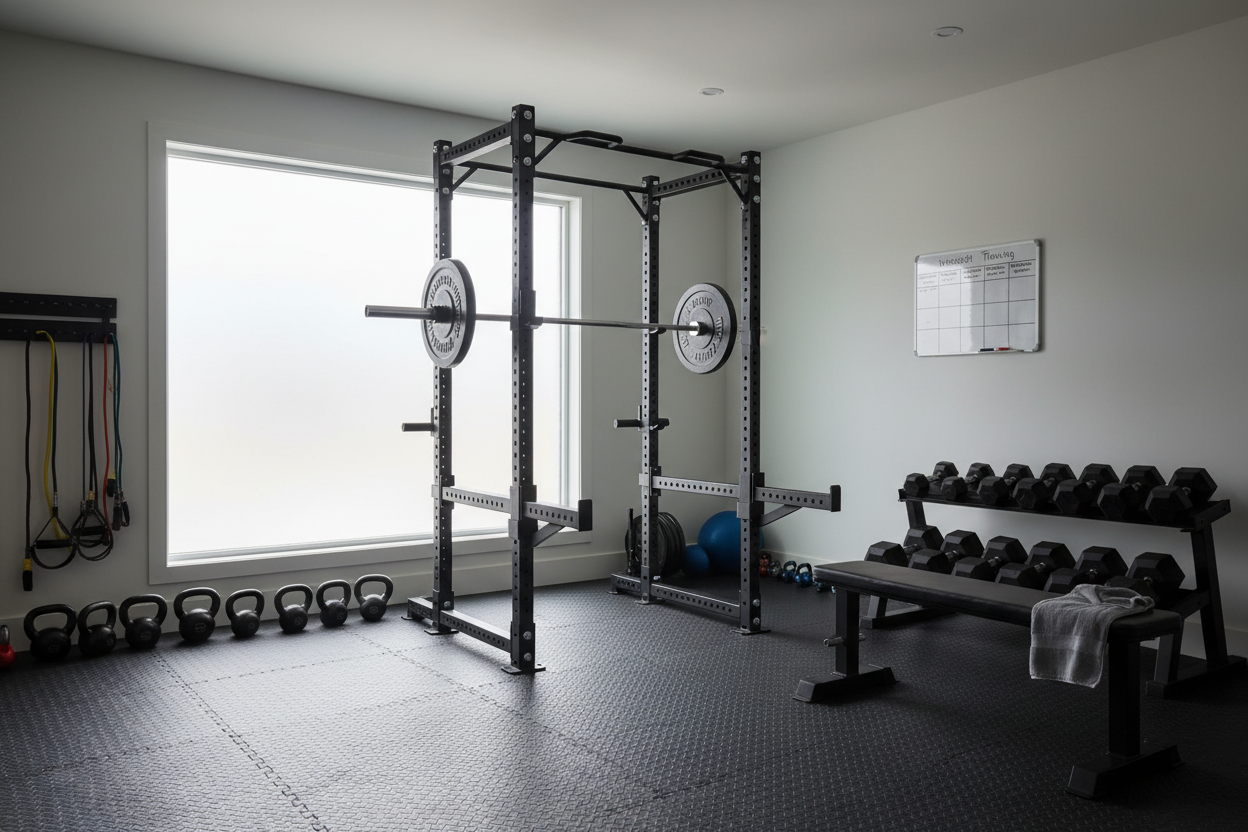
Setup is everything here. You don't want to be sliding around on cold concrete. I personally use a high-density gym flooring for home workout to ensure my shoulder blades can actually dig in and stay retracted. If your back is sliding, your shoulders will protract, and you’re right back to Square One: Pain City. I’ve found that using 50 to 75-pound dumbbells for sets of 12-15 reps provides a massive pump without that sickening 'click' in the joint.
How to Nail the Neutral Grip
If you're doing chest exercises shoulder injury style, stop using a pronated (overhand) grip. When your palms face your feet, it closes the subacromial space. By simply rotating your wrists so your palms face each other—a neutral grip—you open that space up. It sounds too simple to work, but for many of us, it’s the difference between a productive session and a week on the heating pad. Aim for a 45-degree angle if a full neutral grip feels awkward on your wrists.
3 More chest workouts with bad shoulder Modifications
You can't just floor press forever. To keep things interesting, I swap in landmine presses. By pressing a barbell anchored in a corner at an upward angle, you change the leverage. It’s more of a 'push' than a 'press,' which takes the sheer force off the rotator cuff. It’s easily the most underrated chest workout with shoulder pain solution in the book.
Second, try low-to-high cable crossovers. Since the resistance is coming from behind and below you, it mimics the chest-building benefits of an incline press without the overhead stability requirements that usually hurt. Third, if you must use a bench, go with a slight decline. The decline angle naturally reduces the range of motion and keeps the stress on the lower pec fibers rather than the delicate front delt. If you're struggling with basics, this chest and shoulder workout for women actually has some great regressions that work for anyone with banged-up joints.
How to Structure a chest workout rotator cuff injury Routine
Programming is where most people fail. When you're figuring out how to workout chest with shoulder injury, you have to leave your ego at the door. I never go to absolute failure on a pressing movement anymore. I leave two reps in the tank. Why? Because when you hit failure, your form is the first thing to go, and your shoulder is the first thing to pay the price.
Start your session with 5 minutes of face pulls or band pull-aparts. You want the back of your shoulder to be 'on' before you ever touch a weight. For a more detailed breakdown of how to sequence these movements without causing a flare-up, check out our workout hub for specific injury-friendly templates. I typically stick to a 10-15 rep range; anything lower than 6 reps usually involves enough weight to make my joints feel like they're being ground in a mortar and pestle.
Don't Neglect the Antagonist Muscles
Your chest is only as strong as your back is stable. If you have a 'bad shoulder,' it's often because your front side is overdeveloped and pulling your joints out of alignment. You need to build a 'shelf' of muscle in your upper back to support your presses. This means for every set of chest exercises that hurt shoulder less, you should be doing two sets of rows or rear delt flies.
I started focusing on the right shoulder workout exercise that targets the rear and side delts, and my bench numbers actually went up because my base was finally stable. A thick upper back acts like a spring at the bottom of a press. If you’re hollow-chested and rounded-shouldered, no amount of floor pressing will save you. Fix your posture, build your back, and the chest gains will follow—pain-free.
FAQ
Can I still bench press with a shoulder injury?
Maybe, but why risk it? If you must, use a Swiss Bar (multi-grip bar) to keep your hands neutral, or use a 'Board Press' to limit the range of motion. But if it hurts, stop. There's no prize for lifting through a tear.
Is the incline press safer for shoulders?
Usually, no. For most people with impingement, the incline press is actually worse because it requires more overhead mobility. Stick to floor presses or slight declines until you're 100% healed.
How long should I wait to train chest after a flare-up?
If you can't reach behind your back or put on a t-shirt without pain, you shouldn't be pressing anything. Give it 7-10 days of mobility work before testing the waters with light floor presses.