The No-Nonsense Guide to Building Serious Glute Mass
If you are looking for the short answer to what builds the most size, here it is: heavy hip extension combined with deep hip flexion. You cannot pulse or band-walk your way to significant muscle growth. While the Barbell Hip Thrust is widely considered the best exercise for glutes mass due to its ability to load the muscle in its shortened position, it works best when paired with deep squat variations and hinge movements like Romanian Deadlifts. Real growth comes from mechanical tension, not just a burning sensation.
Building a powerful posterior chain is one of the most common goals in the gym, yet it is also where most people spin their wheels. I spent the early part of my lifting career confused by this exact problem. I was hitting the gym five days a week, doing endless cable kickbacks and high-repetition bodyweight lunges until my legs shook. I felt the burn, but after six months, my measurements hadn't budged an inch. It wasn't until I stopped chasing fatigue and started chasing strength—specifically in heavy compound lifts—that I actually saw physical changes. That shift in mindset from "exercising" to "training" is the secret.
Understanding the Mechanism of Growth
To understand glute training for mass, you have to look at anatomy. The gluteus maximus is the largest muscle in the human body, and it is primarily built for explosive power and heavy lifting. It responds best to progressive overload. This means that if you are lifting the same weight today that you were lifting three months ago, your glutes have no reason to grow larger. They have already adapted to the demand.
Many trainees mistake the "pump" (blood rushing to the muscle) for growth stimulus. While metabolic stress has its place, mechanical tension is the primary driver of hypertrophy. You need to move heavy loads through a full range of motion.
The Heavy Hitters: Essential Movements
Your routine needs to be built around a few non-negotiable lifts. These are the glute exercises for mass that provide the highest return on investment.
The Barbell Hip Thrust
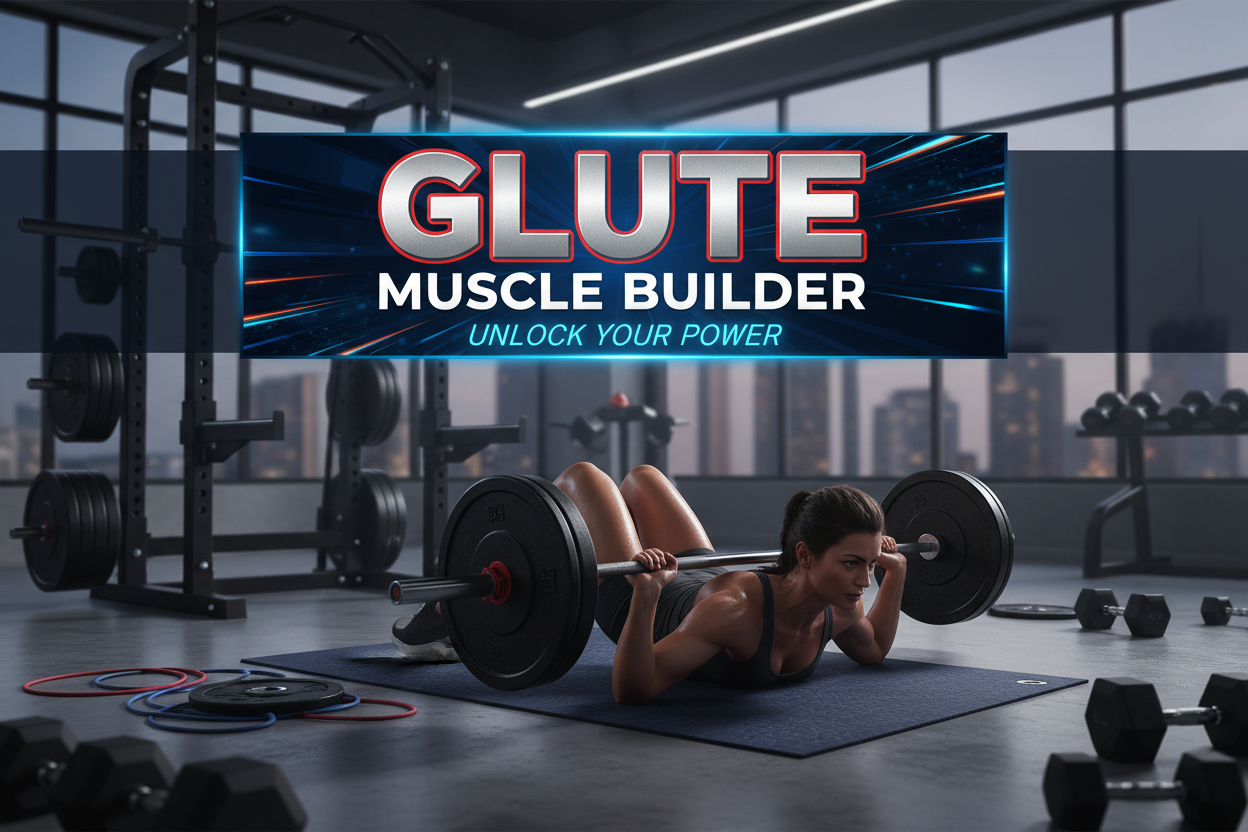
This movement isolates the glutes without being limited by lower back strength, which often happens in squats. By placing the load directly on the hips, you create maximum tension at the top of the movement (full extension). For pure hypertrophy, this is arguably the king. The key here is not just moving weight from point A to point B, but reaching full hip extension and holding for a split second at the top. Keep your chin tucked and your ribs down to prevent your lower back from taking over.
Romanian Deadlifts (RDLs)
While the hip thrust loads the glutes in the shortened position (the squeeze), the RDL loads them in the lengthened position (the stretch). Muscle damage, a key factor in growth, occurs most significantly during the eccentric (lowering) phase of a lift under load. A proper glute mass workout must include a hinge movement like the RDL. Focus on pushing your hips back as far as possible while keeping a neutral spine. The range of motion ends when your hips stop moving back, not when the bar hits the floor.
Bulgarian Split Squats
This is the exercise everyone loves to hate, but its effectiveness is undeniable. Unilateral (single-leg) training ensures that your dominant side isn't doing all the work. By leaning your torso slightly forward during a split squat, you shift the bias from the quads to the glutes. This movement creates an incredible stretch and demands significant stability, recruiting more muscle fibers.
Structuring Your Training Week
Frequency matters. Hitting glutes once a week usually isn't enough for optimal hypertrophy because protein synthesis returns to baseline after about 48 hours. A better approach is to hit the muscle group 2 to 3 times per week with varying intensities.
When designing glute workouts for mass, consider an Upper/Lower split or a Full Body split where you can incorporate high-frequency glute training without burning out. You don't need to do every exercise every session. One day might focus on heavy loading (low reps, high weight), while another day focuses on metabolic stress (higher reps, lower rest).
A Sample Hypertrophy Routine
Here is how you might structure a session focused purely on size. This isn't about cardio; take enough rest between sets to recover so you can lift heavy again.
- A. Barbell Hip Thrust: 4 sets of 8-10 reps. (Focus on the heavy contraction).
- B. Romanian Deadlifts: 3 sets of 10-12 reps. (Focus on the slow eccentric/stretch).
- C. Deficit Reverse Lunges: 3 sets of 12 reps per leg. (Standing on a plate allows for deeper range of motion).
- D. 45-Degree Hyperextensions: 3 sets of 15-20 reps. (Round the upper back slightly to shut off the erectors and focus purely on glute drive).
This collection of glute mass exercises hits the muscle from all necessary angles: vertical hip extension, horizontal hip extension, and hip abduction/stabilization.
The Role of Nutrition
You can have the perfect program, but you cannot build mass out of thin air. Muscle tissue requires energy to be synthesized. If you are perpetually dieting or eating in a caloric deficit, your body will prioritize energy conservation over building new tissue. To support glute mass exercises, you generally need to be in a slight caloric surplus.
Protein intake is equally critical. Aim for roughly 0.7 to 1 gram of protein per pound of body weight. This provides the amino acids necessary to repair the micro-tears created during your heavy lifting sessions. Carbs are also your friend here; they fuel the intense training sessions required to stimulate growth.
Consistency and Progressive Overload
The most boring part of fitness is also the most important. You need to repeat these movements for months, if not years. The goal is to add a little weight to the bar, do one more rep, or improve your technique every single week. This concept, known as progressive overload, is the engine of growth.
Stop changing your routine every two weeks to "confuse" your muscles. Muscle confusion is a myth; muscles don't get confused, they get adapted. Keep your exercise selection relatively stable so you can track your strength gains accurately. If your hip thrust goes from 135lbs to 225lbs, your glutes will be bigger. It is a biological inevitability.
Common Pitfalls to Avoid
A major mistake is using momentum rather than muscle. If you are swinging the weight up during a kickback or bouncing the bar off your hips during a bridge, you are reducing the tension on the target muscle. Drop the ego, drop the weight, and control the movement.
Another issue is neglecting the mind-muscle connection. While this sounds bro-sciencey, actively thinking about squeezing the glute can increase muscle activation. Before your heavy sets, do a few bodyweight activation drills to ensure your glutes are firing and your hamstrings or lower back aren't taking over the load.
Building significant mass takes time and heavy iron. Prioritize the big lifts, eat enough to grow, and stay consistent. The results will follow.
Frequently Asked Questions
How often should I train glutes for maximum growth?
For most natural lifters, training glutes 2 to 3 times per week is the sweet spot. This frequency allows you to maximize protein synthesis spikes while providing enough recovery time between sessions to prevent overtraining and injury.
Can I build glute mass with just bodyweight exercises?
Beginners can see some initial growth with bodyweight movements, but you will eventually plateau. To build significant mass, you need progressive overload, which eventually requires external resistance (weights) to create enough mechanical tension for continued hypertrophy.
Why do I feel my hamstrings taking over during glute exercises?
This is often due to "synergistic dominance," where the hamstrings compensate for weaker or under-active glutes. To fix this, try warming up with activation exercises like clam shells or glute bridges, and ensure your feet aren't placed too far forward during bridges and thrusts.