The Home Pull-Up Machine That Changed My Morning Routine (And My Back)
After months of struggling with traditional doorway pull-up bars that left dents in my door frame and limited my workout options, I finally invested in a proper pull up machine for home use. The difference was immediate—not just in the quality of my workouts, but in how consistently I actually used the equipment. A dedicated machine transforms pull-ups from an awkward, occasionally attempted exercise into a cornerstone of your fitness routine.
The market offers several types of pull ups machine for home setups, ranging from simple tower designs to sophisticated assisted systems. Understanding what separates a worthwhile investment from garage clutter starts with knowing your current fitness level and goals. Someone who can already perform multiple strict pull-ups has different needs than someone still working toward their first unassisted rep.
Why a Dedicated Machine Beats a Simple Bar
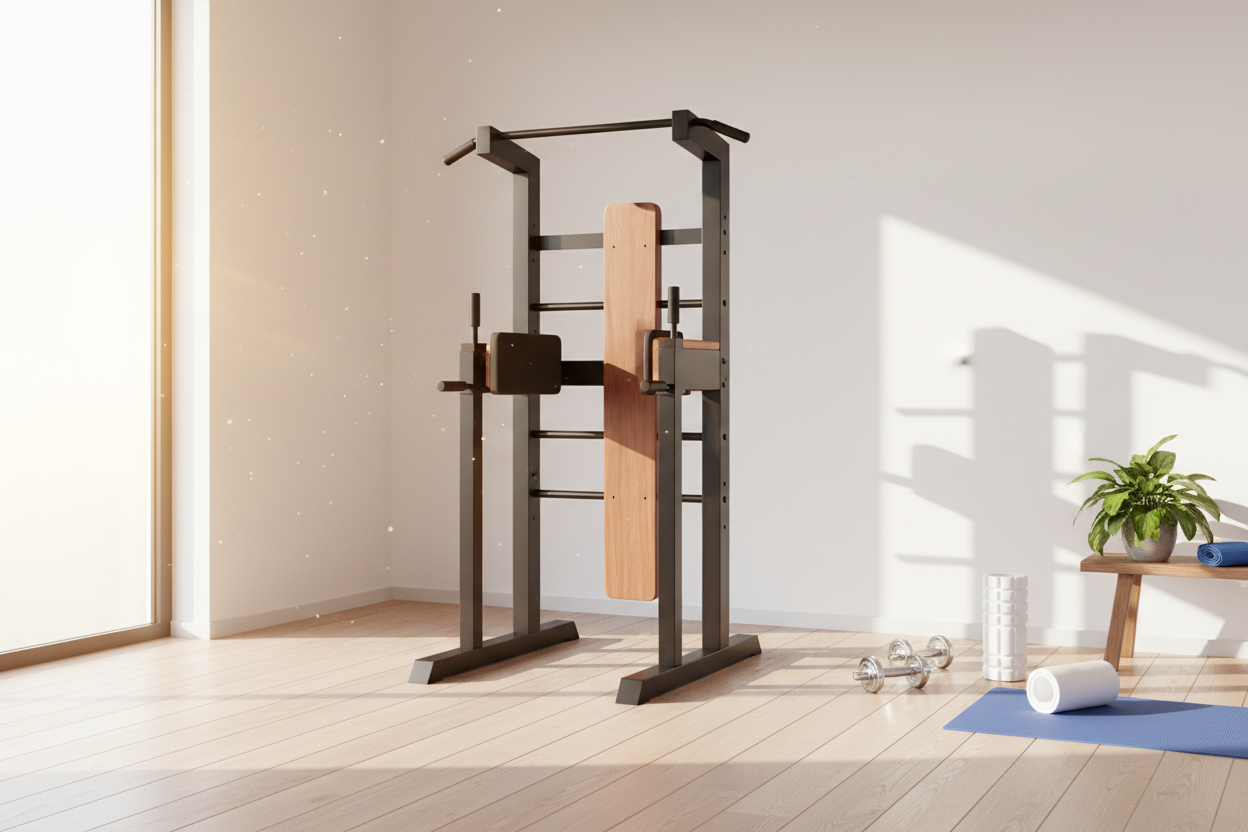
A pull up bar machine provides stability that doorway bars simply cannot match. The freestanding design means you're not testing your door frame's structural integrity with every rep, and the wider base allows for varied grip positions that target different muscle groups. Most quality machines include dip stations, knee raise capabilities, and push-up bars—essentially giving you a complete upper body gym in one footprint.
The psychological aspect matters too. Having a permanent fixture in your home creates a visual reminder and reduces the friction of starting a workout. There's no setup time, no hunting for the bar you stashed in the closet, no excuses. The machine sits there, ready whenever you are.
Assisted Systems: The Game-Changer for Beginners
An assisted pull-up machine for home use revolutionizes how people learn this challenging movement. These machines use counterweight systems or resistance bands to offset a portion of your body weight, allowing you to perform the full range of motion while building the necessary strength. I watched my partner go from zero pull-ups to five solid reps in about three months using our assisted system—progress that would have taken much longer with resistance bands alone.
The adjustability of these machines lets you gradually decrease assistance as you get stronger. This progressive overload is exactly how professional trainers program pull-up progressions, but you can do it in your living room at 6 AM in your pajamas. The commercial-grade versions found in gyms cost thousands, but several companies now make compact assisted systems designed specifically for residential use at a fraction of the price.
Space Considerations and Setup
Before ordering a pull up machine home setup, measure your ceiling height and floor space carefully. Most machines require at least 7 feet of clearance, though some compact models work with lower ceilings. The footprint typically ranges from 4 to 6 feet in length and 3 to 4 feet in width—about the same space as a treadmill.
Assembly usually takes 1-2 hours with basic tools. The machines arrive in flat-pack form with illustrated instructions. I'm not particularly handy, but I managed to assemble ours in an afternoon with just a wrench and Allen keys. The weight of the assembled unit (usually 80-150 pounds) provides stability without requiring floor bolting, though some people add it for extra security.
Features Worth Paying For
Padding quality matters more than you'd think. Cheap foam compresses quickly and becomes uncomfortable, while high-density padding maintains its shape through years of use. The arm and back pads should feel supportive, not just present. I made the mistake of buying a budget model initially—the thin padding meant I dreaded using it, which defeated the entire purpose.
Adjustable height settings accommodate different users and exercises. If multiple people in your household will use the machine, this feature becomes essential. Some models offer tool-free adjustments that take seconds, while others require loosening bolts—a small detail that affects whether you'll actually make those adjustments or just settle for suboptimal positioning.
Weight capacity indicates build quality as much as safety. A machine rated for 300+ pounds typically uses thicker steel tubing and more robust welds than one rated for 220 pounds, even if you weigh considerably less. The higher-rated machines also handle dynamic movements better—the slight swing and momentum that naturally occur during pull-ups won't make the whole structure wobble.
The Vertical Knee Raise Advantage
Most pull-up machines include padded arm rests and a back support for vertical knee raises—an exceptional core exercise that's difficult to replicate with other equipment. This exercise alone justifies the machine's footprint for many users. The combination of pull-ups, dips, and knee raises gives you a comprehensive upper body and core workout without switching between multiple pieces of equipment.
Maintenance and Longevity
Quality machines require minimal maintenance. A quick wipe-down after sweaty sessions prevents corrosion, and an occasional check of bolts keeps everything tight. The powder-coated steel frames resist rust even in humid environments like basements or garages. I've had mine for two years with zero maintenance beyond cleaning, and it looks and functions like new.
The foam grips do wear out eventually, but they're inexpensive and easy to replace. Some users wrap the grips with athletic tape or add their own grip covers for variety. The mechanical simplicity of these machines—essentially just steel tubes and padding—means there's little that can actually break under normal use.
Real-World Usage Patterns
The first few weeks with a new machine feel exciting—you use it daily, experiment with different grips, and feel motivated by the novelty. Then reality sets in, and the machine becomes part of your regular environment. This is where design quality shows its value. A machine that's comfortable and stable gets used. One that wobbles or has uncomfortable padding becomes an expensive clothes rack.
I've found that placing the machine in a high-traffic area rather than tucked away in a spare room dramatically increases usage. Seeing it while walking past reminds me to knock out a quick set, turning pull-ups into a habit rather than a planned workout event. Some days that means just a few reps between work calls; other days it anchors a full upper body session.
Making the Investment Decision
A quality pull up machine home setup costs between $150 and $500, with assisted models typically at the higher end of that range. Compared to gym memberships or other fitness equipment, this represents solid value—especially considering the machine's versatility and durability. The cost per use drops dramatically if you actually use it consistently, which brings us back to choosing a model that fits your space and feels good to use.
Consider your current fitness level honestly. If you can't do a single pull-up yet, an assisted system makes sense. If you're already knocking out sets of ten, a standard tower with added weight capacity might be the better choice. Either way, the machine should challenge you today while leaving room to grow stronger tomorrow.
Frequently Asked Questions
How much space do I really need for a pull-up machine?
Plan for a 4x4 foot floor space minimum and at least 7 feet of ceiling height. You'll also want a few extra feet around the machine for comfortable movement and dismounting. Measure your space carefully before ordering, and remember that you need clearance not just for the machine itself, but for your body moving through the full range of motion.
Can I get a good workout with just a pull-up machine?
Absolutely. Most machines support pull-ups, chin-ups, dips, knee raises, and push-ups—enough variety to build significant upper body and core strength. Combined with bodyweight exercises for legs, you can create a complete strength training program. Many people use their pull-up machine as the centerpiece of a minimalist home gym.
Are assisted pull-up machines effective for building strength?
Yes, assisted machines are highly effective for progression. They allow you to perform the correct movement pattern while gradually reducing assistance as you get stronger. This is superior to substituting with easier exercises because you're training the exact movement you want to master. Most people see measurable progress within 4-6 weeks of consistent training.