The Real Truth About Building a Home Gym That Actually Gets Used
Setting up a home gym sounds like the perfect solution until you're standing in your spare room surrounded by equipment that seemed like a good idea at 2 AM while scrolling through fitness ads. The question isn't whether you should invest in gym machines for home—it's about choosing the right ones that match your actual workout habits, not your aspirational ones.
I learned this the hard way after buying a bulky multi-station that promised to replace an entire gym. It sat in my garage for eight months, mostly serving as an expensive coat rack. The turning point came when I stripped everything back and started with just two pieces of equipment I genuinely enjoyed using. That shift changed everything about my consistency and results.
Understanding What Makes Home Gym Equipment Actually Work
The fitness industry wants you to believe you need every machine under the sun. Reality tells a different story. Effective home gym gym equipment comes down to three factors: space efficiency, versatility, and whether you'll actually use it more than twice. A treadmill gathering dust is infinitely less valuable than a simple set of resistance bands you grab daily.
Most people approach buying workout machine for home setups by thinking about what professional gyms have. That's backwards. Commercial gyms need variety because they serve hundreds of people with different goals. You're one person with specific preferences, and your equipment should reflect that.
The Core Machines Worth Your Money
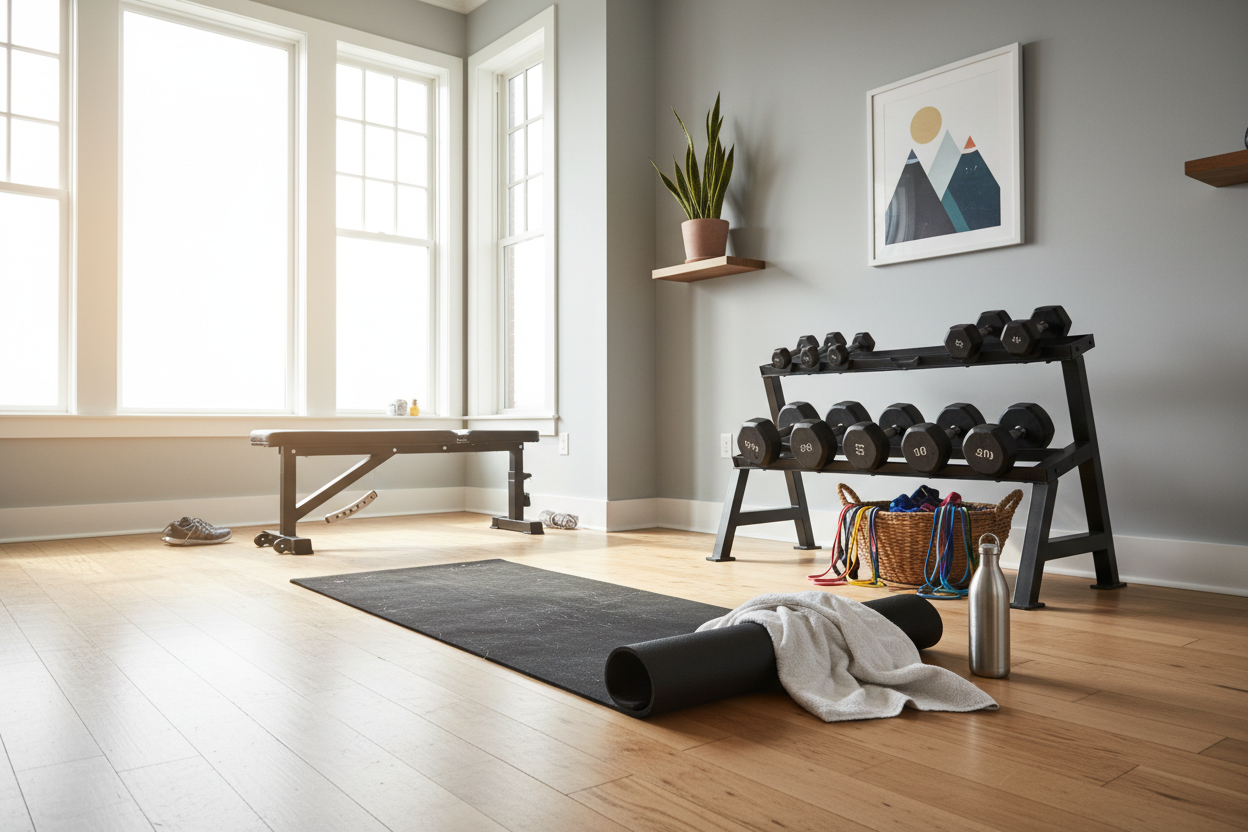
Adjustable dumbbells deserve the top spot for home gym equipment workout routines. They take up minimal space while offering progressive resistance for virtually every muscle group. Pair them with an adjustable bench, and you've got the foundation for serious strength training without dedicating an entire room to work out machines for home.
Rowing machines punch above their weight in the value department. Unlike treadmills that only work your lower body, a quality rower engages 86% of your muscles in every stroke. They fold up when not in use, making them ideal for apartments or shared spaces. The Concept2 Model D remains the gold standard, though several budget-friendly options deliver solid performance.
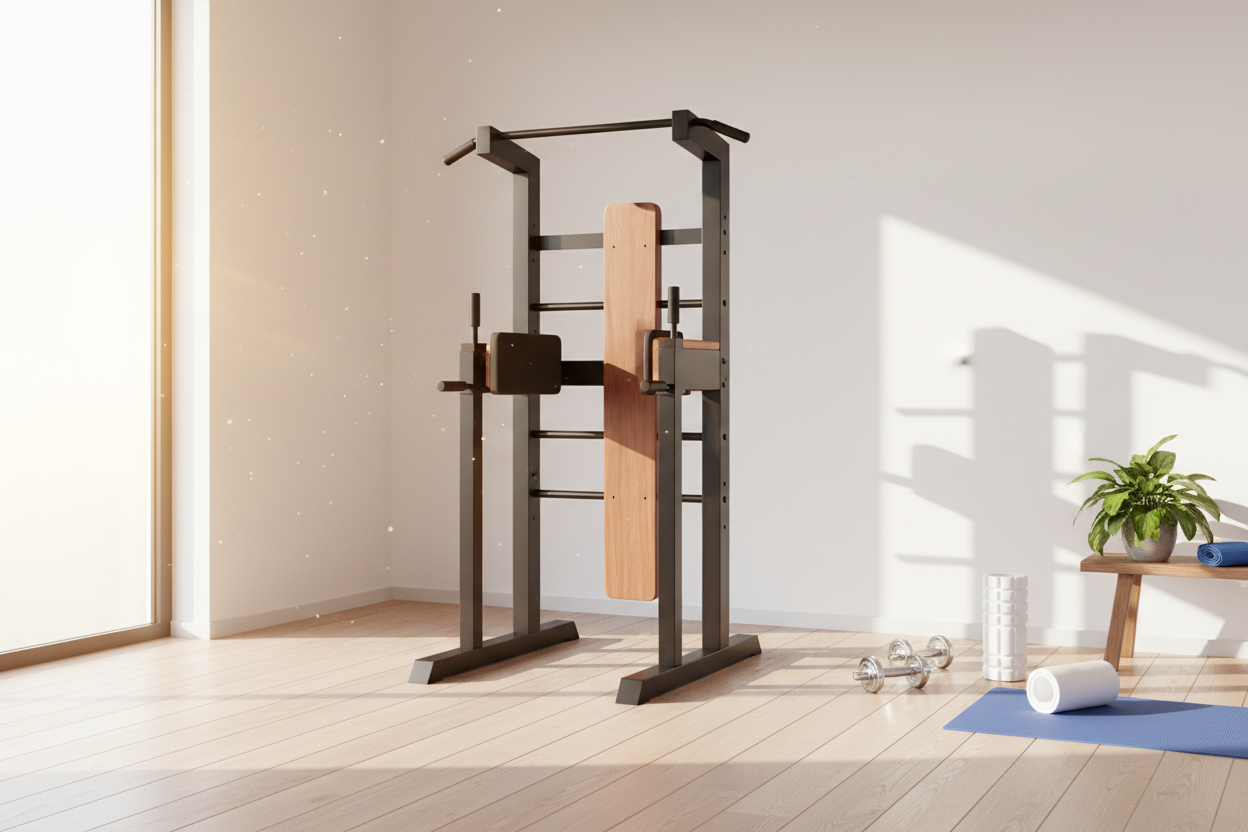
Cable systems or suspension trainers like TRX offer remarkable versatility in a compact package. These at home gym machine options allow for hundreds of exercise variations, from basic rows to advanced core work. They mount to doors or walls, then tuck away in minutes. For anyone juggling limited space with ambitious fitness goals, this category deserves serious consideration.
The Multi-Station Question
Multi-station gyms promise everything in one frame, and for some people, they deliver. These comprehensive at home fitness machine setups work best if you have dedicated space that won't be reclaimed for other purposes. The Bowflex Xtreme and similar models offer legitimate full-body training, but they demand commitment—both financially and spatially.
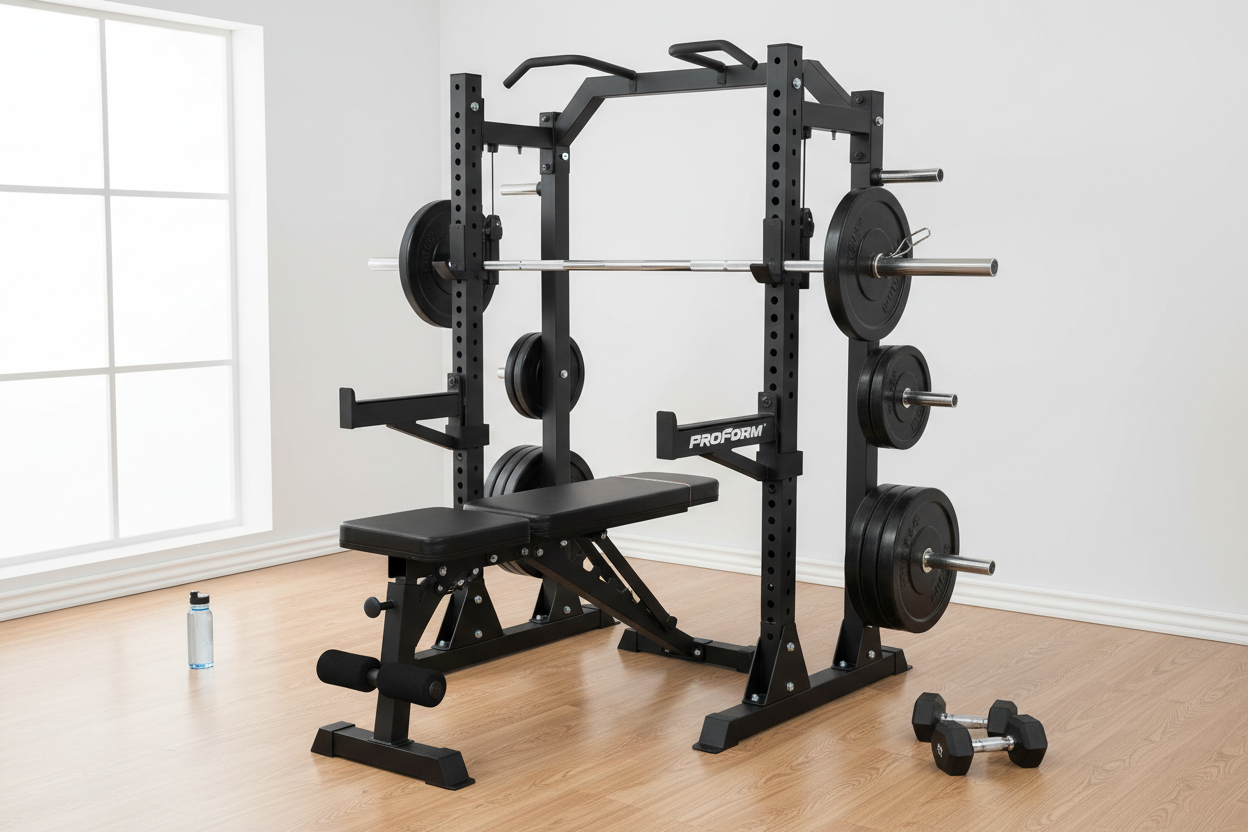
Before dropping thousands on a multi-station, ask yourself honestly: will you use 80% of the stations regularly? If the answer is no, you're better served by individual pieces that match your preferred exercises. A power rack with a pull-up bar and plate-loaded weight gives you more flexibility for less money, though it requires more floor space.
Cardio Equipment That Doesn't Become a Clothes Hanger
Treadmills dominate the market for gym machines home setups, but they're not the only option—or necessarily the best one. Stationary bikes, especially newer smart bikes, offer joint-friendly cardio with built-in entertainment through apps like Peloton or Zwift. The gamification aspect keeps workouts engaging in ways that staring at a wall while running rarely does.
Ellipticals split the difference between bikes and treadmills, providing low-impact full-body movement. They're particularly valuable if you're dealing with knee issues or recovering from injuries. The downside? Quality ellipticals are bulky and expensive. Cheap ones feel terrible and break quickly, making this category particularly unforgiving of budget compromises.
Shopping Smart for Home Workout Machines
The used market for home gym machine for sale options is remarkably robust. People abandon their fitness goals with predictable regularity, especially after New Year's resolutions fade in February. Facebook Marketplace, Craigslist, and local fitness equipment stores often have barely-used machines at 40-60% off retail prices.
Inspect used equipment carefully. Test all moving parts, check for unusual noises, and verify that resistance mechanisms work smoothly across their full range. Cosmetic wear matters less than mechanical soundness. A scratched frame on a quality home gym workout machine beats a pristine exterior on something that'll break in six months.
New equipment comes with warranties and the confidence of knowing its full history. If buying new, wait for major sales around Black Friday, New Year's, or when manufacturers release updated models. The previous year's model of home use gym equipment typically performs identically to the latest version but costs significantly less.
The Space Reality Check
Measure your space before falling in love with any equipment. Manufacturers list machine dimensions, but they rarely account for the clearance you need around equipment for safe use. A treadmill needs extra space behind it for safety. Weight benches require room to load plates. Rowing machines need their full stroke length plus buffer space.
Ceiling height matters more than people realize. Pull-up bars, cable systems, and some strength machines require adequate overhead clearance. Standard 8-foot ceilings work for most equipment, but verify specifications if you're tall or considering machines with high attachment points.
Building Your Setup Progressively
Start with one or two pieces that address your primary fitness goals. Love running? Get a quality treadmill or invest in good outdoor running gear instead. Prefer strength training? Begin with adjustable dumbbells and add equipment as you identify gaps in your routine.
This progressive approach prevents the overwhelm that kills motivation. It also lets you discover your actual workout patterns rather than guessing. You might think you'll use a bike daily, only to realize you prefer bodyweight exercises supplemented with occasional cardio. Better to learn that after spending $300 than $3,000.
The best home gym grows organically around your habits. My current setup includes a power rack, barbell, plates, a rowing machine, and gymnastics rings. It took three years to assemble, with each addition prompted by a specific need I identified through consistent training. That's how sustainable home gyms get built—through use and refinement, not through one massive shopping spree.
Maintenance and Longevity
Quality equipment lasts decades with minimal maintenance. Wipe down machines after use to prevent sweat corrosion. Lubricate moving parts according to manufacturer schedules—usually every few months for heavily used equipment. Tighten bolts periodically, as vibration from use can loosen connections over time.
Budget for eventual replacements of wear items like cables, pulleys, and upholstery. These components cost far less than new machines and extend equipment life significantly. Most manufacturers sell replacement parts, and third-party suppliers often offer compatible alternatives at lower prices.
Frequently Asked Questions
How much should I budget for a basic home gym setup?
A functional home gym starts around $500-800 with adjustable dumbbells, a bench, and resistance bands. Mid-range setups with a quality cardio machine and more strength equipment run $1,500-3,000. Premium home gyms with multiple machines and smart equipment can exceed $5,000-10,000, but most people see excellent results with modest investments focused on equipment they'll actually use consistently.
Is it better to buy one expensive multi-station or several individual machines?
Individual machines offer more flexibility and better resale value if your needs change. Multi-stations work well if you have dedicated space and appreciate the streamlined footprint, but they lock you into specific exercise patterns. Most fitness professionals recommend starting with versatile individual pieces like adjustable dumbbells and a bench, then expanding based on your actual workout preferences rather than theoretical completeness.
What's the most important factor when choosing home gym equipment?
Honest assessment of what you'll actually use beats everything else. The fanciest equipment delivers zero results if it intimidates you or doesn't match your preferred workout style. Choose machines that align with exercises you already enjoy or have successfully stuck with in the past. Consistency trumps comprehensiveness every time in home fitness.