The Fitness Industry Lied to You About Easy Exercise Plans
I remember staring at a 12-week periodized spreadsheet a few years back, feeling like I needed a PhD just to start Monday’s session. It had RPE scales, percentage charts, and accessory movements I couldn’t even pronounce. I spent forty minutes just ‘preparing’ to lift, and by the time I was done with the warm-up, I was already looking for an excuse to quit. The truth is, most easy exercise plans are sabotaged by the industry’s obsession with ‘optimization’ before you’ve even built a habit.
Quick Takeaways
- Friction is the primary reason most people fail, not a lack of willpower.
- A successful routine is one you can perform even on your worst, busiest day.
- Physical environment matters more than the specific rep count.
- Consistency beats intensity every single time for the first 90 days.
The Optimization Trap (And Why You Keep Quitting)
The modern fitness landscape is a mess of over-engineered solutions for problems you don't even have yet. You’re told you need to choose between a high-intensity bootcamp that leaves you puking in a bucket or a complex spreadsheet that requires a calculator. This creates a massive amount of decision fatigue. When you have to decide which of the 14 variations of a bicep curl to do, your brain eventually just decides to sit on the couch instead.
We’ve been conditioned to believe that if it isn’t complicated, it isn’t working. That’s a lie sold to keep you subscribed to apps. Real progress comes from the boring stuff done repeatedly. If your plan requires more than thirty seconds of thought to start, it’s too complex for a beginner.
What Actually Makes an Exercise Plan 'Easy'?
When I say ‘easy,’ I’m not talking about the physical effort—I’m talking about the cognitive load. A simple exercise program succeeds because it removes the friction of starting. If you have to drive twenty minutes to a crowded commercial gym, find a parking spot, and wait for a squat rack, you’ve already lost. The mental energy required to overcome those hurdles is finite.
Removing barriers is the secret. This is why I tell people to stop hiding their gear in the closet. If you keep a large exercise mat permanently rolled out in your living room or office, you’ve eliminated the ‘setup’ phase of your workout. You don't have to 'get ready' to train; the space is already waiting for you.
The Power of a Zero-Friction Setup
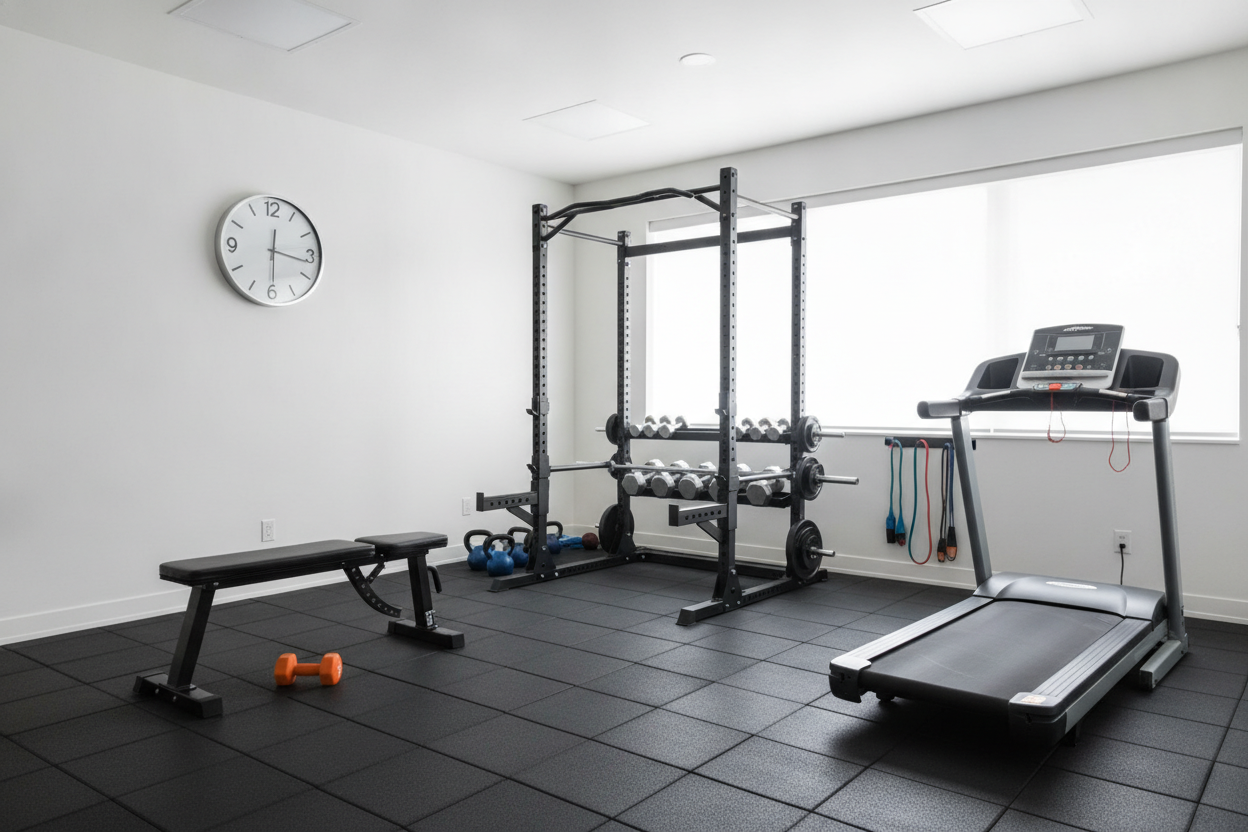
I’ve tested dozens of home gym configurations, and the ones that stick are the ones that are always ready. You want a setup where you can literally roll off the couch and be on your training surface in three seconds. It sounds lazy, but it’s actually a psychological hack. Your brain doesn't view the workout as a 'project' when the equipment is already there.
I’ve found that a 6x8ft exercise mat is the sweet spot for this. It’s a large enough footprint to handle lunges and lateral movements without feeling cramped, but it’s small enough to fit in a corner of the living room without requiring you to remodel your house. It becomes a dedicated ‘zone’ where the only rule is movement.
A Simple Exercise Program You Can Start Right Now
Forget the fancy machines. If you want a simple exercise program that actually sticks, focus on four fundamental movements: the air squat, the pushup, the reverse lunge, and the plank. Do ten reps of each, three times through. That’s it. Don’t worry about heart rate zones or ‘muscle confusion.’ Just move.
Mastering these basics is mandatory. I see people trying to jump into a complex squat exercise program with a 300-pound barbell before they can even do twenty clean bodyweight squats. Build the foundation first. When you can do this routine five days a week for a month without missing a day, then—and only then—do you get to buy more gear.
When and How to Finally Make It Harder
Eventually, you’ll get bored. That’s good. Boredom is a sign of mastery. Once the bodyweight movements feel like a warm-up, you can start adding resistance with dumbbells or kettlebells. This is where you move from ‘habit building’ to ‘strength building.’
Just keep an eye on your gear as you scale up. If you start dropping 50-pound weights on a thin yoga mat, you’re going to ruin your subfloor and annoy your neighbors. Before you go heavy, check out a guide for exercise mat buyers to understand material density. You need a surface that can actually absorb the impact of real weight once you graduate from the ‘easy’ phase.
Personal Experience: My 12-Week Failure
A few years ago, I tried to follow a professional athlete’s ‘simple’ routine. It required two hours a day, six days a week. I lasted exactly nine days. I was so sore I couldn't walk, and I hated every second of it. I felt like a failure. I went back to basics—just 15 minutes of movement on my mat every morning before coffee. That ‘easy’ routine lasted three years and did more for my health than that pro-level program ever could have. Don't let your ego dictate your programming.
FAQ
Do I need to wear shoes for a home workout?
If you have a high-quality, dense mat, you don't need shoes for bodyweight work. In fact, training barefoot can help strengthen your feet and ankles. Just make sure your mat has enough grip so you aren't sliding around.
How long should an easy workout take?
Aim for 15 to 20 minutes. The goal isn't exhaustion; it's consistency. If you have more energy, do another round, but don't feel obligated to spend an hour training every time.
What if I don't have enough space for a gym?
You don't need a gym. You need about 48 square feet. If you can clear enough space for a 6x8 mat, you have enough room to do 99% of effective home exercises.