The Exact Order You Should Buy Equipment for Home Gyms
I remember the exact moment I decided to build my own training space. I was standing in a commercial gym, waiting ten minutes for a squat rack while some guy scrolled on his phone. I went home and almost made the biggest mistake every rookie makes: I nearly spent two grand on a high-end treadmill. I thought a 'real' gym needed a massive machine to anchor the room. I was wrong.
Building a setup is about utility, not aesthetics. If you buy the wrong equipment for home gyms early on, you end up with a very expensive laundry rack and no room to actually move. You need a foundation that grows with your strength, not a piece of plastic that limits you to one plane of motion.
Quick Takeaways
- Flooring is the most important (and ignored) step.
- Adjustable dumbbells save more space than any other gear.
- Don't buy a power rack until you actually have a barbell habit.
- Cardio machines should be the final 10% of your budget.
Stop Buying the Treadmill First
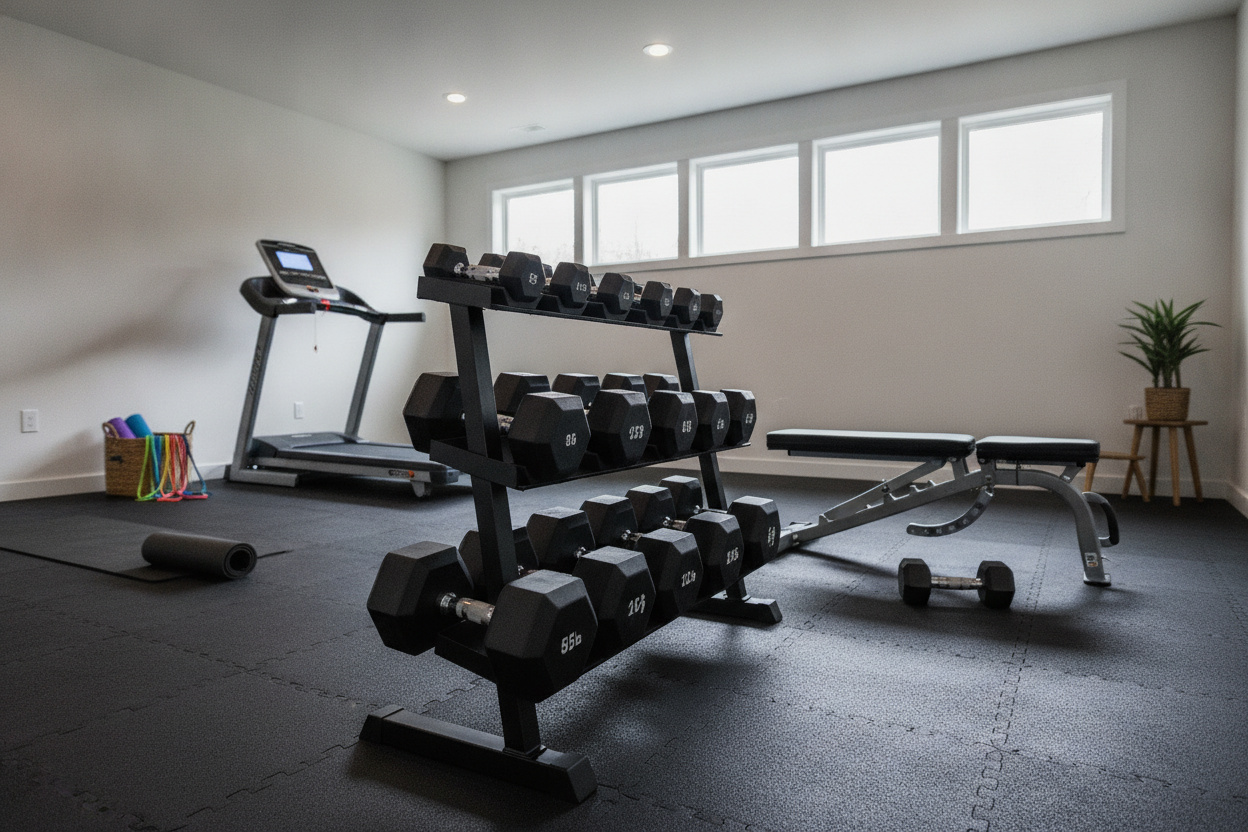
The treadmill is the 'safety blanket' of the fitness world. It feels familiar. You know how to walk, so you buy the machine. But here is the reality: a treadmill has a massive footprint, requires electrical maintenance, and does exactly one thing. If you spend $1,500 on a motorized belt before you own a single plate of iron, you have effectively killed your floor space for a movement you could do for free outside.
Strength equipment is the better investment because it is versatile. A single set of weights can be used for hundreds of movements. A treadmill is a mono-structural commitment. Most people I know who bought the cardio machine first ended up selling it on Marketplace six months later to fund the rack they should have bought in the first place. You want gear that forces you to work, not gear that does half the work for you with a motor.
Think about the long-term utility. If you have $2,000 to spend, that money can buy a lifetime of heavy-duty steel or one mid-range motorized unit that will likely have a software error in three years. Focus on the 'forever' gear first. Strength is the foundation of everything else you want to do in your garage or basement.
Phase 1: Protect Your Floor (And Your Back)
Before you bring in any gym equipment for the home, you have to look at what's under your feet. I’ve seen guys crack their garage foundation because they thought a thin yoga mat was enough to deadlift on. It isn't. You need high-density rubber. If you are working in a spare room or a small corner, a heavy-duty 6x8ft exercise mat is the minimum viable product. It protects your subfloor from the impact of a 50-lb dumbbell and keeps your bench from sliding mid-set.
Once the floor is safe, your next purchase must be a rock-solid adjustable bench. Do not cheap out here. A $90 bench from a big-box store will wobble the second you try to press anything over 30 lbs. Look for a bench with at least a 1,000-lb weight capacity. You want a tripod design or a wide rear base so it doesn't tip when you're doing seated work. A good bench turns your floor space into a functional weight room.
Why an adjustable bench instead of a flat one? Because incline work is essential for shoulder health and chest development. You are buying versatility. A flat bench is great for powerlifting, but an adjustable bench handles everything from seated curls to incline presses and step-ups. It is the most used piece of furniture in my house, and it should be in yours too. Protect the floor, get a stable seat, and you’re ready for the weight.
Phase 2: The Iron (Adjustables vs. Fixed)
Now we get to the actual work. For a beginner gym equipment home gym, you have two choices: a full rack of fixed dumbbells or a single pair of adjustables. Unless you have a 3,000-square-foot warehouse, buy the adjustables. A full set of 5-lb to 50-lb dumbbells takes up an entire wall. A pair of Nuobells or PowerBlocks takes up two square feet.
I personally prefer the 'click' style adjustables that change weight in 5-lb increments. If you're doing a circuit, you don't want to spend three minutes unscrewing collars. You want to drop from 40 lbs to 20 lbs in three seconds. This is where you spend the bulk of your Phase 2 budget. High-quality adjustables feel like real iron in your hand, not like a clunky plastic toy. Look for knurled handles—they make a difference when your hands are sweaty.
Pairing these with your bench allows you to perform roughly 90% of all known strength exercises. You can squat, lunge, press, and row. You don't need a rack yet. You need to master the mechanics of these movements. If you can't commit to a dumbbell program for three months, you definitely aren't ready to have a 400-lb steel cage taking up your entire garage.
Phase 3: The Power Rack (The Centerpiece)
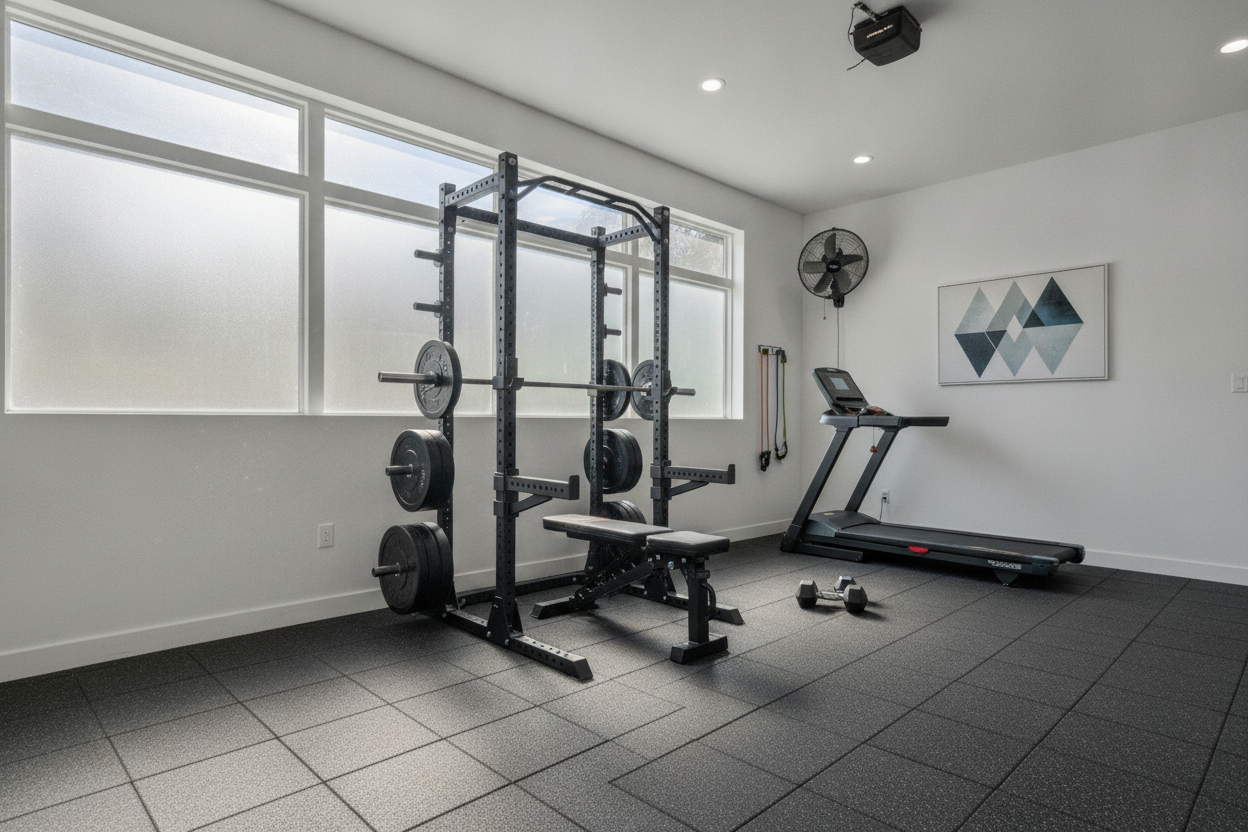
You’ll know it’s time for a rack when your adjustable dumbbells max out. If you’re lunging the 50s and it feels like a warm-up, you need a barbell. This is the biggest investment you’ll make, both in terms of cash and floor space. I recommend looking for a 3x3-inch steel frame with 11-gauge steel. Anything thinner will feel like a playground swing set when you try to rack a heavy squat.
Since these are the biggest ticket items, I always tell people to scout home gym equipment deals for a few months before pulling the trigger. You can often save 20% by timing your purchase with holiday sales or clearance cycles. When you buy the rack, you also need a 'forever' barbell. Don't buy the $50 bar at the local sporting goods store. The knurling will be flat, and the sleeves won't spin. Get a multi-purpose bar with a decent whip and a 190,000 PSI tensile strength rating.
The rack isn't just for squats; it's your safety net. With spotter arms, you can push your limits on the bench press without needing a partner. It becomes the hub of your gym. You can add pull-up bars, dip stations, and landmine attachments later. But for now, just focus on the 'Big Three': the rack, the bar, and the plates. If you're tight on space, look for a folding rack that bolts to the wall, but make sure your studs can handle the load.
Phase 4: Cardio and Specialty Machines
This is where most people start, but it's actually where you should finish. Once you have your strength foundation, then—and only then—should you look at dedicated cardio machines. An air bike or a rower is far superior to a treadmill for a home setup. They are usually more compact, provide a full-body burn, and don't require an outlet. The Concept2 Rower is the gold standard for a reason; it holds its resale value better than almost any other piece of gear.
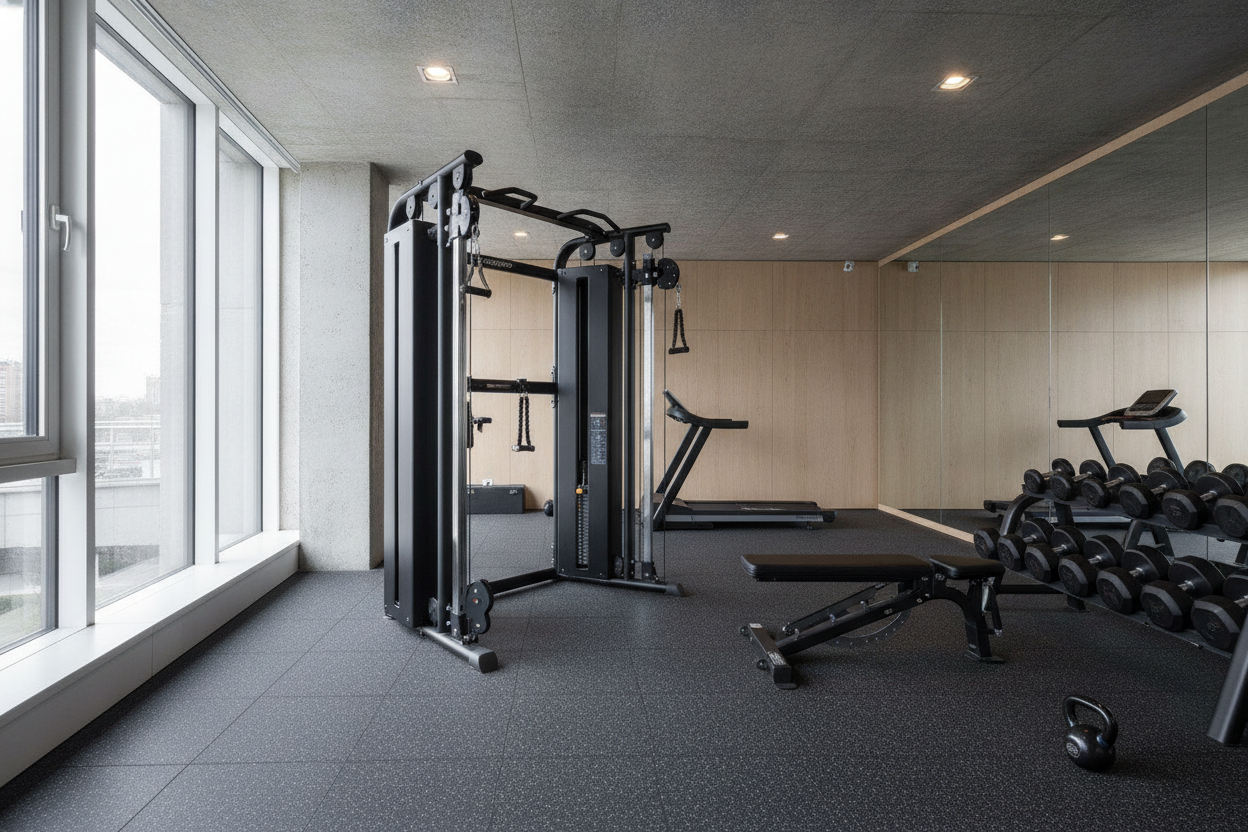
Specialty machines like leg presses or cable crossovers are the 'luxury' tier. They are great for isolation, but they take up a massive amount of room for very specific results. Unless you are a competitive bodybuilder, a good set of resistance bands and a pulley attachment for your rack can mimic most of what those $2,000 machines do. Keep your space open as long as possible.
This blueprint works whether you're in a garage or a spare bedroom, and planning a home gym for any space requires knowing your limits. Don't crowd yourself out. A gym you can't move in is a gym you won't use. Finish your setup with a few 'nice-to-haves' like a loud Bluetooth speaker and a large mirror to check your form, and you’ve officially beaten the commercial gym system.
My Personal Experience
I learned the hard way about 'budget' gear. Five years ago, I bought a cheap, unbranded power rack because it was $200 cheaper than the one I actually wanted. Every time I racked more than 225 lbs, the whole thing would sway two inches to the left. It was terrifying. I ended up selling it for a loss and buying the heavy-duty rack I should have started with. I wasted $300 and a whole Saturday of labor just because I tried to cut corners on the foundation. Buy once, cry once.
FAQ
Is it cheaper to build a home gym or keep a membership?
Initially, the home gym is more expensive. However, with the average membership costing $600 a year plus gas and time, a $2,000 home setup pays for itself in about three years. Plus, the equipment holds its value; you can usually sell quality gear for 70% of what you paid.
Do I need a platform for deadlifting?
If you're pulling over 400 lbs on a regular basis, yes. If you're a casual lifter, two layers of 3/4-inch rubber stall mats are usually enough to protect a standard concrete garage floor. Just don't drop the weight from the top.
What is the best cardio machine for small spaces?
The air bike (like a Rogue Echo or Schwinn AD7) is the best bang for your buck. It has a small footprint, no motor to break, and it provides a level of intensity that a treadmill just can't match. It's also easy to move around on wheels.