Why Most All-In-One Home Workout Stations Feel Terrible to Use
I’ve spent way too many late nights scrolling through equipment listings, convinced that one massive machine would solve every training hurdle. You’ve seen the ads—a shiny home workout station that claims to replace an entire commercial gym for the price of a year's membership. It looks great in the renders, but once it’s bolted together in your garage, the reality is often a mess of squeaky pulleys and a frame that wobbles the moment you try to hit a PR.
Quick Takeaways
- Cheap plastic pulleys create friction that ruins the 'feel' of the lift.
- Marketing 'exercise counts' (like 50-in-1) usually include useless variations.
- Aluminum pulleys and 11-gauge steel are the gold standard for durability.
- Functional trainers offer more versatility than fixed-path multi-gyms.
The All-In-One Machine Fantasy vs. Reality
The marketing for these machines is brilliant. They show a fit model performing a seamless transition from chest presses to lat pulldowns, promising that you can do 50+ exercises in a single 4x4 footprint. It sounds like the ultimate space-saver. But in my experience, those '50 exercises' usually consist of 5 actual movements and 45 awkward variations that feel like you’re fighting the machine rather than the weight.
The biggest issue is the frame. Most budget-tier machines use thin 14-gauge steel and narrow bases. When you’re mid-set on a chest press, you can actually feel the uprights flexing. That instability isn't just annoying; it saps your power output. Your stabilizer muscles are too busy worrying about the machine tipping over to focus on the actual lift. A wobbly machine is a fast track to a boring workout that you’ll eventually start avoiding.
Why Cheap Pulleys Ruin the Entire Experience
If you’ve ever pulled on a high-end cable machine at a black-card gym, you know that butter-smooth glide. That’s not magic; it’s physics. Cheap home units use plastic pulleys with simple bushings instead of ball bearings. They also use stiff, nylon-coated cables that are too thick for the small pulley wheels. This creates 'cable drag'—a jerky, hitching sensation where the weight feels heavier on the way up and lighter on the way down.
This friction kills your mind-muscle connection. Instead of a smooth eccentric phase, the weight drops in tiny increments as the cable catches on the plastic. I’ve tested stations where the friction was so bad it added 15 pounds of 'ghost weight' to every movement. If you’re serious about hypertrophy, you need consistent tension. You won't get that from a machine that feels like it's filled with sand.
Separating the Best Workout Stations from the Coat Racks
When you’re hunting for the best workout stations, stop looking at the glossy photos and start reading the spec sheet. First, look for the steel rating. You want 11-gauge steel, which is significantly thicker and heavier than the stuff sold at big-box retailers. Second, check the pulley material. Aluminum pulleys with sealed bearings are non-negotiable if you want that commercial feel. They don't warp over time and they spin much more freely than plastic.
Next, look at the cable ratio. A 2:1 ratio is standard for functional training—it means 100 lbs on the stack feels like 50 lbs of resistance, but you get twice as much cable travel. This is crucial for explosive movements or long-range exercises like cable crossovers. Just remember, even the highest-end machine is just a piece of furniture if you don't have a plan. I always recommend starting with structured at-home workout programs for beginners to ensure you're actually using all that expensive steel effectively.
Selectorized Weight Stacks vs. Plate-Loaded Rigs
This is the big fork in the road for home gym owners. Selectorized stacks (the ones with the pin) are incredibly convenient. You can change weights in two seconds, which is perfect for drop sets. The downside? They are heavy, expensive to ship, and usually cap out at 160 or 210 lbs. If you’re a strong trainee, you might 'max out' a cheap home stack on day one.
Plate-loaded stations are the budget-friendly alternative. You use the Olympic plates you already own, which saves you a ton of money upfront. However, they take up more physical space because the 'horns' for the plates stick out to the sides. They also tend to have a bit more friction because the weight carriage has to slide up and down guide rods. If you have the budget, go selectorized. If you’re on a budget but want heavy weight, go plate-loaded.
Are Functional Trainers the Smarter Alternative?
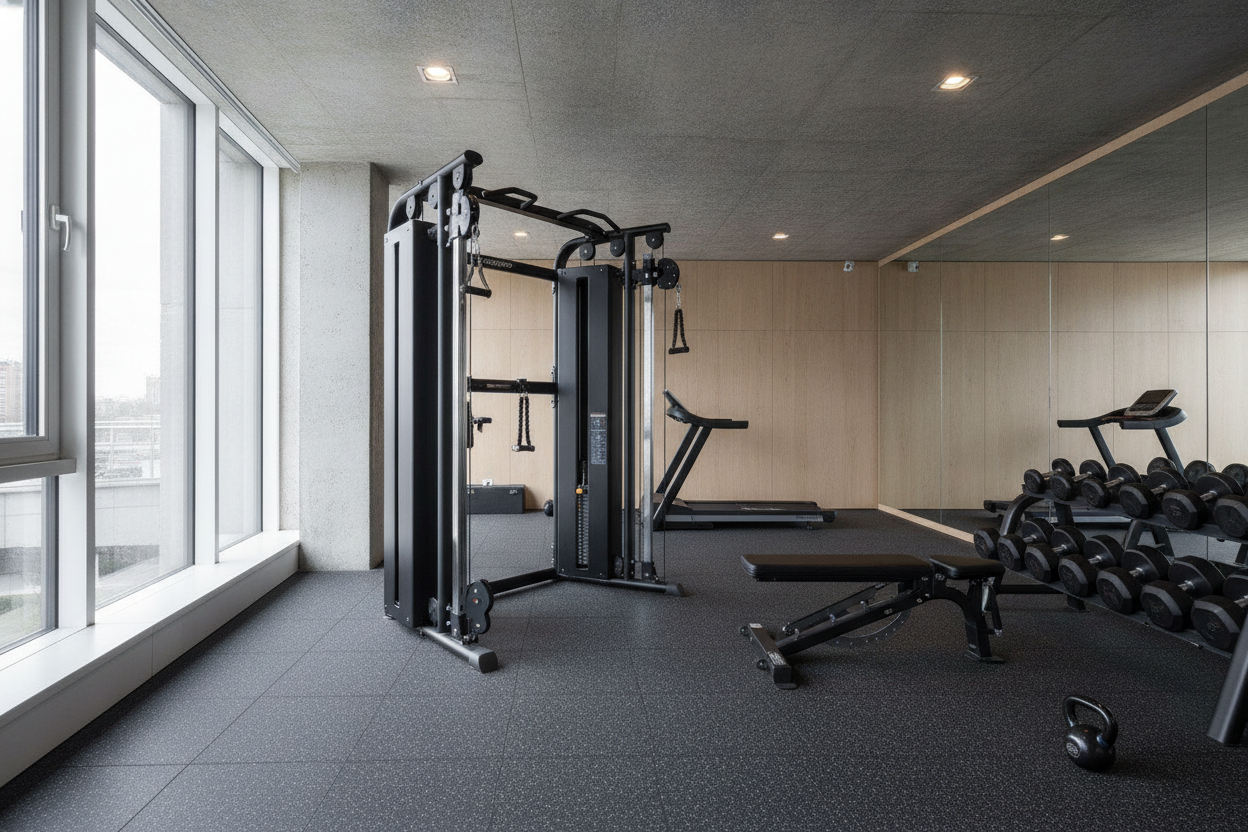
If you’re torn between a traditional multi-gym and a functional trainer, I’ll tell you right now: get the functional trainer. A multi-gym locks you into a fixed path. If your shoulder doesn't like the exact angle of that chest press arm, too bad. A functional trainer uses two independent, adjustable pulleys. This allows you to move in any plane of motion, mimicking how your body actually moves in real life.
The versatility is unmatched. You can do everything from low-row pulls to high-to-low woodchops. Because the handles move freely, these machines are perfect for following along with dynamic workout at home programs that require quick transitions between upper and lower body movements. You aren't limited by the 'machine's logic'—you’re only limited by your own creativity.
My Honest Mistake
I once bought a $400 'all-in-one' from a big-box store because the footprint was tiny. The first time I tried a heavy lat pulldown, the cable actually jumped the track because the pulley was slightly misaligned from the factory. It shredded the nylon coating instantly. I spent more time under the machine with a wrench than I did actually lifting. I eventually sold it for $50 and bought a proper power rack with a cable attachment. Don't buy the 'too good to be true' deals.
FAQ
How do I stop my cable machine from squeaking?
Use a dry silicone spray on the guide rods. Never use WD-40; it attracts dust and will eventually turn into a sticky paste that makes the friction even worse.
Can I upgrade plastic pulleys to aluminum?
Usually, yes. Many brands use standard 3.5-inch or 4.5-inch pulleys. You can find aluminum replacements online that will instantly make a cheap machine feel 50% better.
Is a 160-lb weight stack enough?
For isolation moves like tricep extensions or lateral raises, it's plenty. For compound moves like lat pulldowns or rows, an experienced lifter will outgrow a 160-lb stack quickly. Look for machines with a 200-lb+ option.