The Deep Stretch Rule for Exercises to Build Muscle Mass
I spent my first three years in a garage gym doing what I call 'ego halves.' I’d load 315 on the bar, squat down about six inches, and convince myself I was a beast. My legs stayed like toothpicks. It wasn't until I stripped the bar to 185 and buried my glutes to my calves that things actually changed. If you are struggling to find the right exercises to build muscle mass, you probably don't need more weight—you need more range.
- Hypertrophy is maximized when a muscle is loaded in its longest state.
- Stability is the prerequisite for intensity; if you're wobbling, you aren't growing.
- Specific tools like heel wedges and deficit blocks are mandatory for home gym owners.
- Quality over quantity: four deep sets beat eight shallow ones every time.
Why the Bottom of the Rep is Where the Magic Happens
For decades, we were told that the 'pump' or the 'burn' was the holy grail of muscle building exercises. While that feels great, modern sports science points toward something called stretch-mediated hypertrophy. Essentially, when you stretch a muscle under significant tension, it sends a much louder signal to the brain to pack on size than a contraction does. Think of it like a rubber band; the most potential energy exists when it’s pulled to its limit.
When you perform exercises to gain muscle, the hardest part of the lift is usually the bottom. That is where the muscle fibers are being physically pulled apart while trying to hold onto a heavy load. This mechanical tension is the primary driver for muscle growth. If you are cutting your reps short to move a heavier dumbbell, you are effectively skipping the most productive part of the set. I’ve seen guys add two inches to their chest just by pausing for one second at the bottom of a bench press instead of bouncing the bar off their sternum.
This isn't just about 'feeling the stretch.' It's about choosing the best exercise for gaining muscle mass based on its resistance profile. You want the weight to be heaviest where the muscle is longest. This is why a dumbbell fly is often a better exercise for muscle mass than a cable crossover that loses tension at the bottom. You want to brutally load that lengthened state.
The Leg Day Overhaul: Forcing Your Quads and Hams to Grow
Most people treat leg day like a chore to be finished rather than a growth opportunity. If you want real mass, you need to master leg muscle building exercises for mass like the Romanian Deadlift (RDL). The RDL is the king of the 'deep stretch' rule. Instead of just bending over, you are pushing your hips back until your hamstrings feel like they’re about to snap. That deep, uncomfortable pull is exactly what triggers growth.
For quads, the best exercise to build muscle is the heel-elevated goblet squat. By raising your heels, you allow your knees to travel further forward, which puts the quad in a massive stretch at the bottom. I’ve found that even with a single 50-lb dumbbell, I can get more growth out of a deep, paused goblet squat than I can with a 225-lb 'powerlifting' squat that stops at parallel. It’s about the geometry of the joint, not just the numbers on the plates.
Don't ignore your calves either. The best exercise for muscle growth in the lower legs is a standing calf raise with a three-second hold at the very bottom. Most people just bounce. Bouncing uses your Achilles tendon like a spring. To make the muscles grow, you have to kill the momentum and force the muscle to work from that deep, stretched position. That is how you workout and gain muscle effectively.
You Need the Right Gear to Hit the Depths
You can’t hit a deep stretch if your equipment is fighting you. If you have tight ankles—and most of us do—you’ll find your heels lifting off the floor during squats. This shifts the load to your lower back and kills the quad stretch. Investing in leg exercise equipment for home like a solid pair of squat wedges can be a total game-changer for your range of motion.
I personally use a set of 20-degree steel wedges. They don't budge, and they allow me to get my hamstrings to touch my calves without my lower back rounding. If you're on a budget, even a couple of 5-lb plates under your heels will work, but they tend to slide around. If you want the best exercise to increase muscle mass, you need a stable platform that lets you sink into the hole with confidence.
Upper Body Fixes: Deficit Pushups and Deep Rows
For the upper body, we often get stuck in the middle of the range. Take the pushup. Once your chest hits the floor, the rep is over. But your chest can actually stretch further. By using handles or even a couple of sturdy books to create a 'deficit,' you can drop your chest below your hands. This extra two inches of travel is where the best exercises for muscle growth happen. It turns a basic move into one of the top muscle building workouts you can do at home.
The same applies to back training. When doing a one-arm dumbbell row, don't just pull the weight to your hip. At the bottom of the rep, let the weight pull your shoulder blade forward, wrapping it around your ribcage. This stretches the lats and traps under load. This 'reach' at the bottom is what makes a good muscle workout great. It’s the difference between a thick, wide back and just 'doing reps.'
I also recommend incline dumbbell curls. Sit on a bench at a 45-degree angle and let your arms hang straight down. The stretch on the long head of the biceps is intense. It’s widely considered the best exercise to build mass in the arms because it challenges the muscle in a way a standard barbell curl never could. You don't need 100-lb dumbbells; 25s will feel like lead if you're doing them right.
Stop Slipping When You're Under Heavy Tension
Here is the cold, hard truth: the deep stretch is dangerous if you aren't stable. If you’re performing a heavy Bulgarian split squat—one of the best lifts to build muscle—and your front foot slips even an inch, you’re looking at a potential groin tear. I’ve seen it happen on cheap, slippery gym floors, and it isn't pretty. When you are at the absolute bottom of a rep, your muscles are at their most vulnerable.
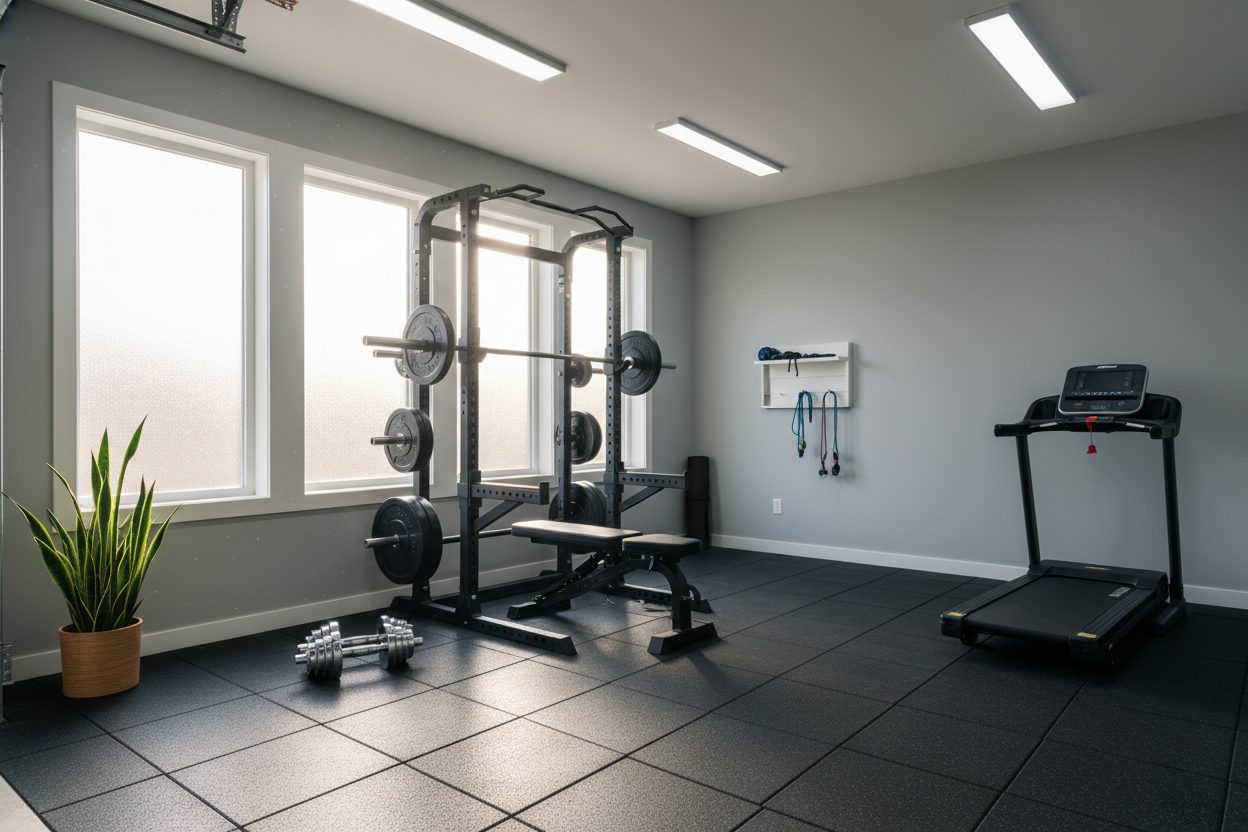
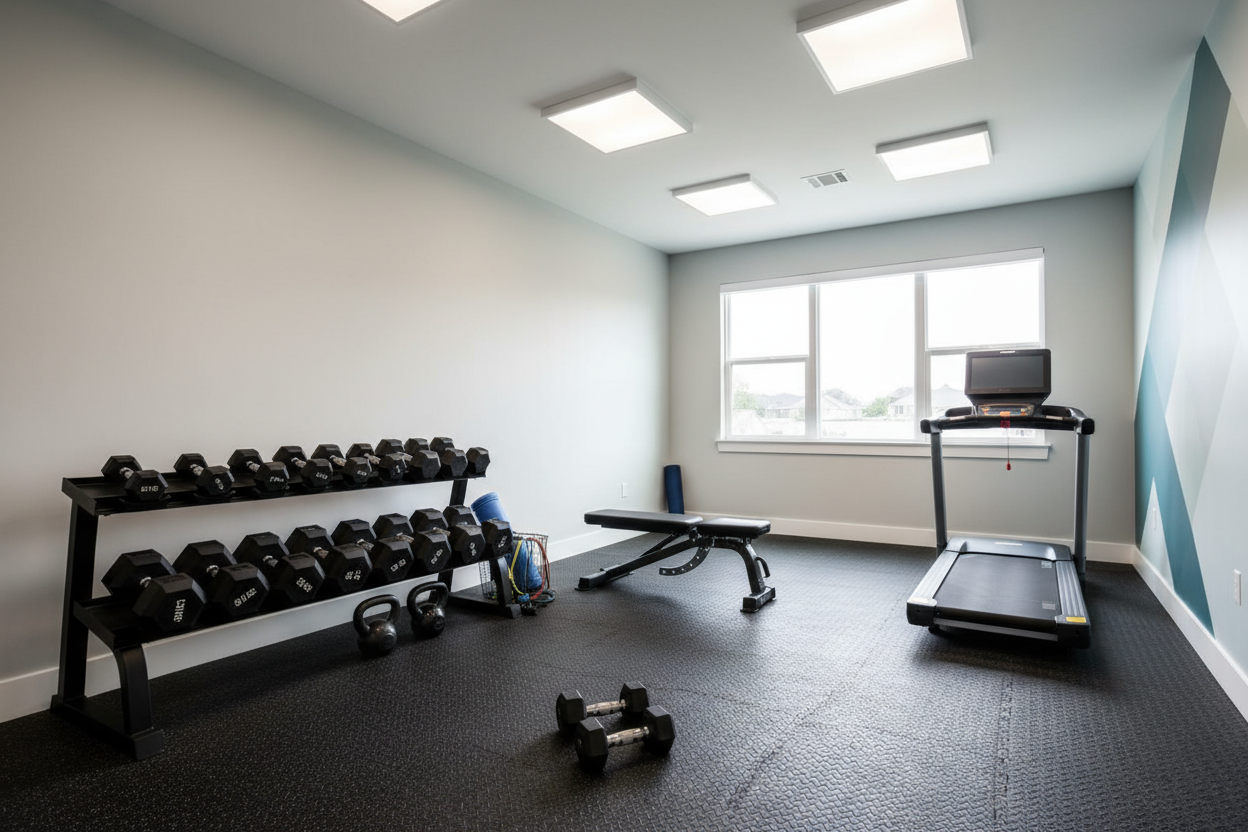
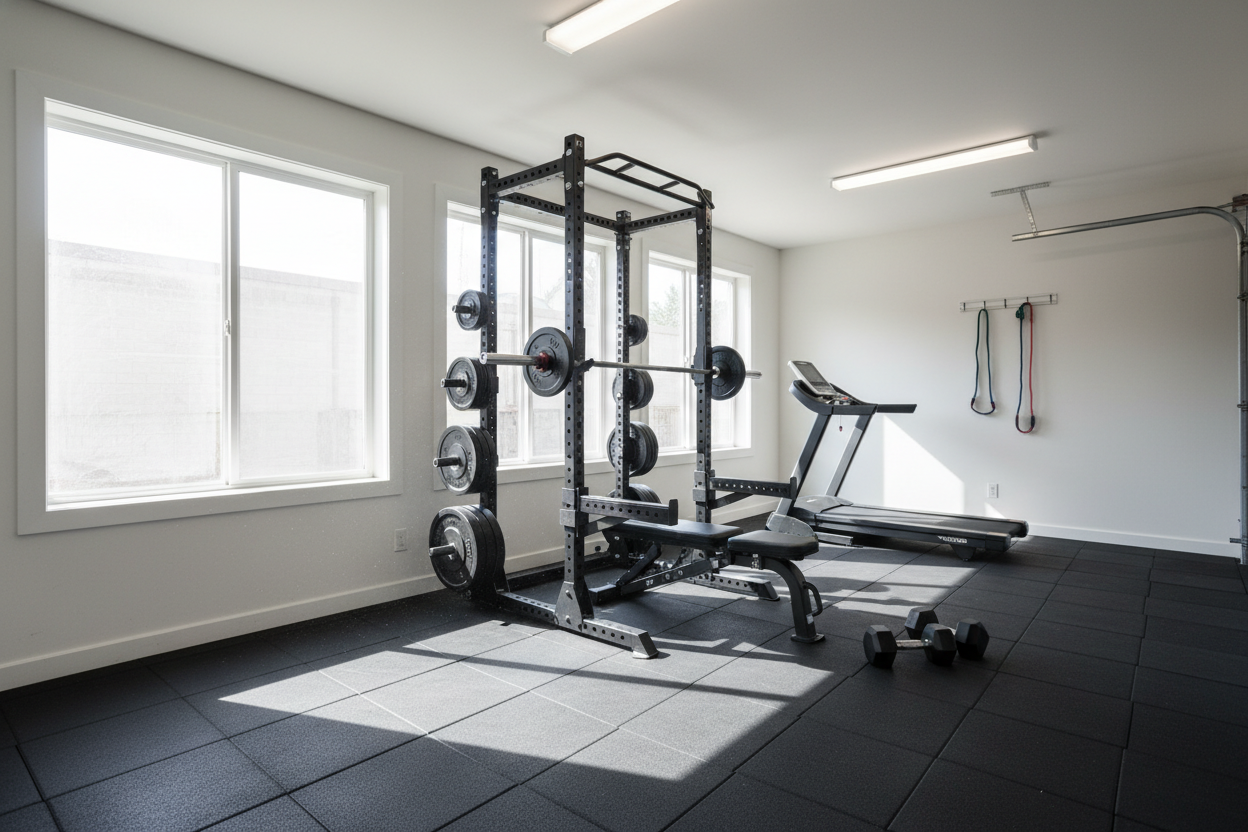
You need a foundation that grips back. I tell everyone building a home setup that the best large exercise mat isn't a luxury; it’s a safety requirement. You need high-density rubber that doesn't compress or slide when you're driving 200+ pounds into the floor. A squishy yoga mat is the enemy of mass gain exercises.
If you have a dedicated space, look into professional-grade gym flooring for home workout setups. A 6x8 ft mat gives you enough room to move from RDLs to lunges without stepping off into the 'danger zone' of slick concrete or carpet. When you know your feet are locked in, you can focus entirely on the muscle stretch rather than trying not to fall over. That mental focus is key to most effective exercises to gain muscle.
Putting It Together: A Sample Stretch-Focused Routine
You don't need a 20-exercise circuit to get big. You need to pick the best lifts to gain muscle mass and execute them with terrifying precision. Here is a simple 4-day split I’ve used to break through plateaus. Every movement here prioritizes the lengthened state.
- Day 1: Lower (Quads Focus) - Heel-Elevated Goblet Squats (4x12, 2-sec pause at bottom), Walking Lunges (3x20 steps), Leg Extensions (3x15 with slow eccentric).
- Day 2: Upper (Push Focus) - Deficit Pushups (4xMax), Incline Dumbbell Press (3x10, deep stretch), Overhead Tricep Extensions (3x15).
- Day 3: Lower (Hams Focus) - Romanian Deadlifts (4x8, slow descent), Leg Curls (3x12), Weighted Calf Raises (4x15, 3-sec stretch).
- Day 4: Upper (Pull Focus) - One-Arm Rows with Reach (4x10), Weighted Pullups or Lat Pulldowns (3x8, full hang), Incline Bicep Curls (3x12).
Personal Experience: The Deficit Disaster
I once tried to get 'innovative' with my deficit pushups by stacking two piles of old encyclopedias. I was about 10 reps in, really feeling that deep stretch, when the 'G' volume of the Britannica slid out from under me. I face-planted directly into the hardwood floor. Aside from a bruised ego and a bloody nose, I learned that stability is the most efficient muscle building exercises' best friend. Now, I use actual blocks and a non-slip mat. Don't be cheap with your foundation; the best muscle building lifts require a solid ground to push against.
FAQ
What is the best exercise to build muscle?
There isn't just one, but the best exercises for muscle mass are those that allow for a full range of motion and a deep stretch under load. Think RDLs, deep squats, and deficit pushups.
How do I know if I'm stretching too far?
You should feel a strong pull in the muscle belly, not the joint. If you feel sharp pain in your shoulders or knees, back off. The goal is a deep muscle stretch, not joint hyperextension.
Can I gain muscle with just bodyweight exercises?
Yes, but you have to get creative. Use deficits (like putting your feet or hands on chairs) to increase the range of motion. This makes the muscle work harder in that lengthened state, which is the best exercise to build mass when you don't have heavy weights.