Stop Trying to Build a Commercial Body Parts Gym in Your Garage
I remember the night I almost pulled the trigger on a used, commercial-grade leg press. It was a beast—400 pounds of steel, plate-loaded, and priced at a 'steal' of $800. I had the tape measure out in my garage, trying to convince myself that if I moved the water heater and never parked my car inside again, it would fit. I was obsessed with recreating that big-box body parts gym feel. I thought I needed a specific station for every muscle to see real results. I was wrong, and if you're heading down that path, you're about to waste a lot of money and even more floor space.
Quick Takeaways
- Commercial gyms use isolation machines for crowd control and safety, not because they are the most effective tools for your home.
- A single-function machine takes up roughly 15-25 square feet; a power rack takes the same space but does 100 more things.
- Focusing on movement patterns (push, pull, hinge) rather than muscle groups builds a more functional physique in less space.
- Prioritize versatile equipment like a 3x3' 11-gauge steel rack and a high-quality barbell over specialized machines.
The Commercial Machine Illusion
Walk into any Lifetime Fitness or Gold's, and you'll see rows of machines dedicated to a single joint. There is a reason for this, and it has nothing to do with 'optimal hypertrophy.' Commercial gyms are designed for throughput. They need a setup where a total novice can walk in, sit down, and move weight without needing a spotter or a 20-minute tutorial on bracing. It keeps the line moving and the insurance premiums low.
When you try to replicate a body parts gym at home, you're adopting a philosophy built for the masses, not for the individual. You don't have 500 members competing for a squat rack. You have yourself. In a garage, every square foot is prime real estate. Filling it with a machine that only works your mid-range pectoral fibers is like buying a specialized kitchen appliance that only peels grapes. It’s cool for five minutes, then it just collects dust and gets in the way of the stuff you actually use.
I've spent years testing everything from $5,000 functional trainers to $200 Facebook Marketplace finds. The biggest lesson? The more specific a machine is, the less useful it is for a home lifter. You want tools, not toys. A barbell doesn't care if it's 'leg day' or 'back day'—it’s ready for whatever you throw at it.
Why Buying a Machine for Every Muscle Fails at Home
Let's talk logistics. A standard two-car garage is about 400 square feet. A dedicated leg extension machine, a seated row, and a pec deck will eat up nearly 60 of those feet once you account for the 'working area' around them. That’s nearly 15% of your total space gone for three exercises. If you try to cover all the different gym parts of body with this logic, you'll be out of space before you even buy a set of plates.
Then there’s the budget. A decent selectorized machine—the kind with the weight stack and the smooth cables—starts at $2,000. For that same price, you can buy a top-tier power rack, an Ohio Bar, and 300 lbs of bumper plates. One setup gives you three movements; the other gives you a thousand. This is exactly why workouts by body parts fail home gym lifters. You end up spending your entire budget on 'finishing' movements and leave nothing for the heavy hitters that actually build the foundation.
I’ve seen guys spend $10,000 on a 'complete' machine circuit only to realize they can't do a single pull-up because they didn't leave room for a bar. Or they buy a cheap, bolt-together Smith machine that wobbles the second you put more than two plates on it. Don't be that person. Invest in the core of your training, not the periphery.
Shift to Movement Patterns, Not Muscle Groups
The secret to a killer home setup is changing how you view your training. Stop looking at your reflection and thinking 'I need a bicep machine.' Start thinking about how you move. If you organize your gym around pushes, pulls, hinges, and squats, the equipment choices become obvious. You don't need a chest press machine; you need a bench and a rack. You don't need a leg press; you need a barbell and the grit to do Bulgarian split squats.
When you make this shift, you'll start seeing the benefits of full body workout plans. Instead of spending 90 minutes hitting 'shoulders' from seven different angles, you can do a heavy overhead press, some chin-ups, and a squat variation. You get more bang for your buck, both in terms of time and metabolic demand. Your garage stops being a collection of 'body parts' stations and starts being a performance center.
I used to follow a strict five-day 'bro split.' I had a chest day, a back day, a shoulder day... you know the drill. When I moved into my first garage gym, I realized I couldn't fit the gear to maintain that. I switched to a three-day full-body split using just a rack and some dumbbells. My strength exploded. Why? Because I was hitting the big compound movements more frequently instead of waiting a full week to touch a muscle group again.
The Only Three Zones You Actually Need
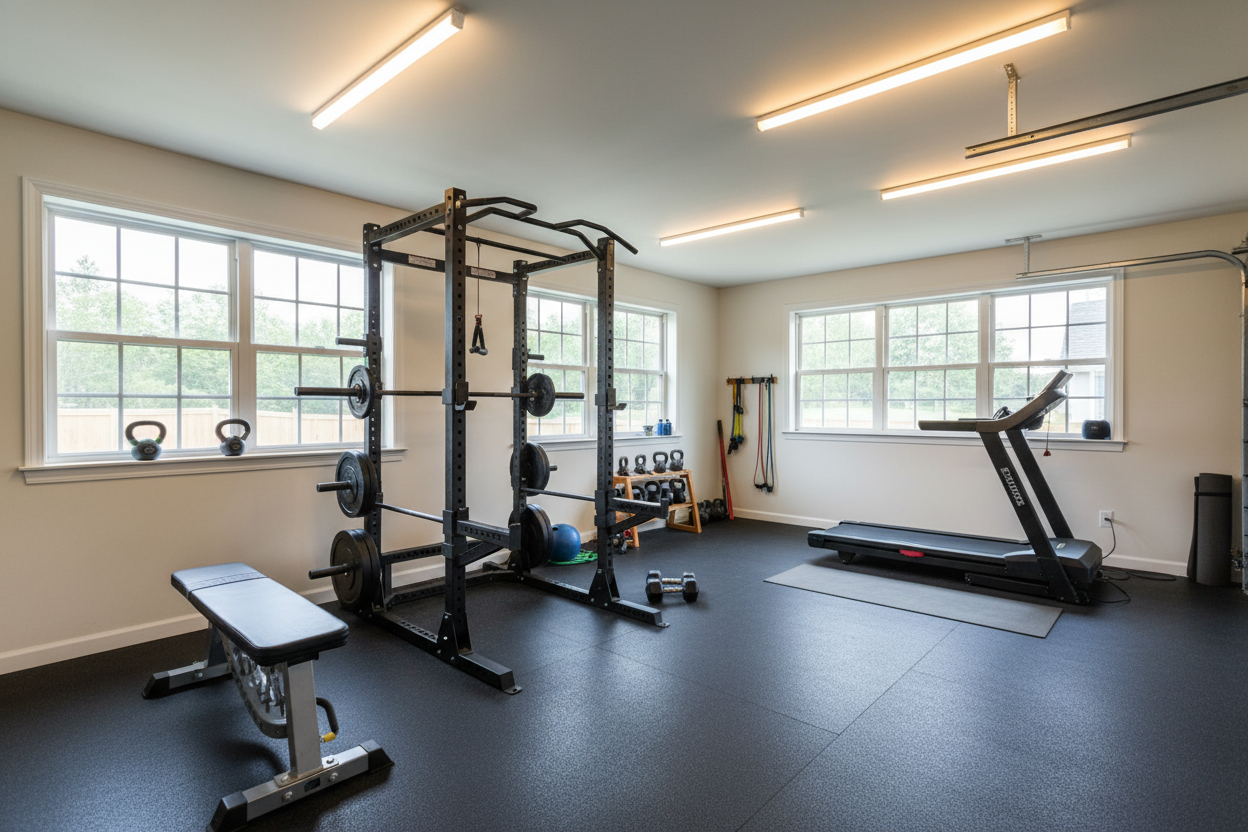
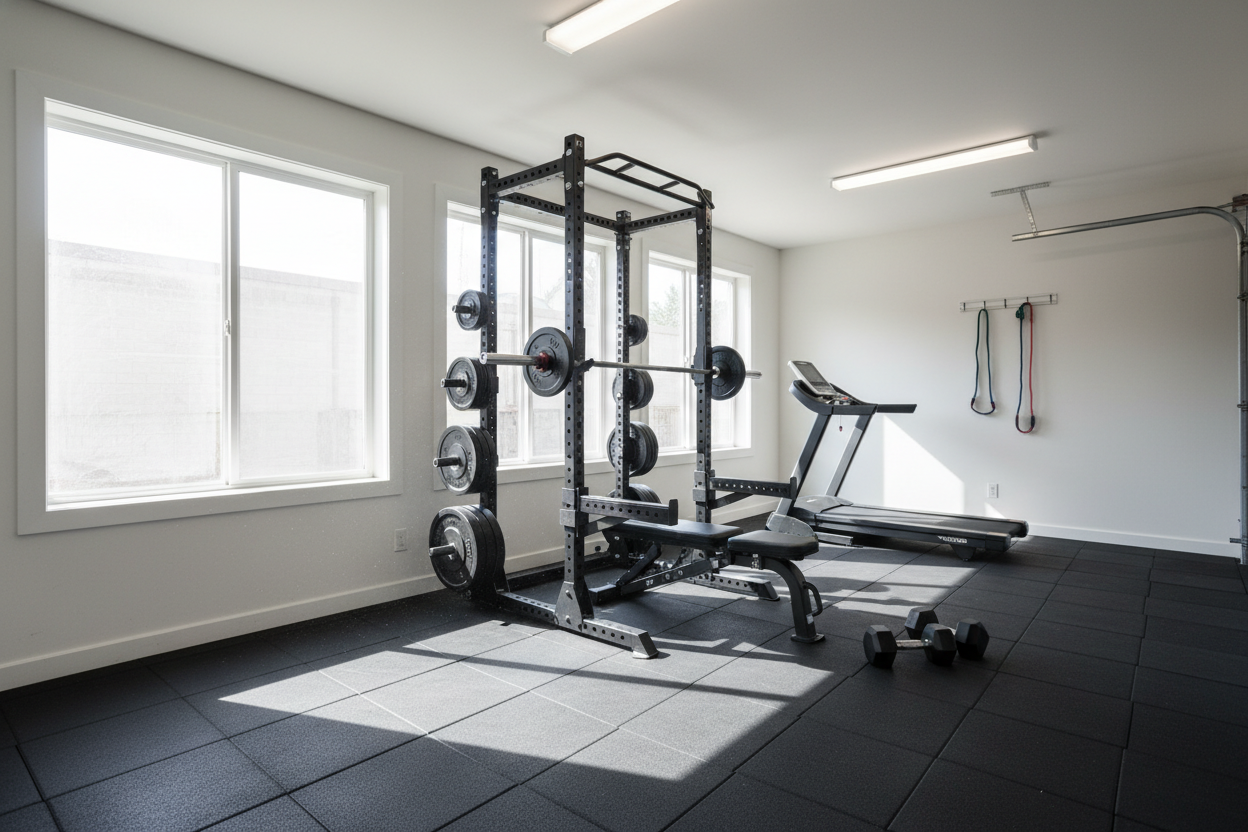
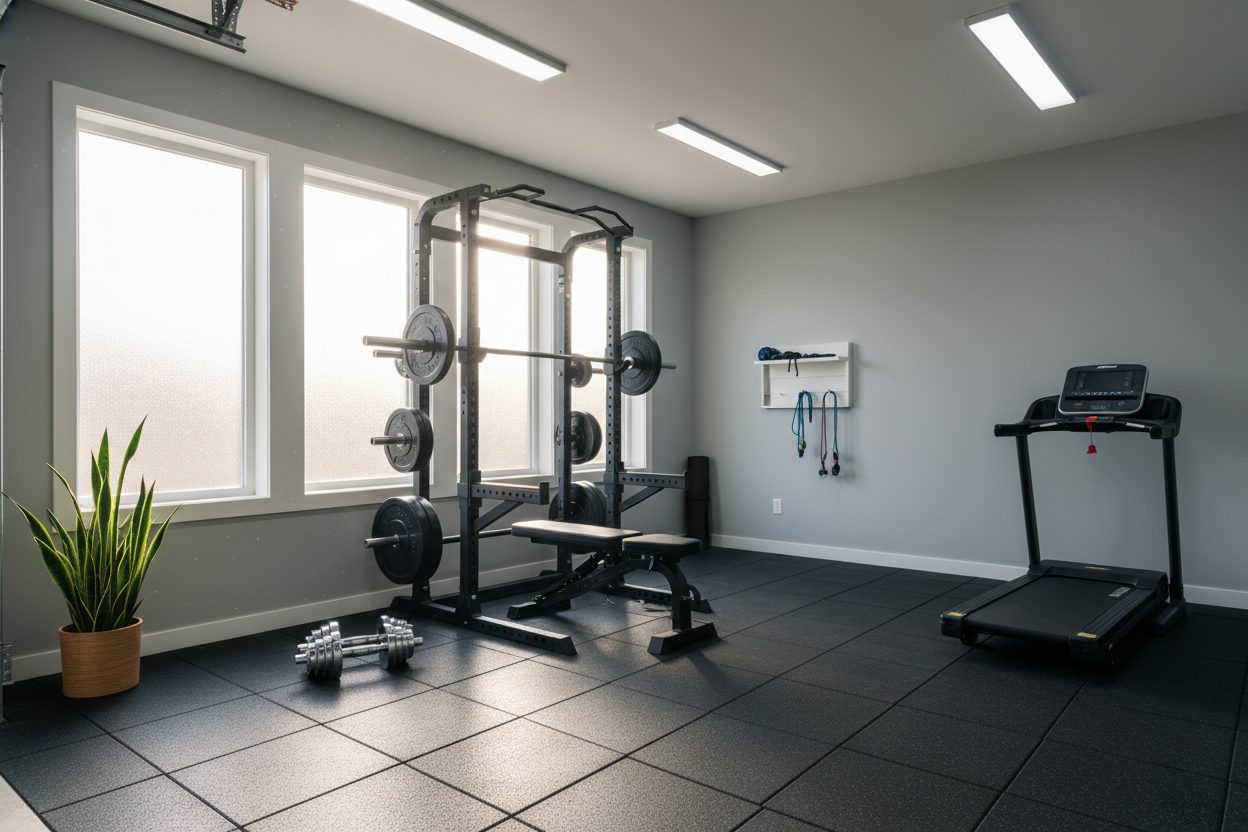
If you want a gym that actually works, divide your space into these three zones. First, the Power Rack Zone. This is your anchor. Get a rack with 3x3-inch uprights and 11-gauge steel. It should have a pull-up bar and safety spotters. This is where you squat, press, and rack your bar for rows. It takes up a 4x4 foot footprint but is the most valuable real estate you own.
Second, the Dumbbell and Bench Zone. A good set of adjustables (like Ironmasters or PowerBlocks) saves an entire wall of space. Pair them with an adjustable bench that goes from decline to 90 degrees. This covers all your unilateral work and your 'accessory' movements without needing a dozen different machines.
Third, the Open Floor Zone. This is the most underrated part of a home gym. You need a dedicated 6x8ft exercise mat to serve as your utility space. This is where you do your deadlifts, your kettlebell swings, your core work, and your mobility. If you cram your garage full of machines, you lose this space, and suddenly you're doing lunges in the driveway because there's no room to move inside.
Free Weights Expose Your Weak Links
The problem with the body parts gym approach is that machines do the hard work of stabilizing for you. When you're locked into a fixed path on a chest press machine, your rotator cuff and serratus anterior are basically taking a nap. When you move to free weights, those small stabilizer muscles have to fire to keep the weight from crashing into your face. This builds a more resilient, athletic body that doesn't fall apart the moment you have to lift something in the real world.
Ditching the machines also forces you to master your own body weight. Instead of a lat pulldown, do a pull-up. Instead of a leg extension, do a sissy squat. You’ll find that these 'simple' movements are often much harder and more effective than the seated versions. To do this safely, make sure you have a large exercise mat for home gym use. It provides the grip you need for heavy floor presses and protects your subfloor when you’re grinding out those final reps of a heavy dumbbell circuit.
A minimalist setup isn't about doing less; it's about doing more with the right tools. It builds a physique that isn't just for show, but one that is actually capable of moving heavy loads through space. Stop buying machines that solve problems you don't have. Buy iron, buy a solid floor, and get to work.
My Honest Mistake: The Smith Machine Incident
I once found a 'deal' on a commercial Smith machine for $300. I thought it would be the ultimate addition to my body parts gym. I spent four hours disassembling it, hauled it home in two truck loads, and spent another six hours putting it together. It took up nearly a third of my gym. Within a month, I realized I hated it. The fixed path felt unnatural for my shoulders, and the bar itself had a weird 15-pound starting weight that messed with my tracking. It became a very expensive coat rack for six months before I practically begged someone to come take it away for free. Don't let 'deals' on single-use equipment distract you from building a versatile space.
FAQ
Is isolation training completely useless for home lifters?
Not at all. It’s just about efficiency. You can do isolation work (like curls or lateral raises) with dumbbells or resistance bands that take up zero extra floor space. You don't need a 200-lb machine to isolate a 15-lb muscle.
What if I really love the leg press?
If you have the space and the cash, go for it. But make it the *last* thing you buy, not the first. Ensure your rack, bar, and plates are top-tier before you start adding luxury items that only do one thing.
How do I hit my hamstrings without a leg curl machine?
RDLs (Romanian Deadlifts) are the king of hamstring builders. If you want that 'curl' sensation, get a $20 furniture slider or use a towel on a smooth floor for bodyweight leg curls. It’ll burn more than any machine ever could.