The core exercises for upper body That Actually Fixed My Bench
I remember the exact moment my bench press plateaued at 225 lbs. I’d spend weeks hammering my triceps and shoulders, yet every time I unracked the bar, I felt like I was balancing on a marshmallow. It wasn't my chest failing; it was my midsection turning into a wet noodle under the load. If you want to move serious weight in your garage, you have to stop treating core exercises for upper body as a 10-minute afterthought.
Quick Takeaways
- A weak core creates 'energy leaks' that kill your overhead and bench press power.
- Integrated movements outperform isolation crunches for real-world strength.
- High-traction flooring is non-negotiable for heavy plank-based rows.
- Programming core work into your main lifts saves time and builds better bracing habits.
Why Your Midsection Is Leaking Pressing Power
Think of your body as a crane. If the base is made of sand, it doesn't matter how strong the cable is—the whole thing is tipping over. When you use a lower body strength machine, the frame provides the stability for you. But when you're standing in your gym trying to overhead press a pair of 50-lb dumbbells, your spine is the only frame you've got. If your core isn't locked, you're bleeding the very power your shoulders are trying to generate.
This 'force transfer' is why most people fail their PRs. You’ll see a lifter's back arch or their hips wiggle during a heavy row. That’s a core upper body workout failing in real-time. By mastering exercises for core and upper body that demand total rigidity, you turn your torso into a solid pillar of granite, allowing every ounce of force to go directly into the bar.
The Problem With Saving 'Abs' for the End of Your Workout
Tossing 50 lazy crunches at the tail-end of your session does zero for your pressing strength. Your abs don't work in isolation when you're actually training; they work as stabilizers. An effective upper body and core workout should involve movements where the midsection works dynamically with the arms and back. If you aren't bracing your trunk while moving a weight, you aren't building the type of core upper body exercises that translate to a bigger total.
My Go-To core exercises for upper body Strength
I’ve spent years testing which upper body and core exercises actually move the needle. We aren't looking for 'burn'; we're looking for tension. These movements fuse your lats, chest, and abdominals into one cohesive unit, making you feel twice as heavy on the platform.
The Renegade Row (Anti-Rotation Pulling)
This is the gold standard for an upper body core workout gym session. You get into a plank position with a pair of hex dumbbells—don't use round ones unless you enjoy visiting the ER for a broken wrist. As you row one weight to your hip, your entire midsection has to fight to keep your hips from rotating. It is a brutal upper body and core workout with dumbbells that punishes anyone with a weak transverse abdominis. If you can do this with 50s without your hips shifting an inch, you’re ready for a massive row PR.
Hollow Body Dumbbell Floor Press (Anterior Core Tension)
Most people lean on the bench for support. I prefer the floor. By adopting a hollow body position—legs hovering six inches off the ground, lower back pressed into the floor—and performing a press, you create a workout for upper body and abs that is physically impossible to 'cheat.' This upper body and ab workout forces the anterior core to stay under extreme tension just to keep you from rolling over. It’s the ultimate upper body ab workout for anyone who feels their back arching during heavy bench sets.
Stop Slipping: Why Your Floor Dictates Your Core Tension
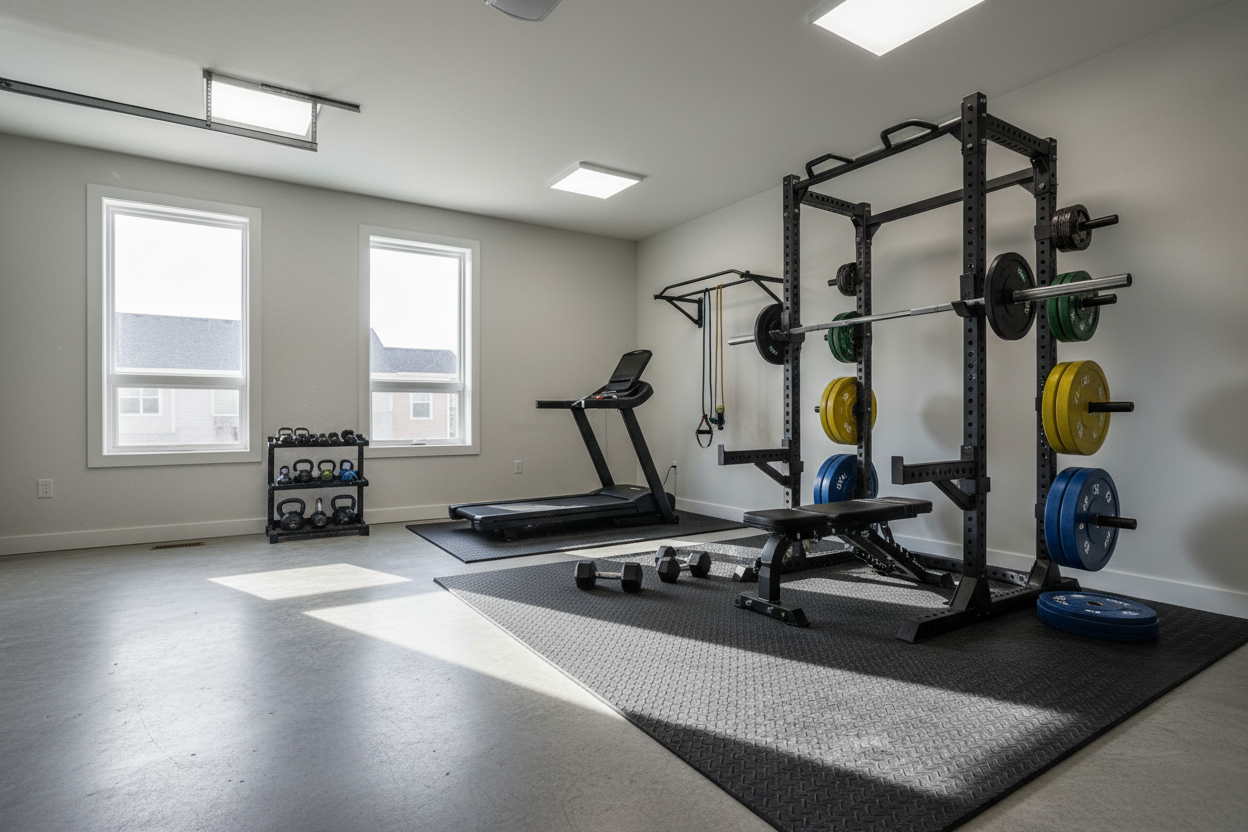
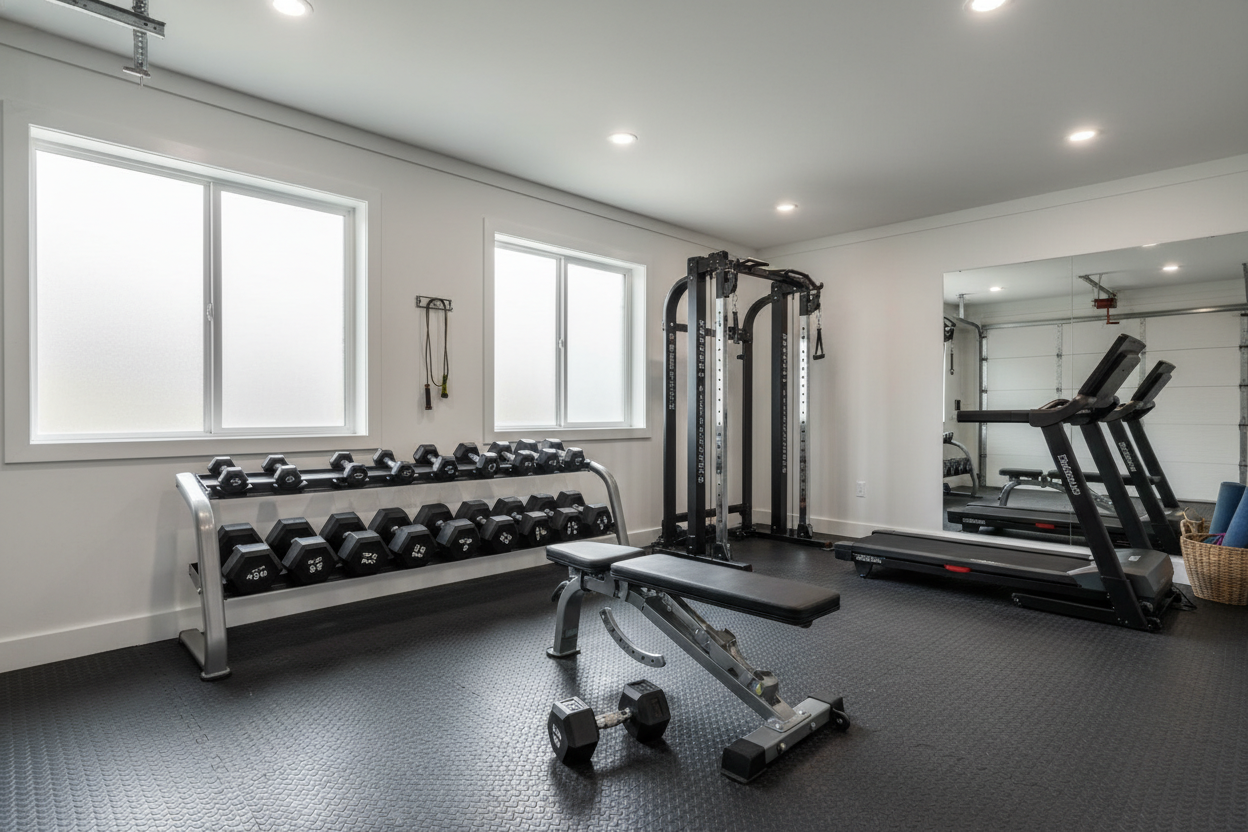
Here is a gear reality check: you cannot perform high-level upper body abs exercises if your feet are sliding. I once tried heavy renegade rows on bare garage concrete and nearly face-planted when my back foot slipped out. You need high-traction gym flooring for home workout to create a stable anchor point. If your toes aren't dug into a grippy surface, you’ll spend more energy trying not to fall than you will building an upper body and core workout with weights.
How to Program This Routine Without Frying Your Shoulders
Don't just add ten new moves to your plate. Replace one of your standard rows with a renegade row, or swap your last chest accessory for the hollow body floor press. This keeps your at home upper body and core workout efficient. On days when you are absolutely crunched for time and just want to sweat, you can pivot to a high-intensity abs and upper body workout to keep the heart rate up while maintaining that midsection tension.
I usually program these good core and upper body workouts twice a week. One day focuses on the anti-rotation (rows), and the other focuses on anterior stability (presses). This ensures you're hitting the upper body and abs dumbbell workout from every angle without overloading your CNS. Trust me, once you stop leaking power through your stomach, those 'shoulder issues' on your heavy presses usually vanish.
FAQ
Can I do these core upper body exercises every day?
No. These are high-tension movements that tax your central nervous system and your stabilizer muscles. Treat them like your main lifts—give yourself at least 48 hours between sessions to recover.
What weights should I use for an upper body and core workout with dumbbells?
Start much lighter than your standard row or press weight. If you usually row 80s, start with 40s for renegade rows. The goal is zero hip movement, not moving the heaviest bell in the rack.
Is an upper body and core workout at home as effective as the gym?
Absolutely. As long as you have a pair of dumbbells and a non-slip floor, you have everything you need to build a bulletproof midsection and a massive upper body.