The Best Machine Only Workout Program for Beginners Is Dead Simple
I remember my first time walking into a commercial gym. I stared at the squat rack like it was a complex physics equation I was destined to fail, eventually retreating to the cardio section just to look busy. The reality is that the free weight area can be a toxic mix of ego and bad form. If you want to skip the anxiety and actually build muscle, a machine only workout program for beginners is the smartest move you can make.
You don't need to balance a 45-pound bar on your neck to get strong. You need mechanical tension and consistency. Machines provide a fixed path of motion, which means you can focus entirely on pushing your muscles to failure without worrying about a heavy bar crushing your windpipe or your ego.
- Safety First: No spotter required for heavy sets.
- Faster Workouts: Switching pins is quicker than loading plates.
- Better Isolation: Direct tension on the target muscle group.
- Predictable Progress: Easy to track exactly how much weight you added.
Why Free Weights Aren't Mandatory on Day One
There is a weird elitism in the fitness world that says if you aren't doing the 'Big Three' lifts—squat, bench, and deadlift—you aren't really training. I’ve spent fifteen years under various bars, and I’m telling you that’s garbage advice for a novice. A gym machine workout routine for muscle building allows you to master the mind-muscle connection without the steep learning curve of technical barbell movements.
When you use a chest press machine instead of a barbell bench press, your nervous system doesn't have to worry about stabilizing the load. It can focus 100% of its output on the pectoral fibers. For a beginner, this neuromuscular adaptation is gold. You’ll see strength jumps every single week because you aren't fighting the balance; you're just fighting the weight. Plus, your joints will thank you. Machines are designed to keep you in a specific plane of motion, which significantly reduces the risk of the 'beginner tweaks' that happen when your form breaks down under a free weight.
Dialing In Your Machine Workout Schedule
The biggest mistake beginners make isn't the exercises they choose; it's the frequency. They try to go six days a week, burn out by Tuesday of week three, and quit. Your machine workout schedule should be built around recovery. For most people starting out, three non-consecutive days (like Monday, Wednesday, Friday) is the sweet spot.
This 3 day machine workout routine gives your central nervous system 48 hours to recover between sessions. You should aim for about 60 to 90 minutes per session, including a quick warm-up. Keep your rest periods between 60 and 90 seconds. If you can talk comfortably, you haven't waited long enough; if you're still gasping, wait a bit longer. Consistency beats complexity every time. If you can stick to this for 12 weeks, you'll see more progress than the guy who does a 'hardcore' routine for two weeks and then disappears.
The 3 Day Machine Workout Routine
This is a full-body approach. We aren't doing a 'bro-split' where you hit chest once a week. We want to hit every major muscle group three times a week to maximize protein synthesis. This equipment workout routine uses standard selectorized machines you’ll find in any Planet Fitness, Gold’s, or local rec center. We are looking for 3 sets of 8 to 12 reps for every movement. If you can do 12 reps with perfect form, it is time to move the pin down one slot.
Day 1: Chest, Quads, and Triceps
Start with the Seated Chest Press. Sit tall, keep your shoulder blades pinned back, and drive through your palms. Next, hit the Leg Extension. Don't just kick the weight up; control the descent to feel the burn in your quads. Finish with Triceps Pushdowns using the cable machine. I prefer the rope attachment because it allows you to pull the ends apart at the bottom for a better contraction. Focus on keeping your elbows glued to your ribs; don't let them flare out like you're trying to fly away.
Day 2: Back, Hamstrings, and Biceps
We’re hitting the posterior chain today. Start with the Lat Pulldown. Think about pulling with your elbows, not your hands. If you feel it in your forearms, you're gripping too tight. Move to the Seated Cable Row to build thickness in the middle of your back. For legs, use the Lying or Seated Leg Curl. This is essential for knee health. End with Machine Bicep Curls. Keep your wrists straight and squeeze at the top. This isn't about swinging the weight; it's about making the muscle work through the full range.
Day 3: Shoulders, Glutes, and Core
The Seated Shoulder Press is your primary mover here. Be careful not to arch your back too much—keep your core tight against the pad. Follow this with the Leg Press, placing your feet high on the platform to engage the glutes and hamstrings. For the 'vanity' muscles, use the Lateral Raise machine to get that shoulder width. Finish the week with Cable Crunches. Kneel down, hold the rope behind your head, and crunch your elbows toward your knees. This beats standard sit-ups any day of the week for abdominal thickness.
What if You Train in a Garage?
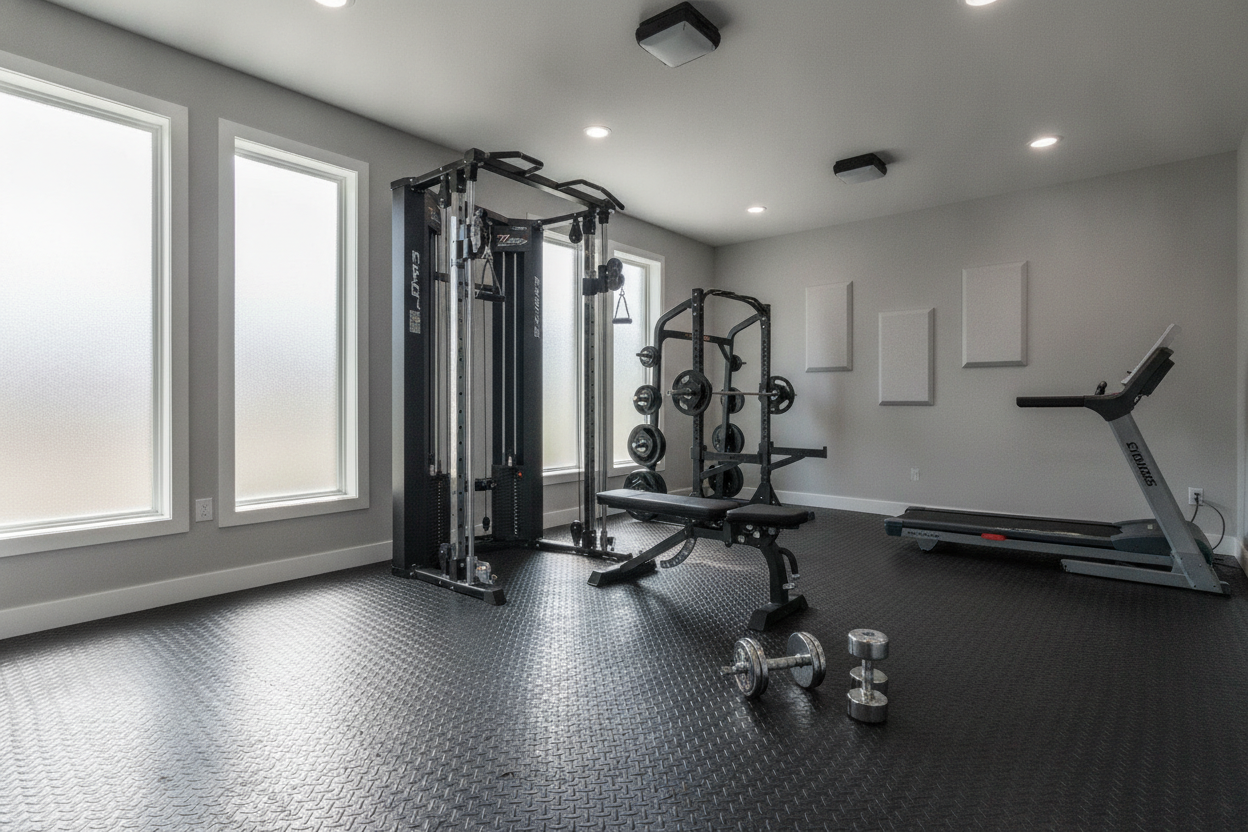
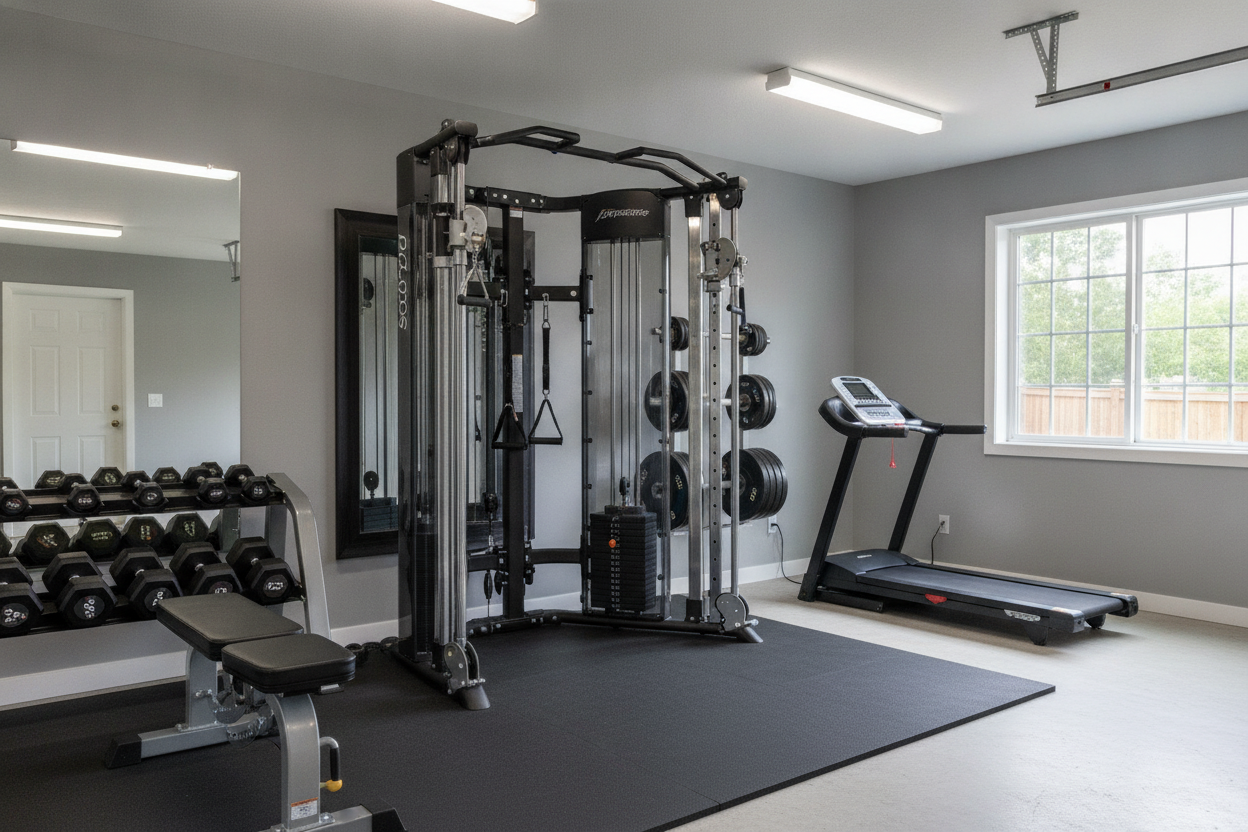
If you aren't heading to a commercial gym, you can still run a killer home weight machine workout. The challenge is space. You don't need a dozen different machines; a single high-quality functional trainer or a well-built multi-gym can cover 90% of these movements. I've seen people waste thousands on cheap, shaky home gyms that feel like they're going to tip over if you pull more than 50 pounds.
When you're shopping, look at the pulley ratio and the weight stack. A 2:1 ratio means 100 pounds feels like 50, which is great for isolation but might be too light for leg presses. You should check out my advice on How to Actually Pick the Best Home Workout Machine for Your Space before you drop your hard-earned cash on a piece of equipment that ends up being an expensive clothes rack. A solid cable crossover or a Smith machine can be the centerpiece of your home setup, allowing you to mimic almost every commercial machine movement safely.
Graduating to a Push Pull Legs Machine Only Split
After about three months, your body will adapt. The 'newbie gains' will start to taper off, and you might find that hitting your whole body in one session leaves you too exhausted to finish your last few exercises with intensity. This is when you transition to a push pull legs machine only split. This increases your weekly volume by dedicating entire days to specific movement patterns.
In a PPL split, Day 1 is 'Push' (Chest, Shoulders, Triceps), Day 2 is 'Pull' (Back, Biceps, Rear Delts), and Day 3 is 'Legs'. This allows you to perform 3 or 4 exercises per muscle group rather than just one. As you move into this more advanced territory, you’ll realize that the quality of the machine matters more. Cheap pulleys start to drag, and cheap frames start to flex. I wrote about My Brutal Search for the Best Full Body Workout Machine for Home because I was tired of equipment that couldn't handle heavy progression. If you’re going to get serious about a machine-based physique, you need gear that feels smooth even when the stack is bottomed out.
When Is It Time to Grab a Dumbbell?
You don't ever *have* to use free weights, but most people eventually want to. I usually recommend sticking to this machine program for at least 8 to 12 weeks. You’ll know you’re ready when you have a solid base of strength—for example, being able to chest press your own body weight on the machine or leg pressing double your weight. At that point, your connective tissue is ready for the added challenge of stabilizing a dumbbell.
Start small. Swap one machine exercise for a dumbbell equivalent each week. Maybe replace the machine shoulder press with a seated dumbbell press. The transition will be much smoother because you’ve already built the raw power; now you’re just teaching your body how to balance it. Just don't let the 'barbell bros' shame you. Some of the biggest guys I know built their foundations on selectorized stacks.
FAQs
Can I build muscle using only machines?
Absolutely. Your muscles don't have eyes; they only respond to tension. If you provide enough resistance and eat enough protein, you will grow. Many professional bodybuilders use machines for the bulk of their training because they allow for better isolation and safety.
How long should I stay on this beginner program?
Run it as long as you are seeing progress. If you are adding weight or reps every week, don't change a thing. Usually, this lasts 3 to 4 months before you'll want to switch to a more high-volume split like Push-Pull-Legs.
What if my gym doesn't have a specific machine?
Most machines have an alternative. No seated row? Use a T-bar row machine or a single-arm cable row. No leg curl? Try a Romanian deadlift with a light kettlebell or use a cable stack with an ankle cuff. The goal is to hit the same muscle group, not necessarily the exact same brand of machine.