Your Gym's Placards Suck: How to Use Beginner Gym Workout Machines
I remember walking into my first commercial gym and feeling like I was trying to read a blueprint for a spaceship. Those faded, sweat-stained stickers on the side of the beginner gym workout machines are supposed to help, but they mostly just make you look like you're trying to solve a Rubik's cube while everyone else is actually training. I've spent a decade testing everything from $5,000 selectorized stacks to cheap Amazon pulleys, and I can tell you: the instructions on the gear are usually garbage.
Most commercial gear is designed for a hypothetical 'average' human who doesn't actually exist. If you follow those diagrams to the letter, you'll likely end up with a shoulder impingement or a very awkward social encounter with the person waiting for the leg press. You aren't doing it wrong; the machine just wasn't built with your specific limb lengths in mind.
- Ignore the 'suggested weight'—start with the lightest plate to test the range of motion first.
- Your joint should always line up with the machine's pivot point (look for the red or yellow bolt).
- Machines aren't 'cheating'; they are surgical tools for creating mechanical tension.
- Adjusting the seat height is more important than picking the actual weight.
Why Those Little Instruction Stickers Set You Up for Failure
The diagrams on selectorized machines are the fitness equivalent of 'Terms and Conditions'—everyone looks at them, but nobody actually understands the fine print. These stickers are designed by corporate lawyers to prevent lawsuits, not by kinesiologists to help you grow your quads. They show a sanitized, 2D version of a movement that doesn't account for the fact that humans are 3D objects with varying bone lengths.
Workouts using machines often feel 'off' because those drawings assume you have perfectly proportional limbs. If you have long femurs or a short torso, the 'standard' setting will have you pushing from a compromised position. I've seen people try to follow the sticker on a shoulder press and end up starting the movement with their hands behind their ears. That's a recipe for a rotator cuff tear. The stickers focus on the 'what' but completely ignore the 'how,' leaving you to guess how to actually interact with the steel.
The Golden Rule of Seat Height (Aligning Your Joints)
Before you even look at a weight pin, you need to find the 'axis of rotation.' On almost every machine, there is a visible pivot point, usually marked with a bright red or yellow bolt. This is the center of the machine's universe. Your joint—whether it's your elbow for a curl or your knee for an extension—needs to be on that same horizontal plane as that bolt.
Getting the seat height right is the first step before jumping into an actual beginner gym machine workout. If the seat is too low, you're losing leverage and putting unnecessary stress on your tendons. If it's too high, you're cutting the range of motion short and missing out on the stretch. Spend thirty seconds fiddling with the pop-pin; it's the difference between a productive set and a wasted one. I see guys in the gym all the time who are too 'macho' to adjust the seat, so they end up doing half-reps with terrible mechanics just to save face.
The 4 Safest Stations for Your First Day
If you're looking for the best gym machine workouts to build a foundation, stick to the basics. The Leg Press is your bread and butter—it lets you move heavy weight without worrying about a barbell crushing your spine. Keep your feet shoulder-width apart and don't lock your knees at the top. It’s about constant tension, not showing off how many plates you can stack.
Next, hit the Seated Chest Press and the Seated Cable Row. These are essential for any beginner machine workout male or female lifters use to build upper body strength. Finally, find the Lying or Seated Hamstring Curl. These four machines offer massive stability, which allows you to focus entirely on feeling the muscle contract rather than wobbling around like a baby deer. You don't need a 12-machine circuit; you need four machines done with absolute focus.
Stop Chasing 'Tone' on the Inner Thigh Machine
We need to kill the idea of 'toning machine exercises.' You cannot spot-reduce fat from your inner thighs by doing a thousand reps on the adductor machine. If you want to see muscle definition, you need a calorie deficit and a workout routine machines only approach that still focuses on intensity. The machine doesn't care about your goals; it only cares about the resistance you provide.
Doing 30 reps with a weight that feels like a light breeze won't change your physique. You need to pick a weight that makes the last two reps of a 10-12 rep set feel like a genuine struggle. I see people reading magazines while on the abductor machine. If you can read a magazine, you aren't training; you're just sitting down in public. Treat the machine with the same respect you'd give a free weight and push it to the limit.
Taking Your Machine Training Home
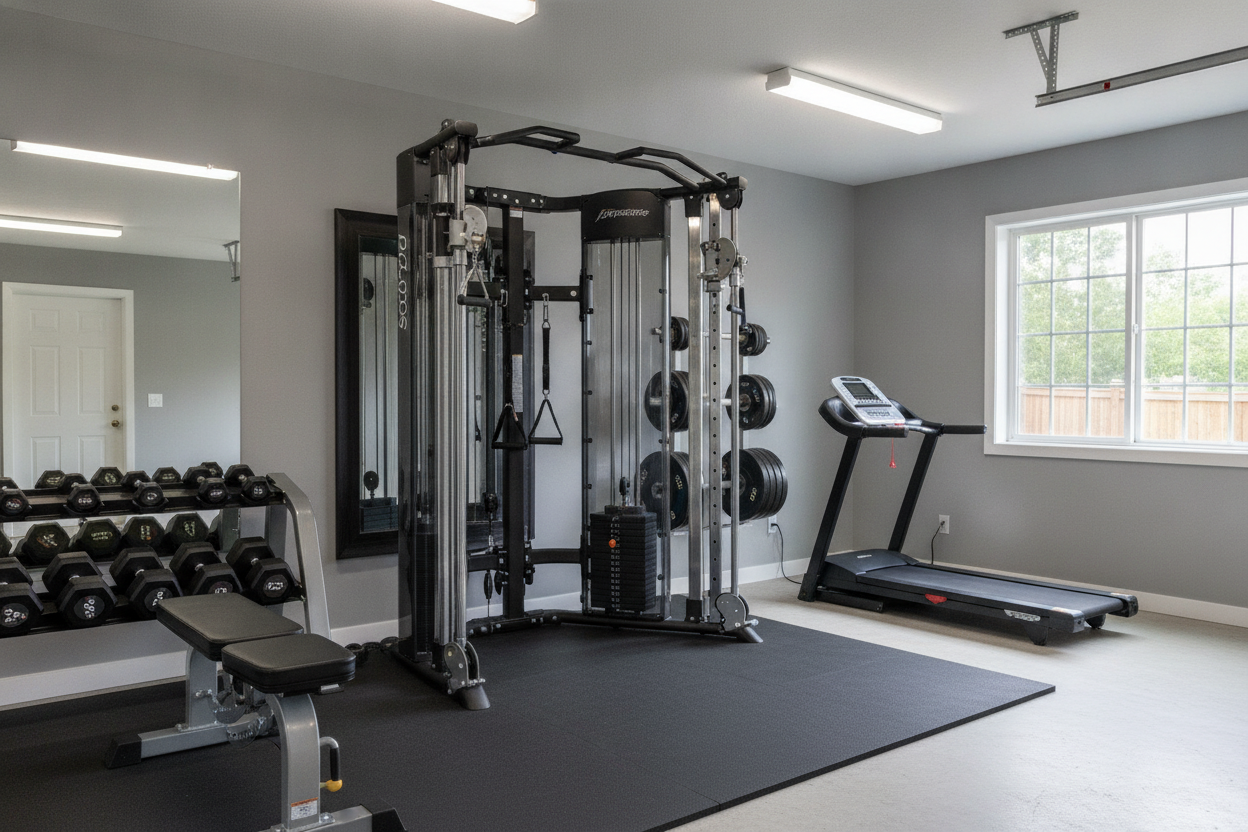
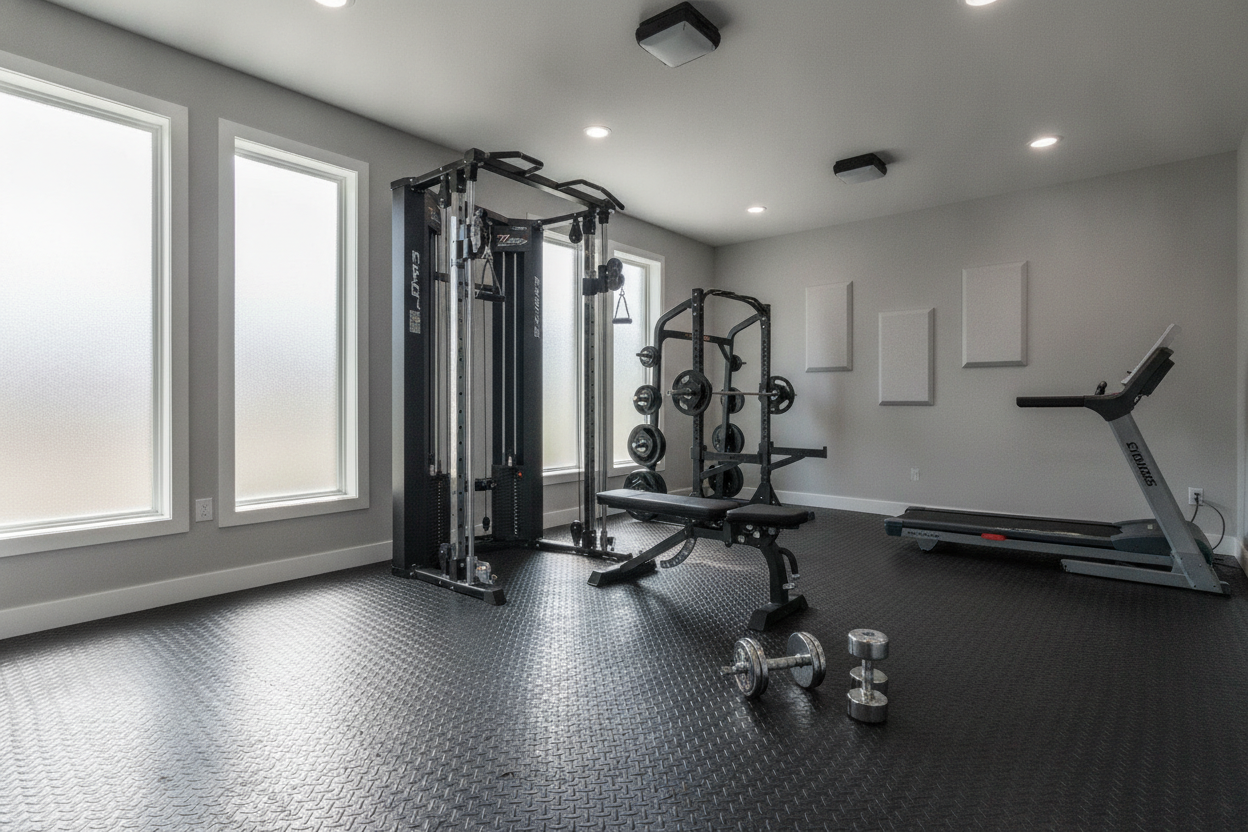
Once you understand how these pivots and pulleys work, you'll realize that home weight machine workouts are actually viable. You don't need a 20-piece circuit in your garage. A solid functional trainer or a high-quality smith machine can replicate almost everything you do at a big-box gym. I've tested home units that have smoother guide rods than the beat-up gear at the local YMCA.
When you're ready to buy gear, look at the pulley ratio and the weight stack increments. A machine that catches or stutters in the middle of a rep is worse than no machine at all. Learning the biomechanical principles in a commercial setting makes it significantly easier to evaluate the weld quality and cable thickness of home equipment. You'll know exactly what a 'good' pulley feels like.
Putting It Together: Surviving the Gym Floor
Walking into the gym with a plan is 90% of the battle. Don't wander around aimlessly looking at the ceiling. Pick your four machines, adjust your seat heights, and get to work. If someone is using a machine you need, just ask 'How many sets do you have left?'—it's the universal gym language for 'I'm next.' Most people are happy to let you work in or tell you they're almost done.
To keep things simple, I recommend bringing a printed gym machine workout routine PDF so you aren't constantly checking your phone and getting distracted. Focus on controlled movements, forget about the placards, and trust what your joints are telling you. A workout routine with equipment should feel challenging, not confusing. You're there to train, not to decode a sticker.
My First-Hand Fail: The Lat Pulldown Trap
Years ago, I thought I was a genius for using the Lat Pulldown machine with a massive 'lean back.' I followed a diagram that showed a guy slightly tilted, so I figured more tilt was better. I ended up pulling with my lower back and wondering why my lats weren't growing. It wasn't until a veteran lifter told me to 'tuck my knees under the pads and stay upright' that I actually felt my back muscles work. I felt like an idiot for weeks, but that's how you learn. Equipment isn't foolproof; you have to be smarter than the steel.
FAQ
Are machines better than free weights for beginners?
They aren't 'better,' but they have a lower barrier to entry. Machines provide a fixed path of motion, which helps you learn how to exert force without needing the balance required for a barbell squat or deadlift. Use them to build the base strength first.
How many days a week should I use machines?
Three days a week is plenty. This gives your central nervous system and muscles time to recover between sessions while still providing enough frequency to see strength gains. Consistency beats intensity every single time.
Should I do cardio before or after using machines?
Do it after. You want your energy levels at their peak when you're moving weight. If you're exhausted from the treadmill, your form on the machines will suffer, and you won't be able to push the intensity needed for real muscle growth.