The Best Fitness Program to Gain Muscle Doesn't Come From an App
I remember scrolling through the App Store at 11 PM, desperate to find the best fitness program to gain muscle that didn't involve a 45-minute commute to a commercial gym. I've bought the $30-a-month 'AI-powered' coaches and downloaded the 50-page PDFs from influencers who have never stepped foot in a garage. Most of it is fluff designed to keep you subscribed, not to get you big.
Quick Takeaways
- Cookie-cutter apps often ignore the equipment limitations of a home gym.
- True muscle building training requires progressive overload, not just 'muscle confusion.'
- Recovery is the most underrated part of any gym workout routine to build muscle.
- Focus on movement patterns (push, pull, squat, hinge) rather than specific machines.
The App Trap: Why Your $30/Month Routine is Failing You
The problem with most digital 'muscle gain exercise routine' templates is that they assume you have access to a $20,000 leg press and a full rack of dumbbells. When the app tells you to do 'Seated Cable Rows' and all you have is a barbell and a bench, you're left guessing. This friction kills your momentum. You spend more time looking at your phone than moving heavy iron.
Furthermore, these programs are often built on 'junk volume.' They want you to feel tired so you think the program is working. But fatigue isn't the same as growth. Paying for a generic PDF won't magically build mass if the volume is so high that your joints give out before your muscles do. A good muscle building workouts plan should be built around what you actually have in your space, not what an influencer uses in their professional studio.
What Actually Makes a Good Workout Routine to Build Muscle?
Hypertrophy—the science of getting bigger—isn't as complicated as the fitness industry wants you to believe. It comes down to three things: mechanical tension, metabolic stress, and muscle damage. You need to pick weights that challenge you within the 6 to 12 rep range and consistently try to beat your past self. If you did 10 reps last week, try for 11 today.
When you're starting a new block, it is often smarter to start with the lightest weights possible. I've seen too many guys try to max out on day one of a new program, only to burn out by week three. You want to leave a little in the tank during the first week so you have somewhere to go. The most effective workout plan to build muscle is the one you can actually finish without needing a nap and a bottle of ibuprofen afterward.
Structuring Your Own Muscle Gain Exercise Routine
Stop looking for the 'perfect' exercise. Instead, look for the perfect movement pattern. Every fitness routines to build muscle should include a squat variation, a hinge (like a deadlift), a horizontal push (bench), a horizontal pull (row), a vertical push (overhead press), and a vertical pull (pull-up). If you hit those, you're 90% of the way there.
Selecting Your Main Movers and Accessories
Choose your 'Main Movers' based on what feels right for your body. If back squats hurt your knees, try Bulgarian split squats. I personally found that my stability improved significantly when I started lifting barefoot on my home gym floor. It allowed me to grip the ground and generate more force during heavy deadlifts. Once your main heavy lifts are done, add 1-2 accessory movements like curls or lateral raises to round things out.
Dialing in the Volume Without Frying Your CNS
Natural lifters don't need 25 sets per body part. In my experience, 10 to 12 hard sets per muscle group per week is the sweet spot. If you're doing more than that, you're likely just going through the motions. A daily workout for muscle gain should feel intense but shouldn't leave you feeling like you've been hit by a truck every single morning. Quality over quantity always wins in a garage gym setting.
Does Your Home Setup Dictate Your Results?
You don't need a commercial gym to get huge, but you do need a stable environment. I once tried to do a gym workout for building muscle on a slippery garage floor with just a yoga mat. It was a disaster. I couldn't get any traction, and my feet kept sliding during bench presses. It felt dangerous and limited how much weight I could move.
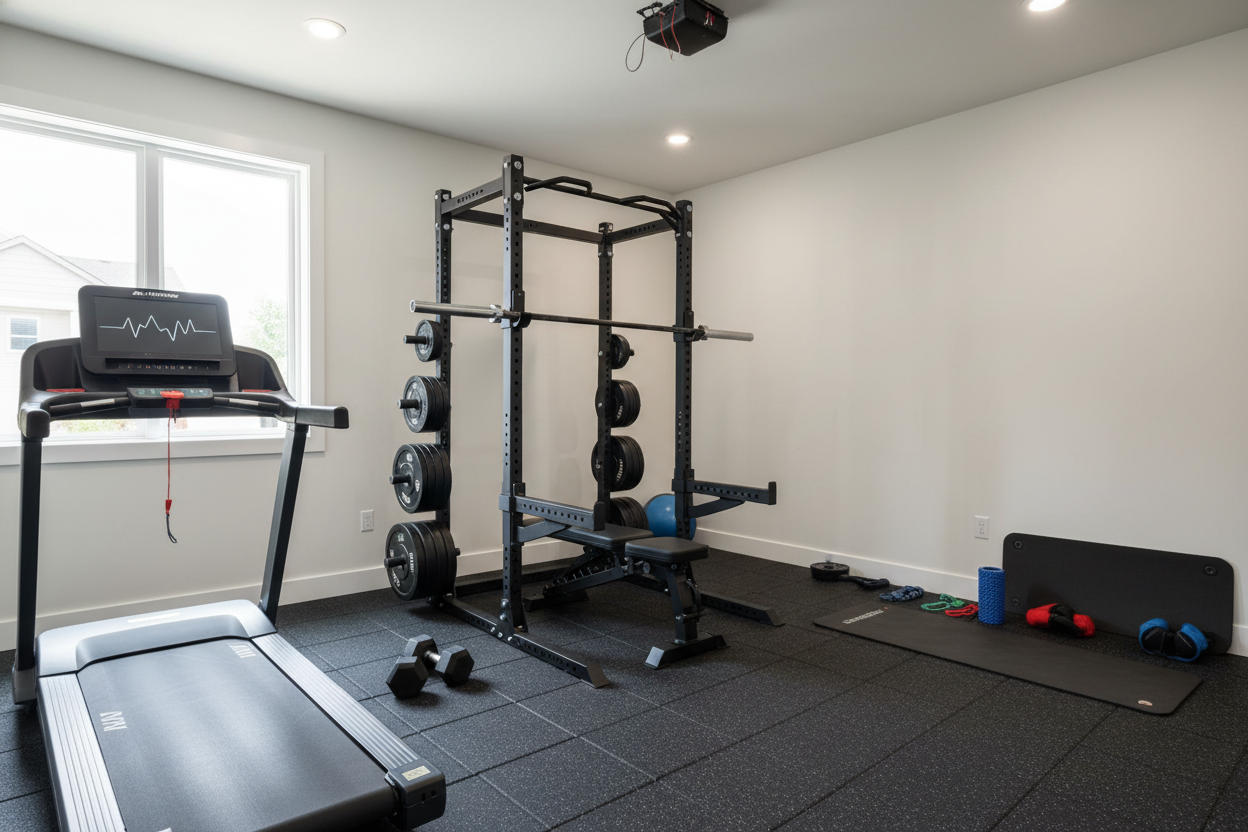
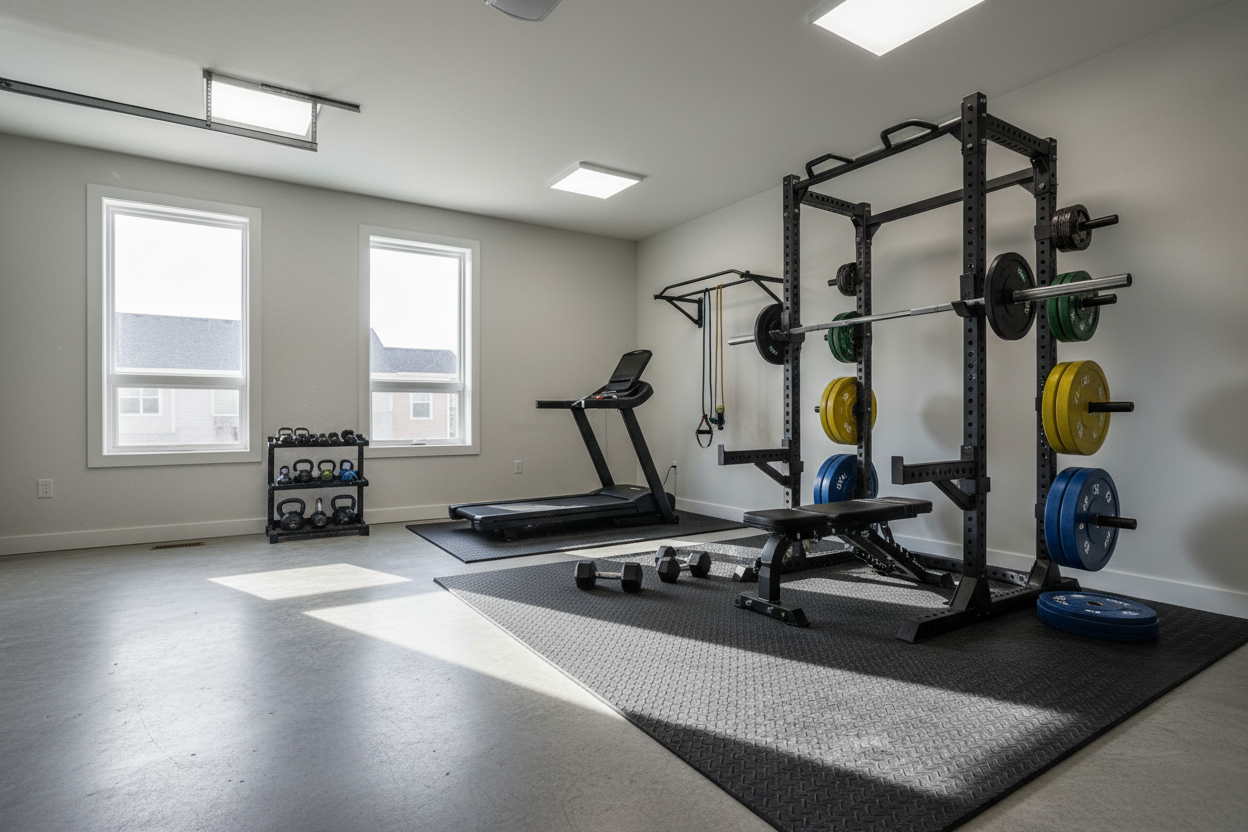
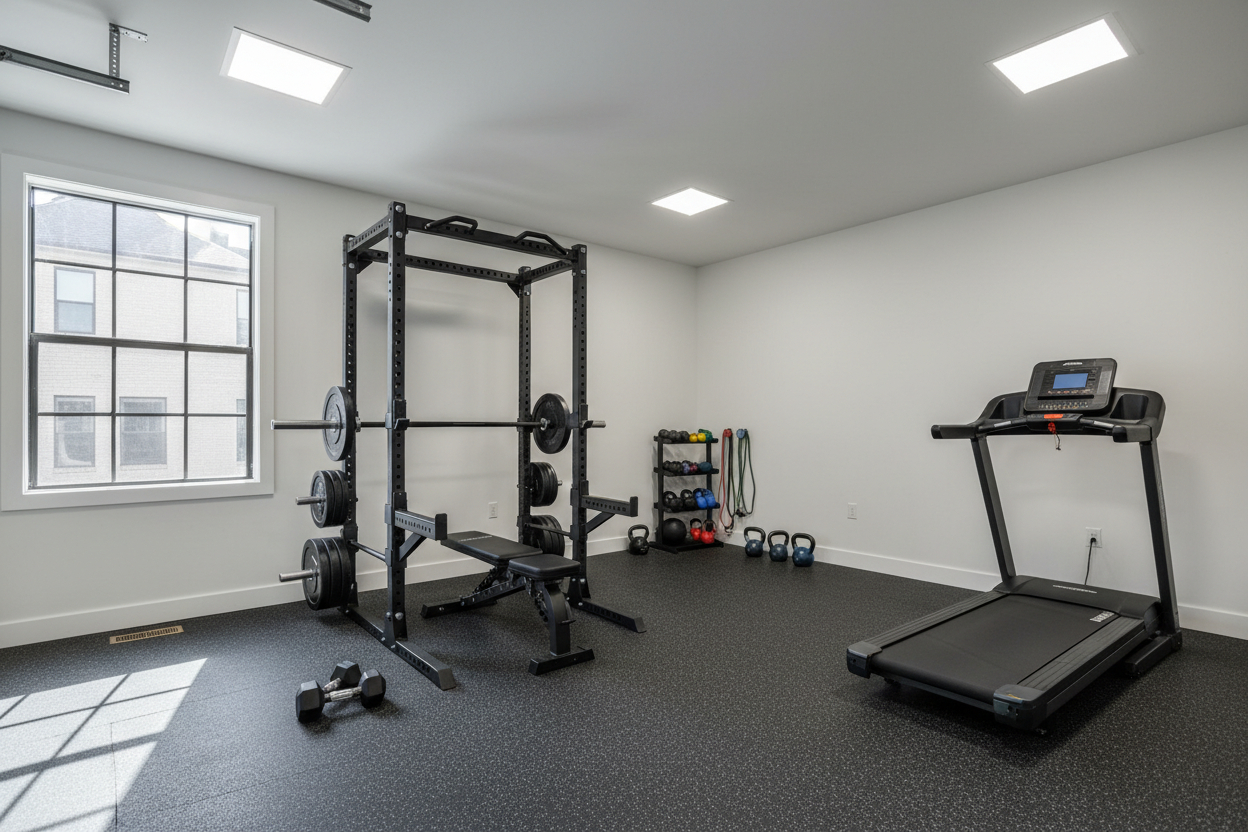
Investing in a large home gym mat was one of the best moves I made for my training. Having a dedicated, high-traction surface meant I could finally push my squats to failure without the rack shifting or my feet sliding. When you feel stable, you can focus entirely on the muscle contraction rather than trying not to fall over.
The Reality Check on Muscle Building Training
The best workout routine to gain muscle is the one you stay on for more than a month. Most people jump ship the moment they don't see a visible change in the mirror. Muscle takes time. You need to eat in a slight surplus, sleep 8 hours, and follow the same boring movements for at least 12 weeks. If you need more inspiration for movement substitutions, explore our workout hub for ideas that work with basic equipment.
FAQ
How many days a week should I train to build muscle?
For most people, 3 to 4 days is plenty. It allows for enough intensity during the session and enough recovery time between them. Remember, you grow while you're resting, not while you're lifting.
Can I build muscle with just dumbbells?
Absolutely. As long as you have enough weight to stay within 1-3 reps of failure, your muscles don't care if the weight is a barbell, a dumbbell, or a heavy sandbag. Progressive overload is the only rule.
Is a full-body routine better than a 'Bro Split'?
For natural lifters, hitting a muscle group 2-3 times a week (full-body or upper/lower splits) is generally better than hitting it once a week. Higher frequency usually leads to better protein synthesis over the long haul.