The Best Fitness Program for Home Based on Your Floor Space
I recently had a client who spent nearly $200 on a highly acclaimed, intense plyometric jumping program. She was excited to start, but there was one massive problem. She lived in a third-floor apartment with a living room roughly the size of a walk-in closet. The moment she attempted a lateral skater jump, she slammed her knee into her coffee table and received an angry text from her downstairs neighbor about the thudding.
This is the most common mistake I see as a personal trainer. People search for the best fitness program for home based entirely on what fitness influencers are doing, completely ignoring their actual floor plan. If your physical space doesn't allow you to perform the movements safely, the routine is useless to you.
Before you swipe your credit card on the latest digital sweat session, we need to talk about spatial awareness. Over the years, I have built dozens of home gyms and tested countless routines. I can tell you firsthand that the secret to consistency isn't the trainer on the screen; it is matching the routine to your square footage.
- Assess your exact available floor space before buying any digital routine.
- Match your program style (HIIT, strength, mobility) to your room's dimensions and flooring type.
- Apartments require vertical, low-impact movements to avoid noise complaints and injuries.
- Garages and basements are ideal for barbell protocols and expansive lateral drills.
Why Spatial Constraints Dictate Your Training Style
Think about the mechanics of a standard workout. A reverse lunge requires about three to four feet of clearance front to back. A burpee demands roughly six feet of horizontal space. If you attempt a sprawling HIIT circuit in a cramped bedroom, you will spend half your workout pausing the video to rearrange your furniture.
Spatial constraints dictate your training style because they directly impact your safety and range of motion. Good at home workout programs are designed with specific footprints in mind. If you are crammed against a wall, you will naturally shorten your stride or avoid fully extending your arms during overhead presses. Over time, these micro-adjustments lead to muscle imbalances and joint pain.
When I design a space for a client, the first thing I do is measure the clear, unobstructed floor area. I highly recommend defining your workout area with a dedicated large exercise mat for home gym use. Laying down a physical boundary helps you instantly visualize the actual space you have for dynamic movements. If your feet constantly step off the mat during a routine, that program is too expansive for your room.
The Minimalist 6x4 Setup: Apartment-Friendly Routines
If you are working with a tiny apartment living room or a narrow bedroom, you need a minimalist approach. The best workout home program for this setup will focus heavily on vertical movements and stationary resistance. Think kettlebell flows, dumbbell complexes, and resistance band circuits.
In a 6x4 space, you cannot perform lateral bounding, broad jumps, or heavy barbell drops. You need routines that keep you anchored. Kettlebell halos, goblet squats, and strict overhead presses are incredibly effective for building muscle and burning fat, and they require almost zero lateral clearance.
For these tight quarters, laying down a compact 6x4 yoga mat provides the perfect foundational footprint. It gives you enough grip for mountain climbers or planks without swallowing your entire room. When searching for at home fitness programs for apartments, look for routines tagged as low impact or zero jumping. These routines are specifically engineered to keep your heart rate up without annoying your downstairs neighbors or requiring you to dodge your sofa.
The Dedicated 6x8 Room: Dynamic and HIIT Training
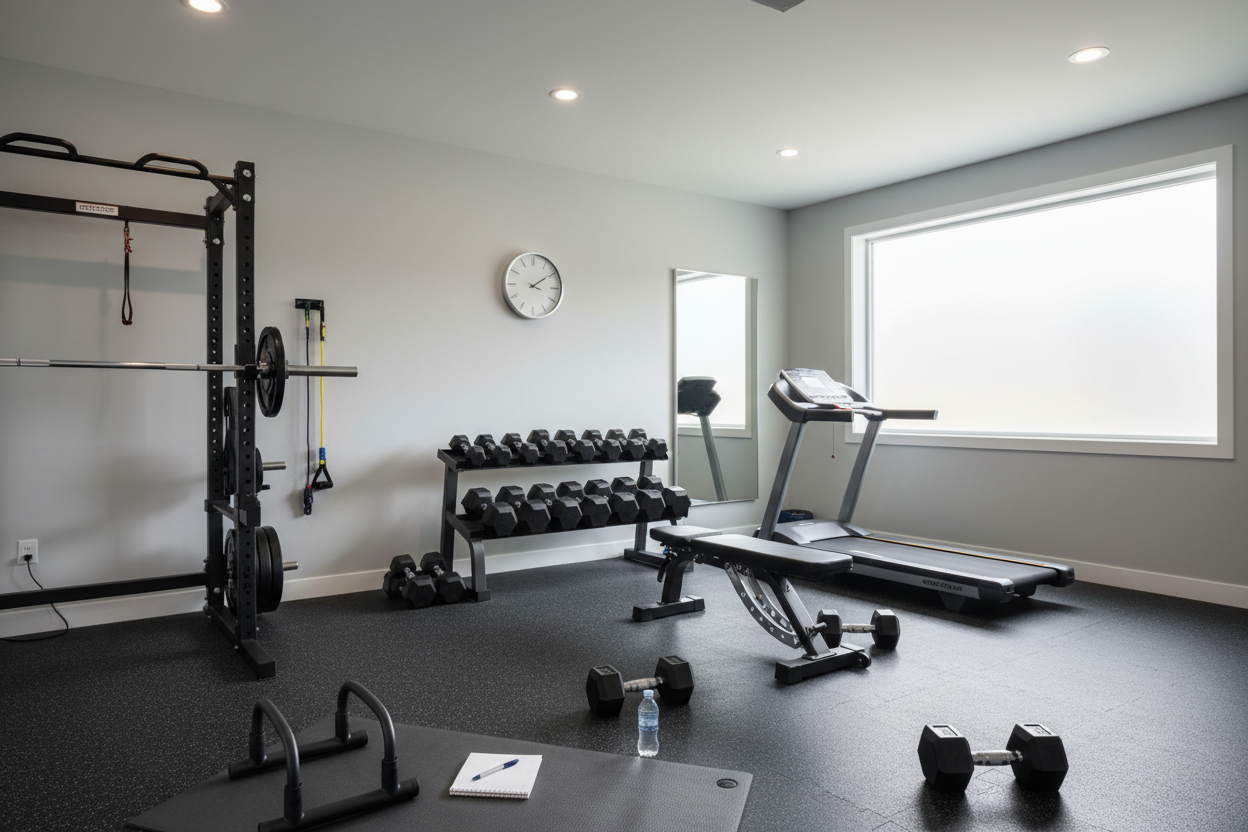
Moving up a tier, let's say you have a spare bedroom, a home office, or a cleared-out section of a basement. A 6x8 foot area opens up a completely different tier of training options. With this footprint, you can safely explore top rated home fitness programs that incorporate dumbbell circuits, plyometrics, and lateral agility work.
This is the sweet spot for high-intensity interval training. You have the clearance to perform lateral lunges, skater hops, and full Turkish get-ups without fear of kicking a wall. However, because you are introducing explosive movements and likely using medium-weight dumbbells (think 15 to 30 pounds), floor protection becomes critical.
I always advise clients in this category to invest in a large 6x8 exercise mat. It perfectly fills the usable space, protects your hardwood or carpet from dropped weights, and provides the necessary shock absorption for your joints during plyometrics. When evaluating the best home fitness workout programs for a dedicated room, you can comfortably select routines that require a bench, adjustable dumbbells, and moderate movement across the floor.
The Open Garage: Heavy Strength and Barbell Protocols
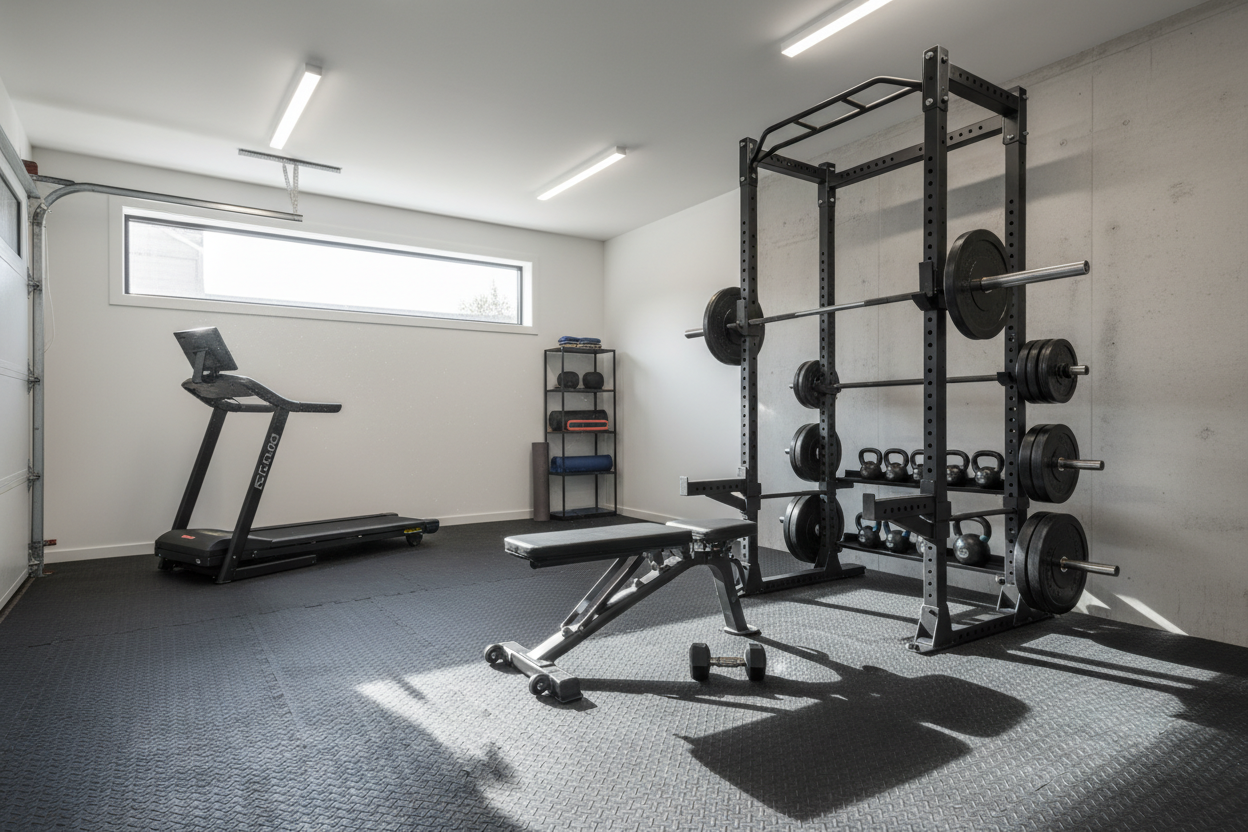
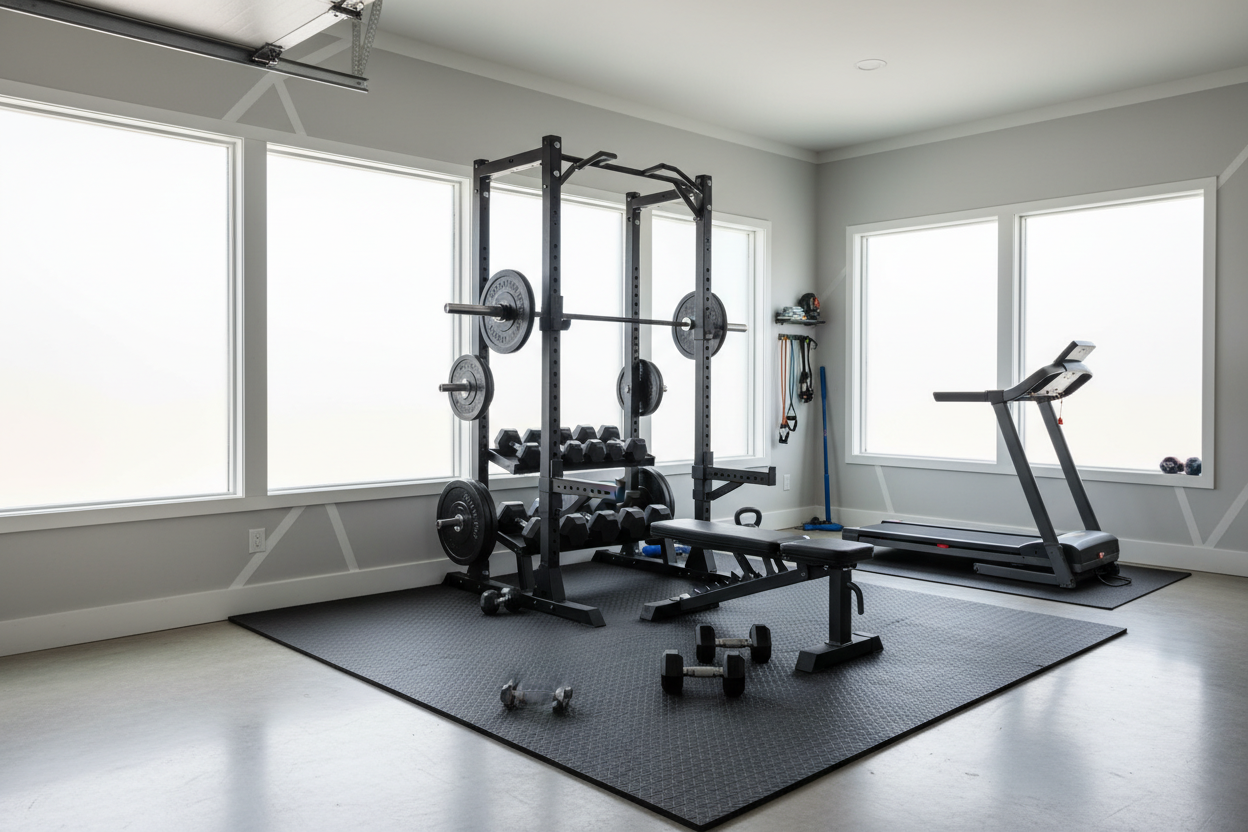
If you have an open two-car garage or a massive unfinished basement, your options are virtually limitless. You are not just looking for a workout video; you are looking for comprehensive strength and conditioning protocols. This space allows for full powerlifting, Olympic weightlifting, and traditional bodybuilding splits.
In an open garage, you have the vertical clearance for overhead barbell presses and the square footage for a power rack, a flat-to-incline bench, and a barbell with bumper plates. The best home training program for this environment will likely look like a traditional gym routine. You can run 5x5 strength programs, heavy deadlift cycles, or complex conditioning workouts that require you to move between a rig and open floor space.
To fully utilize this area, you need to outfit it properly. Finding the best home fitness equipment like a sturdy squat stand and heavy-duty rubber flooring is essential. Because noise and space are rarely an issue here, you can push your limits safely.
How to Audit Top Rated Home Workout Programs Before Buying
Before you commit to a subscription or a one-time purchase, you need to audit the routine like a trainer. Start by digging into the frequently asked questions section of the program's sales page. Look specifically for the equipment needed and space required fine print.
Many top rated home workout programs will list minimal equipment but then casually require a pull-up bar, a plyo box, and 15 feet of running space. Watch a preview video of the workouts. Are the trainers moving side-to-side across a massive warehouse gym? If so, that routine won't translate well to your cramped bedroom.
I also recommend checking the average workout duration and the transition times. If a circuit requires you to jump from a heavy dumbbell bench press immediately to a wall sit, make sure your specific room layout allows you to make that transition in under ten seconds.
Finding Your Perfect Match
Over the past five years, I have personally tested over thirty different digital fitness subscriptions. I recently ran a popular 12-week kettlebell program in my own 10x10 garage setup. While the programming was solid, one honest downside was the requirement to do overhead kettlebell snatches. My ceiling is only 84 inches high, and I scraped my knuckles on the drywall twice before I had to modify the movement to a single-arm clean. It was a harsh reminder that even trainers get caught out by spatial limits.
Ultimately, the best routine is the one that fits seamlessly into your current environment. Match your program to your floor space, protect your joints with the right flooring, and your consistency will skyrocket.
Can I do HIIT workouts in a small apartment?
Yes, but you must select low-impact HIIT routines. Swap jumping jacks for quick step-jacks and burpees for bodyweight squats to avoid noise complaints and joint impact on hard floors.
What equipment is best for a 6x4 workout space?
Adjustable dumbbells (like a 5-52.5 lb set) and resistance bands are ideal. They offer maximum resistance variety while taking up less than two square feet of floor space when stored.
How thick should my workout mat be for home workouts?
For standard home workouts involving dumbbells and bodyweight movements, a 7mm mat provides excellent shock absorption without feeling too squishy or unstable during heavy lifts.