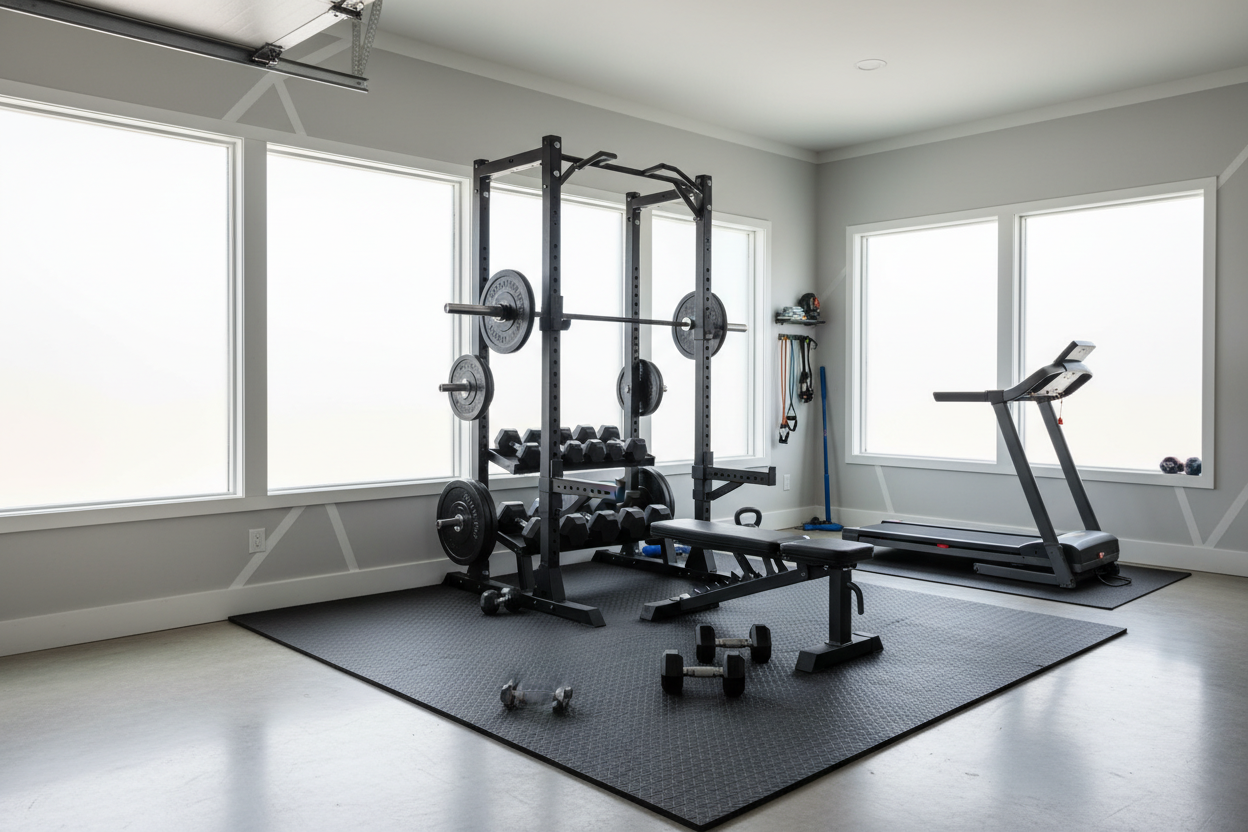
Your List of Home Workout Exercises: The Architecture Method
I remember training a client in a cramped 400-square-foot apartment. She wanted a complete list of home workout exercises but assumed she needed to buy a foldable bench, adjustable dumbbells, and a bulky cable tower. I told her to put her credit card away and look around. Her walls, doorways, and couch were the only equipment she actually needed.
Most people view their house as an empty box that needs to be filled with gear before they can get a good workout. As a personal trainer who spent months testing bodyweight routines during gym closures, I learned to see things differently. I call it the Architecture Method. Your living space already has built-in resistance, varying angles, and stability anchors.
Quick Takeaways
- Treat load-bearing walls as vertical stability benches for lower and upper body isolation.
- Use sturdy doorframes for pulling movements and elevated pressing angles.
- Transform heavy chairs and couches into deficit and step-up platforms.
- Maximize open floor space for dynamic friction and core work.
Rethinking Your Space: The Architecture Method
Stop looking at your living room as a void waiting for gym equipment. A doorway is a vertical anchor. A heavy couch is a plyometric box. A bare wall is a stability pad. When I lived in a tiny studio, I realized my 8-foot ceiling and standard walls were my entire gym.
By shifting your mindset, you unlock dozens of movement patterns that mimic heavy gym machines. You do not need to buy a $500 leg press if you know how to manipulate friction against a wall. You do not need a cable row if you understand how to leverage your body weight against a door jamb. The architecture of your home dictates the resistance.
The Wall-Assisted Exercises List to Do at Home
Your walls are highly versatile tools, provided they are load-bearing and sturdy. When building an exercises list to do at home, the wall is your primary station for isolation work. I always recommend placing a large exercise mat for home gym flush against the baseboards. This prevents your hands or feet from slipping during intense isometric holds.
One honest downside to wall exercises: you risk scuffing your paint. I strongly advise doing these barefoot or in clean socks rather than wearing your outdoor running shoes.
Friction and Stability for Lower Body
The classic wall sit is just the beginning. Drop down until your knees hit a strict 90-degree angle and hold for 45 to 60 seconds to fire up your quads. If you have hardwood floors, put on a pair of thick socks. Lean your back against the wall and perform sliding lateral lunges. The wall removes the balance component, allowing you to push deep into the working leg, mimicking a hack squat machine.
Inverted Angles for Upper Body
Walls allow you to manipulate gravity for upper body pressing. Start with wall walks. Begin in a push-up position with your feet touching the baseboard, then walk your feet up the wall while walking your hands backward until your chest touches the drywall. Hit 3 to 5 reps of these. As you get stronger, hold the top position for a 30-second isometric handstand to build massive shoulder stability.
Doorway and Frame-Based Movements
Doorframes are the unsung heroes of home fitness. They offer a stable grip for pulling movements, which are notoriously difficult to train without a pull-up bar. Grab the vertical trim of a sturdy doorway with both hands, place your feet close to the base, and lean back until your arms are straight. Pull your chest to the wood for a makeshift inverted row.
You can also use the frame to alter your pressing angles. By placing your feet a few inches up on the lower doorframe while in a push-up position, you create a 15 to 30-degree decline. This is one of the most reliable upper chest exercises you can do without an adjustable bench.
Furniture-Elevated: Different Exercises to Do at Home
When clients ask for different exercises to do at home, I point straight to their dining room. Two heavy, identical dining chairs can completely change your pressing mechanics. Place them shoulder-width apart and put one hand on each seat. This allows your chest to drop below your hands during a push-up, creating a deep muscular stretch.
This deficit method makes for some of the best chest exercises you can do at home because it recruits more muscle fibers than a standard floor push-up. Just ensure the chairs are on a non-slip surface and weigh enough not to tip.
Your couch is another excellent tool. Toss one foot up on the cushion to perform Bulgarian split squats. The soft foam of the couch actually absorbs some of your force, introducing a slight balance challenge that recruits your stabilizing muscles heavily.
The Open Floor Space Routine
You only need about a 6x6 foot clearing in the center of your room to get a brutal workout. The floor is where you tie everything together with dynamic movements and core stability. However, working out on bare hardwood or thin carpet will wreck your joints over time.
Laying down a 6x8ft exercise mat gym flooring is the only real upgrade I insist on. It gives you the grip needed for explosive movements like burpees or mountain climbers, and protects your spine during hollow body holds and V-ups. Grab two small towels (or paper plates if you are on carpet) and place them under your feet in a plank position. Drag your knees to your chest for sliding pikes, a core destroyer that rivals any ab wheel.
Combining Your Lists of Exercises to Do at Home
Having multiple lists of exercises to do at home is useless if you do not structure them into a cohesive routine. I suggest a simple three-day split to start.
On Monday, focus on the Wall and Floor. Hit your wall sits, sliding lateral lunges, and finish with floor-based sliding pikes. On Wednesday, tackle Furniture and Doorways. Run through deficit chair push-ups, doorway rows, and couch Bulgarian split squats. On Friday, combine them all into a full-house circuit, moving from a wall walk directly into a doorway row, and finishing with a 60-second floor plank.
Frequently Asked Questions
Will doorway rows damage my trim?
If you have standard, securely nailed wooden trim, bodyweight rows are generally safe. However, if you live in an older home with brittle or purely decorative molding, test it gently first. Grip close to the hinges where the frame is structurally strongest.
How often should I do this routine?
Aim for three to four days a week. Because you are using your body weight and manipulating angles rather than loading heavy barbells, you can recover faster. Alternate between upper-body focused days and lower-body focused days.
Can I actually build muscle without weights?
Yes. Muscle growth requires mechanical tension and progressive overload. By elevating your feet on a doorframe or using chairs for a deficit, you increase the resistance and stretch, forcing the muscle to adapt and grow just as it would with iron.