The Barbell Shoulder Lift Guide: Build 3D Delts Safely
You want shoulders that stretch your t-shirt sleeves, and you know the answer isn't just endless lateral raises with five-pound dumbbells. You need to move heavy iron. Enter the barbell shoulder lift—often called the Overhead Press or Military Press. It is the gold standard for upper body strength, but it is also the movement most people butcher.
When executed poorly, this lift becomes a lower-back destroyer rather than a shoulder builder. When done right, it creates that coveted "capped" look and builds functional core stability that carries over to every other lift. Let's break down the mechanics, the science, and the reality of putting a heavy bar over your head.
Key Takeaways: The Cheat Sheet
- The Setup Matters: The barbell lift to shoulder height (the clean) sets the rhythm for the entire set. Don't rush it.
- Elbow Position: Keep your elbows slightly in front of the bar, not flared out to the sides, to protect your rotator cuffs.
- The "Window": You must move your head back to let the bar pass, then push your head "through the window" at the top.
- Glute Activation: Squeezing your glutes protects your lumbar spine from hyperextending during the lift.
Defining the Movement: More Than Just Pushing Up
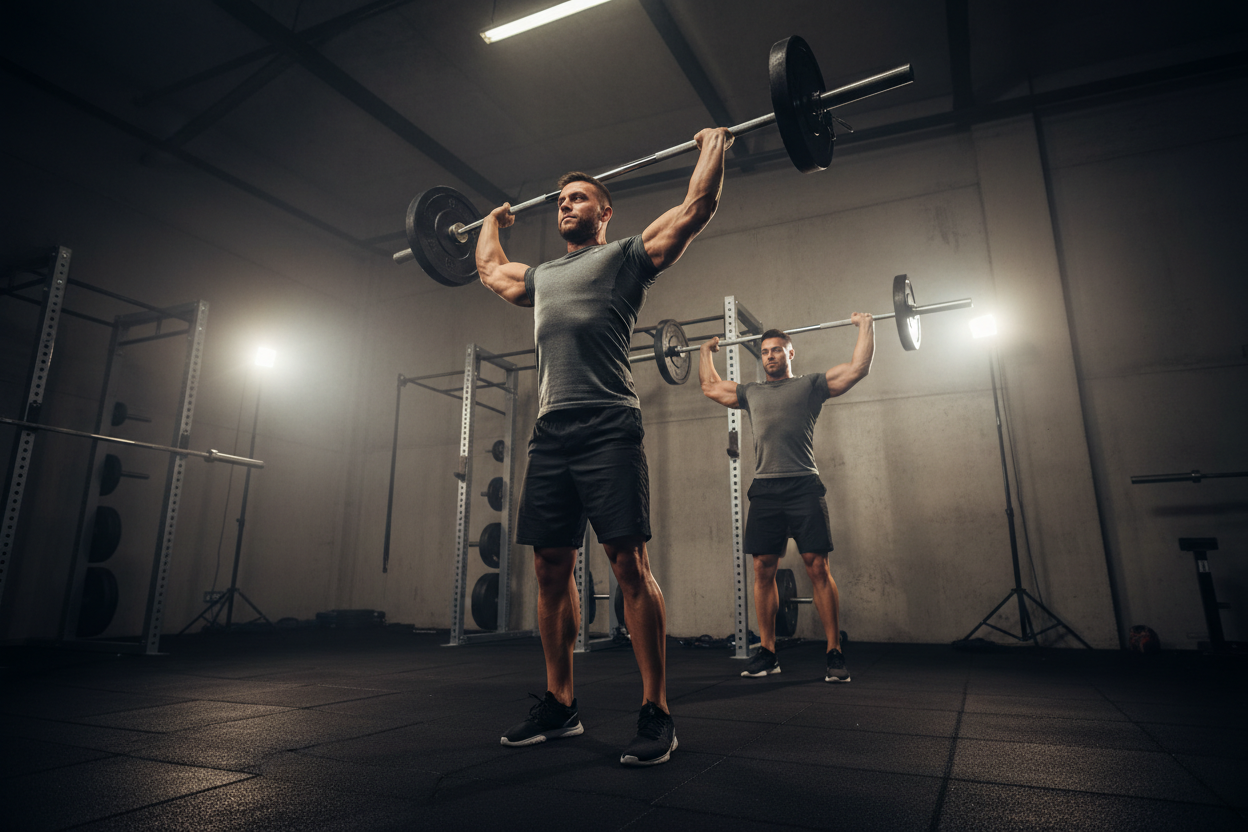
The term "shoulder bar lift" usually refers to the Standing Overhead Press. It is a compound movement that targets the anterior (front) deltoids, triceps, and upper chest. Because you are standing, your core, glutes, and spinal erectors work overtime to stabilize the load.
Unlike machine presses, the barbell doesn't fix your path. You have to earn every inch of stability.
Phase 1: The Setup (Getting the Bar to the Rack Position)
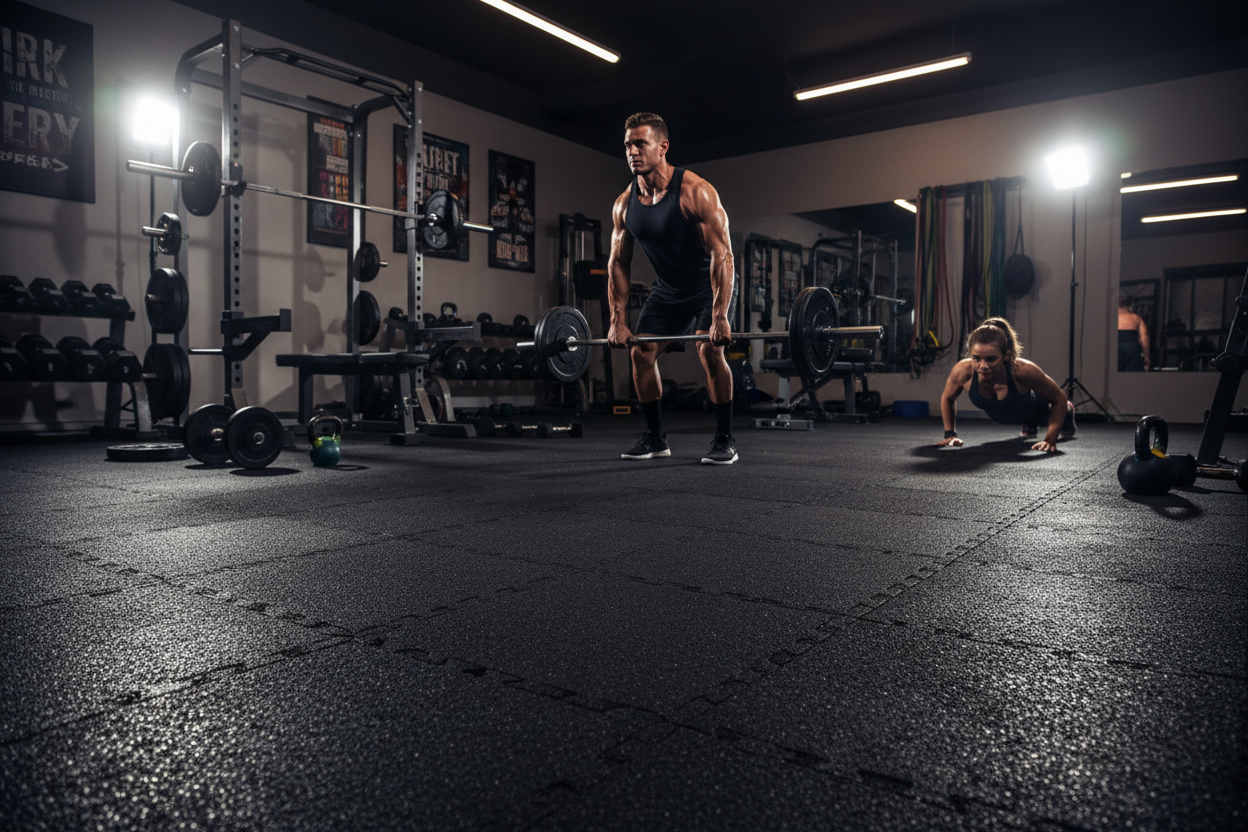
Before you press, you need to execute a proper barbell lift to shoulder height. If you are taking the bar out of a power rack, this is easy. If you are lifting from the floor, you are performing a "Clean."
Rack Height and Grip
Set the hooks at roughly chest height (sternum level). If the bar is too high, you lose tightness trying to unrack it. Your grip should be just outside shoulder width. Too wide, and you lose leverage; too narrow, and your triceps take over completely.
The Unrack
Step under the bar. Place the bar on the meat of your front delts (or hover just above if you lack wrist mobility). Brace your abs like you're about to take a punch, squeeze your glutes, and walk the bar out with two confident steps. No dancing.
Phase 2: The Execution
This is the meat of the shoulder barbell lift. The goal is a vertical bar path. The bar wants to travel in a straight line; your head is the only thing in the way.
The Head Tilt
At the start, tuck your chin back (make a double chin). As you drive the bar up, it should graze your nose. Once the bar clears your forehead, push your head forward "through the window" created by your arms.
The Science of the Lockout: At the top, shrug your shoulders toward your ears. This engages the upper traps and prevents shoulder impingement by rotating the scapula upward, giving the humerus (arm bone) room to move.
Common Mistakes That Kill Progress
The Excessive Lean Back
If you look like you are doing a standing incline bench press, the weight is too heavy. Leaning back turns this into a chest exercise and compresses your lumbar discs. If you feel the need to lean back, rack the weight, drop 10 pounds, and focus on squeezing your glutes to lock your pelvis in place.
Using the Legs (The Push Press)
There is a time and place for the Push Press (using knee drive to help the bar up). However, if you are trying to isolate the shoulders for hypertrophy, keep your knees locked. Using leg drive takes tension off the deltoids.
My Training Log: Real Talk
I want to be transparent about my history with the barbell shoulder lift. On paper, the cues sound simple. In reality, it took me two years to stop hurting my lower back.
I remember a specific session in my garage gym during winter. The bar was freezing cold—the knurling felt sharper than usual. I was trying to hit a bodyweight press (185 lbs at the time). I was so focused on pushing up that I forgot to brace down. On the third rep, my core got soft, my ribs flared up, and I felt a sharp pinch right above my tailbone.
That injury sidelined me for three weeks. What I learned wasn't that I needed stronger shoulders; I needed a stronger brace. Now, when I set up, I don't just "tighten my abs." I physically exhale hard to pull my ribcage down and clamp my glutes so hard they almost cramp. If you don't feel stable from the waist down, you have no business pressing heavy overhead.
Conclusion
The barbell shoulder lift is unforgiving. It exposes weak links in your kinetic chain immediately. But that is exactly why it remains the best tool for building an impressive upper body. Respect the weight, master the head movement, and keep your ego in check. Your shoulders will grow.
Frequently Asked Questions
Is the barbell shoulder lift bad for your back?
It is not inherently bad, but it is high-risk if done with poor form. The danger comes from hyperextending the lower back (leaning backward) to compensate for a lack of shoulder strength. Proper core bracing and glute activation neutralize this risk.
Can I do this lift seated?
Yes. The Seated Barbell Overhead Press removes the legs and lower back stability from the equation, isolating the shoulders more. It is a great variation if you have lower back issues or want to focus strictly on hypertrophy (muscle growth).
How wide should my grip be?
For the standard press, your forearms should be vertical when the bar is at shoulder height. This usually means a grip just slightly outside of shoulder width. If your grip is too wide, you lose power at the bottom of the lift.