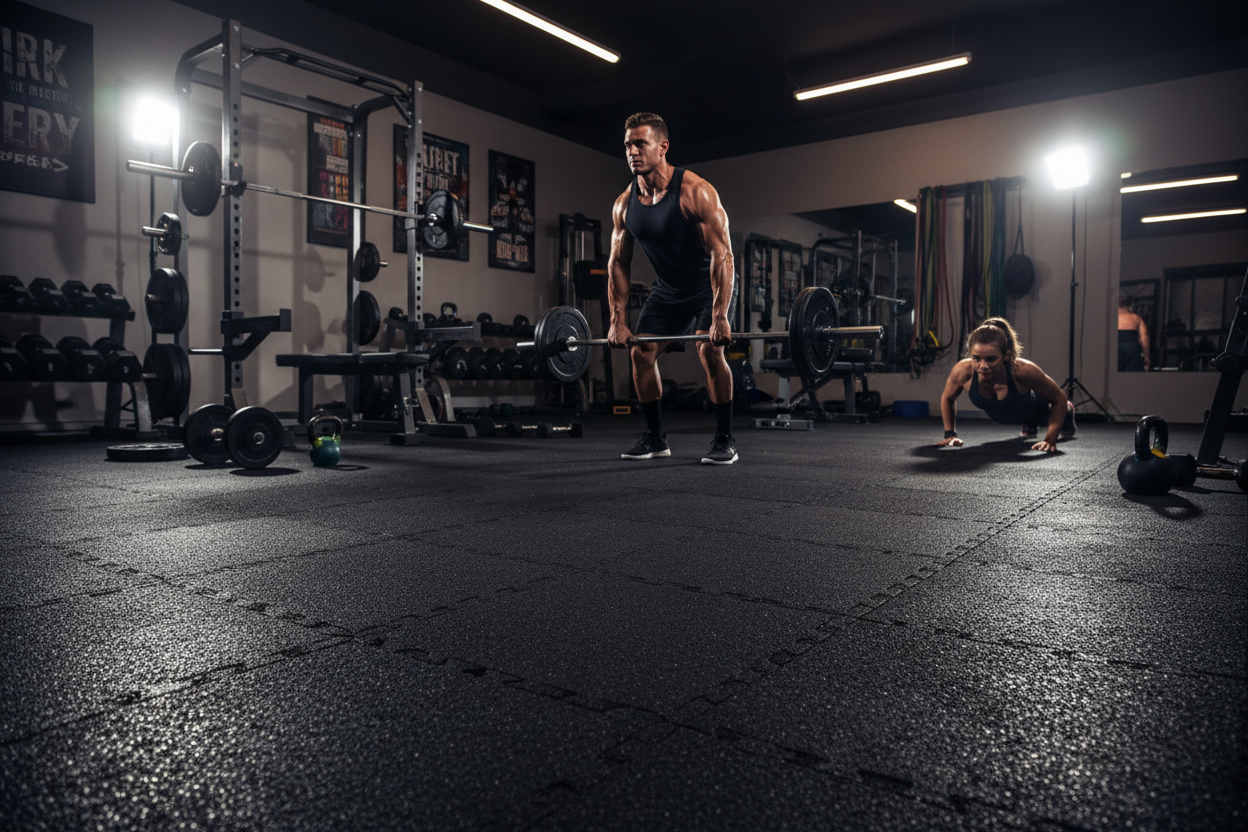
Rubber Flooring for Exercise Room: Avoid These Costly Mistakes
There is nothing quite like the heart-stopping panic of dropping a loaded barbell and hearing the sharp, echoing crack of concrete underneath. Whether you are building a dedicated garage sanctuary, a basement lifting dungeon, or a spare-bedroom yoga studio, your equipment is only as secure as the foundation it rests on.
Investing in the right rubber flooring for exercise room setups is often an afterthought, but it is the single most important decision you will make for your home gym. It dictates your noise levels, protects your expensive gear, and saves your foundation from catastrophic damage. Let's break down exactly what you need to know before rolling out your new floor.
Key Takeaways
- Thickness is crucial: Standard home gyms need at least 3/8-inch thickness, while heavy lifters should opt for 1/2-inch to 3/4-inch mats.
- Format dictates function: Interlocking tiles are best for irregular spaces, rolled rubber for large areas, and stall mats for heavy lifting zones.
- Odor is a real factor: Virgin rubber has less odor than recycled tire rubber, which requires a 'gas-off' period.
- Subfloor prep matters: Moisture barriers are essential when installing over basement concrete.
Choosing Your Format: Tiles, Rolls, or Mats?
When shopping for rubber flooring for fitness rooms, you will encounter three main formats. Your choice depends heavily on your budget, room shape, and how permanent you want the gym to be.
Interlocking Rubber Tiles
If you are setting up in a spare bedroom or an apartment, interlocking tiles are your best friend. They piece together like a giant puzzle, making them incredibly easy to install and remove if you move out. However, they tend to be thinner (usually 8mm) and the seams can separate slightly during high-impact movements like burpees or sled pushes.
Heavy-Duty Stall Mats
The undisputed champion of the North American garage gym. Originally designed for horses, these 3/4-inch thick recycled rubber mats (usually 4x6 feet) are virtually indestructible. They will easily handle dropped deadlifts and heavy kettlebell swings. The trade-off? They are incredibly heavy (around 100 lbs each) and can have a strong rubber odor initially.
Rolled Rubber Flooring
For a seamless, commercial-grade look, rolled rubber is the premium choice. It is ideal for large, rectangular spaces. While it looks fantastic and leaves fewer seams for dust to settle into, it is the most difficult to install solo and often requires double-sided carpet tape or glue to stay anchored.
Thickness Matters: Protecting Your Subfloor
A common mistake is buying ultra-thin foam or cheap rubber flooring exercise room tiles that compress under the weight of a power rack. Here is a quick sizing guide:
- 1/4 inch (8mm): Good for cardio equipment, yoga, and light dumbbell work. Not recommended for dropping weights.
- 3/8 inch (10mm): The sweet spot for most home gyms. It supports heavy racks and protects against moderate drops.
- 1/2 to 3/4 inch: Mandatory for Olympic weightlifting, heavy deadlifts, and anyone dropping bumper plates from overhead.
From Our Gym: Honest Take
When I built my two-car garage gym, I initially went the cheap route with 1/2-inch EVA foam puzzle mats. Within three months, my power rack had permanently compressed the foam, and my bench press felt dangerously unstable. I ripped it all out and upgraded to 3/4-inch recycled rubber stall mats.
The honest truth: The durability is unmatched. My chalked grip feels solid, the floor absorbs the shock of 400-pound deadlifts, and the noise reduction is incredible. However, I have to mention the smell. When setting up this rubber flooring for workout room spaces, the recycled tire off-gassing was intense. I had to scrub the mats with a mild degreaser and leave the garage doors open with fans running for a full week before the smell dissipated. If you are sensitive to odors or lifting in a poorly ventilated basement, you might want to spend the extra cash on virgin rubber.
Frequently Asked Questions
Do I need to glue down exercise room rubber flooring?
In most home gym scenarios, no. The sheer weight of thick rubber mats or rolls, combined with your heavy equipment (like power racks and treadmills), is usually enough to keep the flooring firmly in place. Double-sided heavy-duty tape is a great middle-ground if you notice shifting.
Can I put rubber gym flooring directly over carpet?
It is highly discouraged. Placing heavy rubber over plush carpet creates an unstable, squishy surface that is dangerous for lifting heavy weights. It can also trap moisture and ruin the carpet underneath. If you must, lay down a rigid layer of plywood over the carpet first, then place your rubber mats on top.
How do I clean and maintain my gym floor?
Keep it simple. Vacuum up chalk dust and dirt regularly. For mopping, use a pH-neutral cleaner mixed with warm water (a few drops of dish soap works perfectly). Avoid harsh chemicals like bleach or ammonia, as they will break down the rubber binders over time and cause the floor to crumble.