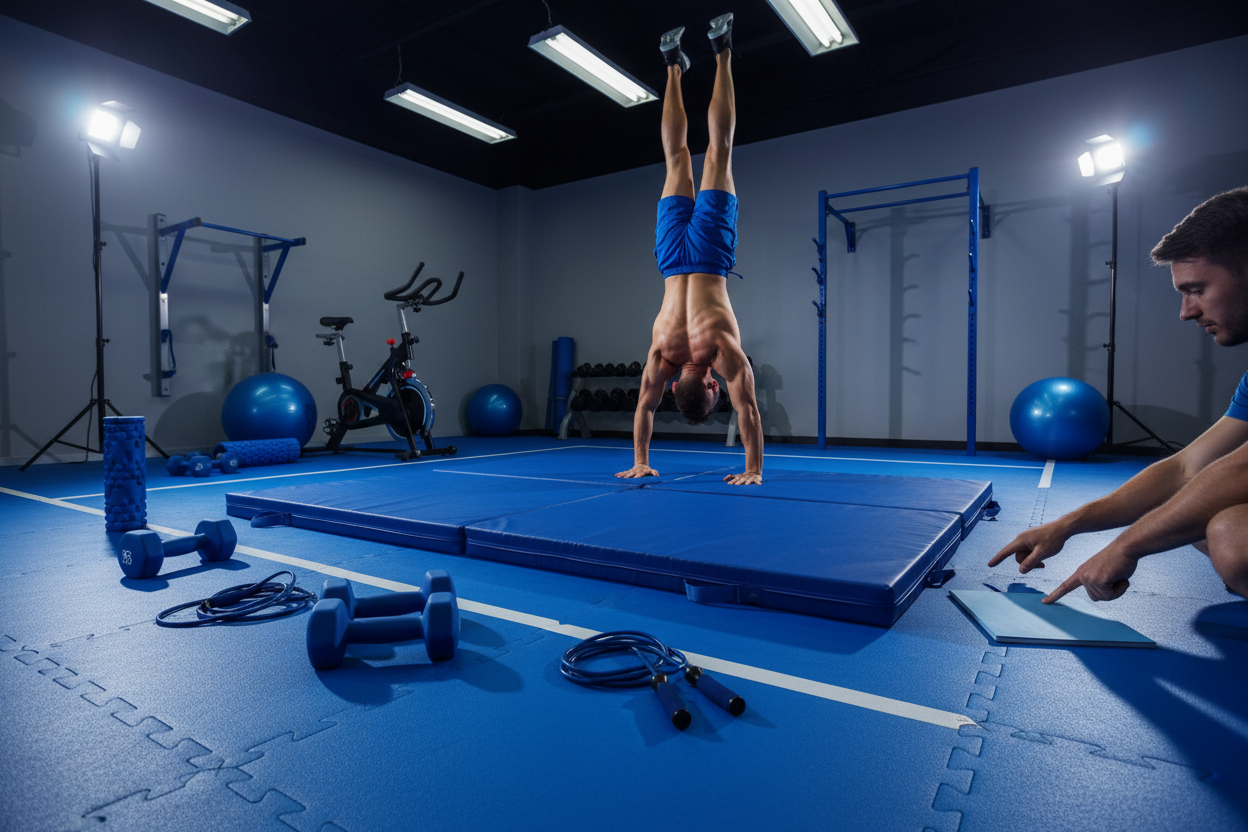
Blue Gymnastics Mat Explained: What to Know Before You Buy
Whether you are outfitting a dedicated basement gym or trying to make your garage floor safer for high-impact workouts, hard surfaces are the enemy of longevity. Joint pain, bruised knees, and echoing thuds can quickly derail a great training session or a kid's tumbling practice. That is where a high-quality blue gymnastics mat comes into play.
Far superior to thin yoga mats, these thick, durable pads provide the shock absorption needed for serious movement. In this guide, we will break down what makes these mats a staple for home gyms, how to choose the right specs, and whether they truly live up to the hype.
Key Takeaways
- Thickness matters: Look for at least 1.5 to 2 inches of cross-linked polyethylene (EPE) foam for optimal shock absorption.
- Space considerations: Standard folding mats are typically 4x8 feet, making them easy to store in closets or under beds.
- Versatility: Beyond gymnastics, a thick blue exercise mat is perfect for martial arts, HIIT, and mobility work.
- Connection points: Hook-and-loop (Velcro) fasteners on all four sides allow you to seamlessly connect multiple mats.
Choosing the Right Specs for Your Space
Not all mats are created equal. When evaluating a gym mat blue in color, the vibrant shade is standard, but the internal construction dictates its lifespan and performance.
Foam Density and Cover Material
The core of a premium blue tumbling mat should feature high-density EPE foam. This material is firm enough to prevent rolled ankles during dismounts but soft enough to cushion a fall. The exterior cover should be an 18-ounce vinyl coated in polyurethane. This specific weight ensures the mat is puncture-resistant, sweat-proof, and easy to wipe down after a grueling session.
Dimensions and Folding Mechanisms
For most North American home gyms, a 4x8 foot tri-fold or quad-fold design hits the sweet spot. When folded, it condenses to a manageable 4x2 foot block. If you are building a larger functional training area, ensure the mat features heavy-duty Velcro on the edges so you can link multiple mats together without dangerous gaps forming in the middle of a routine.
Maximizing Your Training Output
While the name implies a specific use, a blue fitness mat is incredibly versatile. It is a foundational piece of equipment that supports a wide variety of training modalities.
From HIIT to Heavy Stretching
If you regularly perform burpees, plyo push-ups, or kettlebell get-ups, a standard thin mat will not cut it. A thick blue workout mat absorbs the impact of explosive movements, protecting both your joints and your subfloor. Additionally, the firm surface provides excellent tactile feedback for deep mobility work, yoga inversions, and wrestling drills.
From Our Gym: Honest Take
We have been testing a standard 2-inch thick blue gymnastics mat in our uninsulated garage gym for the past eight months. First off, the shock absorption is night and day compared to standard rubber stall mats when it comes to plyometrics. I can confidently do box jump dismounts without sending shockwaves up my shins.
The 18-oz vinyl has held up beautifully to dropped dumbbells and daily foot traffic. However, I will note one minor caveat: if you buy a mat with Velcro on all four sides to connect future pieces, those exposed Velcro strips act like a magnet for garage dust, pet hair, and chalk. You will need to vacuum the edges regularly to keep the adhesive strong and the mat looking clean. Despite that small maintenance quirk, it is easily one of the most used items in our setup.
Frequently Asked Questions
Is a blue gymnastics mat worth it for a standard home gym?
Absolutely. If your workouts include floor work, stretching, plyometrics, or martial arts, the added 1.5 to 2 inches of high-density foam provides joint protection that standard rubber gym flooring simply cannot match.
How do I clean and maintain my mat?
Maintenance is incredibly simple. Because the heavy-duty vinyl is non-porous, you can wipe it down with a damp cloth and a mild soap or a standard gym equipment wipe. Avoid harsh bleach, which can degrade the vinyl and fade the color over time.
Can I leave my mat outdoors?
While the vinyl is water-resistant, it is not recommended to leave the mat outside permanently. Extended exposure to UV rays will cause the cover to become brittle and crack, while moisture can seep into the seams and degrade the foam core.