The Barbell Lift Shoulder Routine That Fixed My Overhead Press
I remember the exact moment my overhead press stalled out at 135 lbs. I was standing in my cold garage, staring at a cheap, rusty bar, and every time I tried to lock out, my right shoulder felt like someone was driving a flathead screwdriver into the joint. I almost gave up on the straight bar entirely, thinking my anatomy just wasn't built for it. Most people reach this point and switch to dumbbells or machines, but they miss out on the most effective strength builder in existence.
The truth is, the barbell lift shoulder path isn't the problem; it is usually our lack of preparation and poor mechanics. After years of testing different bars and racks, I realized that pressing pain-free is about creating a stable environment for the joint to move. If you are tired of mediocre delts and nagging aches, it is time to stop blaming the iron and start fixing your approach.
Quick Takeaways
- Thoracic mobility is the secret to pain-free pressing.
- A proper 'shelf' with your lats protects the rotator cuffs.
- Barbell spin is non-negotiable for wrist and elbow health.
- Progressive overload with a straight bar builds the most mass.
Why the Straight Bar Gets a Bad Rap for Delts
Everyone wants to blame the barbell for their shoulder impingement. I get it; a rigid piece of steel doesn't allow for the natural hand rotation you get with dumbbells. However, the bar isn't the villain here. The real culprits are usually tight lats and a 'stiff' upper back. If you cannot get your arms directly overhead without arching your lower back like a gymnast, you are going to grind your shoulder joints into dust. Before you even think about un-racking a heavy load, you need to open up your chest and lats.
I’ve found that a dedicated shoulder stretch with bar is the most effective way to prep. By using the bar as a lever to stretch the lats, you create the overhead 'room' your humerus needs to move without pinching. If you skip this, you are forcing your body to find mobility elsewhere—usually by over-extending your lumbar spine. That is a recipe for a blown disk, not bigger shoulders. Don't be the guy who ego-presses with a rounded back. Fix your mobility first, and the bar will stop being your enemy.
The Setup: Tension Starts Before the Unrack
Most lifters treat the unrack like an afterthought. They walk up, grab the bar, and just push. That is how you get hurt. The barbell lift shoulder setup starts with your hands. I prefer a grip just outside my shoulders. Too wide, and you lose leverage; too narrow, and you'll crush your wrists. Squeeze the bar like you are trying to snap it in half. This 'white-knuckle' grip creates irradiation, which tells your brain to fire the surrounding muscles for stability.
Once your grip is set, tuck your elbows slightly forward. You want your forearms to be perfectly vertical when viewed from the side. This creates a 'shelf' using your lats and upper back. Before the bar leaves the pegs, take a massive breath into your belly and brace your core as if someone is about to punch you. This internal pressure protects your spine and provides a solid base to push from. If your core is soft, your power will leak out, and your shoulders will take the brunt of the instability.
My Go-To Barbell Lift Shoulder Progression
If you want 3D shoulders, you have to move heavy weight. There is no way around it. While I love high-rep accessory work, the foundation of my training is always built on linear progression. This is the core of any solid guide to barbell training. I focus on two primary lifts that allow for maximum loading: the Strict Press and the Push Press.
The Strict Overhead Press (The King)
This is the ultimate test of upper body strength. The key is the bar path. You want the bar to travel in a straight line, which means your head has to get out of the way. Pull your chin back (don't tilt your head up) as the bar passes your face, then 'push' your head through the 'window' created by your arms at the top. This ensures the weight is stacked directly over your mid-foot. If the bar drifts forward, you're putting massive shear force on your rotator cuffs.
The Push Press (For Eccentric Overload)
When I hit a plateau on strict presses, I switch to the push press. By using a quick 'dip and drive' with my legs, I can move about 15-20% more weight. The magic here isn't the leg drive; it's the eccentric phase. Fighting that heavier weight on the way down forces the medial delts to adapt. It is a brutal way to build raw size, provided you don't turn it into a full-blown squat.
The Best Shoulder Bar Exercises for Accessory Work
You don't need a rack of 50 dumbbells to hit every angle of the shoulder. You can perform several shoulder bar exercises using just a standard Olympic bar. One of my favorites is the Landmine Press. By anchoring one end of the bar in a corner (or a dedicated landmine attachment), you create an angled pressing path that is incredibly joint-friendly. It’s perfect for those days when your joints feel a bit 'crunchy.'
Another underrated move is the wide-grip upright row, but only if you stop at mid-chest height. Going too high can cause that familiar pinching sensation. When done correctly, it’s one of the few barbell moves that really isolates the lateral delt. I also use the bar for 'bus drivers'—holding the bar vertically and rotating it—to burn out the front delts at the end of a session. You'd be surprised how much 3D pop you can get with just 45 lbs and high reps.
Equipment Matters: What's Actually in My Rack
I’ve trained on cheap bars with sleeves that don't spin, and I have the wrist tendonitis to prove it. When you're pressing, the plates need to rotate freely as the bar moves through its arc. If the sleeves are stuck, that rotational force goes straight into your wrists and elbows. I always recommend investing in a reliable Olympic bar with needle bearings or high-quality bushings. It makes a world of difference when the weight feels 'fluid' rather than clunky.
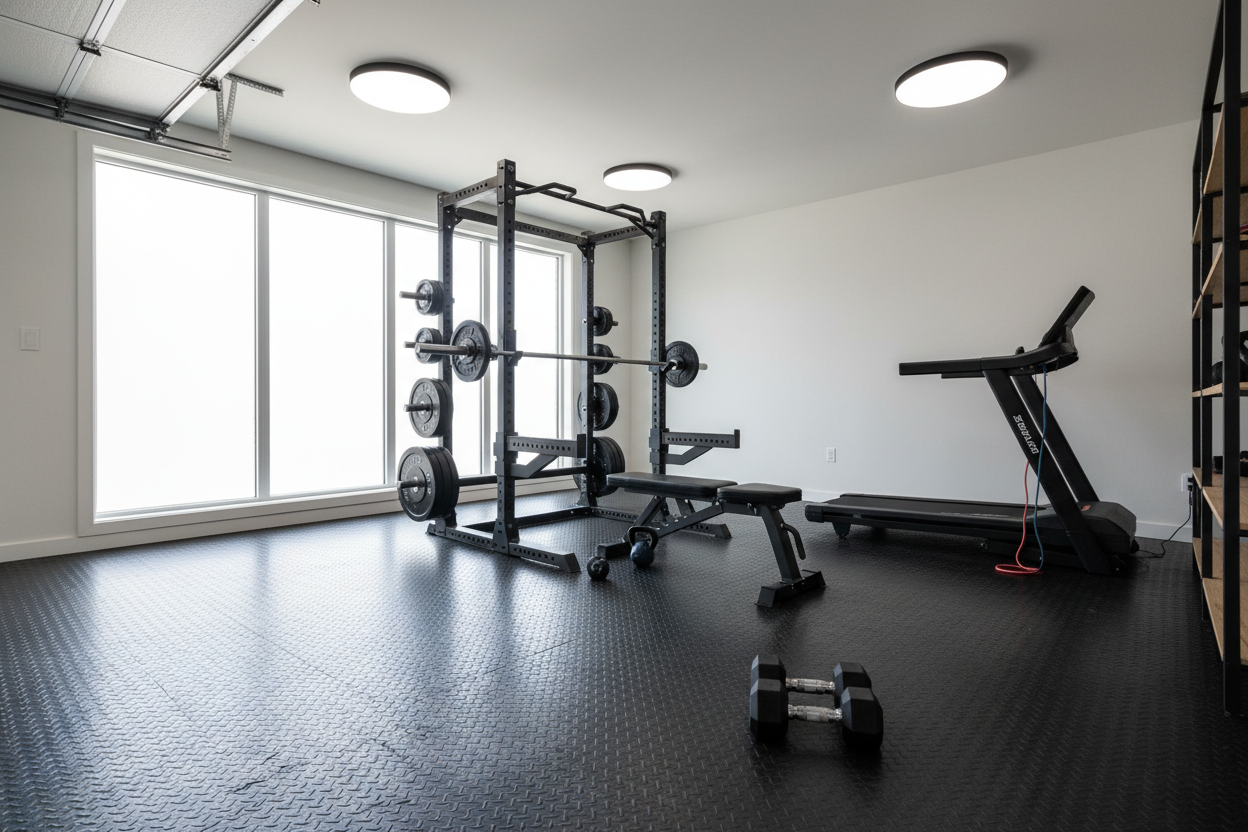
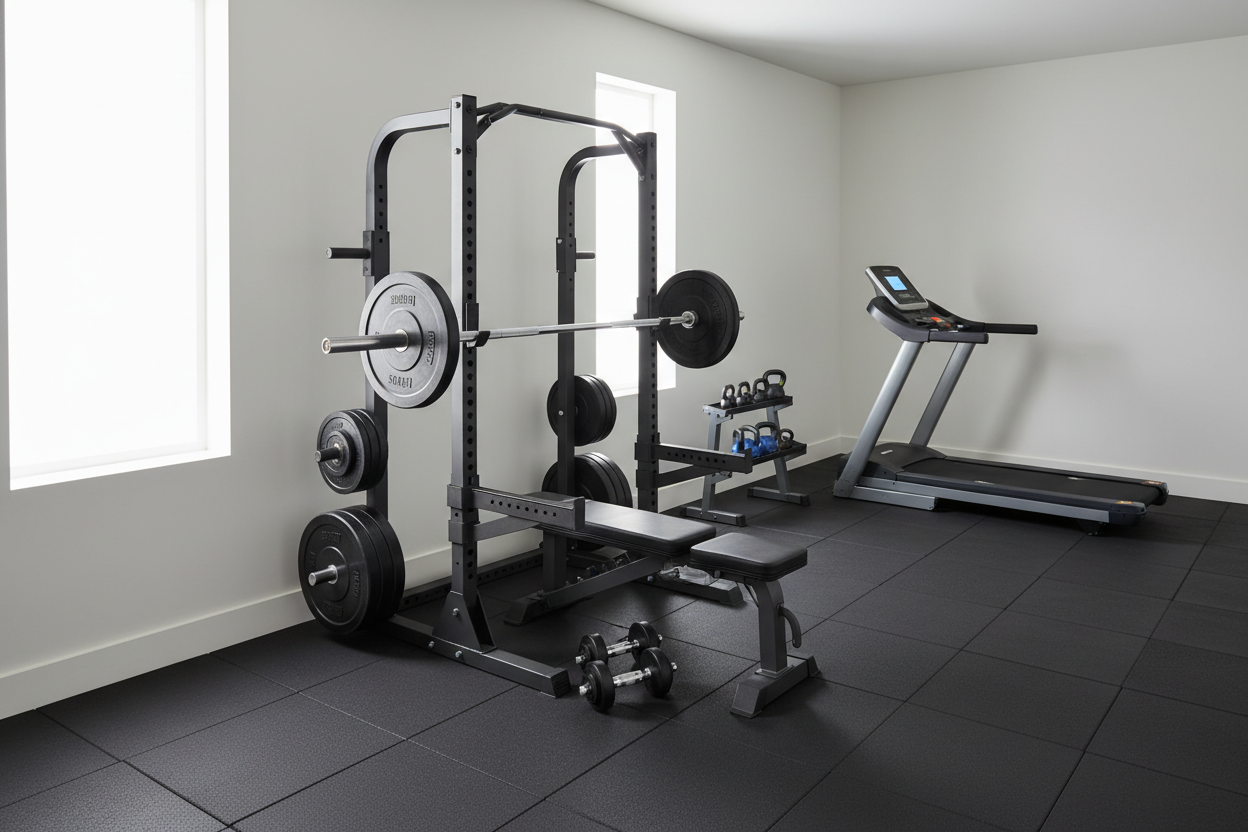
Safety is the other big factor. Pressing heavy in a garage alone can be sketchy. I use a power rack weight bench barbell package because it gives me the safety pins I need. I set the pins just below my chin height. If I fail a rep, I can just drop the bar forward onto the steel rather than trying to bail and risking a back injury. Plus, having a dedicated rack means your J-cups are always at the perfect height for a comfortable unrack, which is where half the battle is won.
Personal Experience: The Lesson of the 185-lb Fail
Early in my training, I tried to max out my overhead press without a rack. I was cleaning the weight from the floor and then pressing it. One afternoon, I got 185 lbs halfway up, my left shoulder gave out, and I had to literally dive out of the way as the bar crashed into my concrete floor. Not only did I ruin the floor, but I also tweaked my neck for a month. That was the day I realized that 'making do' with bad equipment was holding me back. Once I got a real rack and a bar that actually spun, my numbers shot up because I finally felt safe enough to push to failure.
FAQ
Is the barbell better than dumbbells for shoulders?
The barbell allows for micro-loading (adding just 1-2 lbs at a time), which is crucial for the overhead press. While dumbbells allow for a more natural range of motion, the barbell is the king of raw strength and progressive overload.
How wide should my grip be?
For most people, a grip just outside the shoulders is ideal. If your forearms are angled inward or outward at the bottom of the lift, you are losing power and putting unnecessary stress on your elbows.
Should I wear a lifting belt for overhead presses?
Yes, especially on your heavy sets. A belt gives your abs something to push against, which increases intra-abdominal pressure and stabilizes your spine, allowing your shoulders to focus entirely on the move.