I Tack This 10 Min Shoulder Workout Onto Every Single Leg Day
I used to be the guy spending 45 minutes on three different variations of lateral raises. I’d finish my main lifts, wander over to the dumbbell rack, and just start chasing a pump until my joints felt like they were full of gravel. It was a massive waste of time that didn't actually build the 'boulder shoulders' I was after.
Everything changed when I condensed my accessory work into a strict 10 min shoulder workout. By tacking this onto the end of my leg days, I stopped overthinking the volume and started focusing on the only thing that matters: density. If you can't get a massive pump in ten minutes, you aren't training hard enough.
Quick Takeaways
- Eliminates junk volume that irritates rotator cuffs.
- Uses giant sets to maximize every second of the 10-minute window.
- Requires minimal equipment: just a bench and two pairs of dumbbells.
- Focuses on continuous tension rather than ego-lifting heavy weights.
Why I Stopped Doing Dedicated Shoulder Days
Spending an hour on shoulders is usually a recipe for tendonitis. For most of us training in a garage, our delts already get plenty of work during heavy benching and overhead pressing. When I looked at my training log, I realized my 'shoulder day' was mostly me resting for three minutes between mediocre sets of front raises.
Compressing the timeframe forces honesty. You can't fake intensity when the clock is ticking. By switching to a 10 minute shoulder workout, I cut out the fluff and kept only the movements that actually stimulate growth. My rotator cuffs have never felt better, and my delts are actually thicker because the intensity is finally where it needs to be.
The Rules for Squeezing Volume Into 10 Minutes
You can't just do your normal workout faster. You need a system. The first rule is continuous tension. We aren't locking out at the top of presses or letting the weights hang at the bottom of raises. You want the muscle under load for the entire duration of the set.
The second rule is using antagonist or non-competing supersets. While your front delts are screaming during a press, your rear delts are 'resting'—even though they’re about to get hit next. If you want to see how this fits into a broader minimalist philosophy, check out our free workout hub routines for more time-capped programs.
Finally, leave your ego at the door. If you usually grab the 35s for lateral raises, grab the 20s. The short rest periods will make those 20s feel like 50s by the third round. If you stop to breathe for too long, you've already lost the session.
The Brutal 10 Min Shoulder Workout Circuit
Set a timer for 10 minutes. You are going to run this giant set on a loop until time expires. Rest exactly 30 seconds between rounds. No more, no less.
- Seated Dumbbell Press (10-12 reps): Sit on a bench with the back at a slight incline (about 80 degrees). Stop just short of lockout to keep tension on the delts.
- Chest-Supported Rear Delt Swings (15-20 reps): Lay face down on the same bench. Use a heavy-ish weight but a short range of motion. You’re just 'swinging' the weights to fire up the posterior chain.
- Strict Lateral Raises (12-15 reps): Stand up and keep your core tight. Don't use momentum. If you have to swing your hips, the weight is too heavy.
Repeat this until the 10 minutes are up. Usually, you’ll get through 3 to 4 rounds. By the final round, your shoulders should feel like they're physically vibrating.
Setting Up Your Garage for Zero-Rest Transitions
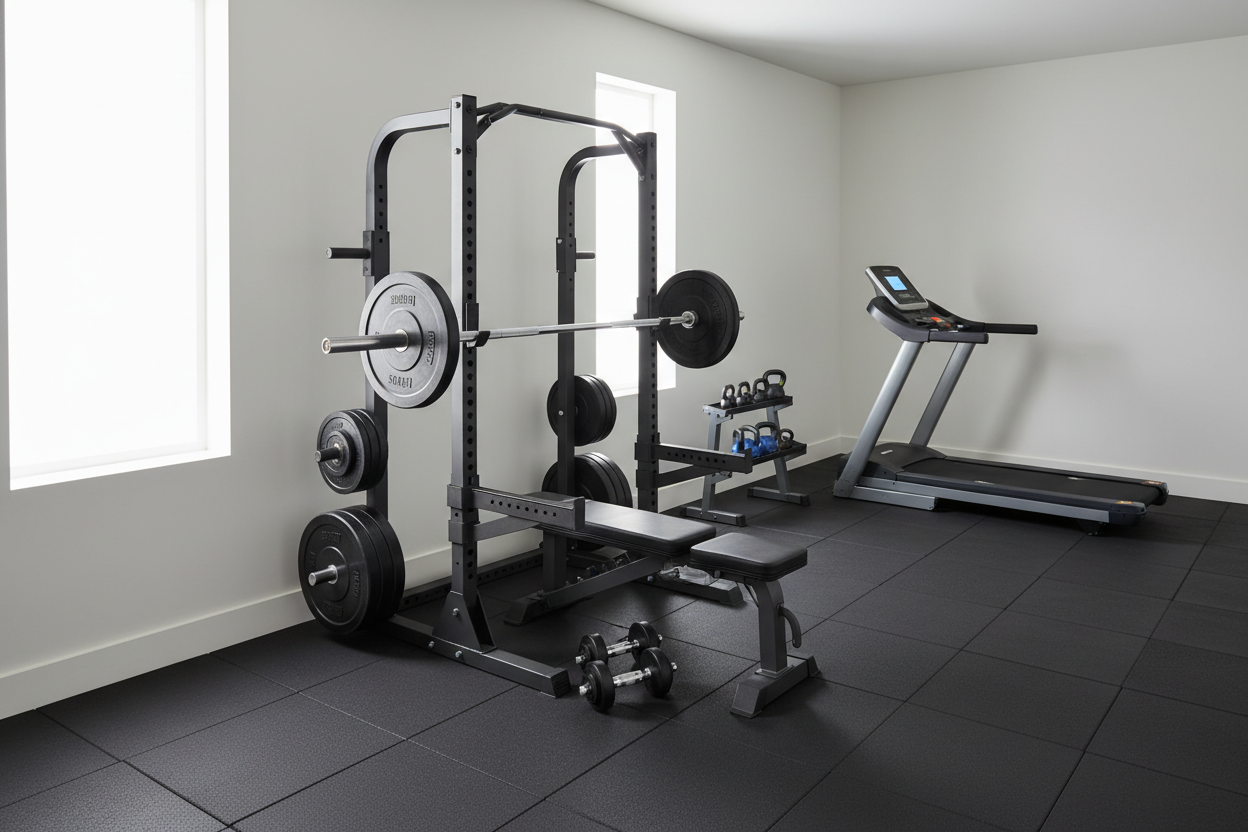
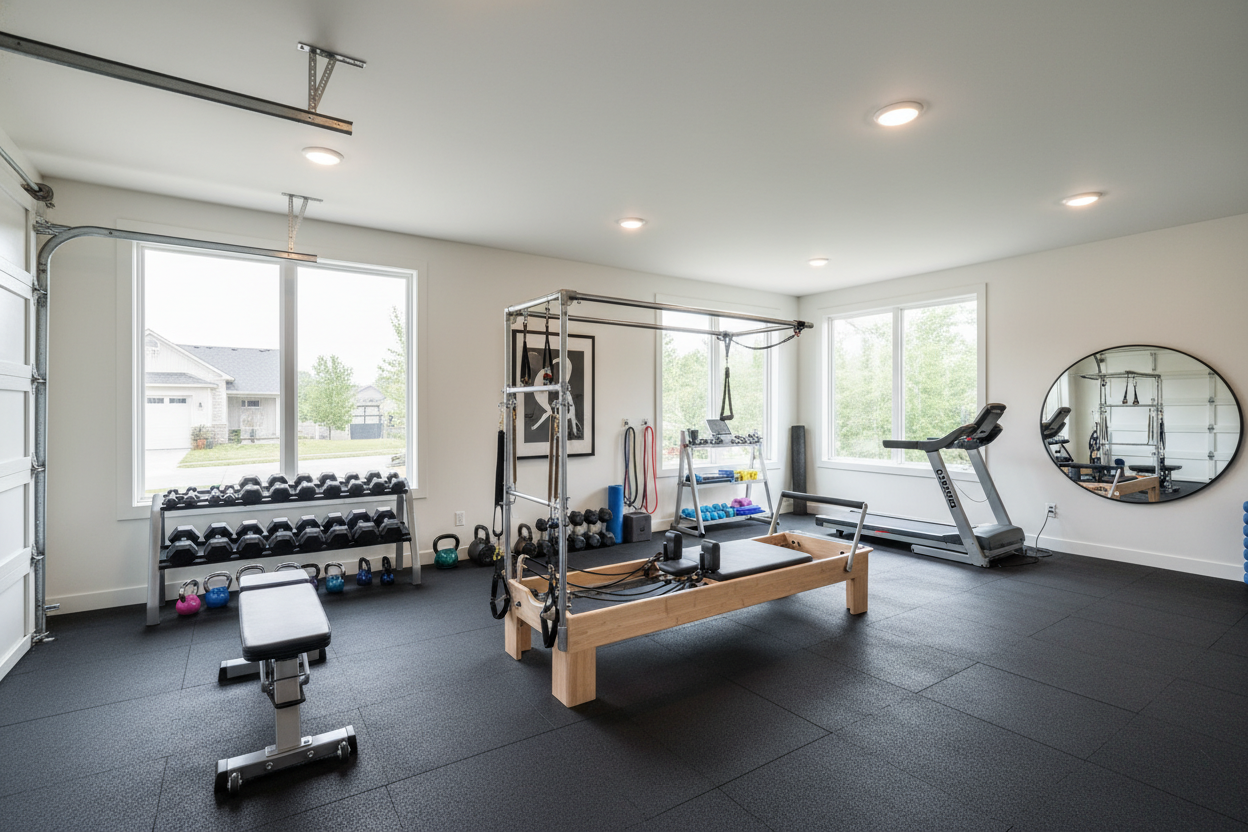
In a home gym, your biggest enemy is clutter. You can't spend 45 seconds hunting for a matching dumbbell or clearing a spot on the floor. I stage my weights right next to my bench before I even start the clock. If you’re using adjustable dumbbells, have your increments pre-planned so you aren't fiddling with pins or dials.
Stability is also key. When you’re moving fast between seated presses and standing raises, you need a floor that isn't slick with sweat or uneven. I always perform this circuit on a durable home gym exercise mat. It gives you the grip you need for lateral raises and protects your floor if you have to drop the weights at the end of a grueling set.
How to Warm Up When You're Short on Time
If you're doing this after a leg day, your core temperature is already high, which is ideal. But if you’re jumping into this cold on a lunch break, you need to prime the pump. You don't need 20 minutes on a treadmill, but you do need blood in the joints.
I usually do two minutes of arm circles and 'band pull-aparts' to wake up the upper back. If you feel particularly stiff, a quick 10-minute HIIT warm-up can get your heart rate up and joints lubricated without burning the local glycogen you need for the actual lifting. Just don't let the warmup become the workout.
FAQ
Can I do this workout every day?
Absolutely not. Your delts need recovery just like any other muscle. Twice a week is the sweet spot, especially if you're already doing heavy chest or back work on other days.
What if I only have one pair of dumbbells?
Adjust your rep counts. If the weights are light, slow down the tempo (3 seconds down, 3 seconds up). If they're heavy, focus on the eccentric (lowering) phase to maximize the stimulus.
Should I do this before or after my main lift?
After. This is an accessory circuit designed to flush the muscle with blood. Save your primary energy for your heavy compound movements like squats, deadlifts, or overhead presses.