The 8-Second Rule for Any Exercise No Gym Protocol
I have spent enough time in cramped hotel rooms and garage corners to know the despair of a missing squat rack. Usually, when you are forced into an exercise no gym routine, the first instinct is to go for high reps. You do fifty push-ups, a hundred air squats, and a lot of sweating, but you never actually feel like you are building muscle. It feels like cardio in disguise, and for those of us used to the crush of a heavy barbell, it is deeply unsatisfying.
Quick Takeaways
- Stop counting reps and start counting seconds; tension is the only metric that matters.
- The 8-second eccentric phase mimics the mechanical load of heavy iron.
- Slow-motion training requires high-density floor support to protect your joints.
- Lower your volume—intensity this high will fry your central nervous system faster than you think.
Why Fast Reps Are Killing Your Living Room Gains
The biggest mistake people make with exercises without a gym is relying on momentum. When you have 315 pounds on your back, physics does the work of creating tension for you. When you only have your body weight, your brain has to do the heavy lifting. If you are dropping into a squat and bouncing out of the bottom, you are bypassing the most productive part of the movement. You are essentially using elasticity to cheat yourself out of growth.
I have seen guys who can bench 300 pounds struggle to finish ten push-ups when they actually stop to control the movement. Most workout no gym plans fail because they prioritize the burn over mechanical tension. A 'burn' is just metabolic stress—it is great, but without tension, you are just getting better at enduring discomfort rather than getting stronger. To grow, you need to make 20 pounds feel like 100, and you do that by removing the bounce.
When you move fast, your muscles only work at their peak for a fraction of a second at the 'sticking point.' The rest is just gravity and swing. By slowing down, you force every motor unit to stay recruited throughout the entire range of motion. It is the difference between a sprint and a slow, agonizing crawl through mud. One gets you tired; the other makes you hard to kill.
Weaponizing the Negative (The 8-Second Eccentric)
This is where the 'Yielding-Eccentric' method comes in. If you cannot add plates, you must add time. The 8-second rule is simple: for every single rep, you take a full eight seconds to lower yourself to the bottom of the movement. This is not a 'slow' rep; it is a controlled descent into hell. You are fighting gravity every inch of the way, refusing to give in until you reach the absolute bottom.
Why eight seconds? Research into hypertrophy suggests that time under tension is a primary driver for muscle protein synthesis, especially when the load is sub-maximal. By the time you reach the bottom of your third rep, your muscles are screaming because they have been under peak tension for nearly 30 seconds. That is equivalent to a heavy set of five on the bench press in terms of the stimulus provided to the tissue.
This approach transforms workouts without gym equipment from 'maintenance' into 'building' phases. You aren't just holding onto what you have; you are creating enough micro-trauma in the muscle fibers to force adaptation. It requires a level of mental discipline that most people lack. It is easy to grind out a heavy triple when the adrenaline is pumping; it is much harder to stay focused while counting 'one-one-thousand, two-one-thousand' while your quads are on fire.
The 8-Second Push-Up (Chest & Triceps)
To execute this properly, start in a high plank. Your core should be as tight as if someone is about to kick you in the ribs. Begin the descent. By count four, you should be halfway down. By count seven, your chest should be hovering exactly one inch off the floor. Do not rest at the bottom. The second you hit eight, explode back to the top in one second. That 'one second' up is the only break you get.
I have found that tucking the elbows closer to the ribs—about a 45-degree angle—saves the shoulders during these long holds. If you flare them out like a T, the 8-second descent will put a massive amount of shear force on the rotator cuff. Keep it tight, keep it slow, and don't let your hips sag. If your form breaks, the set is over.
The 8-Second Bulgarian Split Squat (Legs)
This is the king of the workout routine without gym gear. Elevate your back foot on a chair or a couch. All the weight is on your front leg. As you lower yourself for those eight seconds, focus on keeping your torso upright to hammer the quads, or lean slightly forward to torch the glutes. The stretch you feel at the bottom of an 8-second eccentric is more intense than any leg press I have ever used.
The key here is the transition. Do not 'sit' into the bottom position. You want to stop just before your back knee touches the floor, hold for a heartbeat, and then drive back up. By rep five, your balance will start to waver because your stabilizer muscles are exhausted. This is where the real work happens.
Protecting Your Joints During Slow-Motion Grinds
When you slow things down, you aren't just taxing the muscles; you are putting a lot of sustained pressure on your contact points. Doing 8-second split squats on a hardwood floor is a recipe for bursitis. Your joints need a surface that absorbs the micro-vibrations and provides a stable, non-slip base. I have made the mistake of doing these on a cheap, squishy yoga mat, and I nearly rolled my ankle because the foam was too unstable.
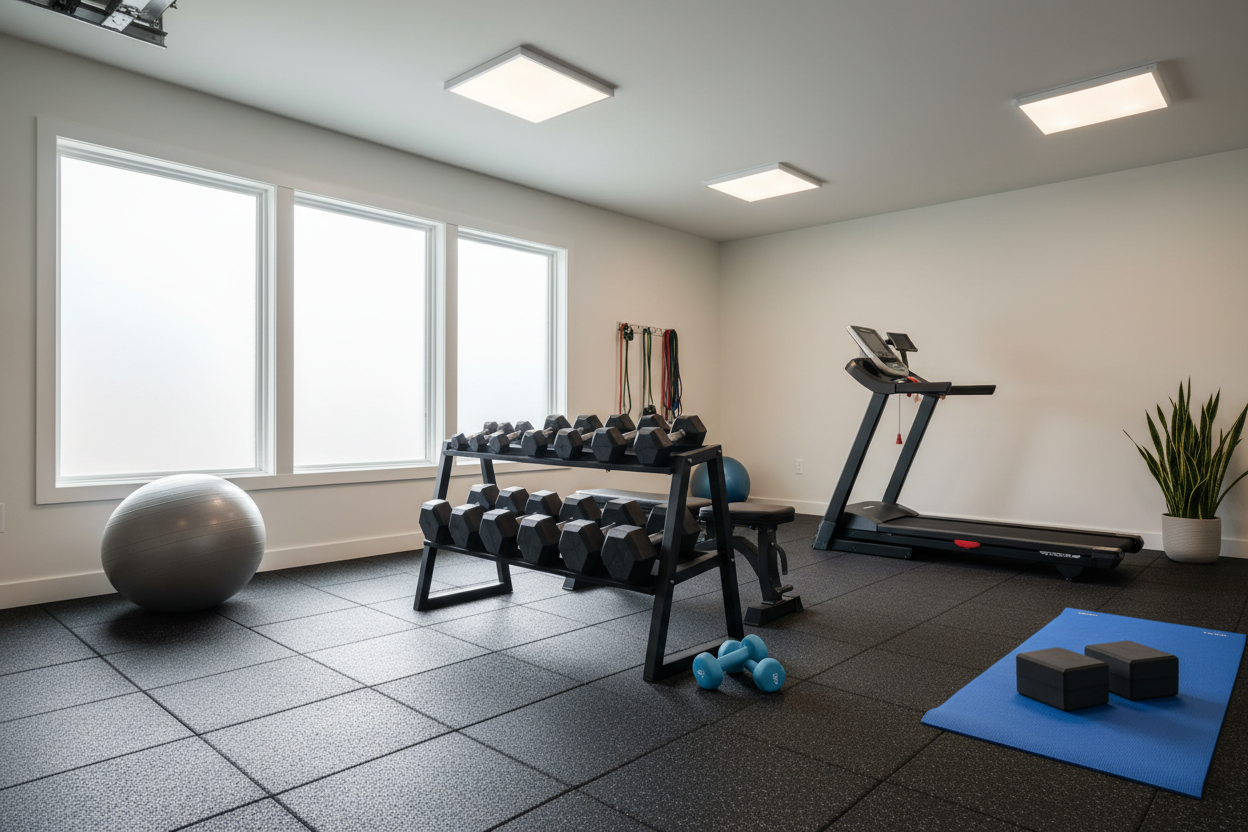
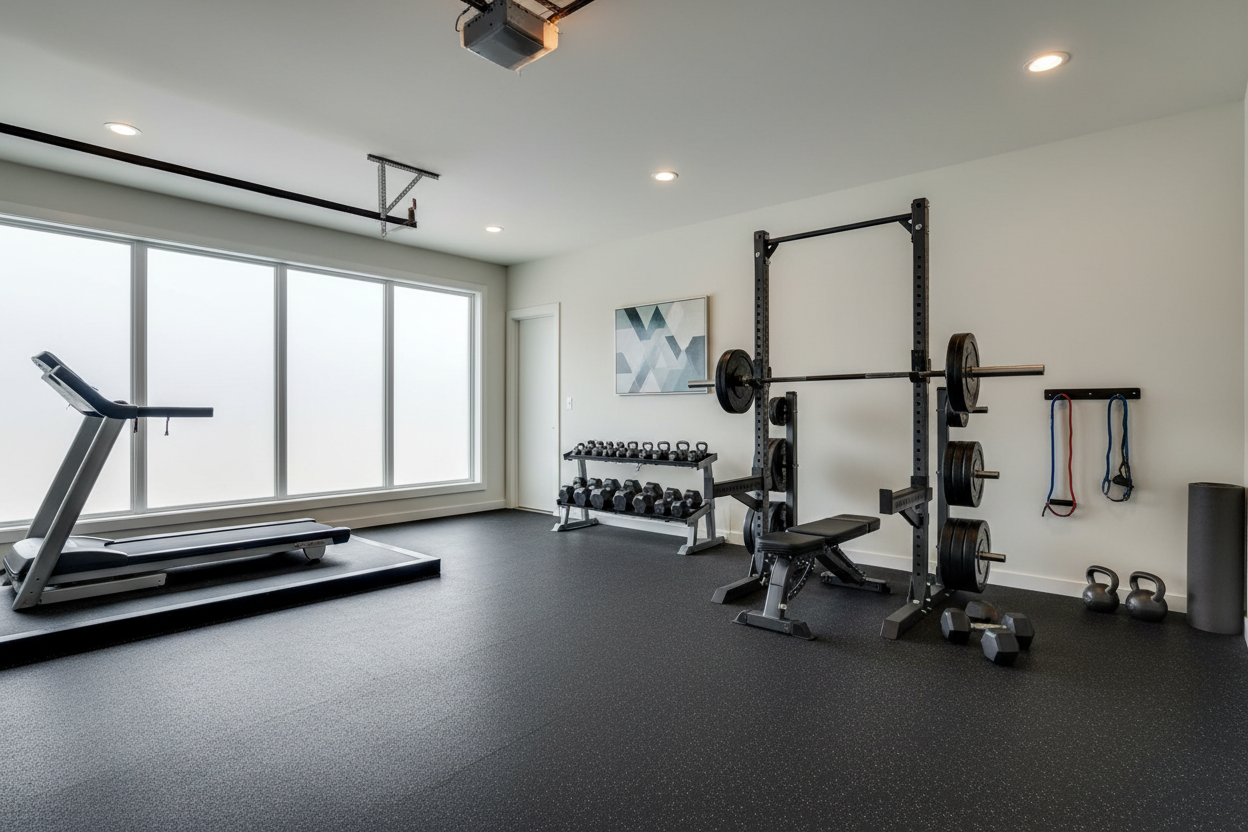
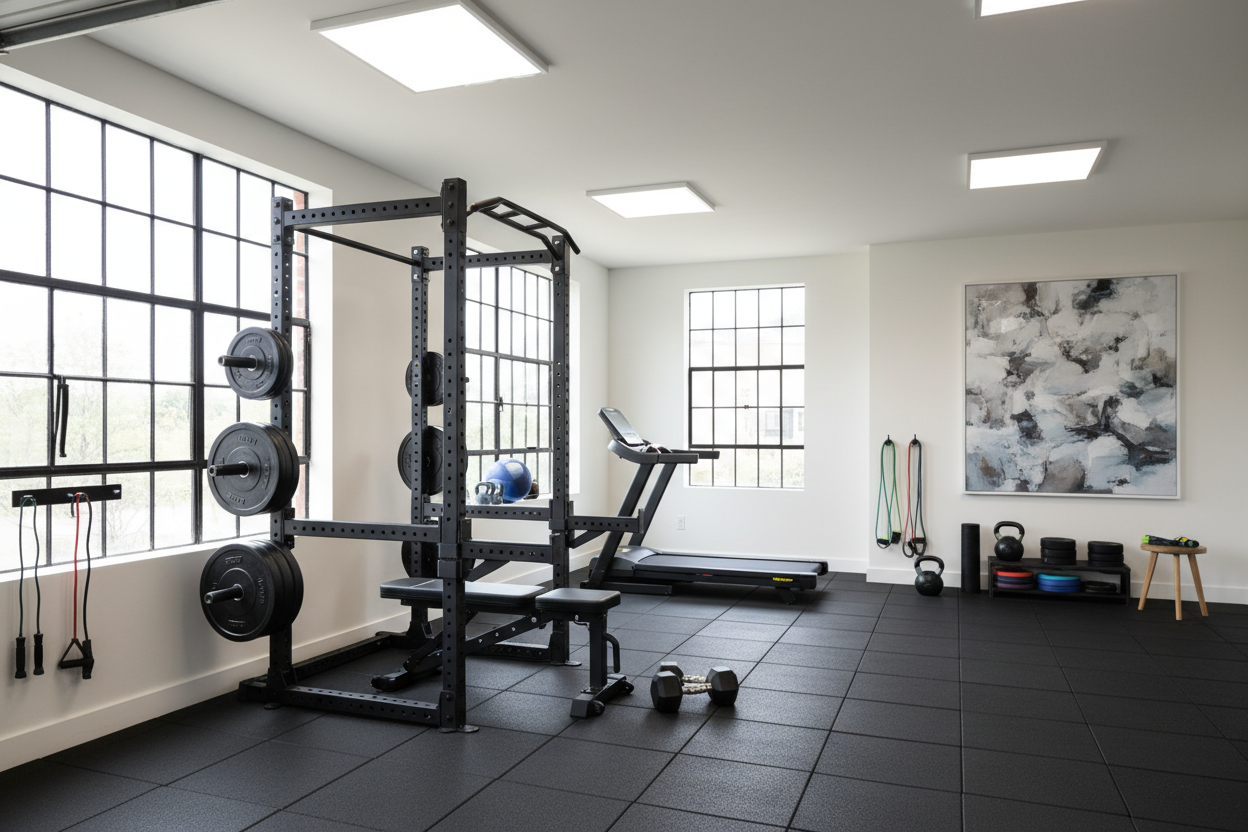
You need something dense and unyielding. I usually recommend a professional-grade gym flooring for home workout setups. You want a surface that stays put when you are shaking during that final 3-second hold. A 6x8 ft space is plenty of room to execute this entire protocol, but the material needs to be thick enough to protect your wrists during push-ups and your knees during those deep lunges. Don't overlook the floor—it is the only piece of 'equipment' that actually matters here.
Structuring Your Weekly Plan
Because the time under tension is so high, you cannot train with the same volume as a standard gym session. If you try to do five sets of twenty with an 8-second negative, you will burn out in a week. Start with three sets of 5-8 reps. If you can do more than 10 reps with a true 8-second count, you are either a freak of nature or you are counting too fast. Use a literal stopwatch if you have to.
I suggest a three-day full-body split. This gives your nervous system time to recover from the intense eccentric loading. Eventually, you can look into building a hybrid routine where you use these slow-motion bodyweight movements as 'finishers' after your heavy lifting sessions. It is a fantastic way to ensure you have hit every fiber possible without needing to load another four plates on the bar.
My Personal Take: The Des Moines Incident
I learned the power of the 8-second rule the hard way. I was in Des Moines for a wedding, stuck in a hotel with a 'gym' that was basically a closet. I figured I would just do some 'easy' bodyweight stuff. I tried this eccentric protocol for the first time—3 sets of split squats and 3 sets of push-ups. I thought I was hot stuff because I can squat 400 lbs. The next morning, I could barely walk down the aisle. I had to hold onto the pew to sit down. My mistake was underestimating the sheer damage slow-tempo training does. It is a tool, not a toy. Treat it with respect, or it will break you.
FAQ
Is an 8-second negative better than lifting heavy weights?
It is not 'better,' it is different. Heavy weights build absolute strength and bone density better. However, for muscle growth (hypertrophy), 8-second negatives are an incredibly effective way to create the necessary mechanical tension when you don't have access to a rack.
Do I need to use a timer?
Yes. Most people count '1, 2, 3' in about 1.5 seconds when they are under strain. Use a clock with a second hand or a metronome app on your phone. If you aren't honest with the count, you are wasting your time.
Can I do this with pull-ups?
Absolutely, and it is the fastest way to increase your pull-up max. Jump to the top, then take 8 seconds to lower yourself until your arms are fully locked out. It is brutal, but it works.