The 4 Easy Weight Exercises for Women I Give Every Beginner
I spent years watching people get paralyzed by choice in big-box gyms. They see an influencer performing a single-leg-squat-to-overhead-press on a Bosu ball and think, 'I can't do that.' You shouldn't do that. It is circus stuff designed for views, not for building a foundation. If you are looking for easy weight exercises for women, you need to ignore the noise and focus on movements that have a low 'skill floor' but a high 'strength ceiling.'
Quick Takeaways
- Focus on four foundational movement patterns: squat, hinge, push, and pull.
- 'Easy' refers to how quickly you can learn the form, not how little effort you put in.
- You only need two pairs of dumbbells and a few square feet of floor space to start.
- Mastering these moves prevents the 'gym-timidation' that stops most people before they see results.
Why 'Easy' Should Mean 'Low Skill', Not 'Low Effort'
There is a massive difference between an exercise that is simple to execute and one that is lazy. When I talk about easy movements, I am talking about 'low skill' exercises. A barbell snatch is high skill—it takes months of coaching just to look decent. A Goblet Squat is low skill—I can teach it to you in three minutes, and you can start getting stronger in four.
Beginners often get lured into complex, multi-joint movements because they look 'functional.' In reality, if you are trying to balance on one leg while curling a weight, you aren't lifting heavy enough to build muscle, and you aren't stable enough to be safe. By sticking to a full body weight training workout built on simple patterns, you can actually push your intensity without worrying about falling over. You want to spend your energy on the muscle, not on the coordination.
The Core Four: Movements You Can Master in 10 Minutes
These four movements cover your entire body. No fluff, no filler.
1. The Goblet Squat: Hold a single dumbbell against your chest like a heavy cup. Keep your elbows tucked. Sit back into your hips and stand up. Because the weight is in front, it acts as a counterbalance, making it much easier to keep your back flat than a traditional back squat.
2. The Dumbbell Floor Press: Most people think they need a bench for chest work. You don't. Lie on the floor, knees bent. Press the dumbbells from your chest toward the ceiling. The floor acts as a safety stop, preventing your elbows from going too deep and straining your shoulders. It is the ultimate upper-body builder for a home setup.
3. The Romanian Deadlift (RDL): This is the 'hinge.' Hold dumbbells at your thighs, keep your legs mostly straight (but not locked), and push your butt back as if you are trying to close a car door with your glutes. Stop when the weights are at mid-shin and come back up. This builds the hamstrings and glutes without the technical complexity of pulling from the floor.
4. The Supported Dumbbell Row: Find a sturdy chair or the edge of your couch. Lean over, support your weight with one hand, and pull a dumbbell to your hip with the other. This targets your back and biceps while keeping your spine supported and safe.
How to Build This Into a Routine That Actually Works
You don't need a 20-page PDF to see progress. To turn these moves into easy weight workouts for women, you just need a simple structure. Perform each exercise for 3 sets of 10 to 12 reps. Rest for 60 seconds between sets. Do this three times a week, leaving at least one day of rest between sessions.
The goal is 'progressive overload.' This means that once 12 reps feel like a breeze, you either pick up a heavier weight or you slow down the movement to make it harder. This beginner free weight workout female lifters can stick to is effective because it is repeatable. When you follow a consistent beginner free weight workout plan, you can actually track your strength gains instead of just 'working out' and hoping for the best.
Gear Talk: What You Need to Pull This Off at Home
You don't need a 500-lb rack to start. For these exercises, I usually recommend a pair of 10-lb and 15-lb rubber hex dumbbells. Avoid those cheap, sand-filled plastic weights you see at big-box retailers; the handles are usually too thick and the plastic eventually cracks. Get cast iron or rubber-coated hex bells.
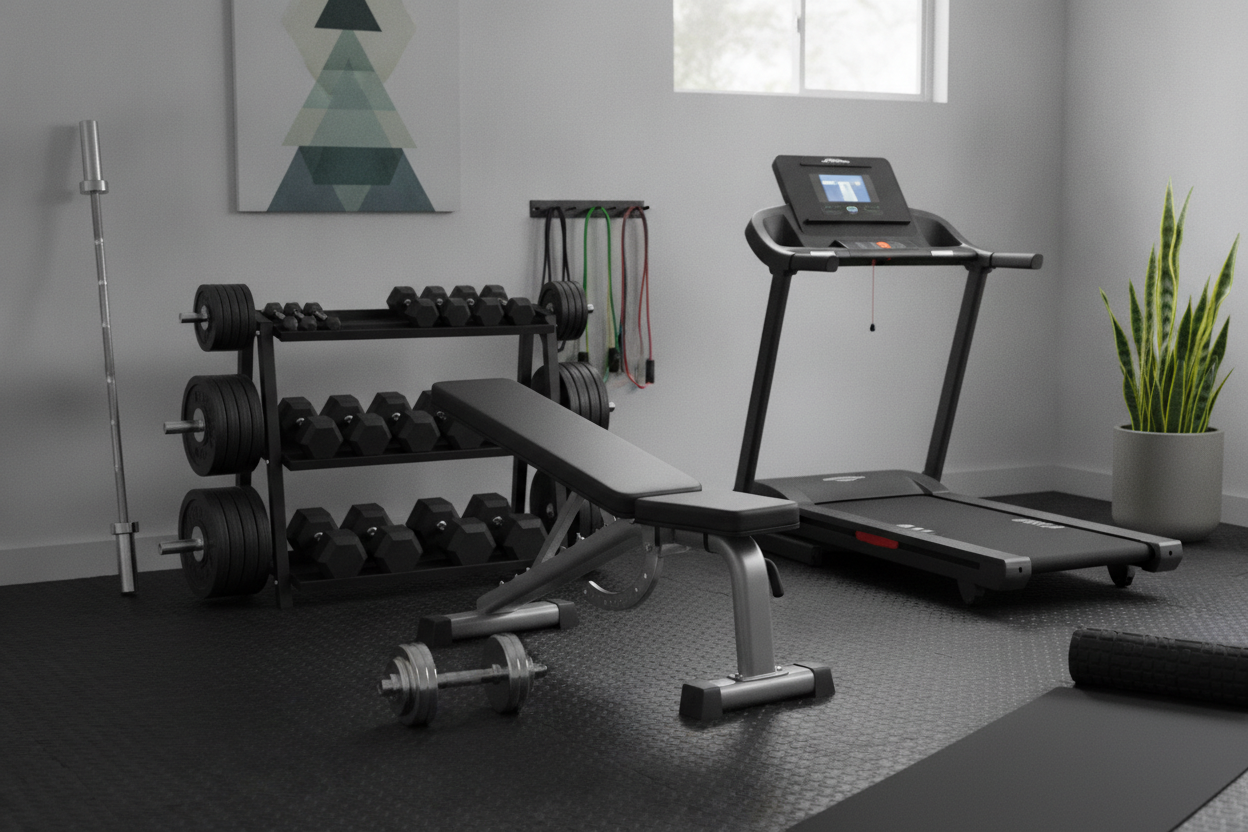
As you get stronger, the floor press will start to feel limiting. Your range of motion is cut short by the ground. That is the point where adding an adjustable weight bench makes sense. It allows you to hit different angles and lets your elbows drop lower for a better stretch in the chest and shoulders. But for the first 90 days? The floor is just fine.
How to Know When You're Ready to Graduate
A women's beginner free weight workout isn't meant to be your routine forever. It is a bridge. You'll know you are ready to move on when you've maxed out the heaviest dumbbells you own or when your rest periods feel like they aren't even necessary because the weights are too light.
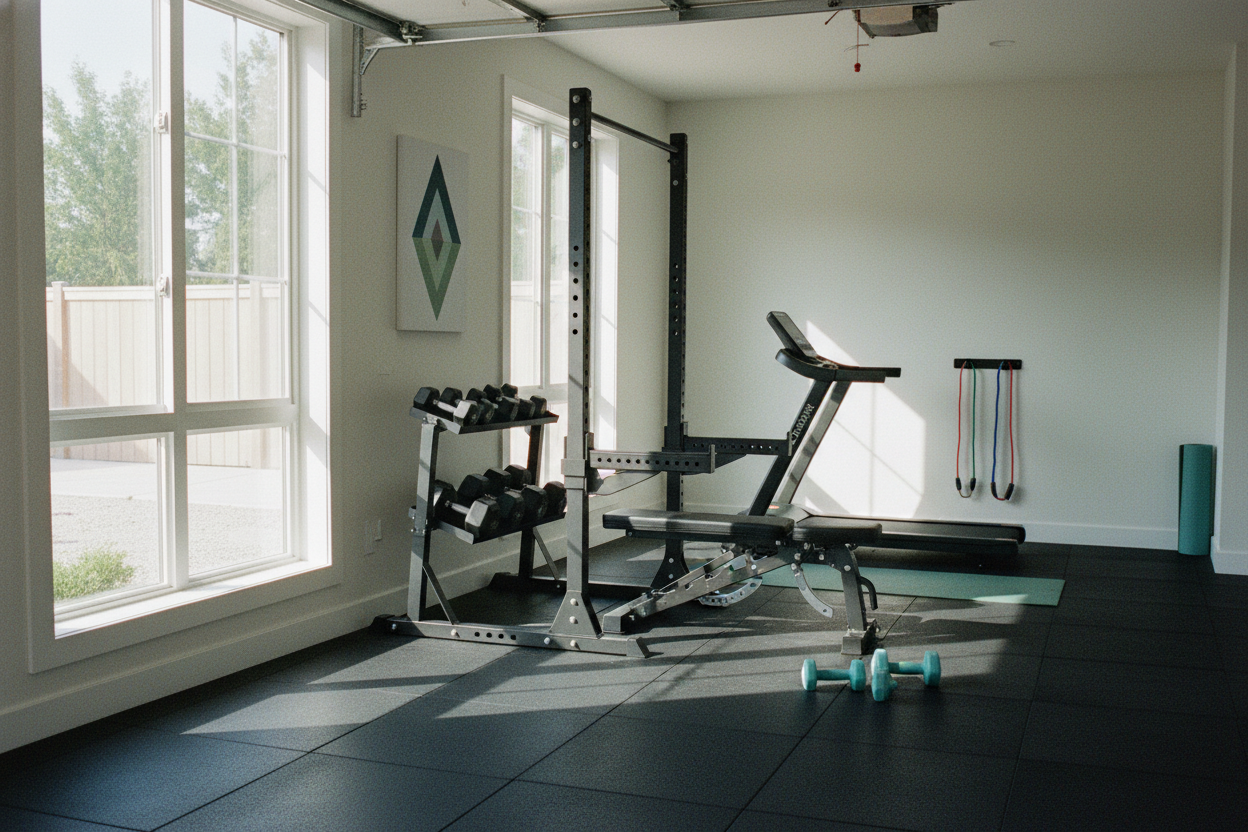
Once you are comfortably moving 30-lb or 40-lb dumbbells for squats, it might be time to look at a power rack weight bench package. Transitioning to a barbell allows you to load the weight much heavier than your grip can handle with dumbbells. These easy moves are the perfect rehearsal for the big lifts you'll do later.
My Honest Experience
When I first started training my wife in our garage, I tried to give her the 'hard' stuff immediately. I had her doing barbell back squats and overhead presses. She hated it. She felt clumsy, her lower back was constantly 'tweaky,' and she didn't feel the muscles working. We stripped it back to these four moves. Within a month, her confidence skyrocketed because she wasn't fighting the equipment anymore; she was just moving the weight. My mistake was thinking complexity equaled results. It doesn't. Simplicity does.
FAQ
Do I need to wear lifting shoes?
No. For these moves, flat-soled shoes like Chuck Taylors or even going barefoot (if you're at home) is actually better than squishy running shoes. You want a stable base.
What if I can't do 10 reps?
Then do 5. Or 3. The number doesn't matter as much as the form. If you can only do 4 good reps, do 4. Next week, try for 5.
Can I do these every day?
I wouldn't. Your muscles grow while you rest, not while you work. Give yourself at least 48 hours between sessions to recover and get stronger.