The 3-Piece Gym Set for Home That Actually Replaces a Membership
I remember the day I finally had enough of the 'home gym nearby' that smelled like wet socks and charged me $80 a month for the privilege of waiting 20 minutes for a squat rack. I spent hours scrolling through Amazon at midnight, comparing specs and trying to find a gym set for home that didn't look like a plastic toy. Most of what I found was overpriced junk, but after five years of training in my garage through heatwaves and snowstorms, I’ve figured out the exact formula.
Quick Takeaways
- Skip the multi-station 'appliances'—they have poor range of motion and break easily.
- Prioritize a rack with 11-gauge steel for safety.
- Olympic-sized iron plates are non-negotiable for progressive overload.
- Protect your floor (and your barbell) with high-density matting.
- A quality 3-piece setup pays for itself in roughly 18 to 24 months.
The All-In-One Appliance Trap
You’ve seen them—the giant, multi-station 'gym appliances' that promise 50 exercises in one machine. They usually feature cheap pulleys, plastic bushings, and a leg developer that feels like it was designed for a toddler. These machines are the reason so many people search for a 'home gym set for sale' on Craigslist six months after buying one. They’re clunky, they have a fixed range of motion that doesn't fit most bodies, and they eventually become very expensive coat racks.
The temptation to buy a used home gym set is real, but be careful. Most of what you find in the used market is rusted, sand-filled plastic weights or bolt-together racks that have more wobble than a Jenga tower. If you want a setup that actually allows you to train hard, you have to move away from the 'machine' mindset and back to the basics of iron and steel.
The Holy Trinity of Garage Gains
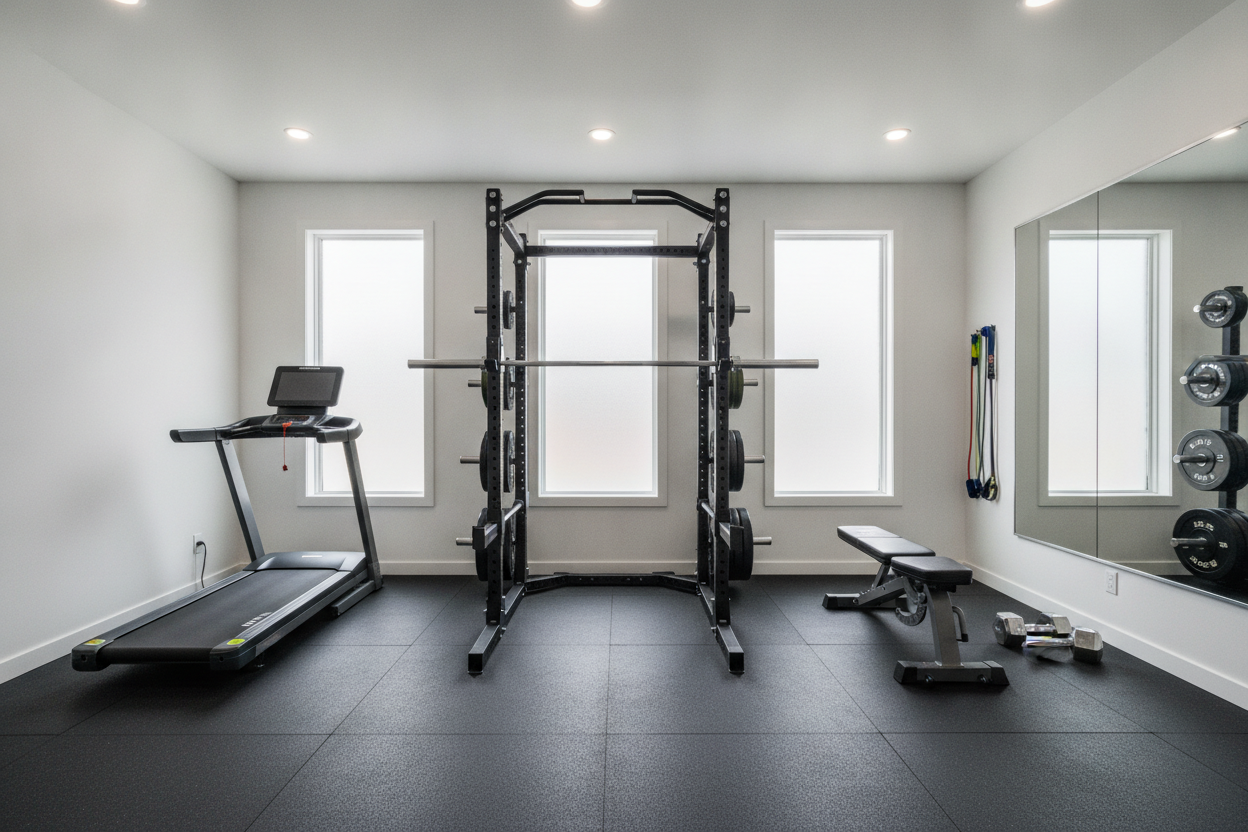
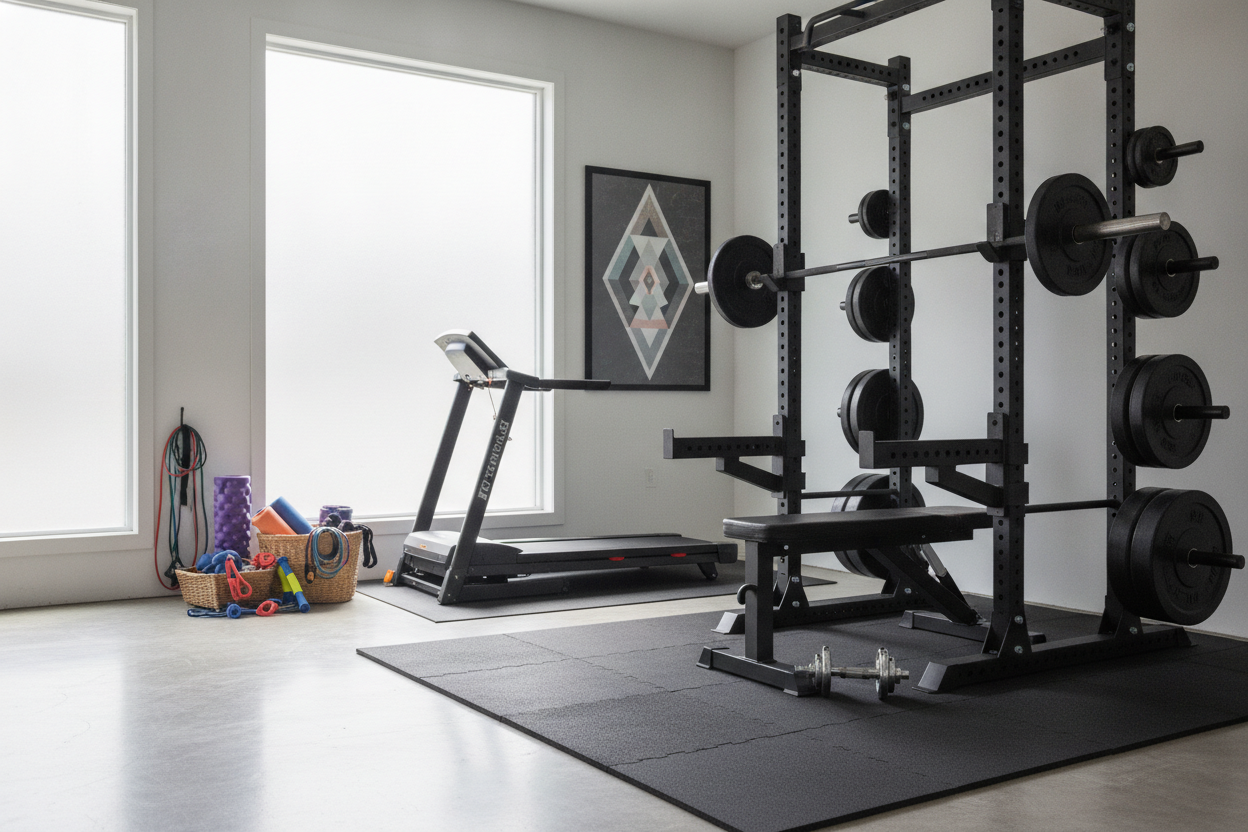
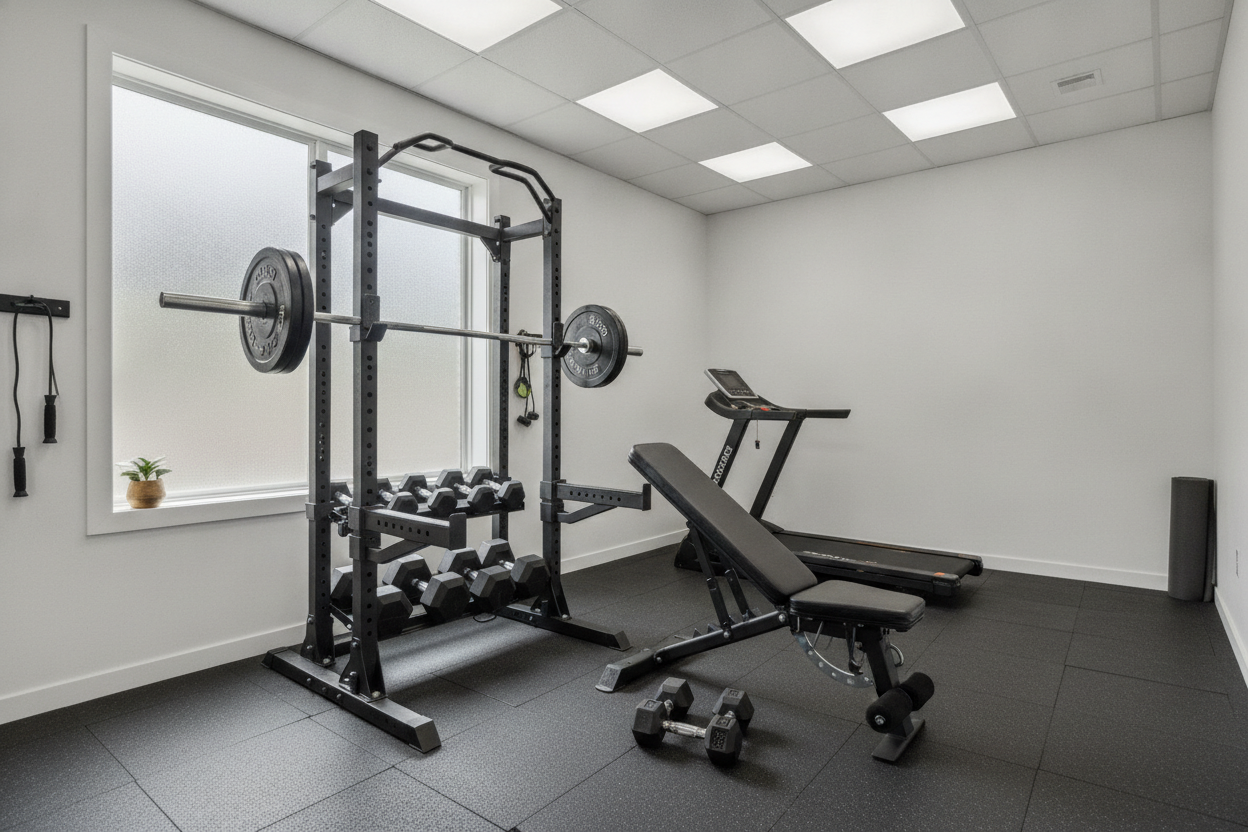
You don't need a 2,000-square-foot facility to get strong. A legitimate at home gym set only requires three core items. This minimalist approach saves space, saves money, and—most importantly—allows you to perform the big compound movements that actually build muscle and strength.
1. A Rack That Can Handle a Missed Squat
The power rack is the heart of your gym. If you’re training alone, this is your only spotter. Look for a rack made of 2x3 or 3x3 11-gauge steel. I personally prefer a half-rack or a full power cage with 5/8-inch holes. This allows you to add attachments later, like dip bars or landmines. Avoid anything with a weight capacity under 500 lbs; even if you aren't squatting that much yet, a lower rating usually indicates thin, unstable steel that will shake every time you re-rack the bar.
2. Real Iron (Not Sand-Filled Plastic)
When looking for a home gym set, people often cheap out on the weights. Do not buy the plastic-coated, sand-filled weights found at big-box retailers. They are bulky, they leak, and they won't fit on a standard Olympic barbell. You need a 7-foot Olympic bar with a 28mm to 29mm shaft and a set of iron or rubber bumper plates. Standard Olympic sizing is crucial because it ensures your gear will be compatible with every other piece of quality equipment you buy in the future.
3. A Bench That Doesn't Wobble
There is nothing more terrifying than un-racking a heavy bench press and feeling the padding shift under your shoulder blades. A good bench should have a weight capacity of at least 800 lbs and a tripod-style base or a very sturdy wide rear stabilizer. Whether you go with a flat bench or an adjustable one, make sure the pad is at least 11 inches wide and uses high-density foam that doesn't bottom out when you lay on it.
Protecting Your Foundation (Don't Skip This)
Before you start bolting your rack to the floor, think about what's underneath it. Dropping a 45-lb plate on bare concrete will eventually crack the slab, and it'll definitely chew up the knurling on your expensive barbell. You need a dedicated Large Exercise Mat For Home Gym to dampen noise and absorb the shock of heavy lifts. For most people, a 6x8ft exercise mat is the 'sweet spot' size—it's large enough to fit a standard power rack and still give you room to step out for lunges or deadlifts without your plates hanging off the edge.
Let's Talk Hard Numbers
I get it—the upfront home gym equipment prices can look scary. A solid rack, bar, and plate set might run you $1,200 to $2,000. But compare that to a $60/month membership plus the gas and time spent commuting. In two years, the home gym has paid for itself. More importantly, you're making smart long-term home gym investments that hold their value. Quality iron plates don't really depreciate; you can often sell them years later for 70% of what you paid.
Ready to Pull the Trigger?
Stop waiting for the 'perfect' time or searching for a 'home gym nearby' that you know you'll hate visiting in February. Buy your gear from reputable brands that specialize in strength, not department stores. If you're overwhelmed by the options, check out a definitive guide to smart buying to see how these pieces fit together. Your future self, the one who just smashed a PR at 6:00 AM in their pajamas, will thank you.
My Biggest Mistake
When I started, I bought a cheap $150 'no-name' rack from a liquidator. The first time I tried to rack 225 lbs, the whole thing swayed nearly four inches to the left. I was so worried about the 'deal' that I ignored the specs. I ended up selling it for $40 three weeks later and buying the heavy-duty rack I should have bought in the first place. Buy once, cry once.
FAQ
How much space do I actually need?
A standard Olympic bar is 7 feet long. You generally want at least 8 to 10 feet of width to comfortably load plates, and about 6 to 8 feet of depth for the rack and bench setup.
Can I put a gym set on the second floor?
It depends on your home's construction, but generally, I advise against it for heavy lifting. 500+ lbs of concentrated weight, plus the impact of a dropped lift, is a lot for standard residential floor joists.
Should I get bumper plates or iron plates?
If you plan on doing Olympic lifts (cleans, snatches) or deadlifting and you're worried about noise, get bumpers. If you just want to squat and bench and want to fit more weight on the bar, iron is the way to go.