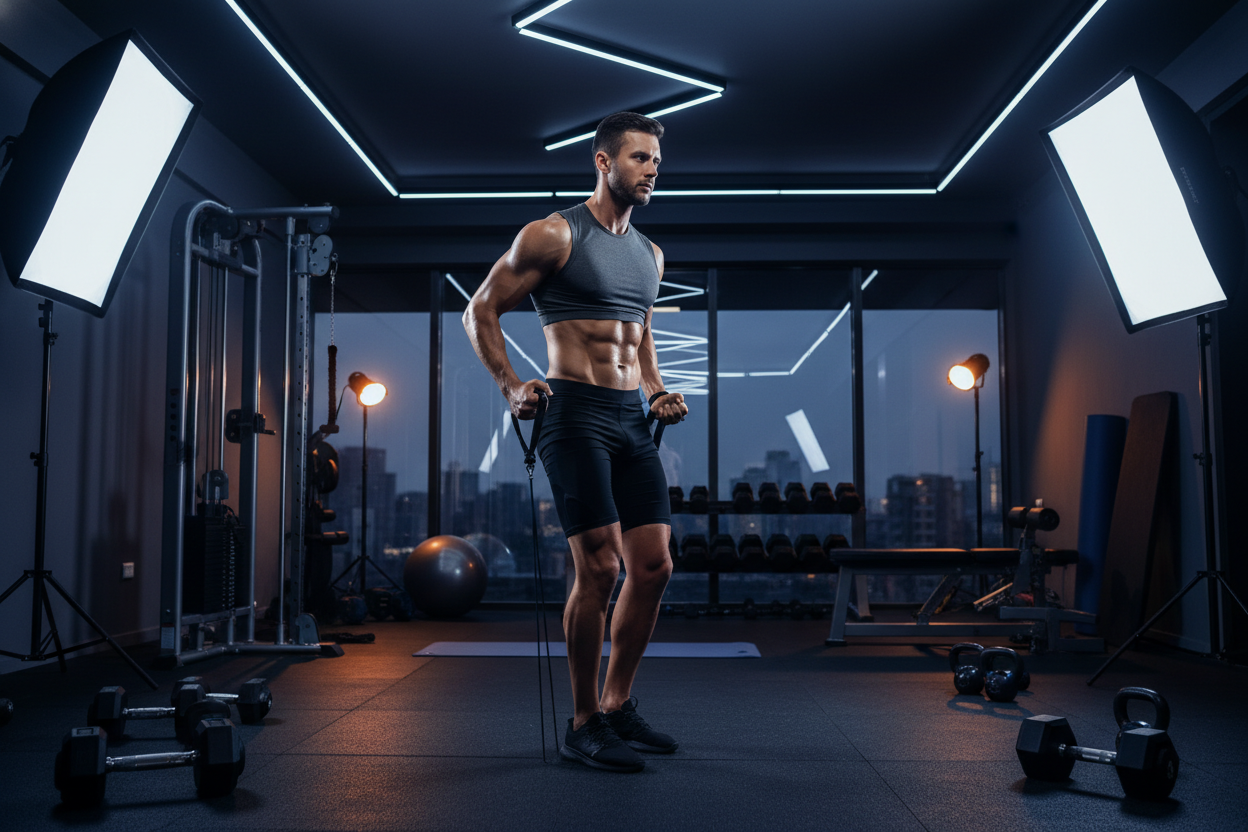
Complete Gym Set for Home: The Definitive Guide to Smart Buying
Building a sanctuary for iron in your garage or spare room is the ultimate commitment to your fitness journey. But navigating the market to find the perfect complete gym set for home can feel like walking through a minefield of cheap plastic and marketing hype.
You want equipment that withstands heavy use, fits your space, and mimics the biomechanics of commercial gear. Whether you are looking to build mass, increase strength, or simply stay active, buying the wrong setup is an expensive mistake you don't want to make.
Quick Summary: Choosing Your Setup
- Assess Your Footprint: Measure ceiling height and floor space; allow a 2-foot buffer around equipment.
- Resistance Type: Choose between free weights (barbells/plates) for stabilizers or cable machines for isolation.
- Weight Capacity: Always buy a kit rated for at least 20% more than your current max lift.
- Expansion Potential: Ensure the full home gym set allows for add-ons like dip bars or extra weight stacks.
- Material Quality: Look for 11-gauge steel frames and high-density foam padding.
Defining the "Complete" Setup
The term "complete" is often misused in fitness marketing. A true full gym set for home must allow you to perform the fundamental human movements: push, pull, squat, hinge, and carry.
If a gym equipment set only allows for chest presses and leg extensions but neglects the posterior chain (your back and hamstrings), it creates muscle imbalances. Real completeness means versatility. You need gear that adapts to compound movements, not just isolation exercises.
The All-in-One Machine vs. Free Weight Kits
When shopping for a gym kit home, you will generally face two paths. The first is the multi-station machine. These are safe and compact but often limit your range of motion. They lock you into a fixed path, which reduces the activation of stabilizer muscles.
The second path is a full gym set based around free weights—usually a rack, a barbell, plates, and a bench. From a coaching perspective, this is superior for long-term strength development. Moving a barbell through space requires coordination and core stability that a machine simply cannot replicate.
Critical Features of a High-Quality Set
Don't get distracted by flashy red knobs or Bluetooth connectivity. Focus on the steel. When evaluating a gym equipment home set, look at the gauge of the steel tubing.
Commercial gyms use 7-gauge or 11-gauge steel. Many cheap gym kits for home use 14-gauge or higher (which means thinner metal). If the rack wobbles when you rack the bar, it is not safe. Stability is the most underrated feature of any full gym equipment for home.
The Importance of the Bench
The bench is the unsung hero of your complete home gym set. It supports your spine under load. Avoid benches that feel hollow or have gaps between the seat and back pad greater than 2 inches.
A wide pad (12 inches or more) provides a stable platform for your shoulders during pressing movements. If the pad is too narrow, you lose leverage and increase the risk of shoulder injury.
My Training Log: Real Talk
I need to be honest about my first experience buying a "complete" setup online. I bought a budget-friendly all-in-one tower back in 2016 because the price was unbeatable. The photos looked sleek, but the reality was gritty.
The specific issue wasn't even the weight limit; it was the "cable drag." Every time I did a tricep pushdown, the movement felt like I was pulling the cable through wet sand rather than smooth air. It hitched and jerked, which completely ruined the eccentric (lowering) part of the rep.
Worse yet was the knurling on the lat pull-down bar. It was practically smooth chrome. As soon as my hands got slightly sweaty, my grip failed long before my back muscles did. I ended up having to wrap athletic tape around it just to get a workout in. Lesson learned: high-quality pulleys and proper aggressive knurling are worth the extra investment.
Conclusion
Investing in a complete gym set for home is an investment in your longevity. By prioritizing heavy-duty steel, versatile equipment, and proper biomechanics over flashy add-ons, you build a training environment that demands progress.
Stop waiting for the perfect time to start. Measure your space, set your budget, and choose the kit that aligns with your strength goals. The best gym is the one you can walk to in your socks.
Frequently Asked Questions
How much space do I really need for a full gym set?
For a free-weight setup involving a 7-foot Olympic barbell, you need a minimum width of 10 feet to load plates comfortably. A 10x10 foot area is the standard recommendation for a rack, bench, and bar clearance.
Is a multi-gym safer than free weights for beginners?
Generally, yes. Multi-gyms with weight stacks eliminate the risk of dropping weights on yourself. However, they do not teach proper lifting mechanics or balance as effectively as free weights do.
Can I install gym equipment on the second floor?
It depends on the structure of your home. A standard residential floor is rated for 40 pounds per square foot live load. A 300lb rack plus 300lbs of weights and a 200lb user concentrates a lot of mass. Always consult a structural engineer or place heavy gear on a ground-floor concrete slab.