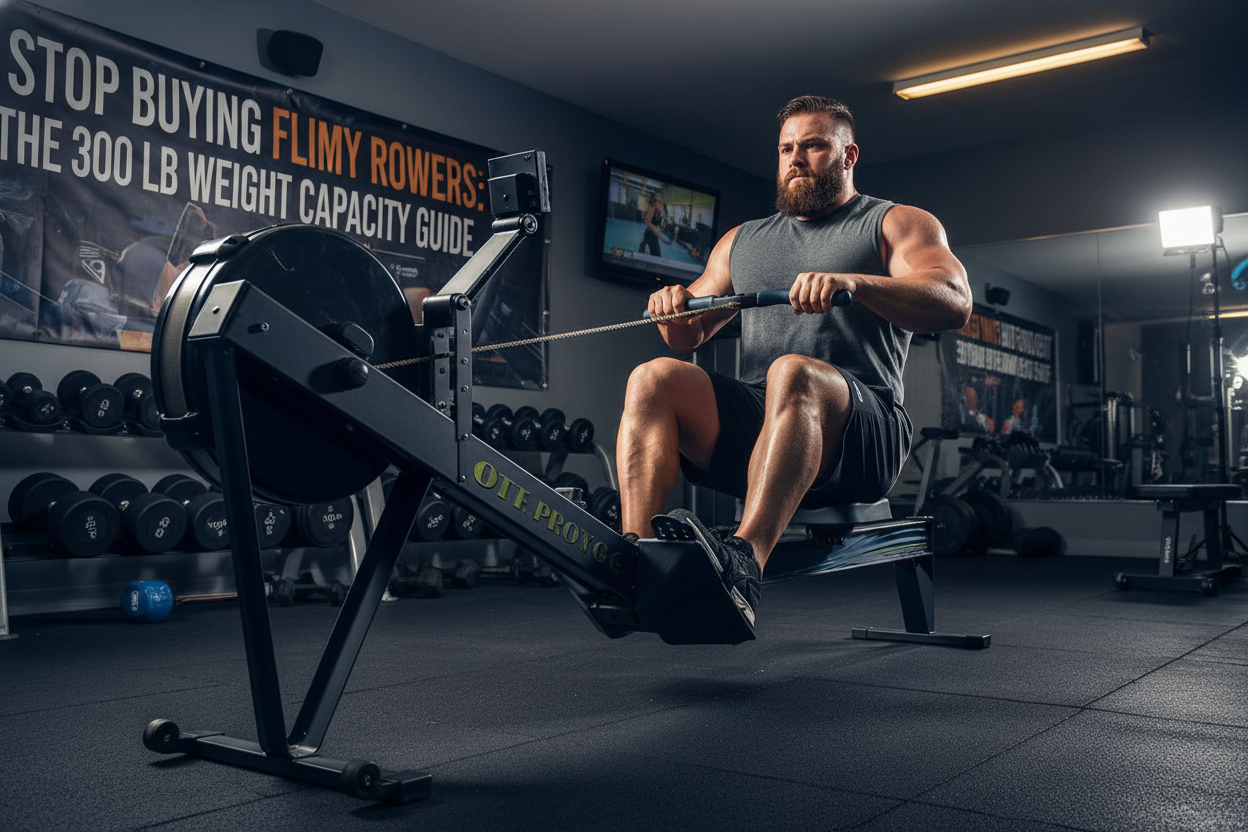
Stop Buying Flimsy Rowers: The 300 lb Weight Capacity Guide
If you are a larger athlete or just starting a weight loss journey, the standard gym equipment specs often feel like a personal slight. You look at the manual, see a 250 lb limit, and walk away. Finding a rowing machine 300 lb weight capacity isn't just about safety; it is about finding a machine that won't wobble, creak, or flex when you put real power behind the handle.
When you carry more mass, you generate more force. A budget rower might technically hold your weight while static, but once you start driving with your legs, the dynamic load changes everything. This guide cuts through the marketing fluff to help you understand what actually makes a rower heavy-duty.
Key Takeaways: Choosing a Heavy Duty Rower
If you need a quick answer on what matters most for a rowing machine for a heavy person, here is the checklist:
- Frame Material: Look for steel or commercial-grade aluminum monorails. Plastic components in the structural frame are a no-go.
- Rail Length & Inseam: Big guys often have longer legs. Ensure the rail accommodates an inseam of at least 38 inches.
- Seat Durability: Contoured, high-density foam seats prevent numbness and cracking under heavier loads.
- Resistance Type: Air and water rowers typically offer smoother resistance curves for powerful rowers compared to budget magnetic options.
- The "Wiggle" Test: A machine with a wider footprint and heavier gross weight offers better lateral stability.
Why Weight Capacity is More Than Just a Number
Many manufacturers inflate their rowing machine weight capacity numbers. They test the machine with a static load—literally placing weights on the seat without moving it. But rowing is dynamic.
When you are a 300 lb person driving back at full intensity, the force exerted on the rail and the footplates can exceed your body weight significantly. A heavy duty rowing machine is designed to handle this dynamic stress.
If you buy a machine that barely meets your weight requirement, you will likely experience rail flex. This causes the seat rollers to bind, creating a bumpy, uneven stroke that ruins the workout and wears out the bearings in months rather than years.
Critical Features for the Big & Tall Rower
Structural Integrity and Frame Weight
The best rowing machine for a heavy person usually weighs more itself. If the machine weighs 50 lbs, it is going to lift off the ground when a 300 lb user creates momentum. Look for machines with a gross weight of over 70-100 lbs. This natural ballast keeps the rower planted during high-intensity interval training (HIIT).
The Seat and Monorail
Comfort is the biggest barrier to consistency. A rowing machine for plus size users requires a seat that is wider and made of firmer material. Soft, cheap foam compresses to the plywood base instantly under heavy weight, leading to tailbone pain within five minutes.
Furthermore, pay attention to the monorail height. A standard rowing machine sits very low to the ground. For big guys or those with limited mobility, a "high profile" rower (sitting 20 inches off the floor, similar to a chair) makes getting on and off significantly easier and safer.
Footplate Design and Width
A rowing machine for big guys needs a wider stance. Many compact rowers place the footplates too close together. If you have a larger midsection or thick thighs, a narrow stance makes it impossible to reach the "catch" (the starting position) comfortably because your legs have nowhere to go. Look for machines with adjustable foot width or a wider monorail design.
Resistance Types: What Handles the Power?
Not all resistance mechanisms are built for the torque a heavy user can produce.
- Air Resistance: The gold standard. The harder you pull, the more resistance you get. It scales infinitely with your strength, making it ideal for a rower machine for heavy person usage.
- Water Resistance: Similar to air, it provides a natural feel and handles heavy power output well without slipping.
- Magnetic Resistance: Be careful here. While quiet, budget magnetic rowers often have a "top end" resistance that feels too light for a strong, heavy user. If you go magnetic, ensure it is a commercial-grade model.
My Training Log: Real Talk
I want to share a specific experience that specs on a website won't tell you. A few years ago, I was training a client who was roughly 310 lbs. We tried to save money by buying a mid-range magnetic rower rated for "300 lbs."
The issue wasn't the frame snapping; it was the footplates. Every time he drove back for a hard stroke, the plastic heel cups would flex outward. It felt mushy, like rowing through mud. Even worse was the sound—a rhythmic clunk-squeak every time the seat rolled over the joint in the rail (which came in two pieces to save shipping costs).
We eventually swapped it for a welded-frame air rower. The difference was immediate. The "dead spot" at the catch disappeared. When you are heavy, you need that solid, unyielding surface to push against. If the machine flexes, you are leaking energy. Don't settle for the squeak; get a solid rail.
Conclusion
Finding a rowing machine for 300lb person is an investment in your health, but only if the machine lasts. Ignore the flashy screens and Bluetooth features until you have verified the steel gauge, the rail stability, and the warranty. A rower that supports you confidently is the one you will actually use. Build your engine on a frame that can handle the horsepower.
Frequently Asked Questions
Is a water or air rower better for a heavy person?
Generally, air rowers are superior for heavy users because they offer infinite resistance and are typically built with commercial-grade durability. However, water rowers are also excellent as they provide consistent resistance and the water tank acts as a natural counterweight for stability.
Does the weight capacity include the force of pulling?
No, the listed capacity is usually the static weight limit. This is why it is recommended to buy a machine with a capacity 50 lbs higher than your actual weight to account for the dynamic force generated during vigorous rowing.
Can I use a rowing machine if I am over the weight limit?
It is not recommended. Exceeding the limit increases the risk of the seat rollers shattering, the rail warping, or the frame cracking during a stroke, which could lead to significant injury.