The 3-Day Machine Training Program I Give to Every New Client
We've all been there. You walk into a commercial gym, see 40 different stacks of iron, and start doing a lap like you're looking for a parking spot at a crowded mall. You might hop on a chest press because it's open, then wander over to a bicep curl because it looks easy. This 'scavenger hunt' approach to fitness is exactly why most people never see their bodies change. Using a machine training program is the fastest way to stop guessing and start seeing actual muscle definition.
Quick Takeaways
- Frequency is king: Hitting the full body 3 times a week beats 'bro-splits' for beginners.
- Consistency matters: Stop swapping exercises every session; stick to the plan for 8 weeks.
- Track everything: If you aren't moving the pin down the stack, you aren't growing.
- Safety first: Machines provide the stability you need to push to failure without a spotter.
The Problem With 'Winging It' on the Gym Floor
Beginners often treat the gym like a buffet—a little bit of this, a little bit of that. This lack of structure is the primary reason for plateaus. When you pick random resistance weight machine exercises based on what's available, you lose the ability to apply progressive overload. Progressive overload isn't just a fancy term; it's the law of making your muscles adapt by doing slightly more over time.
If you don't have a set gym routine using machines, you'll never know if that 50-pound press was harder today than it was last Tuesday. You end up doing 'junk volume'—moving weight just to move it, without any real tension or intent. A structured workout plan using gym machines ensures you hit every muscle group with the right intensity to spark a change, rather than just getting sweaty and calling it a day.
Why You Should Stick to a Full Body Framework First
For a novice, a whole body machine workout is vastly superior to splitting your days by body part. Why? Because frequency drives adaptation. When you're starting a machine strength training routine, your muscles and nervous system need to learn the movements. By hitting your legs, back, and chest three times a week instead of once, you're giving your body triple the opportunities to grow.
Recovery is also easier to manage on a full-body plan. Since you aren't doing 12 sets of just chest in one day, you won't be so sore that you can't lift your arms for a week. I always tell my clients to use a template. I even provide The Bare-Bones Gym Machine Workout Routine PDF I Actually Use to keep them accountable. It’s much harder to skip a set when it’s staring at you from a checklist. This approach makes a beginner gym workout female machines or male lifters use much more effective than a random circuit.
The 3-Day Routine: Your New Blueprint
This gym machine program is designed to be performed three days a week—think Monday, Wednesday, and Friday. This leaves plenty of time for recovery. We’ve split this into three distinct days (A, B, and C) to keep the movements fresh and ensure we are hitting the muscles from different angles while maintaining a workout routine using gym machines that is easy to follow.
Workout A: The Heavy Push/Pull Foundation
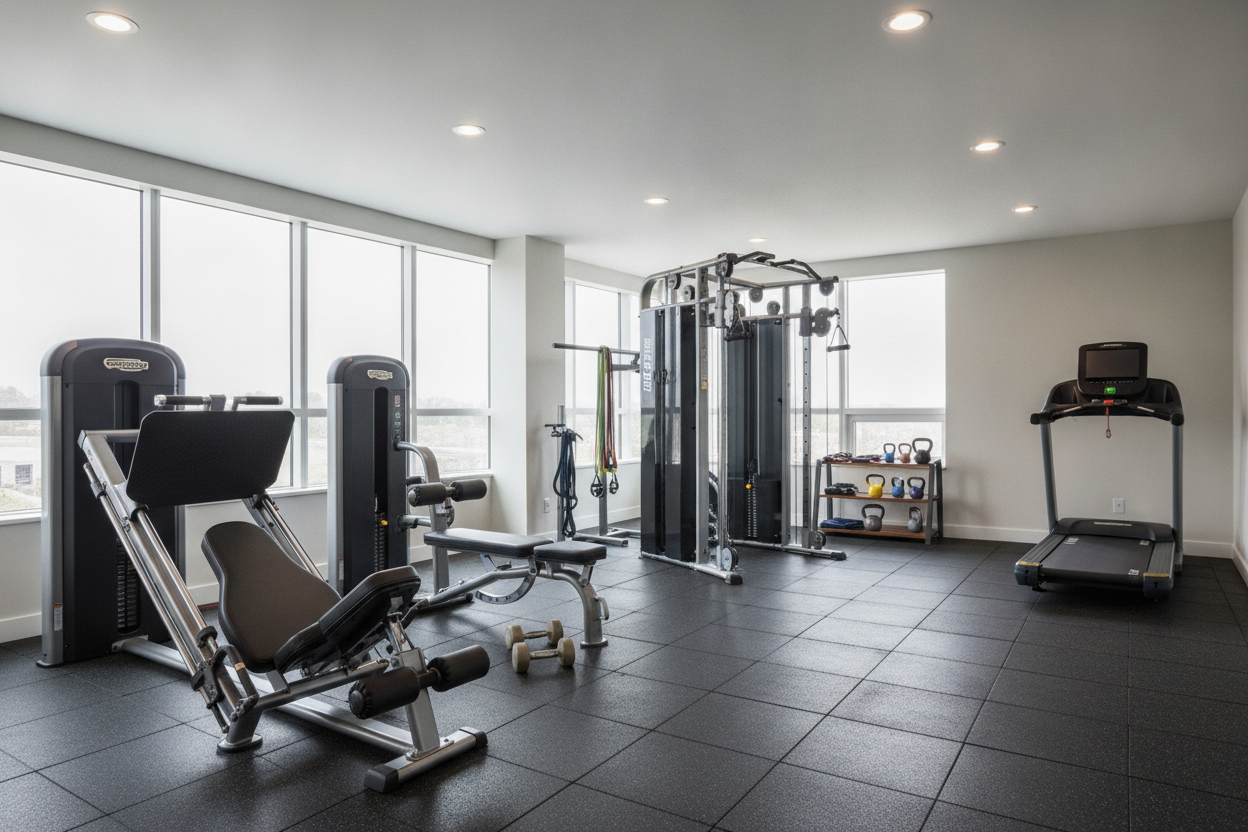
Day one is all about the big movers. We start with the Leg Press to target the quads and glutes—aim for 3 sets of 10-12 reps. Keep your feet shoulder-width apart and don't lock your knees at the top. Next, move to the Seated Chest Press. This is your primary 'push' movement. Focus on a controlled 2-second eccentric (lowering) phase.
Finish the session with a Lat Pulldown for your back and a Machine Crunch for core stability. This weight machine gym workout focuses on high-yield movements that build a solid foundation. If you're looking for an easy gym machine workouts entry point, this is it. Don't rush; focus on the 'squeeze' at the peak of every rep.
Workout B: Hamstrings, Shoulders, and Core
Workout B shifts the focus slightly to ensure a balanced full body gym machine workout female and male trainees can both benefit from. We start with the Seated Hamstring Curl (3 sets of 12). Most people neglect their hamstrings, but these are the 'biceps of the legs.' Follow this with a Shoulder Press machine to build that capped shoulder look.
For the 'pull' portion, use the Seated Row. Keep your chest against the pad and pull with your elbows, not your hands. We finish with triceps. Stop Googling 'Arm Workout Gym Female Machine' and Try This Instead: the classic cable or machine triceps pushdown. It’s more effective than any 'toning' gimmick you'll find on social media. This is a complete workout plan with equipment that hits the spots most people miss.
Workout C: Isolation and Weak-Point Training
The final day of the week is a gym circuit workout using machines that focuses on isolation. We start with Leg Extensions and Pec Deck (Chest Fly). Since these are isolation moves, we go for slightly higher reps—around 12-15. This helps with the 'mind-muscle connection' that beginners often struggle with.
Wrap up the week with Rear Delt Flies (to fix that 'desk-job posture') and Calf Raises. Even if you're following a women's machine workout plan, don't skip the upper body work. Building shoulder and back muscle creates the illusion of a smaller waist. This full body workout for beginners with equipment ensures no muscle is left behind before you head into your weekend recovery.
How to Progress When the Stack Feels Too Light
The biggest mistake in a workout plan machines only is staying at the same weight for months. Once you can hit the top end of your rep range (let's say 12 reps) with perfect form, it's time to move the pin down. But what if the next plate is too heavy? This is a common issue with resistance weight machine exercises in commercial gyms where the jumps are 10 or 15 pounds.
If the next jump is too big, increase your reps first. If you did 12 reps at 50 pounds, try to get 15 reps before moving to 60. You can also slow down the tempo. Spend 3-4 seconds on the lowering phase of the rep. This increases 'time under tension,' making the weight feel heavier without actually adding iron. This is the secret to a successful machine strength training routine.
Can You Really Lose Weight Sticking Just to Machines?
I get asked for a machine workout plan for weight loss constantly. Here’s the cold truth: weight loss happens in the kitchen, but muscle is built in the gym. A high-intensity beginner gym equipment workout female or male lifters perform will preserve your lean muscle while you're in a calorie deficit. This keeps your metabolism high.
Instead of just doing hours of cardio, a full body gym machine workout female focus ensures that when the weight comes off, you actually have a toned, athletic shape underneath. Machines are incredibly efficient for this because you can move from one exercise to the next with minimal rest, keeping your heart rate elevated. It’s essentially a gym routine using machines that doubles as a metabolic booster.
Personal Experience
When I first started training, I was embarrassed by how weak my stabilizers were. I tried to do barbell squats and almost tipped over. I spent the next six months exclusively on a machine training program. I felt like a failure at first because 'real lifters use free weights.' But you know what? I gained 10 pounds of muscle on those machines because I could actually push myself to the limit without the fear of dropping a bar. My biggest mistake was not tracking my numbers; I just 'felt' the workout. Once I started writing down my weights, my progress exploded. Don't let ego get in the way of the most stable tool in the gym.
FAQ
Are machines as good as free weights?
For building muscle size (hypertrophy), absolutely. Machines remove the need for balance, which allows you to focus 100% of your effort on the target muscle. For raw athletic power, free weights have an edge, but for most people looking to look better, machines are top-tier.
How long should this workout take?
If you are focused and not scrolling on your phone, you should be in and out in 45 to 60 minutes. That includes a quick 5-minute warm-up on the treadmill or elliptical.
Can I do this program every day?
No. Your muscles grow while you rest, not while you're lifting. Stick to 3 days a week with at least one day of rest between sessions. If you feel like you need more, increase the intensity of your sets, not the frequency.