Your Spare Room Needs an Exercise Body Gym, Not More Iron
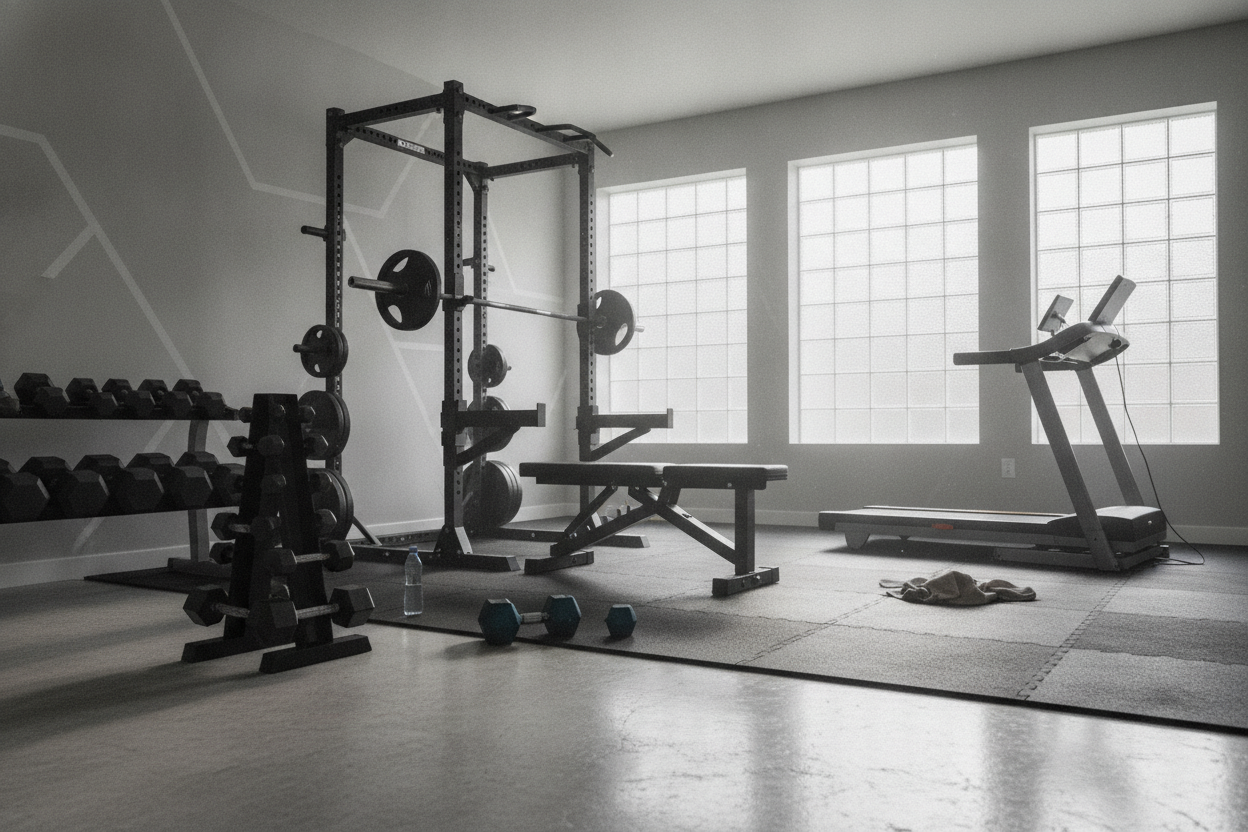
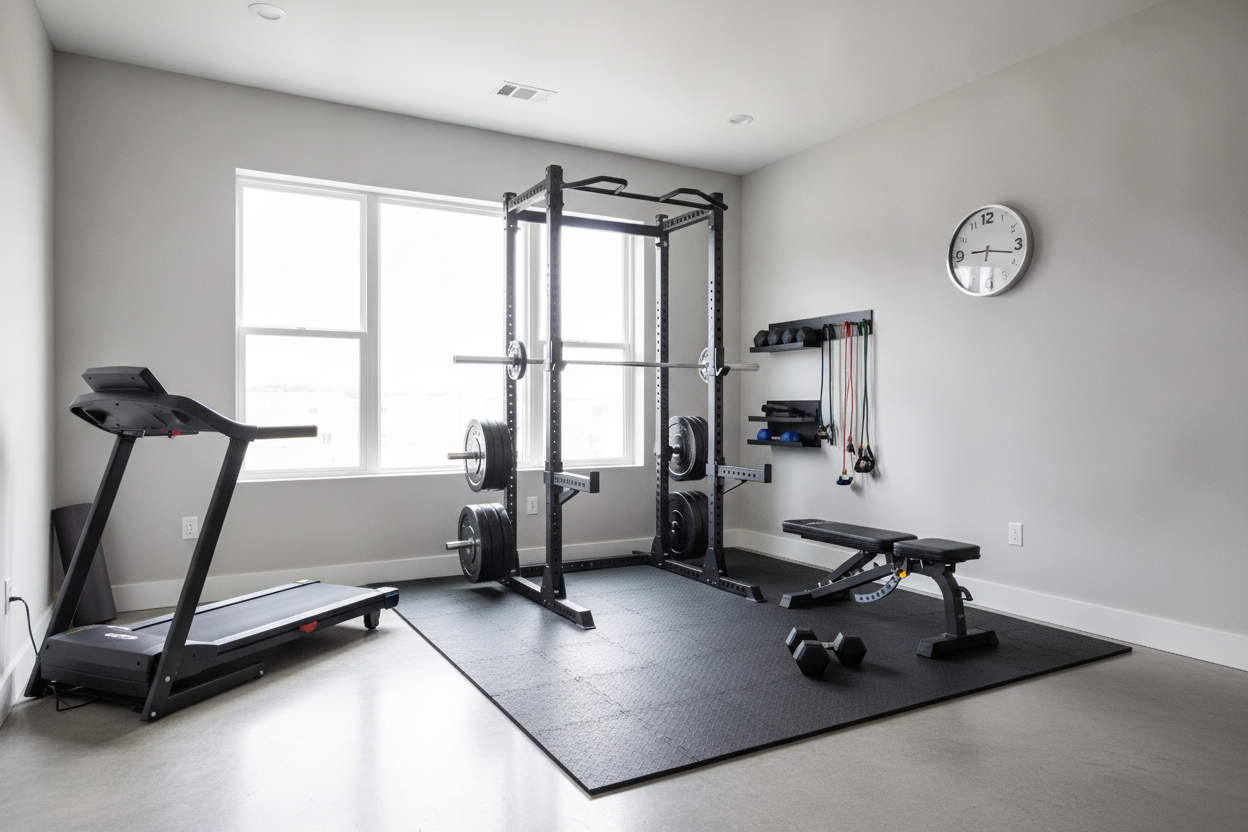
I remember the day I realized my 10x10 spare room was a graveyard for heavy metal. I'd bought a half-rack, a flat bench, and a set of plates that took up 70% of the floor, leaving me about three square feet to actually breathe. It wasn't a gym; it was a storage unit that I occasionally sweated in. Most people think they need a miniature version of a commercial facility to get results, but for most of us, an exercise body gym that prioritizes movement over mass is the smarter play.
- Open floor space is more valuable than a leg extension machine.
- A single 6x8ft mat creates a dedicated 'go zone' for any workout.
- Adjustable kettlebells and suspension trainers replace 90% of bulky gear.
- High-density rubber flooring saves your subfloor and your joints.
The Trap of the 'Mini Commercial Gym'
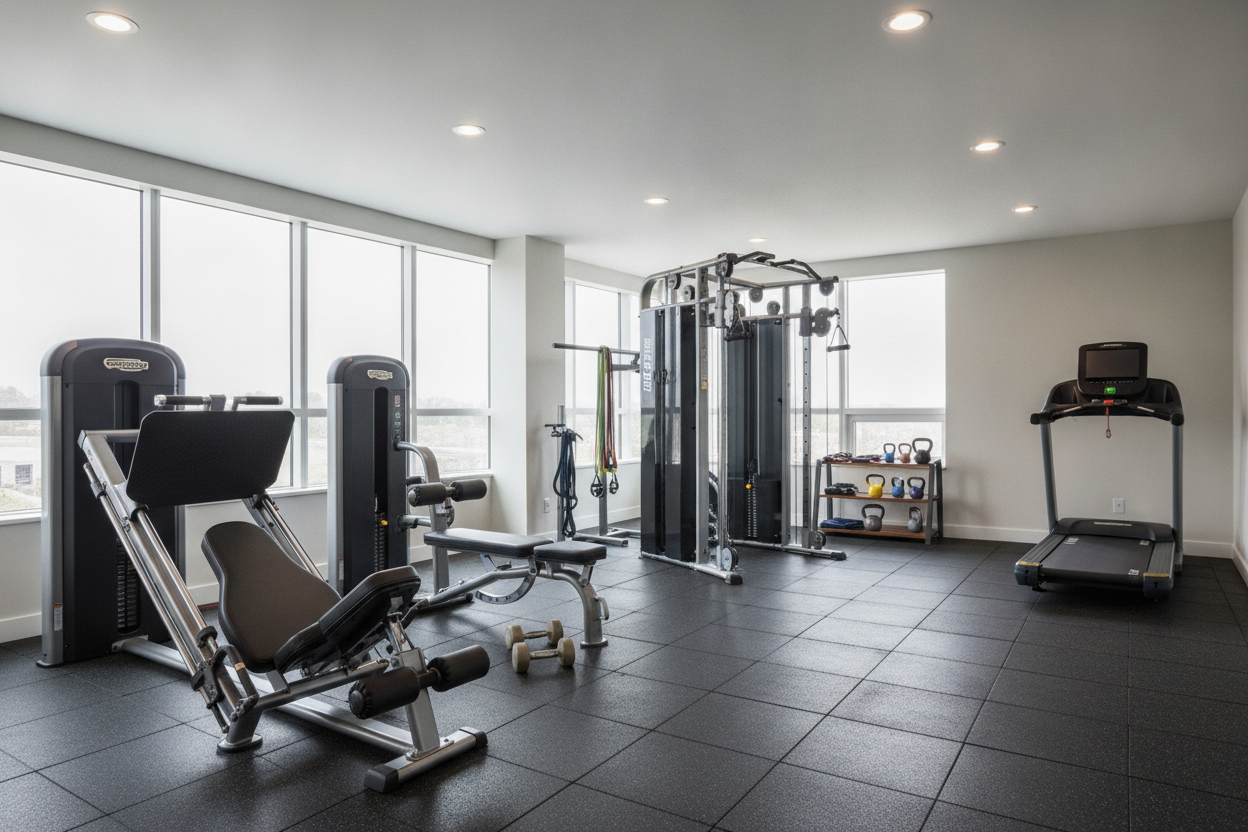
You see the ads for those 11-gauge steel power racks and think you need that level of overkill. Then it arrives. You spend six hours bolting it together only to realize you can't do a pull-up without hitting the ceiling or a lunging movement without kicking the base of the rack. Replicating a commercial facility in a small room is a recipe for frustration. You end up with a cluttered mess where you can't even perform a workout body gym routine safely.
It is about utility, not just having a rack that looks cool on Instagram. When you're working with limited square footage, every inch of floor space is a premium resource. If you can't take a full stride in any direction, your equipment isn't helping you—it's in your way.
What Actually Defines a Functional Space?
A functional space is one where you can move 360 degrees without hesitation. If you have to move a bench just to do a set of burpees, you've already lost the mental battle. I found that when I started to build an exercise body gym without the clutter, my motivation spiked. You want an open floor plan that facilitates complete gym exercises—think Turkish get-ups, bear crawls, and lateral lunges.
If your gear dictates your movement, you're doing it wrong. The focus should be on creating a 'flow' state where you can transition from strength work to mobility without a construction project in between sets. This approach turns your room from a closet full of iron into a legitimate training studio.
The Floor is Your Most Important Piece of Equipment
Most home gym owners treat flooring as an afterthought. They buy those cheap foam puzzle tiles that slide around the second you try to do a mountain climber. Stop that. If you're doing ground-based work, you need a high-quality 6x8ft exercise mat that stays put. I've dropped 24kg kettlebells on high-density rubber, and the difference in sound and vibration is night and day compared to bare subfloor.
Standard yoga mats are way too narrow for dynamic work; you'll find yourself constantly stepping off onto the cold floor. I recommend browsing a large exercise mat for home gym collection to find something with enough real estate for sprawl-out movements. A 7mm or 8mm thickness is the sweet spot for stability and cushion. You want a surface that provides enough grip for a sweaty plank but isn't so soft that it kills your balance during single-leg work.
The Minimalist Gear Trifecta
You only need three things to replace a room full of machines. First, a pair of adjustable kettlebells—the competition style ones that keep the same dimensions regardless of weight are best. Second, a suspension trainer; it turns any door frame or ceiling beam into a back-building station. Third, a 100-lb sandbag. Sandbags are honest; they don't have handles that help you cheat, making them perfect for functional strength.
Now, I know some people love their full body workout machines, and if you have the space, a functional trainer is great. But for a spare room, those machines usually just become expensive clothes hangers. If you're tight on space, stick to the trifecta. You can store all of it in a corner the size of a laundry basket, leaving the rest of the room for movement.
Programming for an Open Floor Plan
You don't need a barbell to build serious strength. A sample week in my exercise body gym looks like this: Monday is heavy kettlebell swings and weighted push-ups. Wednesday is sandbag carries and high-volume suspension rows. Friday is dedicated to mobility and complete gym exercises like Cossack squats and windmills. You're training for longevity and 'useful' strength, not just a one-rep max that leaves you sidelined with a tweaked lower back.
Is a 10x10 room really big enough?
Absolutely. If you keep the center clear and store your gear against the walls, it feels twice as big. The key is the 'open floor' philosophy.
Do I need to bolt anything to the wall?
Not necessarily. A good suspension trainer can use a door anchor, and kettlebells obviously stay on the floor. It's the ultimate 'renter-friendly' gym setup.
What about cardio?
Use the floor. Shadowboxing, mountain climbers, and high-intensity interval training (HIIT) don't require a $2,000 treadmill that ends up gathering dust and taking up 20 square feet.