Swallow Your Pride: How to Start Building Muscle With an Empty Bar
I remember staring at a 45-pound barbell in my garage like it was a live grenade. I’d just spent $300 on a rack that felt a little wobbly, and I was terrified I wouldn’t even be able to bench the bar without pinning myself. Most people think they need to be 'in shape' just to walk into a weight room, but that is backwards. If you want to know how to start building muscle, you have to accept that the starting line is usually a lot lighter than you think.
- The empty 45lb bar is your best friend for the first 30 days.
- Mastering movement patterns now prevents a blown-out lower back later.
- A home setup kills the gym anxiety that stops most beginners.
- Consistency beats 'optimal' programming every single time.
The 'Too Weak to Lift' Trap (And Why It's Garbage)
I hear it all the time: 'I will join a gym once I lose ten pounds' or 'I need to do some pushups before I try benching.' It is nonsense. You do not get fit to lift weights; you lift weights to get fit. That 45-pound Olympic bar isn’t a trophy for the elite; it is a tool. Even if you can only do three reps with just the bar, those are the three most important reps you will ever do.
The weights are the starting line, not the finish line. Waiting until you are 'strong enough' to start is like waiting until you are fluent in French to move to Paris. Just get under the bar. The steel does not care how much you weigh or what you look like.
How to Start Working Out to Build Muscle (Without the Ego)
Your first week isn't about PRs or looking cool for Instagram. It is about 'greasing the groove.' I tell everyone learning how to start working out to build muscle to spend at least two weeks with nothing but the bar. Squat it, press it, and row it. If 45 pounds feels too heavy, grab a pair of 10-pound dumbbells. There is zero shame in starting with a weight that feels 'easy.'
You are training your nervous system to move correctly. If you try to jump straight to 135-pound squats because you are embarrassed to be seen with an empty bar, your form will break, and your joints will pay the price. Master the mechanics of the hip hinge and the squat depth now, while the stakes are low. Real growth happens when you stop trying to impress people and start focusing on the quality of the rep.
How to Start Working Out to Gain Muscle When You Hate the Gym
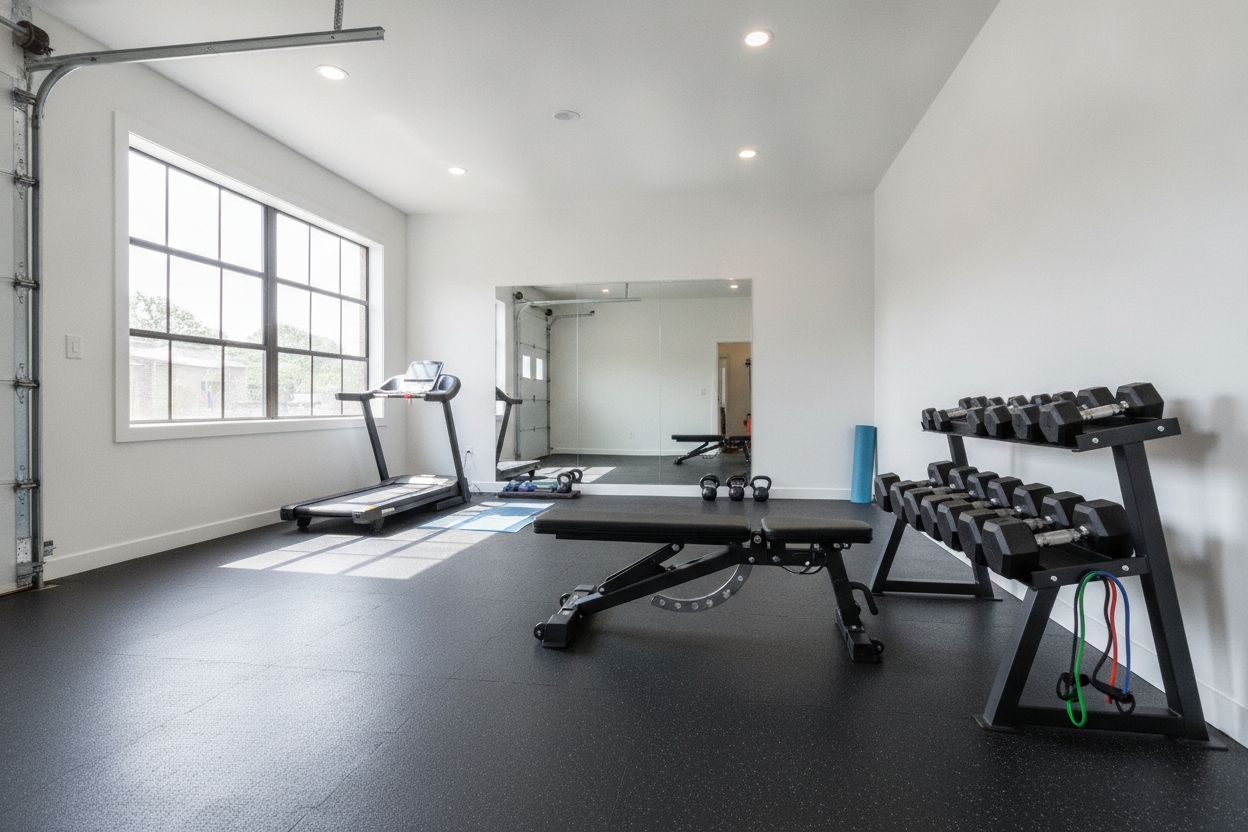
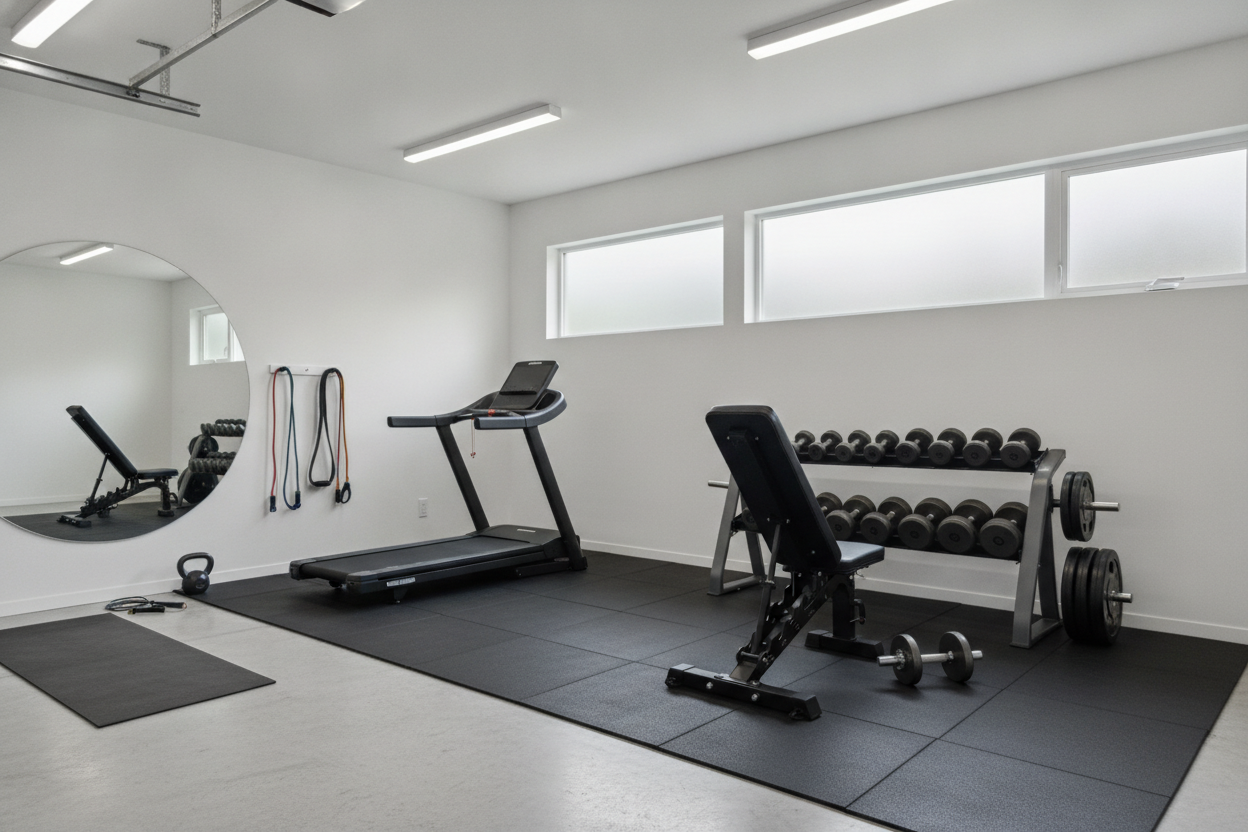
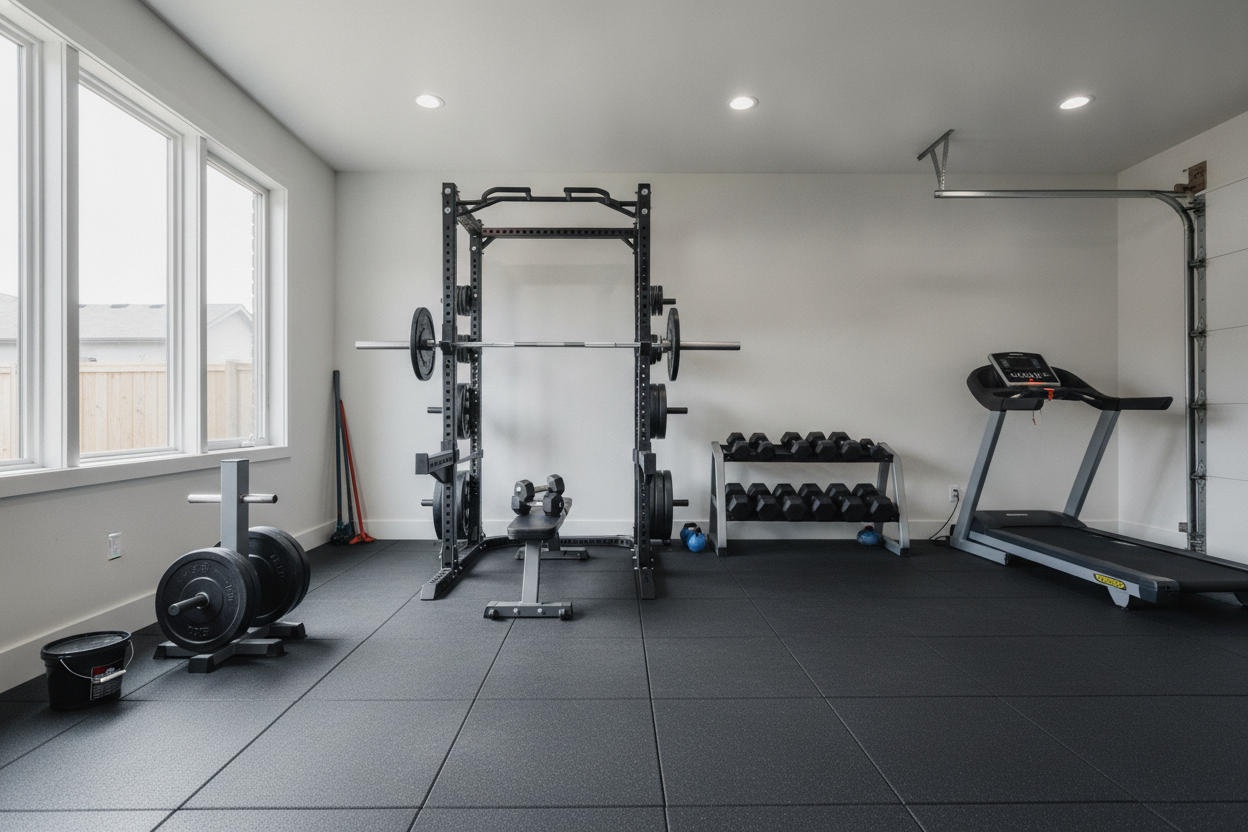
Commercial gyms are often sensory nightmares. The guy screaming while doing curls, the overpriced juice bar, and the feeling that everyone is judging your 'light' weights. It sucks. That is why I am a huge advocate for the home gym. You do not need a $5,000 Rogue setup to see results. Start by clearing a corner of your garage or spare room. Throw down an extra wide exercise mat to protect your floors and give yourself a defined work zone. Once you have a dedicated space, how to start working out to gain muscle becomes a matter of walking ten feet, not driving ten miles.
Removing the friction of a commute and a crowd is the most underrated strategy for muscle growth. When the equipment is staring at you while you drink your morning coffee, you are much more likely to actually use it.
The First 30 Days: Surviving the Soreness
Week one is going to hurt. Not 'call a doctor' hurt, but 'I can’t sit on the toilet without holding the wall' hurt. This is DOMS (Delayed Onset Muscle Soreness). It usually peaks around 48 hours after your workout. The mistake most beginners make is waiting until the soreness is 100% gone before lifting again. Do not do that.
Get back under the bar, even if you are stiff. Light movement actually helps flush out that stiffness by increasing blood flow to the tissue. By week four, this extreme soreness mostly disappears as your body adapts. Consistency in the first month is the price of entry for the gains that follow in month six.
The Only Three Metrics Beginners Actually Need to Track
Stop obsessing over heart rate zones or whether you should eat 1.2 or 1.5 grams of protein per pound. It is analysis paralysis. If you find yourself working out but not growing, you are likely overcomplicating the wrong things. Track these three metrics instead: protein intake, days trained, and weight added to the bar.
Aim for a palm-sized portion of protein at every meal. Show up three times a week. Add 5 pounds to the bar every session. If you cannot add 5 pounds, try to do one more rep than last time. That is the whole secret. You do not need a complex spreadsheet; you just need to be slightly better than you were last Monday.
My Personal Take
When I first started, I bought a cheap weight set from a big-box store. The bar was thin, the knurling felt like sandpaper, and the plates were significantly off-weight—one '45lb' plate was actually 42lbs. I spent months wondering why my left side felt stronger. My mistake was thinking any cheap steel would do. My advice? Buy a decent bar first. It is the only thing you actually touch. Everything else can be budget, but do not skimp on the steel in your hands.
FAQ
Is the empty bar enough to build muscle?
Initially, yes. Your muscles respond to tension. If 45 lbs is a challenge for you, your body will adapt by building muscle. Once it gets easy, you add weight.
How many days a week should I start?
Three days is the sweet spot. Monday, Wednesday, Friday. It gives your central nervous system enough time to recover while keeping the habit fresh.
Do I need supplements to see results?
No. Eat a steak or some Greek yogurt. Supplements are the last 5% of the equation; the barbell is the first 95%.