Styrofoam Mats Explained: Are They Right for Your Gym?
Building a home gym often starts from the ground up. If you are dealing with cold concrete basement floors or trying to protect your apartment's hardwood from dumbbell drops, you have likely looked into various flooring options to anchor your space.
Many beginners search for styrofoam mats to cushion their workout area, drawn in by the affordable price tag and easy installation. But before you cover your entire garage in this material, we need to clear up a massive industry misconception about what these mats actually are, and whether they can handle your specific training style.
Key Takeaways
- Most fitness mats are made of high-density EVA foam, not actual styrofoam (EPS), which would easily crush under body weight.
- Foam tiles are excellent for yoga, mobility work, and light dumbbell training, but are not suitable for heavy barbell drops.
- Modern floor mat tiles design options offer highly aesthetic choices, including sleek monochrome and geometric setups.
- A popular interior trend is utilizing a white foam mat setup to instantly brighten dark basement or garage gyms.
Understanding the Material: Styrofoam vs. EVA Foam
When most people ask us about styrofoam flooring, they are actually referring to Ethylene-Vinyl Acetate (EVA) foam. True styrofoam (expanded polystyrene) is what cheap coolers are made of—it snaps, crunches, and flakes under pressure. EVA foam, on the other hand, provides the flexible, shock-absorbing qualities you need for a functional workout space.
Why Density Matters
For home gyms, you want high-density EVA foam. Entry-level mats might feel pillowy soft, but they will permanently compress if you leave a heavy bench sitting on them. Commercial-grade foam offers a firmer surface that supports your joints during plyometrics without causing dangerous instability during weighted squats.
Elevating Your Space with Floor Mat Tiles Design
Gone are the days when your only flooring options were industrial black rubber or primary-colored playroom squares. Today's floor mat tiles design allows you to seamlessly integrate your workout area into your home's aesthetic without sacrificing functionality.
The Bright Space Advantage
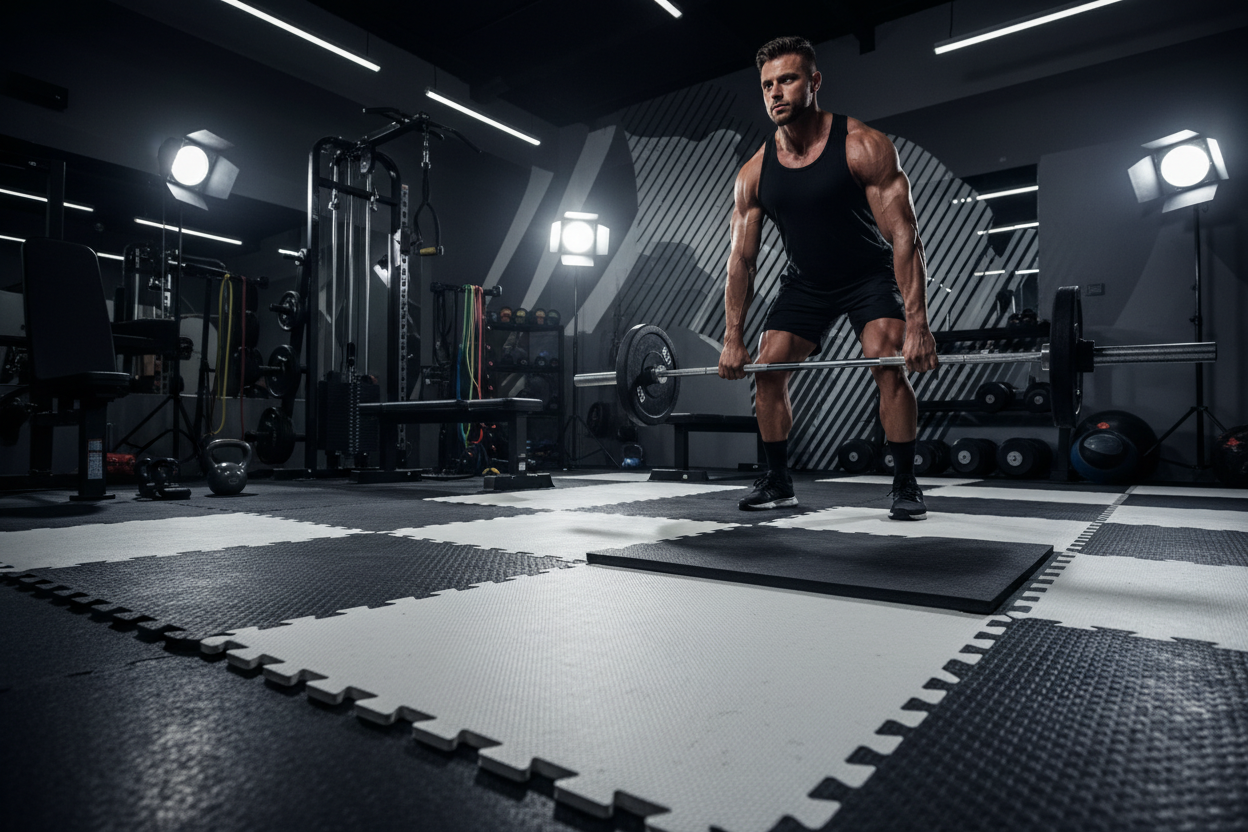
If you are setting up in a dimly lit basement, dark rubber flooring sucks the light right out of the room. We highly recommend using white foam floor tiles to instantly brighten the area. A high-quality white foam mat reflects overhead lighting, making cramped spaces feel significantly larger and more inviting. For a modern, geometric look, alternating black and white foam tiles creates a classic checkerboard pattern that naturally defines your training zone.
What Workouts Actually Work on Foam Flooring?
Foam flooring is incredibly versatile, but it is not a magical shield for your subfloor. Here is how it holds up to different training styles.
Best Uses: Bodyweight, Yoga, and Mobility
If your routine consists of Pilates, stretching, kettlebell swings, or TRX suspension training, white foam tiles provide the perfect blend of grip and cushion. They are vastly superior to hard floors for kneeling exercises, burpees, and floor-based core work.
The Heavy Lifting Warning
If you are deadlifting 300+ pounds or dropping Olympic bumper plates, foam is simply not enough. The barbell will compress the foam, hit the concrete below, and potentially damage both your equipment and your foundation. For heavy lifting zones, you need 3/4-inch vulcanized horse stall mats or dedicated heavy-duty rubber gym flooring.
From Our Gym: Honest Take
We recently tested a setup of white interlocking floor tiles in a 10x10 spare bedroom gym. Aesthetically, it was a massive win—the room looked clean, bright, and professional. The interlocking teeth fit together so snugly that the seams practically vanished.
However, I have to be honest about the long-term durability. During a heavy dumbbell bench press session, I dropped a 50-pound dumbbell from about knee height. While the hardwood floor underneath was perfectly fine, the dumbbell left a permanent crescent-shaped dent in the foam. Additionally, after three months of use, the white surface required weekly mopping to remove scuff marks from black-soled running shoes. If you are going with white, I strongly suggest training barefoot or having dedicated indoor-only gym shoes.
Frequently Asked Questions
Are styrofoam mats safe for heavy gym equipment?
No. Heavy power racks, treadmills, and loaded barbells will permanently compress and puncture foam mats. Use high-density rubber flooring for heavy equipment and save the foam for open floor-work areas.
Are white interlocking floor tiles hard to keep clean?
They do show dirt and shoe scuffs much faster than black flooring. However, because EVA foam is water-resistant, you can easily clean them with warm water and a mild dish soap solution. Avoid harsh bleach, which can degrade the material over time.
Can I park a car on foam garage gym flooring?
Absolutely not. The weight of a vehicle, combined with the heat from the tires and turning friction, will instantly tear and destroy foam tiles. If your garage gym shares space with your car, you must use heavy-duty rubber.