Fitness Equipments for Home: The Ultimate Strength Guide
You don't need a warehouse-sized room or a five-figure budget to build a physique that turns heads. The problem isn't a lack of options; it's the paralysis caused by too many choices. Most people fill their garages with gimmicky gadgets that end up as expensive clothing racks. If you want real results, you need to focus on fitness equipments for home that prioritize biomechanics, durability, and progressive overload.
Key Takeaways
- Prioritize Free Weights: Adjustable dumbbells are the gold standard for home weight training equipment due to their versatility and space efficiency.
- Stability Matters: A sturdy, adjustable bench is non-negotiable for safe weight lifting at home equipment setups.
- Resistance Variety: Combine heavy iron with resistance bands to alter strength curves and protect joints.
- Space vs. Function: For small spaces, opt for kettlebells and door-frame pull-up bars over bulky resistance machines.
The Philosophy of Home Strength Training Equipment
Building a home gym requires a shift in mindset. In a commercial facility, you rent access to machines that stabilize the weight for you. When selecting at home strength training equipment, you generally want gear that forces your body to do the stabilizing. This recruits more muscle fibers and improves functional strength.
The goal is to replicate the effectiveness of gym equipment and weights found in professional centers but with a smaller footprint. Whether you are looking for weight training systems or simple accessories, the focus must remain on compounds movements: squats, hinges, pushes, and pulls.
Essential Weight Lifting at Home Equipment
1. The King: Adjustable Dumbbells
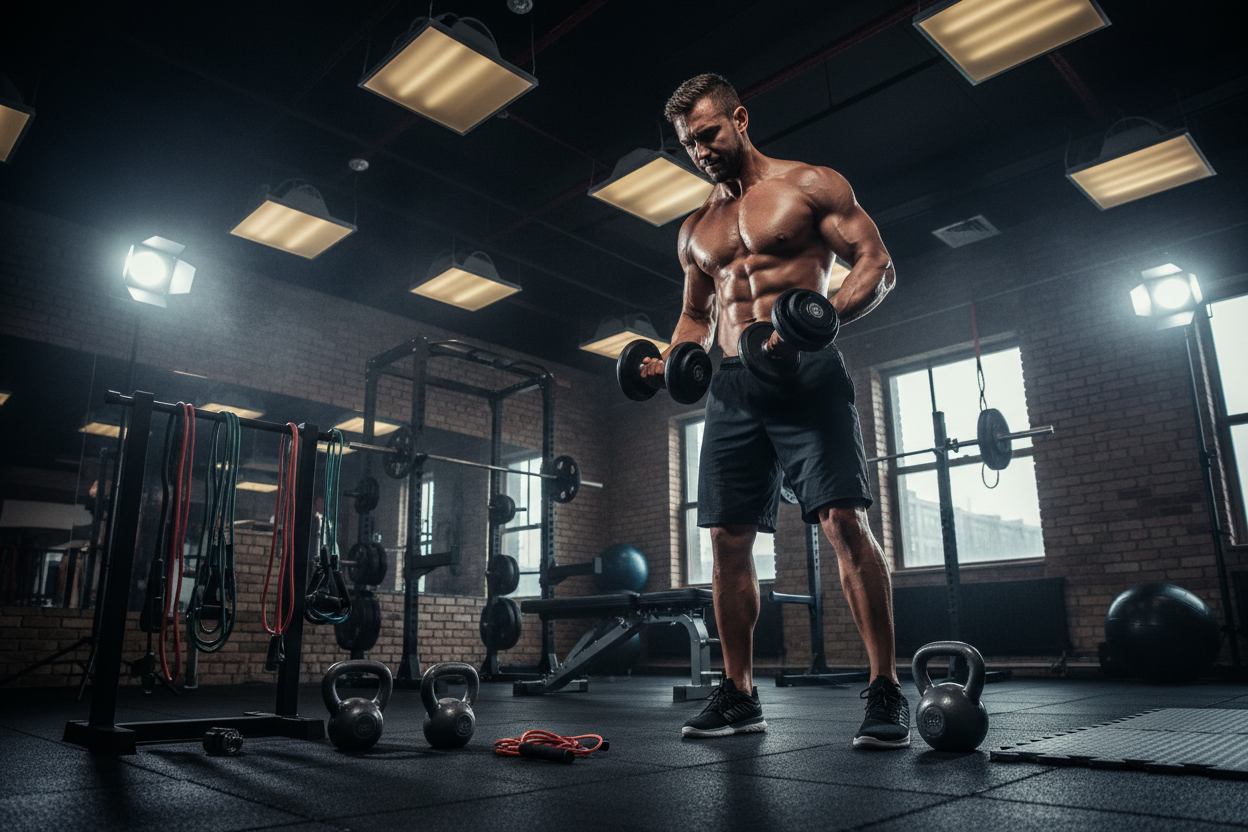
If you can only buy one piece of home weightlifting equipment, make it high-quality adjustable dumbbells. Unlike fixed dumbbells that require a massive rack, adjustable versions allow you to change the load from 5lbs to 50lbs (or more) in seconds. This is crucial for progressive overload—the scientific principle of gradually increasing stress on the muscle to force adaptation.
2. The Foundation: An Adjustable Bench
Many beginners overlook the bench, thinking the floor is sufficient. It isn't. To maximize range of motion during presses and rows, you need elevation. A flat-incline-decline (FID) bench transforms your home strength equipment setup. It allows you to hit muscle groups from different angles, which is vital for hypertrophy (muscle growth). Look for a weight capacity of at least 600lbs to ensure safety during heavy lifts.
3. The Heavy Hitters: Barbells and Plates
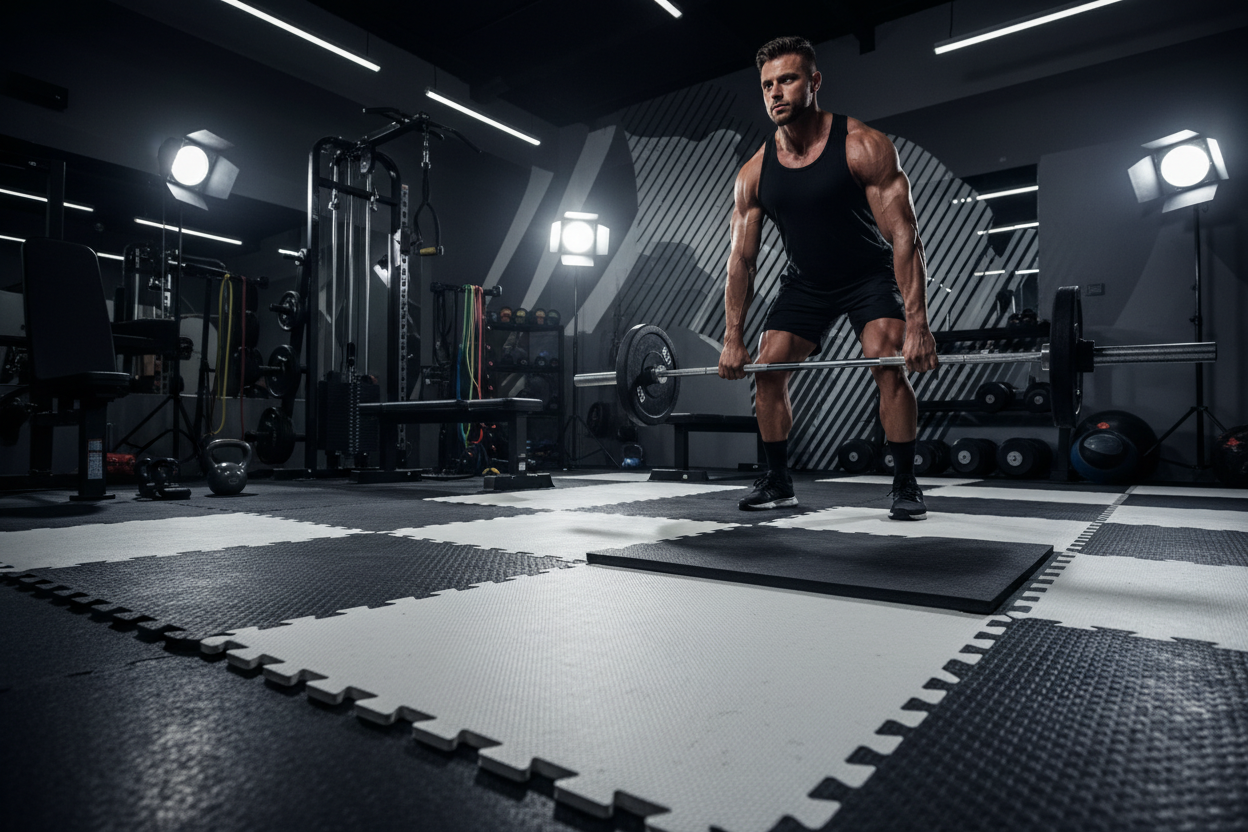
For those serious about powerlifting or raw strength, home weight training equipment must eventually include a barbell. This is the only way to effectively load heavy squats and deadlifts. However, this requires more space. You will need a rack or stand. If space is tight, look for short-barbells (often 6ft instead of 7ft) that still fit standard Olympic plates.
Resistance Machines for Home vs. Free Weights
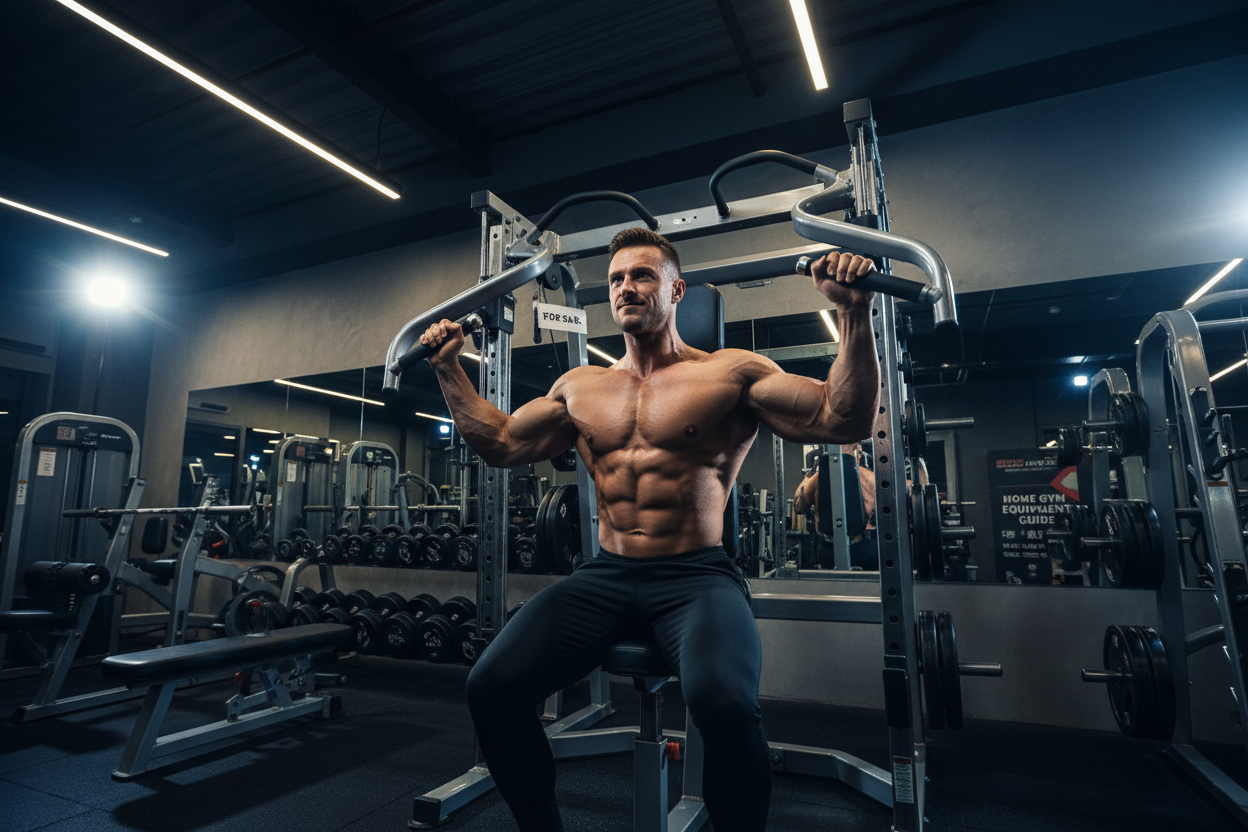
There is a common debate regarding resistance machines for home versus free weights. Machines are excellent for isolation exercises and working around injuries because they provide a fixed path of motion. However, they are often expensive and take up significant floor space.
For most home setups, home resistance training equipment like cable pulley systems that attach to a rack or door are superior. They offer the constant tension of machines without the bulk. These are perfect for tricep pushdowns, face pulls, and cable crunches, filling the gap that gravity-dependent free weights leave behind.
Underrated Strength Training Accessories
You don't always need heavy iron to get strong. Resistance workout equipment like heavy-duty loop bands are essential for accommodating resistance. By attaching bands to your weights, the lift gets harder as you reach the top of the movement (where you are strongest). This matches the strength curve of your muscles better than static weight alone.
Additionally, suspension trainers are fantastic strengthening exercise equipment. They utilize your body weight and gravity to create resistance, forcing intense core engagement. They are arguably the best exercise room equipment for those who travel or need to pack their gym away into a drawer after use.
My Personal Experience with Fitness Equipments for Home
I’ve spent years training in commercial gyms, but when I transitioned to a garage setup, reality hit hard. I remember buying a cheap "all-in-one" weight training system thinking I’d scored a deal. The first time I loaded it up for a bench press, the wobble was terrifying. It didn't feel like the solid steel I was used to; it felt like tin foil.
But the specific detail that sticks with me is the knurling on my first decent barbell. I bought a mid-range power bar, and the first time I gripped it for a deadlift without chalk, the aggressive cross-hatch pattern dug into my calluses in a way that commercial gym bars—worn smooth by thousands of hands—never did. It hurt, but the grip security was unmatched. I also learned quickly that home gym equipment with weights creates a distinct smell. That mix of rubber flooring off-gassing and the metallic scent of iron plates on a humid morning is something you don't get in an air-conditioned fitness center. It smells like work.
Conclusion
Curating the right equipment for strength training at home is an investment in your health and longevity. It removes the friction of commuting to a gym, leaving you with no excuses. Start with the essentials—dumbbells and a bench—and expand your exercise strength equipment collection as you get stronger. The best gym is the one you actually use.
Frequently Asked Questions
What is the best home strength training equipment for small apartments?
For tight spaces, adjustable dumbbells and resistance bands are the superior choice. They offer a complete weight training at home equipment solution that can slide under a bed or sit in a closet when not in use, unlike bulky treadmills or racks.
Can I build muscle with just resistance bands?
Yes, you can. Resistance training equipment at home doesn't always require iron. As long as you are close to failure and progressively increasing the thickness of the bands (resistance), your muscles will experience the mechanical tension required for growth.
Is home gym weight lifting equipment expensive?
It can be, but it doesn't have to be. While high-end weight training home gym equipment can cost thousands, a basic effective setup (bands, pull-up bar, and kettlebell) can be assembled for under $200. The key is prioritizing function over fancy features.