Finding a Chest Press for Sale: The Ultimate Buyer’s Guide
You are scanning the market looking for a chest press for sale, but the options are overwhelming. You have commercial beasts that cost as much as a used car and budget home-gym contraptions that look like they might fold under a heavy set. Making the wrong choice here doesn't just hurt your wallet; it hurts your gains and, potentially, your rotator cuffs.
Buying gym equipment isn't about finding the lowest sticker price. It is about understanding biomechanics, footprint, and resale value. Whether you are outfitting a garage gym or upgrading a commercial facility, you need to look past the shiny powder coat.
Key Takeaways
- Check the Movement Path: Look for converging arms (hands coming together at the top) for better pectoral peak contraction.
- Selectorized vs. Plate-Loaded: Selectorized offers speed and convenience; plate-loaded usually offers a higher weight capacity and smoother linear feel.
- Stability is King: If the frame weighs less than the user, skip it. Look for 11-gauge steel or thicker.
- The Resale Factor: High-end brands hold value. A cheap bench press machine for sale often becomes scrap metal within five years.
Analyzing the Mechanics: It’s Not Just Pushing Weight
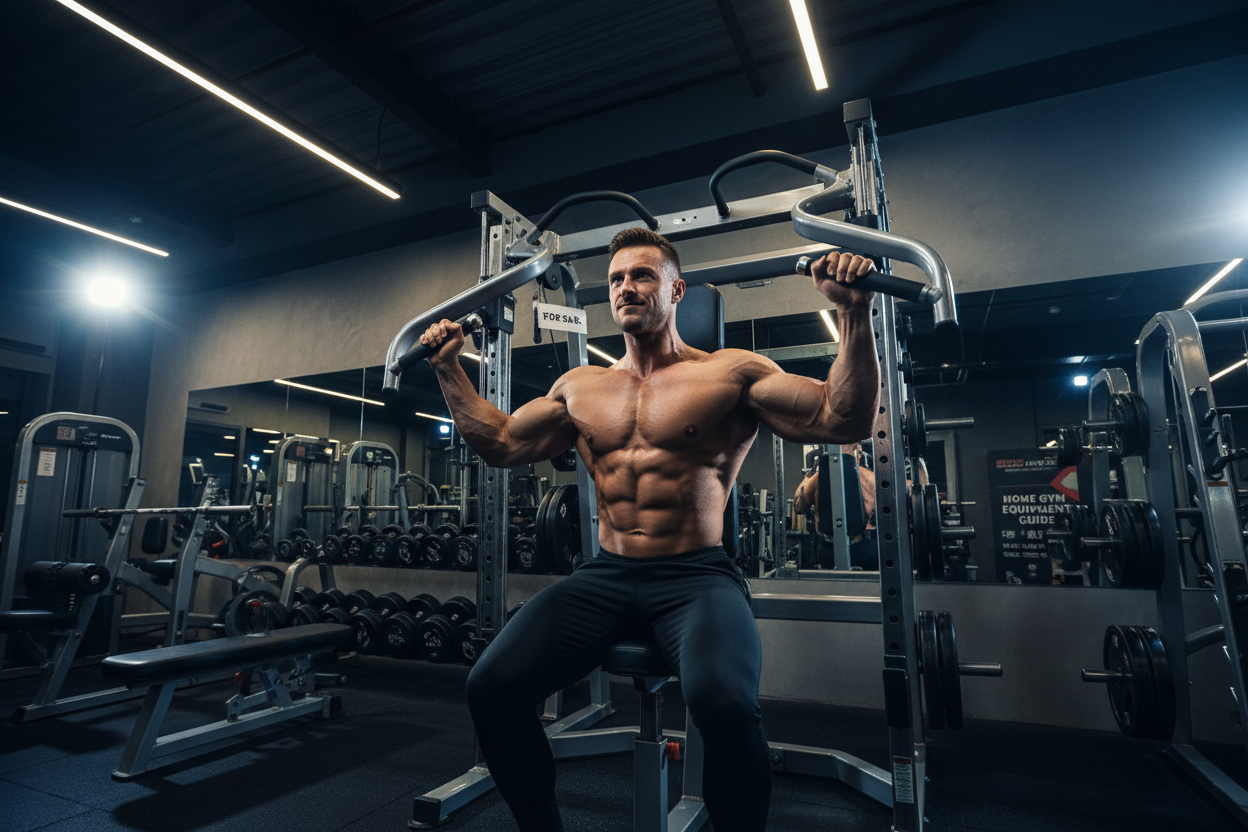
When you browse chest press machines for sale, the first thing to inspect is the axis of rotation. Old-school machines pushed straight out. While effective, they don't mimic the natural function of the pectoral muscle, which is to adduct the humerus (bring the upper arm across the body).
The Converging Axis
Modern engineering favors a converging path. As you press out, your hands should move closer together. This forces a harder contraction at the peak of the movement. If you find a chest press machine sale listing, check the pivot points. If the arms move in a fixed, parallel line, you are losing out on significant muscle activation.
Iso-Lateral Movement
Try to find a unit that allows each arm to move independently. This prevents your dominant side from taking over the lift, which is a common issue with barbells. Iso-lateral machines correct muscle imbalances and force your core to stabilize the load.
Price vs. Value: What Should You Pay?
The chest press machine price spectrum is massive. You can find budget models for $500 and premium commercial units for over $4,000. Here is where the money actually goes.
The Budget Tier (Under $800)
In this range, you are mostly looking at plate-loaded leverage machines. Be wary of "wobble." Lower-end machines often use plastic bushings instead of sealed bearings. This creates friction and a "gritty" feeling during the rep.
The Mid-Range ($1,000 - $2,500)
This is the sweet spot for serious home gyms. You start seeing 11-gauge steel frames and better upholstery. If you see a bench press machine for sale in this bracket, check if it uses nylon pulleys or aluminum. Aluminum lasts longer and provides a smoother drag.
Space and Footprint Considerations
Before you click buy, measure your floor space. A vertical chest press saves space but often sacrifices the strength curve. A horizontal or supine press takes up a massive amount of floor real estate but usually offers a better leverage advantage.
Don't forget to account for the loading pin length. If you buy a plate-loaded machine, you need an extra foot of clearance on each side to actually slide the plates on and off.
My Training Log: Real Talk
I’ve pressed on everything from rusty garage builds to top-tier Hammer Strength units. Let me tell you about a specific "deal" I once regretted.
I picked up a budget vertical press off a local listing. It looked sturdy enough in the photos. But the second I loaded it with anything over two plates, the back pad became the problem. It wasn't the firmness; it was the vinyl texture. It was so slick that once I started sweating, my shoulders slid up the pad every time I drove the weight forward. I couldn't keep my scapula retracted.
Furthermore, the handle diameter was too thin—about 25mm. Without thick gloves, it dug into the ulnar nerve in my palm, making heavy pressing painful on the wrists. Good machines usually have a fat grip (32mm+) to disperse the load. I ended up wrapping the handles in bicycle tape just to make it usable. Specs on a website don't tell you about grip texture or pad friction, but those details dictate whether you'll actually use the machine.
Conclusion
Finding the right equipment takes patience. Don't just jump at the first chest press machine sale banner you see. Look for converging arms, check the steel gauge, and ensure the movement feels natural. Your chest workout should destroy your muscles, not your joints.
Frequently Asked Questions
What is a good price for a home gym chest press?
For a durable, plate-loaded machine that won't wobble, expect to pay between $800 and $1,500 new. Used commercial pieces often fall into this range as well and offer excellent value.
Is a machine chest press better than a barbell bench press?
"Better" depends on the goal. For raw strength and nervous system development, the barbell wins. For hypertrophy (muscle growth) and safety without a spotter, a machine is often superior due to constant tension and stability.
How much space do I need for a chest press machine?
Plan for a footprint of roughly 5 feet by 5 feet, but add an extra 1-2 feet of clearance on all sides for loading weights and getting in and out of the machine safely.