1/2 Inch Gym Flooring: Is It Thick Enough for Heavy Lifts?
Nothing shatters the excitement of a new home gym quite like the sound of a heavy barbell cracking your garage floor. If you are building out a training space, you already know that protecting your foundation is priority number one. But finding the right balance between budget, thickness, and performance can be overwhelming.
Enter 1/2 inch gym flooring. Often considered the sweet spot for residential and light commercial spaces, this thickness promises to handle heavy equipment without the hefty price tag of thicker commercial tiles. But is it actually enough for your specific training style? Let's break down exactly what you need to know before rolling out your new foundation.
Key Takeaways
- Ideal for most home gyms: Provides ample protection for power racks, treadmills, and dumbbell workouts.
- Bumper plates are your friend: Perfectly paired with bumper plates for heavy deadlifts, but iron plates may require additional drop pads.
- Cost-effective foundation: Offers professional-grade shock absorption without the premium cost of 3/4-inch stall mats.
- Easy installation: Lighter and easier to cut around corners or pillars than thicker alternatives.
Why Thickness Matters: The Goldilocks Zone
When designing a home gym, flooring thickness is your first line of defense against structural damage and noise complaints. While 3/8-inch flooring is often too thin for heavy free weights, and 3/4-inch mats can be overkill (and a nightmare to move), a high-quality 1/2 inch gym mat sits comfortably in the middle.
Protecting Your Subfloor
Whether you are setting up over concrete in the garage or plywood in a spare bedroom, impact absorption is critical. Half-inch rubber is dense enough to disperse the kinetic energy of a dropped dumbbell, preventing localized damage to the floor beneath. However, the type of weights you use matters heavily here.
Equipment Stability
One underappreciated benefit of this thickness is equipment stability. If your flooring is too squishy, heavy power racks can wobble, and your footing might feel unstable during heavy squats. High-density rubber mats 1/2 inch thick provide a firm, unyielding surface that keeps your rack resting securely while offering enough grip for your lifting shoes.
Space Planning: Garage Gyms to Basement Setups
North American home gyms usually fall into two categories: the humid garage or the space-constrained basement. Half-inch flooring is highly adaptable to both environments.
Managing Seams and Edges
If you are buying rolled flooring, half-inch material is heavy enough to lay flat without curling at the edges, minimizing tripping hazards. For basement setups with lower ceilings, saving that extra quarter-inch of vertical space (compared to thicker mats) can actually make a noticeable difference when doing overhead presses.
From Our Gym: Honest Take
We've outfitted dozens of spaces, and I have personally trained on just about every surface imaginable. When setting up my own two-car garage gym, I opted for rolled 1/2 inch gym flooring. The density is fantastic—my 800-pound functional trainer hasn't left permanent indentations after a year of daily use.
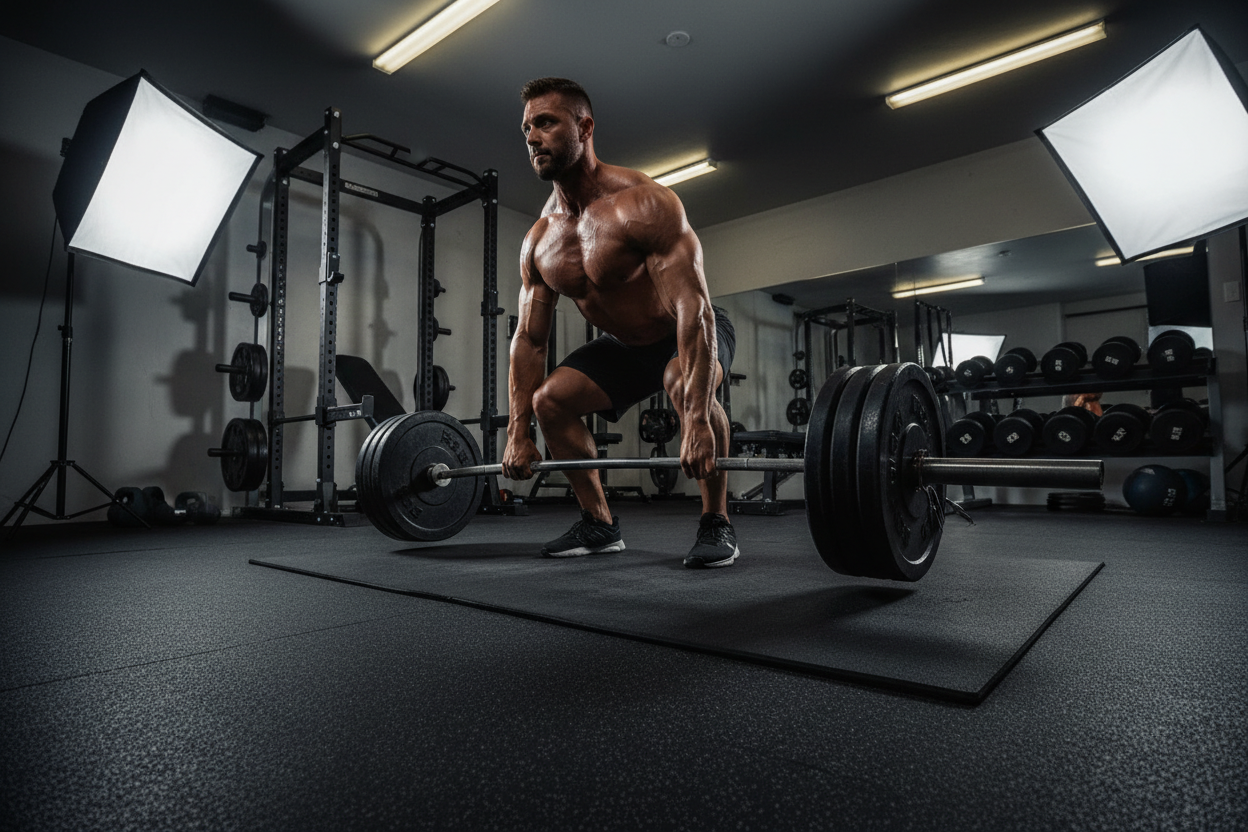
However, I'll be completely honest: when I am pulling deadlifts over 400 pounds, I do not drop the bar directly on the bare floor. Even with bumper plates, I use a pair of dedicated crash pads. The half-inch rubber protects the concrete from the initial shock, but the acoustic boom of a heavy drop will still echo through the house. If you are an Olympic weightlifter constantly bailing from overhead, you might want to build a dedicated wooden lifting platform on top of your half-inch base.
Frequently Asked Questions
Is a 1/2 inch gym mat thick enough for deadlifts?
Yes, provided you are using bumper plates and controlling the eccentric portion of the lift. If you regularly drop heavy weights from waist height or use cast iron plates, you should add a lifting platform or crash pads over your mat.
Can I put heavy racks on rubber mats 1/2 inch thick?
Absolutely. High-density half-inch rubber is designed to withstand thousands of pounds of static weight. It will easily support power racks, functional trainers, and heavy treadmills without compressing or warping over time.
Do I need to glue down my flooring?
For most home gym applications, no. The sheer weight of the rubber, combined with your equipment resting on top, is usually enough to keep the flooring securely in place. Double-sided carpet tape is a great, non-permanent solution if you experience any minor shifting.