Stubborn Delts? The best cable shoulder exercises to force growth
I spent three years grinding out heavy dumbbell overhead presses and standard lateral raises, only to look in the mirror and see the same flat, narrow shoulders. It is a common trap. You think more weight equals more growth, but for the deltoids, gravity is often your biggest enemy. If you are tired of the same old plateaus, it is time to look at the best cable shoulder exercises to fix the tension gaps your dumbbells are leaving behind.
Quick Takeaways
- Cables provide constant tension that dumbbells cannot replicate due to gravity's dead zones.
- The cross-body lateral raise is the superior way to isolate the side delt through a full range of motion.
- Lying on the floor for face pulls eliminates the 'lean-back' cheat and forces rear delt isolation.
- Using wrist cuffs instead of handles removes grip fatigue from the equation entirely.
Why Your Dumbbell Routine Hit a Brick Wall
Dumbbells are great for a lot of things, but they are objectively flawed for isolation. Think about a standard lateral raise. At the bottom of the movement, there is zero tension on your shoulder because the weight is just hanging. You do not actually start working until the dumbbell is halfway up. By the time you hit the top, the tension is maxed out, but you have missed half the rep.
Cables change the physics. Because the resistance is coming from the pulley—not just falling toward the floor—you can manipulate the angle to ensure your muscle is under load from the very first inch of the movement. This constant tension is what triggers the metabolic stress needed for hypertrophy. If you want those 'capped' shoulders, you have to stop letting gravity give you a break.
The Best Cable Shoulder Exercises (Zero Fluff)
I have tested every 'innovative' shoulder move on the internet, and most of them are just circus acts designed for views. The following movements are the ones that actually provide a mechanical advantage. They align with how your muscle fibers actually run, which is the only thing that matters for growth.
The Cross-Body Lateral Raise
This is the gold standard. Instead of standing next to the cable, you stand slightly in front of it and pull from the opposite side. This setup allows the cable to pull your arm across your body, creating a massive stretch on the lateral delt that you simply cannot get with a dumbbell. Understanding the mechanics of cable shoulder abduction is a total lightbulb moment for most lifters.
When you perform these, keep the cable at roughly wrist height when your arm is at your side. This ensures the resistance profile is heaviest where the muscle is strongest. Do not worry about the weight stack; focus on the 'arc' of your hand moving away from your body. This is about precision, not ego.
The Scapular-Plane Y-Raise
Most people wreck their rotator cuffs by trying to pull perfectly out to the side. Your shoulder blades actually sit at an angle on your rib cage. The Y-raise respects this anatomy. By using a dual-pulley setup and pulling your arms up and out into a 'Y' shape, you hit the front and lateral delts simultaneously in their most natural path of motion.
I prefer setting the cables to the bottom setting and crossing the cables so I am holding the left handle in my right hand and vice versa. This creates a stable 'X' pattern that keeps the tension smooth. It is a much friendlier movement for anyone who has dealt with that annoying 'clicking' sensation during overhead work.
The Lying Cable Face Pull
Face pulls are a staple, but most people do them wrong. They lean back, use their hips, and turn it into a weird upright row. To fix this, lie down on the floor with your head toward the cable machine. By taking your legs and lower back out of the equation, your rear delts and rhomboids are forced to do 100% of the work.
This variation is humbling. You will likely have to drop the weight by 30%, but the pump in your upper back and rear delts will be twice as intense. Use a long rope attachment so you can pull the ends past your ears, maximizing the contraction.
Stringing It Together: The Best Cable Shoulder Workouts
You do not need to abandon your heavy presses entirely, but you should prioritize these best cable shoulder workouts if growth is the goal. I recommend a 'pre-exhaust' approach. Start your session with 3 sets of cross-body lateral raises to get the blood into the muscle, then move into your compound pressing. This ensures the delts are the limiting factor, not your triceps.
A sample high-intensity cable routine would look like this: 3 sets of Cross-Body Lateral Raises (12-15 reps), followed by 3 sets of Scapular-Plane Y-Raises (10-12 reps), finishing with 4 sets of Lying Cable Face Pulls (15-20 reps). Keep the rest periods short—about 45 to 60 seconds. The goal here is accumulation of fatigue, not a three-minute break between sets to scroll through your phone.
Getting the Setup Right in Your Garage Gym
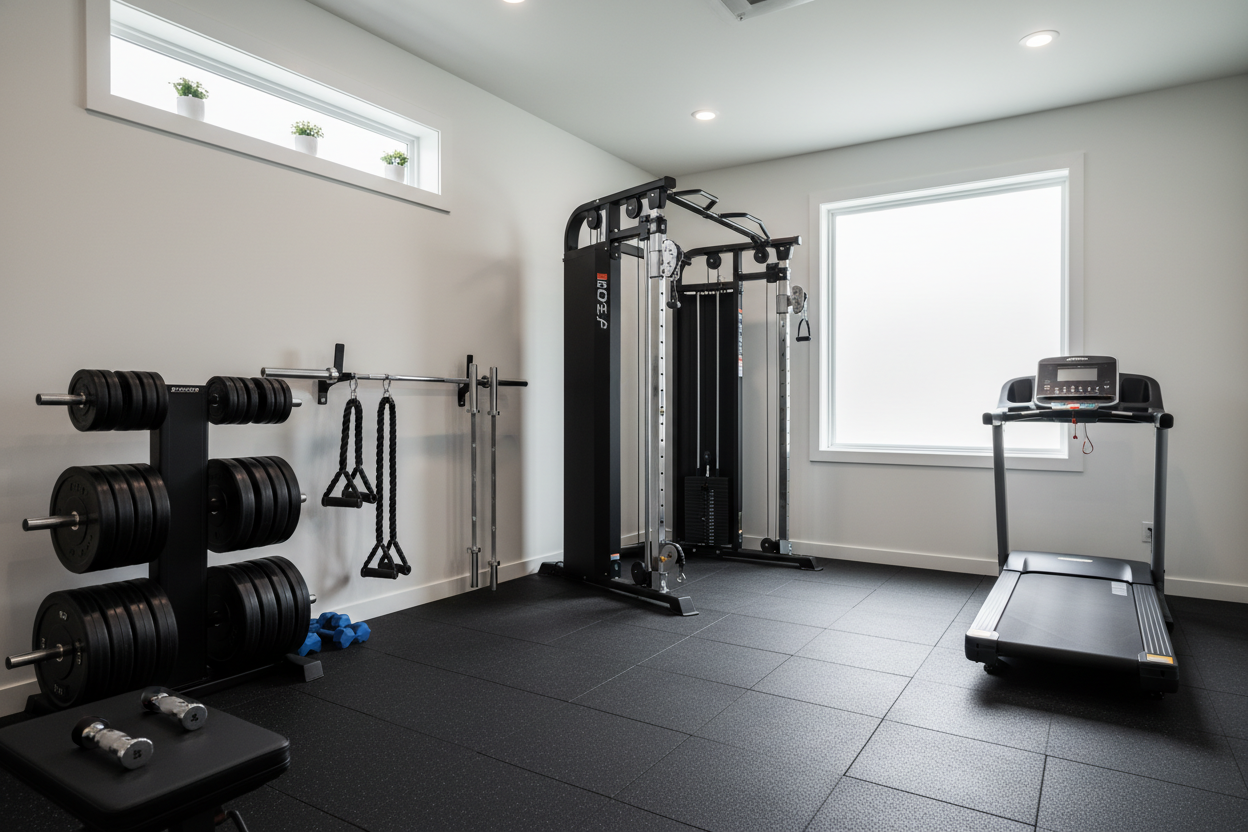
If you are training at home, the quality of your pulley matters. A cheap, jerky cable system will ruin the mind-muscle connection because the weight will 'jump' during the rep. If you are currently shopping, finding the best cable machine for home gym use means looking for a 2:1 pulley ratio for smoother travel and longer cable reach.
One of the best upgrades I ever made was ditching the standard D-handles for isolation work. Your grip often fails before your shoulders do. Check out some best-selling equipment upgrades like padded wrist cuffs. Strapping the weight directly to your arm removes the forearm from the movement, allowing you to truly isolate the deltoid. It is a small change that makes a massive difference in how the exercise feels.
My Personal Experience
I used to be a 'barbell only' snob until I realized my shoulders looked like they belonged to a distance runner. I bought a cheap plate-loaded cable tower for my garage, and while it worked, the friction was terrible. I eventually bit the bullet and bought a functional trainer with aluminum pulleys. The difference in my lateral delt development over six months was more than I had seen in the previous three years. My mistake was thinking any cable was a good cable; smoothness actually matters when you are doing high-rep isolation work.
FAQ
Can I do these exercises on a single-pulley machine?
Absolutely. For the Y-raises, you will just have to do one arm at a time. It takes longer, but it actually allows for even better focus on each side to fix imbalances.
Why do my traps hurt during lateral raises?
You are likely shrugging the weight up. Focus on pushing your hands 'out' toward the walls rather than 'up' toward the ceiling. Using wrist cuffs can also help fix this.
How often should I train shoulders with cables?
Since cables are generally easier on the joints than heavy barbells, you can hit them 2-3 times a week. Just monitor your recovery and make sure you are not overdoing the volume.