I Started Building Flexibility When I Stopped Trying So Hard
I remember the exact moment I realized my approach to building flexibility was a total disaster. I was cooling down after a heavy squat session, trying to force my hands to touch my toes. I was pulling so hard my face turned purple, convinced that if I just gritted my teeth, my hamstrings would finally surrender. Instead, I felt a sharp, electric twinge in my lower back that put me on the couch for three days. I was treating my mobility like a 1-rep max attempt, and my body was fighting back with everything it had.
Quick Takeaways
- Pain is a signal to stop, not a barrier to push through.
- Frequency beats intensity; five minutes daily is better than an hour weekly.
- Your nervous system controls your range of motion more than your actual muscle length.
- Environment matters—hard concrete floors trigger a 'bracing' response that kills flexibility.
The Day I Realized Yanking on My Hamstrings Was Useless
For years, I approached the gym with a 'break it to build it' mentality. It worked for my bench press, so I figured it would work for my tight hips. I’d spend twenty minutes on a Sunday afternoon screaming through a yoga video, trying to yank my limbs into positions they hadn't seen since the Clinton administration. It was miserable, and more importantly, it didn't work. I'd leave the session feeling 'loose' for an hour, only to wake up the next morning feeling like a rusted suit of armor.
The problem was my ego. I was trying to dominate my muscles instead of communicating with them. When you treat mobility like a heavy deadlift PR, you're missing the point. Flexibility isn't about how much force you can apply to a joint; it's about how much safety your brain perceives in that range of motion. Once I stopped trying to 'win' at stretching, my joints actually started opening up.
Why 'More Pain, More Gain' Ruins Your Mobility
If you pull a cold muscle to the point of pain, your body triggers the stretch reflex. This is an involuntary contraction designed to prevent the muscle from tearing. Essentially, by trying to force a deep stretch, you are literally telling your nervous system to tighten the muscle even harder. It’s a physiological stalemate that you will never win. This is precisely Why I Only Stretch to Improve Flexibility on My Rest Days—your nervous system needs to be in a parasympathetic, relaxed state to actually allow for new range of motion.
When you're fresh off a brutal lifting session, your muscles are pumped, inflamed, and on high alert. Trying to lengthen them in that state is like trying to stretch a frozen rubber band. You might get a little give, but you're mostly just creating micro-tears and irritation. True ways to improve flexibility involve coaxing the muscle to relax, not demanding it.
Micro-Dosing: One of the Best Ways to Improve Flexibility
The biggest lie in the fitness industry is that you need a dedicated 60-minute 'mobility day.' Nobody has time for that, and frankly, it's not even the most effective way to do it. I found that 'micro-dosing' movement throughout the day yielded results that a weekly yoga class never could. We’re talking three to five minutes, three times a day. It’s about reminding your brain that these ranges of motion are safe and accessible.
Think about it like this: if you sit in a desk chair for eight hours and then try to 'fix' it with one hour of stretching, you're still losing the volume battle. But if you drop into a deep goblet squat for 60 seconds every time you go to the kitchen for water, you're constantly feeding your brain data that says, 'Hey, we can still do this.' This consistent, low-stress input is one of the best ways to improve flexibility for the long haul.
Sneaking Movement Into Your Heavy Barbell Sets
You don't even need to leave the rack to find time for this. Some of my best progress happened when I stopped scrolling through Instagram during my three-minute rest periods between heavy sets. Instead of sitting on the bench, I started doing active mobility. If I was benching, I’d do some band pull-aparts or shoulder pass-throughs. If it was a leg day, I’d spend my rest time in a 90/90 hip flow.
It sounds counterintuitive to work during your rest, but the key is keeping the intensity at a 2 out of 10. You aren't trying to get a pump; you're just moving. I’ve found that these 3 Ways to Sneak an Exercise About Flexibility Into Heavy Leg Days keep the joints lubricated and actually make the heavy sets feel smoother because your body isn't 'cooling down' and tightening up between efforts.
Your Concrete Garage Floor Is Fighting Against You
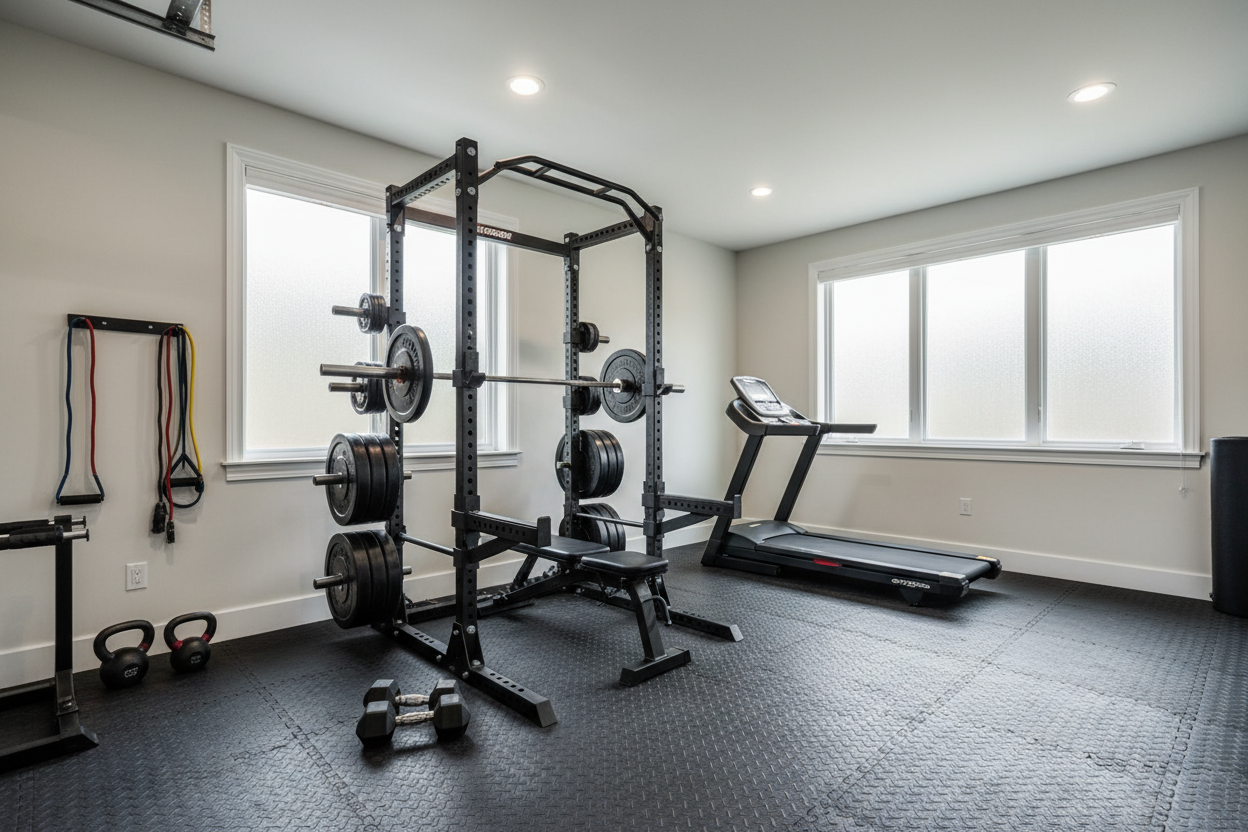
One thing I ignored for way too long was the environment of my home gym. My garage has a standard concrete floor with some thin, cheap horse stall mats. When I tried to do floor work, my knees and ankles were screaming from the pressure. When your joints feel pain against a hard surface, your entire body tenses up to protect itself. You cannot relax into a stretch if your patella feels like it’s being crushed into a rock.
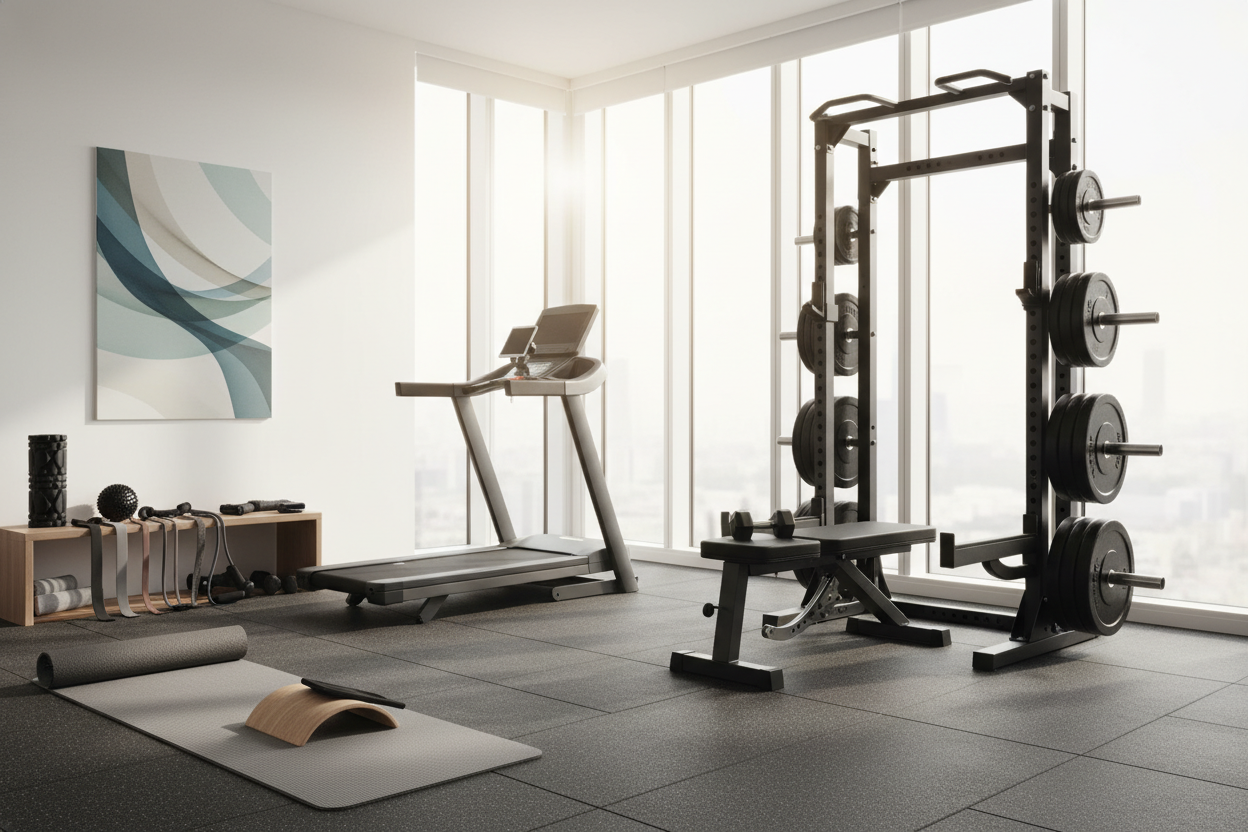
The easiest fix I ever made was investing in a high-quality large yoga mat. If you're a bigger lifter, those standard 24-inch mats are a joke. You end up with your knees on the mat and your hands on the cold floor. Upgrading to a 6x8ft exercise mat changed everything for me. It gave me enough cushioned real estate to actually sprawl out and move through a full range of motion without hitting the edges. When your body feels supported and cushioned, it finally feels safe enough to let go of that chronic tension.
The Best Way to Increase Flexibility Is Just Showing Up
At the end of the day, the best way to increase flexibility isn't some secret Mongolian contortionist routine. It’s the boring stuff. It’s the five minutes of cat-cow and bird-dog you do while your coffee brews. It’s the decision to stop stretching to the point of pain and start stretching to the point of 'mild curiosity.' Consistency is the only 'hack' that actually works for stiff lifters.
I still have days where I feel like a 2x4, especially after a heavy deadlift session. But because I’ve lowered the barrier to entry, I actually do the work. I don't dread my mobility sessions anymore because they aren't 'sessions'—they're just part of how I move through my day. Stop trying so hard, get off the cold concrete, and just keep showing up.
FAQ
How long should I hold a stretch?
Forget the stopwatch. Hold it until you feel the muscle actually 'yield' or relax. For most people, that’s between 30 and 60 seconds. If you’re shaking or holding your breath, you’ve gone too far.
Should I stretch before or after my workout?
Dynamic movement (circles, swings, light reps) before the workout to wake things up. Static stretching is best saved for after the session or, better yet, on your rest days when your nervous system isn't fried.
Is it normal for my joints to pop while stretching?
As long as there’s no sharp pain, it’s usually just gas bubbles (crepitus) or tendons moving over bone. It’s common, but if it comes with a stabbing sensation, back off immediately and see a pro.