I Broke These 10 Bodybuilding Rules and Grew Faster
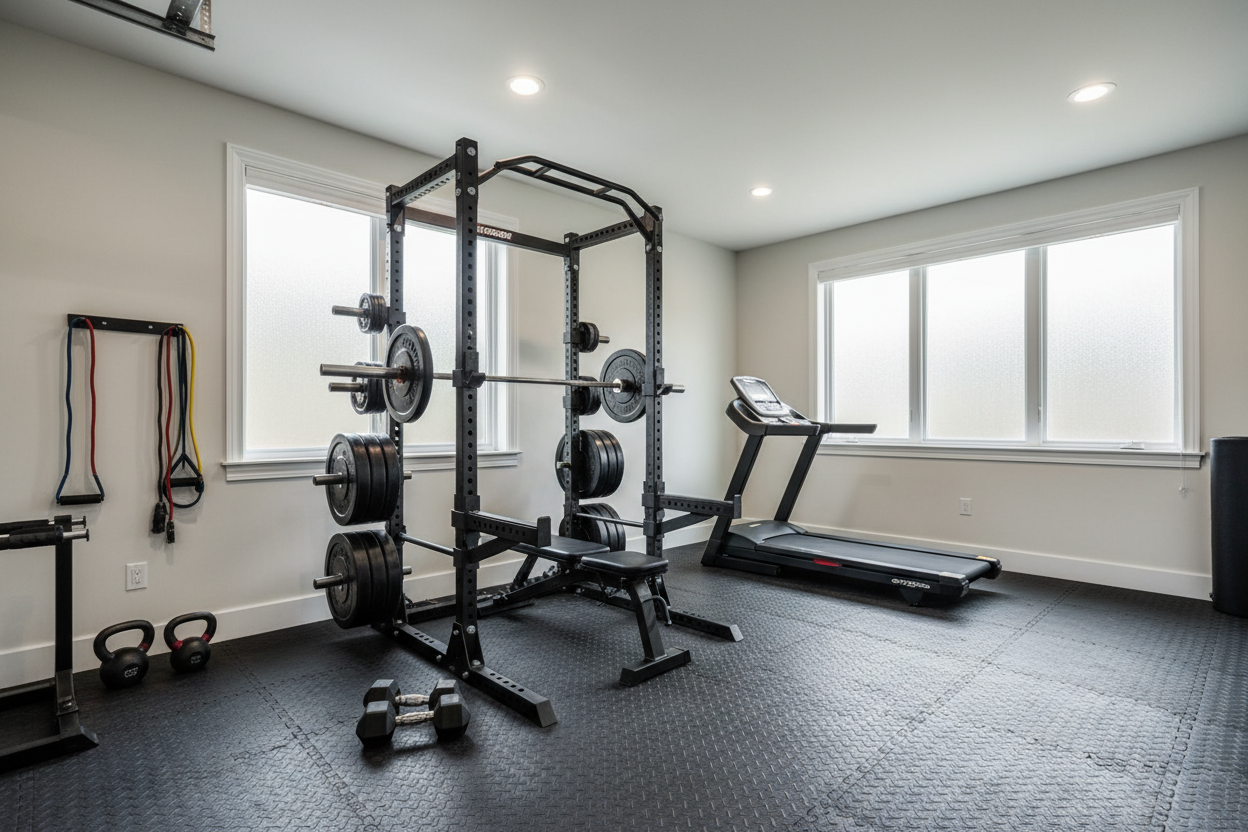
I remember sitting on a plyo box in my unheated garage, breath fogging up the air, scrolling through a magazine feature on a pro's chest day. The routine called for four different cable angles, two machine presses, and a finishing superset on a pec deck I didn't own. I felt like I was failing before I even picked up a plate. Trying to follow the standard 10 bodybuilding commandments in a 10x10 space with a power rack and a rusty barbell is a recipe for stalled progress and gear-envy.
Quick Takeaways
- Mainstream bodybuilding advice is written for people with access to $100k in commercial machines.
- Isolating every muscle fiber is less important than mastering a deep stretch on compound lifts.
- Training to absolute failure while alone in a garage is a safety hazard that ruins recovery.
- Efficiency beats variety every single time when you're training at home.
Why Commercial Gym Dogma Fails in a Garage
Most fitness media is produced in high-end facilities in Venice or Miami. They assume you have a 12-stack cable jungle and a line of Hammer Strength machines. When you try to port those high-volume, isolation-heavy routines into a garage gym, you spend half your time 'MacGyvering' your rack with resistance bands just to mimic a single-arm crossover. It's a waste of energy.
The truth is that 'commercial gym dogma' relies on high-frequency isolation because machines allow for easy recovery. When you are working with a barbell and heavy iron, the systemic tax is much higher. You can't train like an enhanced athlete on a 6-day split and expect your joints to survive the sheer load of constant compound movements. You need a strategy that respects your equipment and your central nervous system.
The 10 Bodybuilding Rules You Should Be Breaking
The standard list of rules—like 'don't use momentum,' 'train 6 days a week,' or 'chase the pump over the weight'—doesn't always apply here. In a home gym, you need to be a pragmatist. I stopped caring about 'feeling the squeeze' on 15 different variations and started caring about moving more weight through a full range of motion. If you want to grow in a garage, you have to stop acting like you're at Gold's Gym.
Ignoring the 'Isolate Everything' Myth
You don't need five different cable angles to build a chest. In fact, trying to replicate them with dumbbells usually results in a lot of wasted time and awkward setups. I spent years trying to hit the 'inner' and 'outer' pecs with light-weight flyes. It did nothing compared to what happened when I focused on deep-stretch compound movements.
Instead of chasing isolation, I started doing weighted dips and paused bench presses with a slight deficit. These movements stimulate the most tissue possible with minimal equipment. If you have a rack and a bar, your goal should be to become a master of the basics. A 315-lb bench will do more for your physique than any amount of creative band-work ever will.
Why You Shouldn't Train to Absolute Failure
We’ve all seen the videos of guys screaming through a final rep while three spotters help them. That isn't happening in your garage at 9 PM. Training to absolute, 'muscular collapse' failure on a barbell bench or squat when you're alone is dangerous. I’ve been pinned under a bar before; it’s not a badge of honor, it’s a sign you didn't plan your set correctly.
I advocate for training with 1-2 reps in reserve (RIR). By stopping just shy of total failure, you significantly reduce your recovery time and the risk of injury. This allows you to hit that same muscle group again sooner in the week. In a home gym, consistency over months beats a single 'hardcore' set that leaves you too sore to move for a week.
Rethinking 'Fasted Cardio' and Core Work
The idea that you need a separate 60-minute treadmill session to stay lean is a relic of the 90s. Most of us don't have time for that, and we definitely don't want a massive commercial treadmill taking up the footprint of a second power rack. You can get the same metabolic benefits in a fraction of the time.
I usually kick things off with a low-impact HIIT warmup. It gets the heart rate up and the joints lubed without draining the systemic energy I need for heavy squats. As for abs, stop doing 45 minutes of crunches on your rest days. I’ve found that a quick core and glute circuit at the end of a lifting session is more than enough to maintain a solid midsection and provide the stability needed for heavy overhead presses.
How to Actually Program Your Garage Sessions for Mass
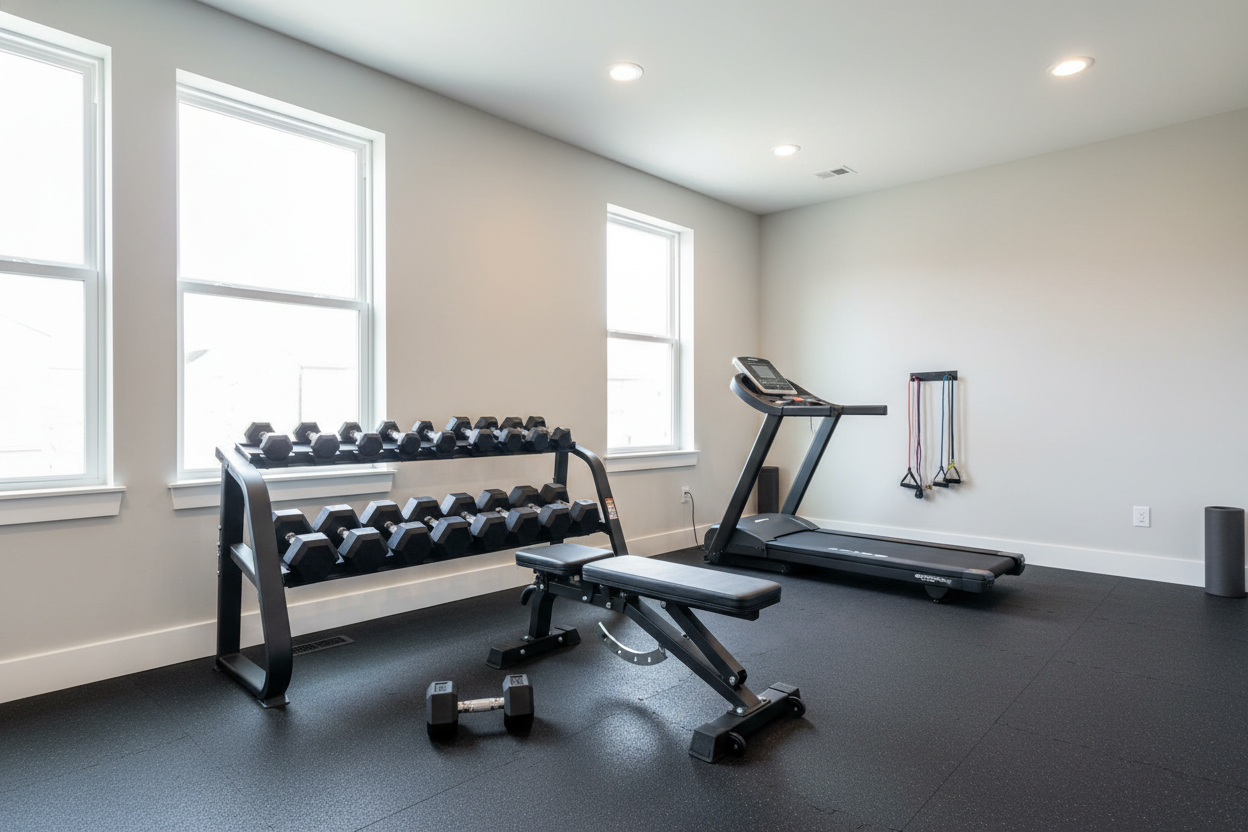
If you want to grow, your program needs to be built around what you actually have. For most of us, that's a rack, a bench, and maybe some adjustable dumbbells that go up to 50 or 80 lbs. Forget the 20-set arm days. Focus on a heavy, compound-focused plan with moderate volume.
Pick four main lifts: a squat, a hinge, a push, and a pull. Hit those hard for 3 sets of 6-10 reps. Then, pick two 'accessory' moves that use your dumbbells or body weight. That’s it. If you are adding 2.5 lbs to the bar every week, you are growing. You don't need a fancy app or a pro's 'secret' routine; you need to stop making excuses for why your garage isn't a commercial gym and start using the tools you actually own.
Personal Experience: The Day I Almost Quit
A few years ago, I tried to run a high-volume 'German Volume Training' program in my garage. It was 10 sets of 10 on everything. By set 6 of squats, I was so gassed I could barely keep my form, and by set 8, I was wondering why I even liked lifting. I was following a 'rule' that more volume equals more growth. I ended up with a strained lower back and zero gains for three months. I learned the hard way that in a home gym, quality of effort on a few key lifts beats a mountain of mediocre volume every time.
FAQ
Do I need a cable machine for a pro-level back?
No. Heavy barbell rows, weighted chin-ups, and meadows rows with a landmine attachment will build more thickness than a lat pulldown ever could. Cables are a luxury, not a necessity.
Is it okay to use 'cheat' reps?
A little body english on the last rep of a row or curl is fine, but if you have to swing your whole body to move the weight, it's too heavy. Keep it controlled, especially when you don't have a spotter.
How many days a week should I train at home?
For most people, 3 to 4 days of high-intensity lifting is the sweet spot. It allows for full recovery and keeps you from burning out in a small space.