Stop Wasting Time: The Real Way to Build Stronger, Shapelier Glutes
Building a powerful, well-shaped posterior isn't about doing endless kickbacks with zero resistance or spending hours on the elliptical. If you want to see actual physical changes, you have to treat your glutes like any other major muscle group. They require significant stimulus, adequate fuel, and progressively harder training sessions. The most direct answer to how you build mass in this area is through hypertrophy-focused strength training. You need to lift weights that challenge you within the 8 to 12 rep range, focusing on compound movements that allow for heavy loading, while ensuring you are eating enough protein to support tissue repair.
My Journey from Cardio Bunny to Heavy Lifter
I spent the early years of my fitness journey completely misunderstanding how body composition works. I wanted what everyone calls "fit glutes," but my routine consisted entirely of running and bodyweight squats. I was terrified that lifting heavy would make me bulky. After two years of sweating daily, I looked in the mirror and realized my shape hadn't changed at all; I had just become a smaller version of my former self. The turning point came when a trainer practically forced me under a barbell. I started squatting and deadlifting. Within four months of dropping the excessive cardio and picking up heavy iron, my jeans fit differently. It was a humbling lesson: you cannot sculpt a muscle that you haven't built yet.
Understanding the Anatomy of the Glutes
Before diving into the specific movements, it helps to know what you are actually working. The buttocks are made up of three main muscles: the gluteus maximus, gluteus medius, and gluteus minimus. The maximus is the main driver of shape and size. It extends the hip. The medius and minimus are situated more on the side and are responsible for stabilization and abduction. To get a complete look, your routine needs to hit all three heads, but the bulk of your energy should go toward the maximus.
Many gym-goers endlessly search for that one magic exercise to build buttock muscles, but a well-rounded physique requires a mix of movements that stretch the muscle and movements that contract it under load.
The Heavy Hitters: Compound Movements
Your workout should revolve around compound lifts. These give you the most "bang for your buck" because they recruit the most muscle fibers and allow you to move the most weight.
The Hip Thrust
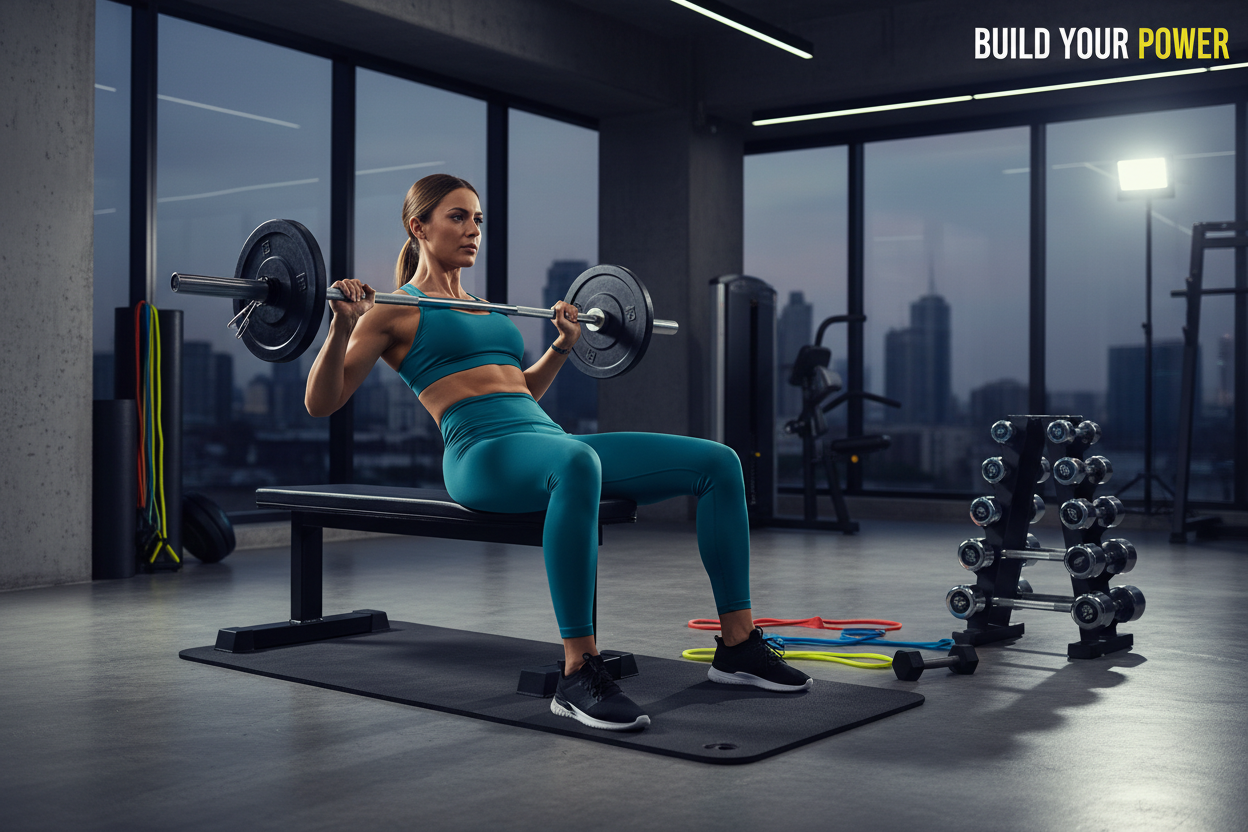
If there is a king of glute development, this is it. The hip thrust isolates the glutes without putting as much strain on the lower back as a squat might. By placing your upper back on a bench and a barbell across your hips, you can drive a tremendous amount of weight directly through the hips. This achieves peak contraction at the top of the movement.
Keep your chin tucked and your gaze forward. Drive through your heels. You want to feel the glutes doing the work, not your lower back or hamstrings. If you are looking for specific exercises to build bum muscle mass quickly, this should be your priority.
Romanian Deadlifts (RDLs)
While the hip thrust focuses on the squeeze (shortened position), the RDL focuses on the stretch (lengthened position). Muscle damage, which signals growth, often happens during the eccentric or lowering phase of a lift. The RDL is fantastic for this.
Keep a slight bend in your knees, push your hips back as far as they can go, and lower the bar along your shins. Stop when your hips stop moving back. If you go lower than that, you are just using your lower back. The soreness from these can be intense, but that is usually a sign you hit the target fibers.
Squats and Lunges
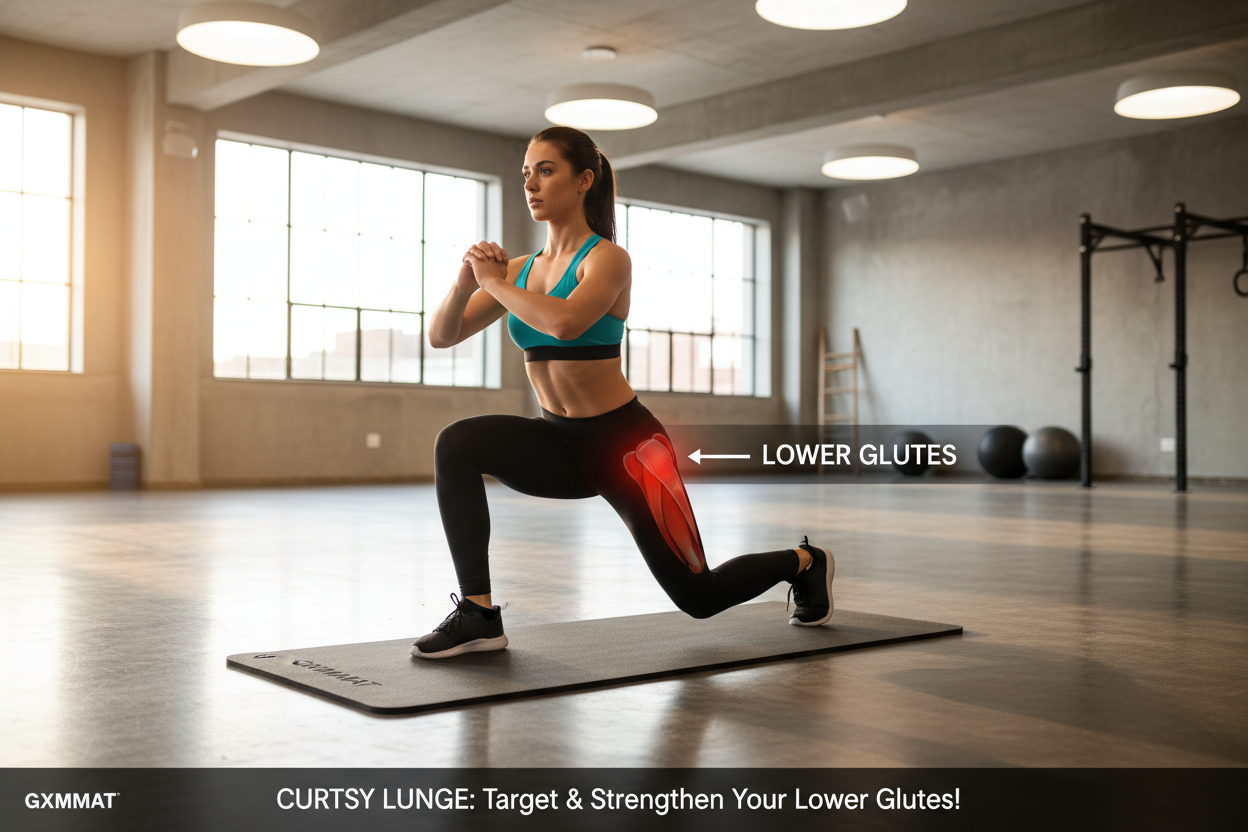
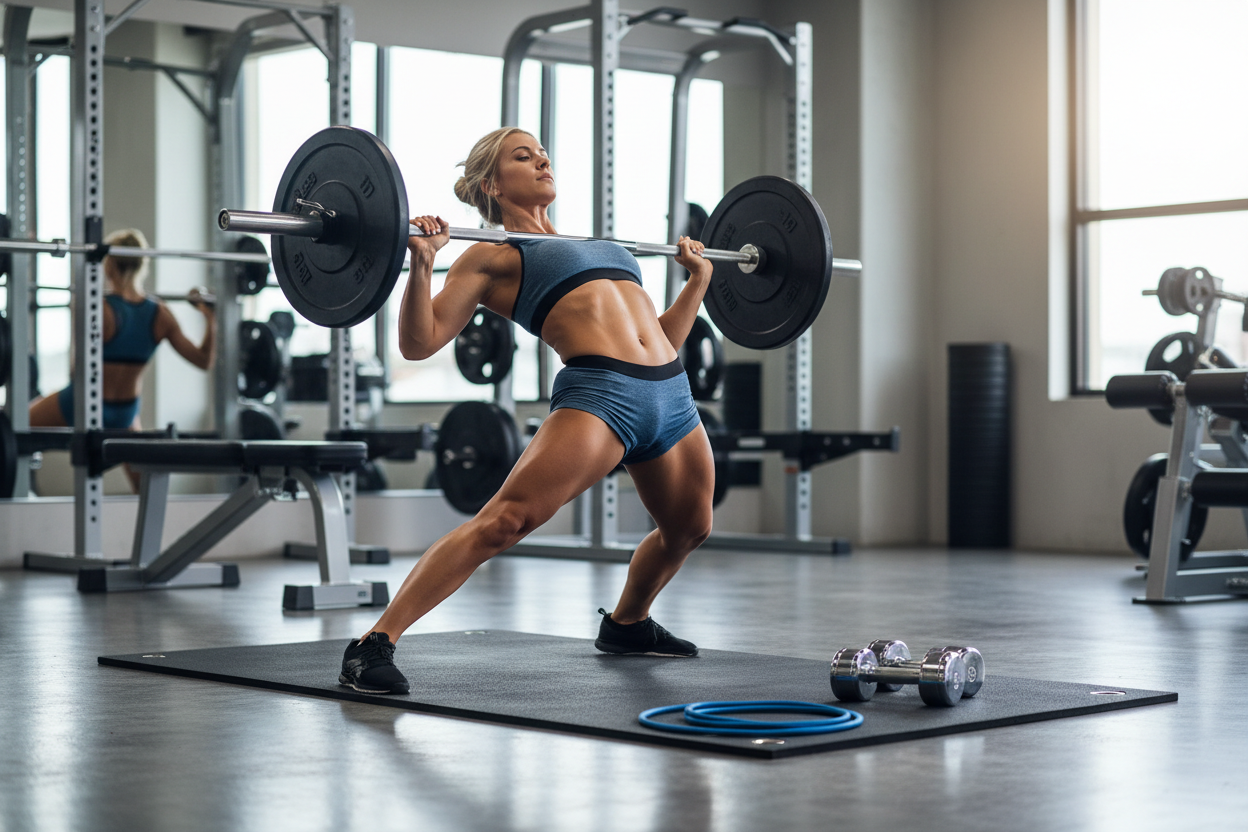
Squats are often touted as the ultimate leg builder, and they are, but they are quad-dominant for many people. To make them more glute-biased, you can take a slightly wider stance and focus on hitting depth. Lunges, specifically reverse lunges or Bulgarian split squats, are also non-negotiable. Unilateral training (working one leg at a time) ensures you aren't compensating with a stronger side and helps round out the shape of the glutes.
Progressive Overload is Key
You could have the perfect selection of exercises to build bum muscle, but if you use the same 10-pound dumbbells for a year, you will look exactly the same a year from now. This is the principle of progressive overload. You must give the body a reason to adapt.
Try to improve your performance every week. This doesn't always mean adding weight. You can add a rep, improve your form, slow down the tempo, or reduce rest times. As long as the difficulty increases over time, your muscles will be forced to grow to handle the stress.
Nutrition: The Other Half of the Equation
Training provides the spark, but food provides the bricks. You cannot build a house without materials. If you are in a steep calorie deficit, your body will struggle to build new muscle tissue. For optimal growth, you should be eating at maintenance calories or a slight surplus.
Protein intake is critical. Aim for roughly 0.7 to 1 gram of protein per pound of body weight. This ensures that the micro-tears you create during your heavy hip thrusts and squats are repaired thicker and stronger. Carbs are also your friend here; they provide the glycogen needed to fuel those intense leg day sessions.
Frequency and Recovery
How often should you train? A common mistake is hammering the glutes every single day. Muscles grow while you rest, not while you train. If you train them daily, you interrupt the recovery process. A better approach is hitting the lower body 2 to 3 times a week with at least one rest day in between. This frequency allows for high-quality sessions where you can lift heavy without fatigue compromising your form.
Mind-Muscle Connection
It sounds like "bro-science," but the ability to mentally connect with the muscle you are working is backed by evidence. Many people suffer from "glute amnesia" due to sitting at desks all day. Their hip flexors get tight, and their glutes turn off. Before you load up the bar for your main exercise to build buttock muscles, do a few activation drills. Clamshells or bodyweight glute bridges can help "wake up" the nerves so that when you start your heavy sets, the right muscles are firing.
Building a physique takes patience. It is a slow process that requires months and years of consistency. Ignore the influencers claiming you can transform in two weeks with a resistance band. Stick to the heavy compounds, eat your protein, and rest.
Frequently Asked Questions
How long does it take to see results in glute growth?
Visible muscle growth generally takes about 8 to 12 weeks of consistent training and proper nutrition. While you might feel stronger within the first month due to neural adaptations, actual hypertrophy (increase in muscle size) is a slower biological process that requires patience.
Can I build glutes without using heavy weights?
You can build some muscle with bodyweight or light bands, especially as a beginner, but eventually, you will plateau. To achieve significant growth and that "fit glutes" look, you generally need to introduce external resistance (weights) to continue providing the necessary stimulus for the muscles to adapt.
Why do I feel leg exercises in my lower back instead of my glutes?
This usually indicates a form issue or a weak core. If you arch your back excessively during movements like kickbacks or hip thrusts, the load shifts to the lumbar spine; focus on tucking your pelvis, keeping your ribs down, and reducing the weight until you can feel the glutes working exclusively.