Gravity Defied: The Real Science Behind Building Higher, Rounder Glutes
For years, the fitness industry sold a misleading narrative that thousands of unweighted kickbacks and endless hours on the StairMaster were the keys to a perky backside. The reality is far different and, frankly, much more efficient. If your goal is to change the actual shape of your body—specifically to create that lifted, shelf-like appearance—you need to stimulate hypertrophy (muscle growth). You cannot shape what isn't there, and muscle tissue is the only thing that will provide that structure. To get results, you have to move iron.
The solution isn't buried in a complex algorithm; it is based on biomechanics. If you want the short answer, the best exercise for lifting glutes is undeniably the Hip Thrust (and its heavy variations). While squats and lunges are fantastic, the hip thrust places the glutes under maximum tension when the muscle is fully shortened, creating a peak contraction that other movements simply cannot match. However, building a complete physique requires more than just one movement. It requires a strategic approach to loading the posterior chain.
Why Heavy Weights Are Non-Negotiable
Many people shy away from heavy lifting due to a fear of getting "bulky," but the gluteus maximus is the largest muscle in the human body. It is a powerhouse designed to move heavy loads. High-repetition bodyweight exercises might create a temporary "pump" due to blood flow, but they rarely provide enough mechanical tension to force the muscle fibers to grow thicker and stronger. To see a physical lift, you need to tear down muscle fibers so they repair larger than before.
Learning how to lift your buttocks with weights requires a shift in mindset from "burning calories" to "building tissue." You should be finishing your sets feeling like you could only perform maybe one or two more reps with good form. If you finish a set of 15 and feel like you could have done 30, the weight is too light to change your physique.
The King of the Lift: The Barbell Hip Thrust
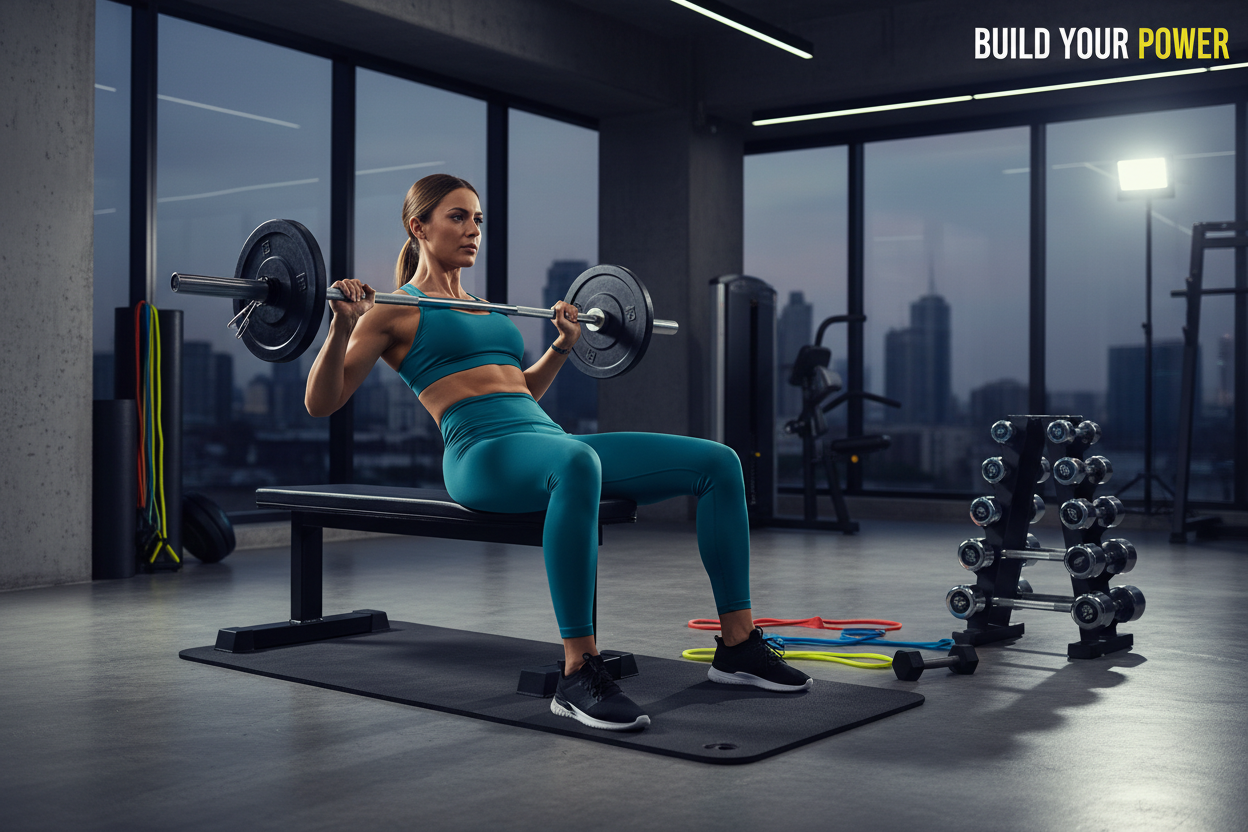
This movement isolates the glutes without putting excessive strain on the lower back or quads, provided your form is dialed in. To execute this properly, position your upper back against a sturdy bench. Roll a barbell over your hips (use a pad to avoid bruising). With your feet planted shoulder-width apart and shins vertical, drive through your heels to lift your hips until your body forms a straight line from shoulders to knees.
The magic happens at the top. You must tuck your chin and posteriorly tilt your pelvis—think of pulling your ribs down and curling your tailbone up. This prevents your lower back from taking over. Hold that squeeze at the top for a full second. This peak contraction is what stimulates the upper glutes, contributing heavily to that "lifted" look.
The Stretch: Romanian Deadlifts (RDLs)
While the hip thrust works the muscle in its shortened position, the Romanian Deadlift works the glutes in their lengthened (stretched) position. This is crucial for the "glute-ham tie-in," the area where your butt meets your thigh. A well-developed tie-in creates visual separation, making the glutes look higher.
Grab a pair of heavy dumbbells or a barbell. Keep a slight bend in your knees, but do not turn this into a squat. Hinge at your hips, pushing your backside toward the wall behind you. Keep the weights close to your shins. Go only as low as your flexibility allows without rounding your back—usually just below the knees. You should feel a deep stretch in your hamstrings and glutes. Squeeze your glutes to pull your torso back upright.
My Transition from Cardio to Iron
I spent the early years of my fitness journey terrified of the weight room. I was the classic "cardio bunny," spending 45 minutes on the elliptical followed by hundreds of bodyweight squats. I thought I was working hard because I was sweating, but my physique never changed. My glutes remained flat, and my knees actually started to hurt from the repetitive, low-impact grinding. The turning point came when I finally hired a strength coach who forced me to pick up a 40lb dumbbell for goblet squats.
The soreness I felt the next day was different—it was deep within the muscle belly, not just in my joints. Within three months of swapping the daily cardio for three days of heavy lifting, my jeans fit differently. The "shelf" I had been chasing for years finally started to appear. It wasn't magic; it was progressive overload. I realized that struggling through 8 reps with a heavy weight did more for my shape than 50 reps with air.
Unilateral Work: The Bulgarian Split Squat
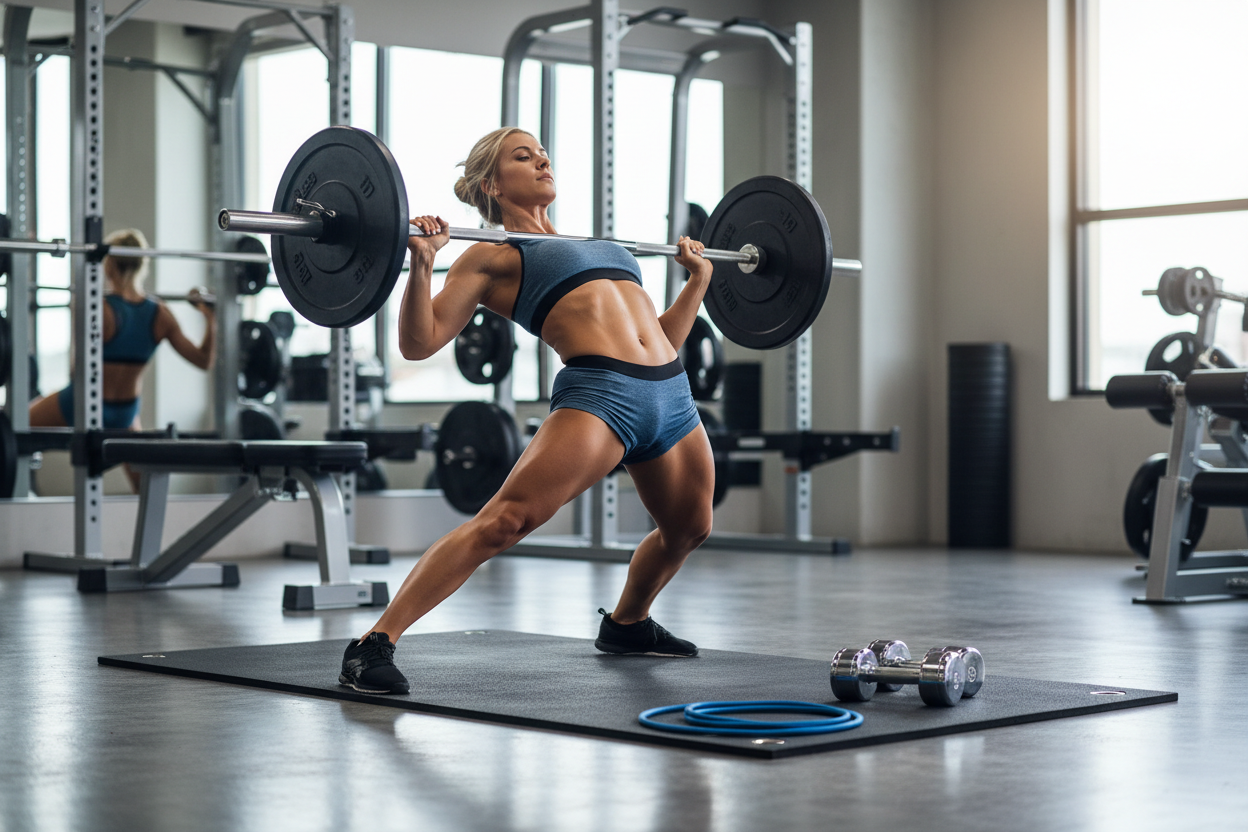
If you want to fix imbalances and target the glute medius (side glute), you cannot ignore single-leg work. The Bulgarian Split Squat is notoriously difficult but incredibly effective. Place one foot on a bench behind you and step the other foot out. Lower your back knee toward the ground.
To make this glute-dominant rather than quad-dominant, lean your torso forward slightly (about 45 degrees) and ensure your front shin stays relatively vertical. Drive through the heel of the front foot. This exercise stabilizes the hip and builds the upper shelf, giving the appearance of a rounder, wider shape.
Structuring Your Routine for Growth
Randomly throwing these exercises together won't yield optimal results. A solid glute-focused leg day should follow a hierarchy of energy expenditure. Start with your heaviest compound movement, typically the Squat or the Hip Thrust, while your nervous system is fresh. Aim for 3 to 4 sets in the 6 to 10 rep range.
Follow this with your lengthening movement, like the RDL. Since this requires significant stability, keep the reps moderate, perhaps 8 to 12. Finish with your unilateral work and high-repetition isolation movements (like cable kickbacks or abduction machine) to fully exhaust the fibers. This structure ensures you hit the muscle from every angle—shortened, lengthened, and stabilized.
Nutrition and Recovery
You can lift all the weights in the world, but you cannot build a house without bricks. In this context, bricks are protein and calories. To grow muscle tissue in your glutes, you generally need to be eating at maintenance calories or a slight surplus. If you are perpetually dieting and in a severe deficit, your body will refuse to build new muscle tissue.
Prioritize protein intake roughly around 0.7 to 1 gram per pound of body weight. Sleep is equally vital; muscles grow while you rest, not while you train. If you are hitting the gym six days a week but sleeping five hours a night, you are short-circuiting your own progress.
Frequently Asked Questions
How often should I train glutes to see results?
For most lifters, training glutes 2 to 3 times per week is the sweet spot. This frequency allows for high-quality volume while giving the muscles roughly 48 hours to recover and grow between sessions. Training them every day usually leads to overtraining and diminished returns.
Can I build glutes with just dumbbells?
Absolutely. Your muscles do not know the difference between a barbell, a dumbbell, or a machine; they only recognize tension. You can perform RDLs, goblet squats, lunges, and even hip thrusts with a heavy dumbbell, provided you continue to increase the weight as you get stronger.
Why do I feel leg exercises in my lower back instead of my glutes?
This is usually a form issue or a result of a weak core. If you arch your back excessively (anterior pelvic tilt) during movements like hip thrusts or squats, the load shifts to the lumbar spine. Focus on tucking your chin, bracing your core like you're about to be punched, and reducing the weight until you can feel the glutes engaging properly.