Stop Wasting Time on Bench Press: The Real Blueprint for a Bigger Chest
Most guys walk into the weight room on Monday, head straight for the flat bench, and proceed to heave weight they can barely control. I used to be exactly that guy. For the first two years of my lifting journey, I thought the barbell bench press was the holy grail of pectoral development. I chased a higher max weight relentlessly, arching my back and recruiting every fiber of my front deltoids and triceps to move the bar. The result? Massive shoulders, sore elbows, and a chest that looked exactly the same as when I started. It wasn't until I dropped the ego and studied anatomy that I realized moving weight from point A to point B isn't the same as building muscle.
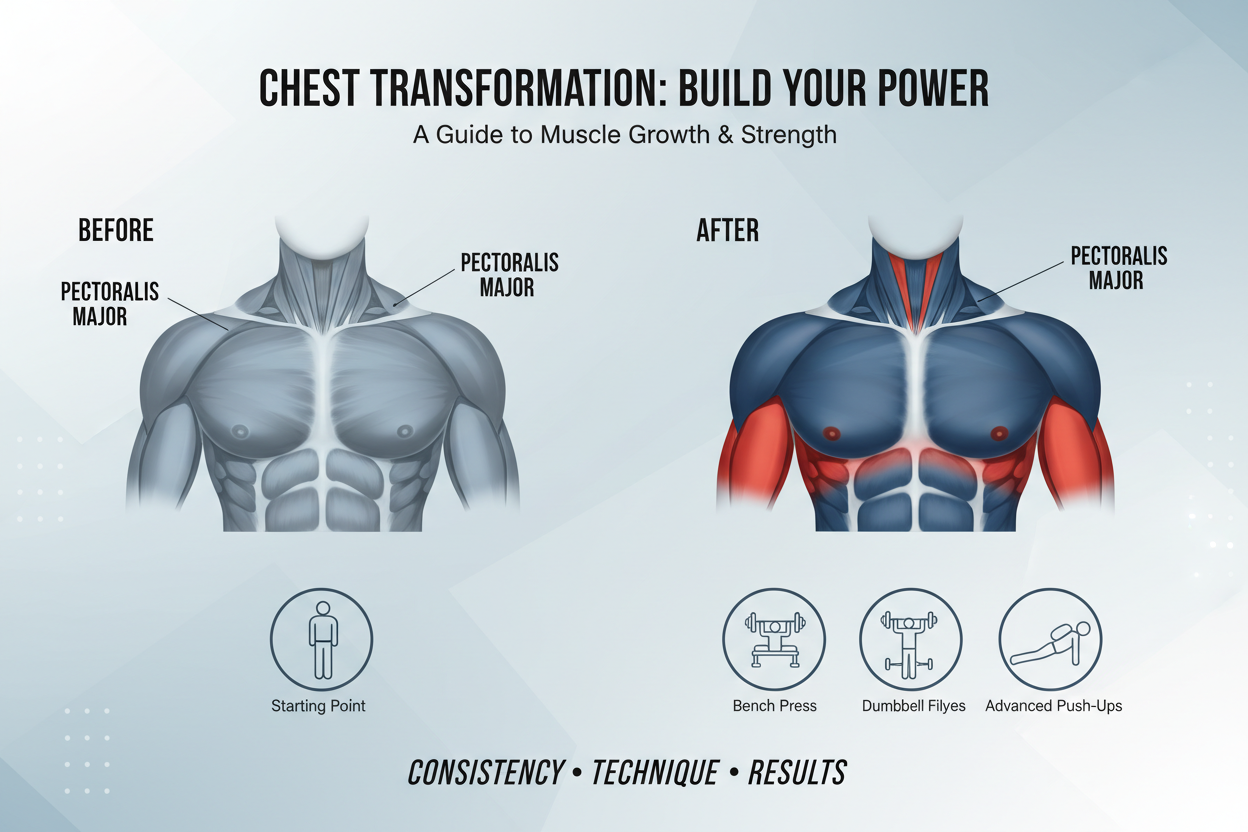
To actually grow your pecs, you need to understand that the chest is a fan-shaped muscle designed to bring the arm across the body, not just push forward. The best work out for your chest isn't necessarily the one with the heaviest plates; it's the one that maximizes tension across the entire range of motion. If you are tired of plateaus and want to fill out your t-shirt, you need to rethink your angles, your equipment, and your intensity.
The Upper Chest Gap
If you look at the most impressive physiques, the distinguishing factor is almost always the "upper shelf" of the pectorals. This clavicular head of the pec is notoriously stubborn. When you focus solely on flat pressing, the lower and middle pecs take the brunt of the load, often leaving the upper chest underdeveloped. This creates a droopy look rather than that armored-plate aesthetic.
The incline dumbbell press is arguably superior to the barbell for this purpose. Barbells lock your hands in a fixed position, which can limit the stretch at the bottom and the contraction at the top. Dumbbells allow your wrists to rotate slightly and your elbows to tuck naturally, providing a deeper stretch. When compiling the best exercises chest development requires, a low-incline (15 to 30 degrees) dumbbell press should be near the top of the list. The angle doesn't need to be steep; too high, and you are just doing a shoulder press.
Why Machines and Cables Are Not "Cheating"
There is a strange stigma in some lifting circles that free weights are for "real" lifters and machines are for beginners. This mindset kills gains. While free weights are excellent for stabilizers and overall power, they suffer from a variable resistance curve. At the top of a dumbbell fly, for example, there is almost zero tension on your chest because gravity is pulling the weight straight down through your joints, not against the muscle.
This is where the best chest exercises gym setups offer come into play. Cables and converging plate-loaded machines keep tension on the muscle throughout the entire movement. A cable crossover allows you to cross your hands past the midline of your body, achieving a peak contraction that is physically impossible with a barbell. If you want to sculpt the inner chest, you have to embrace the machines. Integrating cable flys immediately after your heavy pressing movements ensures you are fully exhausting the muscle fibers without putting your shoulder joints at risk.
The Forgotten Mass Builder: Dips
Before the bench press became the standard for strength, dips were the primary upper body builder. They are essentially a squat for your upper body. When performed with a slight forward lean, dips recruit a massive amount of muscle fibers in the lower and outer pecs. The key here is depth and control. Bouncing out of the bottom position is a one-way ticket to sternum pain or a torn rotator cuff. Lower yourself slowly until you feel a deep stretch in the chest, pause for a split second, and drive up.
For those who have mastered their body weight, adding a dip belt with plates turns this into one of the best chest building workouts available. It allows for infinite progressive overload. Just ensure your shoulders stay depressed (down away from your ears) to keep the tension on the pecs and off the traps.
Structuring the Perfect Session
Throwing random exercises together rarely yields results. You need a logical flow. A great session starts with a compound movement to utilize your fresh energy stores for heavy lifting, then transitions into hypertrophy-focused movements, and finishes with metabolic stress (the pump). The best workout of chest development follows this hierarchy strictly.
Start with a heavy incline press. Do 3 to 4 sets in the 6-10 rep range. This builds the strength foundation. Follow this with a flat pressing movement, preferably with dumbbells or a high-quality machine press, aiming for 8-12 reps. This targets the meat of the muscle. Next, move to a weighted dip or a decline movement to hit the lower pecs. Finally, finish with an isolation movement like cable flys or a pec deck machine, aiming for 15-20 reps with a focus on squeezing the muscle as hard as possible.
The Role of Progressive Overload and Recovery
You can have the perfect exercise selection, but if you are lifting the same 50lbs dumbbells for the next six months, you won't grow. The principle of progressive overload is non-negotiable. This doesn't always mean adding weight. You can add a rep, slow down the eccentric (lowering) phase, or decrease rest times. You must give the body a reason to adapt.
Furthermore, chest growth doesn't happen in the gym; it happens while you sleep and eat. Overtraining the chest is a common error. The pectorals are large muscles, but they are also involved in almost every other upper body movement. If you are training shoulders and triceps on separate days, your chest is getting indirect work constantly. For most natural lifters, hitting chest hard twice a week with adequate rest days in between is the sweet spot for hypertrophy.
Sample Routine for Hypertrophy
If you are ready to switch things up, try this rotation for eight weeks. Focus on form over weight.
-
Incline Dumbbell Press: 4 sets of 8-10 reps (Focus on the upper shelf)
-
Flat Machine Press or Weighted Dips: 3 sets of 10-12 reps (Heavy compound movement)
-
Cable Crossovers (High to Low): 3 sets of 15 reps (Squeeze at the bottom for 1 second)
-
Pec Deck / Machine Fly: 3 sets of 15-20 reps (Burnout set to finish)
This routine covers all angles and utilizes both heavy mechanical tension and metabolic stress. It combines the best exercises chest anatomy dictates for growth. Consistency with this approach, fueled by a slight caloric surplus, will do more for your physique than years of ego-lifting on the flat bench ever could.
Frequently Asked Questions
How often should I train my chest for maximum growth?
For most intermediate lifters, training chest twice a week is optimal. This frequency allows for sufficient volume to stimulate growth while providing enough recovery time (usually 48-72 hours) between sessions to prevent overuse injuries.
Can I build a big chest with just push-ups?
Yes, but eventually you will hit a plateau as your body adapts to your own weight. To continue building mass with push-ups, you must introduce progressive overload by elevating your feet, wearing a weighted vest, or using variations that increase mechanical disadvantage.
Why do I feel my shoulders taking over during chest presses?
This usually happens because your shoulder blades aren't retracted, or your elbows are flared out too wide (90 degrees). Pin your shoulder blades back against the bench and tuck your elbows slightly toward your ribcage to force the pectorals to do the work.