Stop Wasting Time on Kickbacks: The Heavy Lifts That Actually Build Glutes
If you have spent months religiously doing donkey kicks, clam shells, and walking sideways with a resistance band around your knees but haven't seen significant changes in your physique, you aren't alone. The fitness industry often markets glute training as a high-repetition, low-impact endeavor designed to create a burning sensation. While that burn feels productive, it is rarely enough to stimulate significant muscle hypertrophy. To actually change the shape and strength of the largest muscle group in your body, you need to move serious weight. The gluteus maximus is a powerhouse designed for explosive movement and heavy loads, not just fluttering your legs in the air.
Building substantial muscle requires mechanical tension. This is the physical stress applied to muscles when they contract against a heavy load. While isolation movements have their place for warm-ups or metabolic finishing, they shouldn't be the main course. If your goal is growth, your training needs to center around heavy glute exercises that allow for progressive overload—the practice of gradually increasing the weight, frequency, or number of repetitions in your strength training routine.
The Reality Check: My Transition to Heavy Lifting
I spent the first two years of my lifting journey terrified of the squat rack. I thought heavy weights would make me look bulky or result in an injury. My routine consisted almost entirely of bodyweight lunges and cable kickbacks. I was consistent, but my progress stalled completely after the newbie gains wore off. I had endurance, sure, but no shape and very little functional strength.
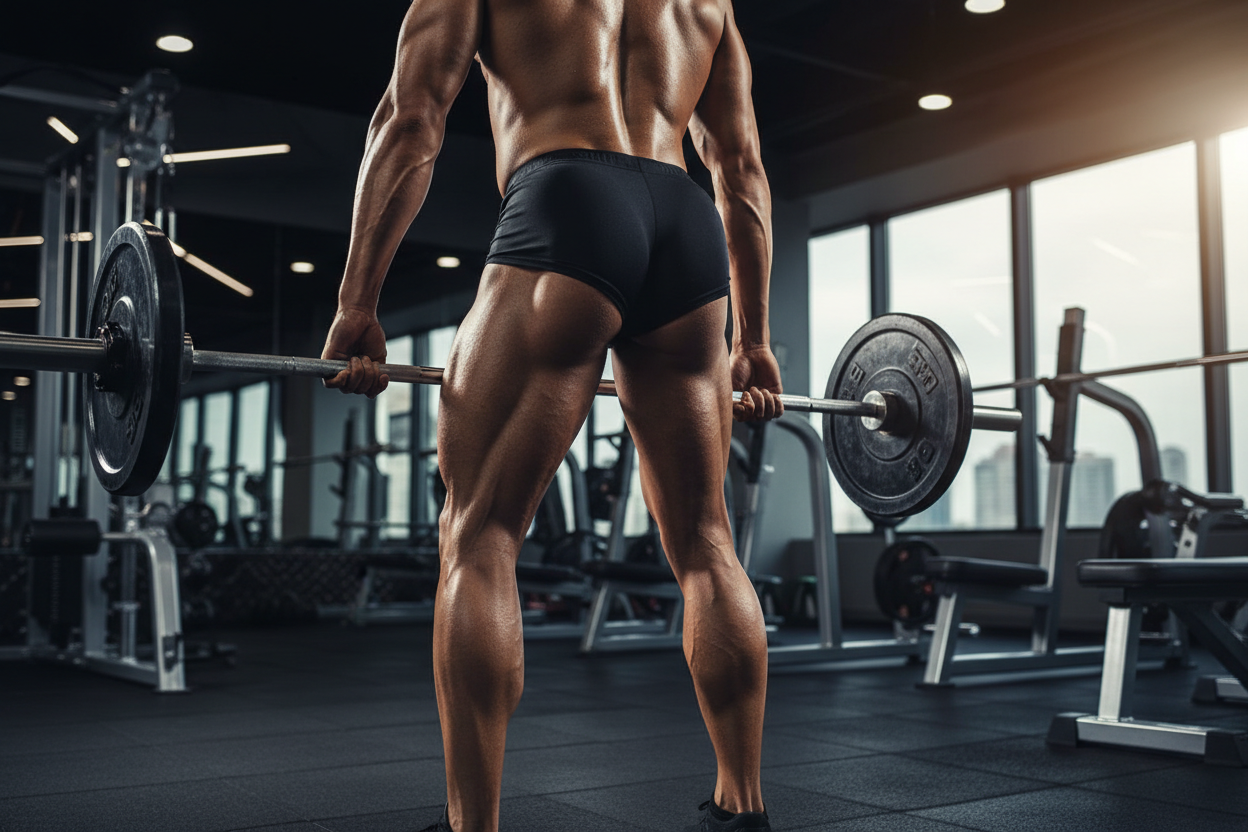
The turning point came when I finally hired a strength coach who stripped away the fluff. He put a barbell in my hands and dropped my rep ranges from 20 down to 6. The first time I deadlifted my body weight, I realized what I had been missing. The soreness wasn't just a surface-level burn; it was a deep muscle fatigue that signaled growth. Within four months of prioritizing heavy compound movements, I saw more progress than I had in the previous two years combined. It wasn't magic; it was simply matching the stimulus to the muscle's potential.
The Mechanics of Heavy Glute Training
The glutes are primarily comprised of fast-twitch muscle fibers, which respond best to heavy resistance and explosive power. When you limit yourself to light weights, you are primarily engaging slow-twitch fibers designed for endurance. To tap into the growth potential of fast-twitch fibers, you need to lift heavy enough that you can only complete between 5 to 10 repetitions with proper form.
A proper heavy glute workout focuses on hip extension. This is the movement of opening the hip joint, like standing up from a chair or thrusting your hips forward. While many exercises involve the legs, not all of them prioritize the posterior chain. Leg presses, for example, can be incredibly heavy, but they are often quad-dominant. You need to select movements where the glutes are the primary driver of the motion.
The Big Three: Essential Heavy Glute Exercises
You do not need a library of fifty different movements. You need mastery of a few effective ones. These three lifts allow for the greatest load and, consequently, the greatest growth.
The Barbell Hip Thrust
This is arguably the king of glute isolation. Unlike squats, where the load is shared across the back and quads, the hip thrust places the load directly over the hips. This creates a shorter lever arm and maximizes tension on the glutes at the top of the movement (full contraction).
To perform this heavy, stability is key. Use a bench that won't slide and position it just below your shoulder blades. Keep your chin tucked and your gaze forward to prevent hyperextending your lower back. When you drive the bar up, think about scooping your pelvis under rather than arching your back. Because the glutes are strongest at the top of this movement, you can often move more weight here than in any other exercise.
The Romanian Deadlift (RDL)
While the hip thrust challenges the glutes in the shortened position, the RDL challenges them in the lengthened (stretched) position. This stretch under load is a potent trigger for hypertrophy. The movement is a hinge, not a squat. Imagine you are trying to close a car door with your butt while holding a heavy tray of drinks.
Keep your shins vertical. As you lower the bar, push your hips back as far as they will go. Stop the descent once your hips stop moving back; going lower usually just means your spine is rounding, which shifts tension from the glutes to the lower back. The soreness from heavy RDLs is distinct and often delayed, proving its effectiveness.
Bulgarian Split Squats
These are frequently cited as the hardest glute exercises in existence, and for good reason. They demand balance, mobility, and immense unilateral strength. By taking one leg out of the equation, you force the working glute to stabilize the pelvis while moving a heavy load.
To make this glute-biased rather than quad-biased, take a slightly longer stance and lean your torso forward (while keeping the spine straight). This angle increases the stretch on the glute. Because you are balancing on one leg, you won't lift as much absolute weight as a deadlift, but the relative load on the muscle is massive.
Structuring Your Heavy Glute Workout
Trying to max out on every exercise every day is a recipe for nervous system burnout, not growth. A well-structured session should start with your heaviest compound movement while you are fresh and move toward accessory work. Here is a framework for a session focused on mechanical tension:
- Warm-up: 5-10 minutes of dynamic stretching (hip openers, bodyweight glute bridges).
- Primary Compound (Hip Thrust): 3 sets of 5-8 repetitions. Rest 3 minutes between sets.
- Secondary Compound (RDL): 3 sets of 8-10 repetitions. Focus on the slow eccentric (lowering) phase.
- Unilateral Movement (Walking Lunges or Split Squats): 3 sets of 10-12 repetitions per leg.
- Accessory (45-degree Hyperextension): 2 sets to failure, holding a weight plate against your chest.
Notice the low volume of exercises but the high demand on effort. If you can chat casually immediately after a set of heavy thrusts, the weight likely isn't heavy enough. The goal is to reach near-failure by the final rep of each set.
Recovery and Frequency
Lifting heavy takes a toll. Connective tissue needs time to adapt, and muscles grow during rest, not during the workout. If you are truly performing a heavy glute workout with sufficient intensity, you should probably only train this specific muscle group twice a week with at least two days of rest in between.
Nutrition also plays a massive role. You cannot build muscle out of thin air. Ensure you are consuming enough protein to repair the micro-tears created by these heavy lifts. Without the building blocks of nutrition and the recovery time of sleep, all that heavy lifting will just lead to fatigue rather than a stronger posterior chain.
Common Questions About Glute Training
How often should I increase the weight?
Aim for progressive overload every week or two. If you hit the top of your rep range (e.g., 8 reps) with good form, add the smallest available weight increment (usually 2.5 or 5 lbs) for the next session. If form breaks down, keep the weight the same and focus on controlling the movement better.
Why do I feel heavy leg exercises in my lower back?
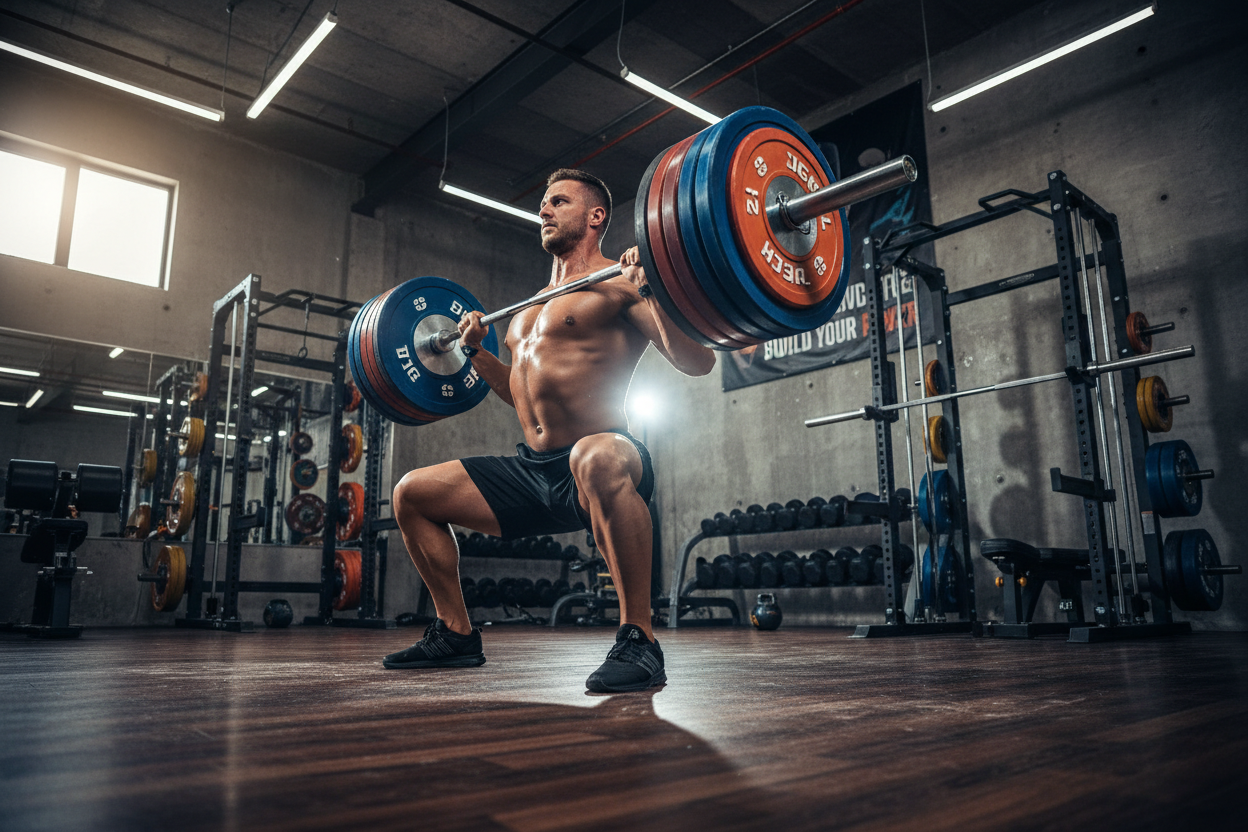
This usually indicates a bracing issue or a lack of core engagement. Before you lift, take a deep breath into your belly and tighten your abdominals as if someone is about to punch you. If your back arches excessively during movements like the RDL or squat, reduce the weight until you can maintain a neutral spine.
Can I build glutes without a barbell?
You can make progress with dumbbells or kettlebells, especially with unilateral moves like split squats. However, eventually, the weight of dumbbells becomes difficult to hold or position before the glutes are fully exhausted. For maximum potential, a barbell allows for the easiest heavy loading.