Stop Wasting Leg Day: The Blueprint for Stronger Glutes and Quads
Walking out of the weight room with shaky legs is often viewed as a badge of honor, but soreness doesn't always equate to progress. To truly reshape your lower body, you need a strategy that balances intensity with biomechanics. A comprehensive full leg and glute workout isn't just about doing endless squats until you drop; it is about targeting the posterior chain, the quadriceps, and the stabilizers with precision. If you are tired of guessing which machines to use or how many sets to perform, this guide lays out exactly how to structure your training for maximum hypertrophy and strength.
I recall my first few years of lifting where I fell into the trap of ego lifting. I loaded up the leg press with every plate I could find, moving the sled three inches, thinking I was building massive legs. The reality was a rude awakening: my knees hurt, and my glutes were non-existent. It wasn't until I stripped the weight back and focused on full range of motion and specific activation cues that my physique actually changed. Learning to feel the muscle stretch under load was the turning point. That experience taught me that effective training is about intention, not just exertion.
The Anatomy of a Perfect Leg Day
Building a lower body that performs as well as it looks requires hitting the muscles from multiple angles. A well-rounded gym leg and glute workout should revolve around three main movement patterns: the squat, the hinge, and the lunge. By categorizing exercises this way, you ensure that the quads, hamstrings, and glutes all receive adequate stimulus without overtraining one specific area.
The squat pattern targets the anterior chain (quads) and adductors, while the hinge pattern—think deadlifts—hammers the posterior chain (hamstrings and glutes). The lunge, or unilateral movement, fixes imbalances between your left and right sides. Neglecting any of these leaves performance and aesthetic gains on the table.
Compound Movements First
Energy levels are highest at the start of your session, so this is where the heavy lifting belongs. We start with the barbell hip thrust or a heavy squat variation. While squats are traditionally the opener, starting with hip thrusts allows you to pre-exhaust the glutes without taxing the lower back significantly. This ensures that during your subsequent compound lifts, your glutes are firing actively rather than letting your quads take over entirely.
For the squat, depth is non-negotiable. Whether you choose a high-bar back squat or a goblet squat, aiming for your hips to break parallel with your knees ensures maximum muscle fiber recruitment. If ankle mobility is an issue, elevating your heels on small plates can be a game-changer for hitting the quads harder.
The Hinge: Targeting the Posterior Chain
Once the heavy knee-dominant movement is done, we shift to the hips. The Romanian Deadlift (RDL) is arguably the most effective movement for hamstring and glute development. Unlike a conventional deadlift where the weight starts on the floor, the RDL starts from the top down. The focus here is pushing the hips back as far as possible while keeping a neutral spine. You should feel a deep stretch in the hamstrings.
Executing a proper glute and leg workout at gym facilities gives you access to barbells and dumbbells that allow for this necessary overload. If your grip strength fails before your legs do, use lifting straps. The goal is to fatigue the legs, not the forearms.
Unilateral Training and Accessories
Unilateral training is where physiques are refined. The Bulgarian Split Squat is notoriously difficult but incredibly effective. It forces the glute medius to stabilize the pelvis while the quads and glute max work to drive the body upward. This exercise exposes weaknesses immediately. If you wobble or collapse inward, it is a sign that your stabilizers need work.
Following the heavy compound work, accessory movements allow you to add volume with less systemic fatigue. Exercises like leg extensions, seated hamstring curls, or cable kickbacks fit perfectly here. High-rep ranges (15-20 reps) work well to pump blood into the muscle and induce metabolic stress, which is a key driver for growth.
Structuring the Routine
Here is a concrete example of how to put these principles into practice. This routine is gender-neutral, though it aligns perfectly with the goals often associated with a women's leg and glute gym workout, emphasizing glute shape and leg definition without excessive bulk.
- Barbell Hip Thrusts: 4 sets of 8–10 reps. Hold the contraction at the top for one second.
- Barbell Back Squats (or Leg Press): 3 sets of 6–8 reps. Focus on a 3-second lowering phase.
- Romanian Deadlifts (Dumbbell or Barbell): 3 sets of 10–12 reps. Focus on the stretch.
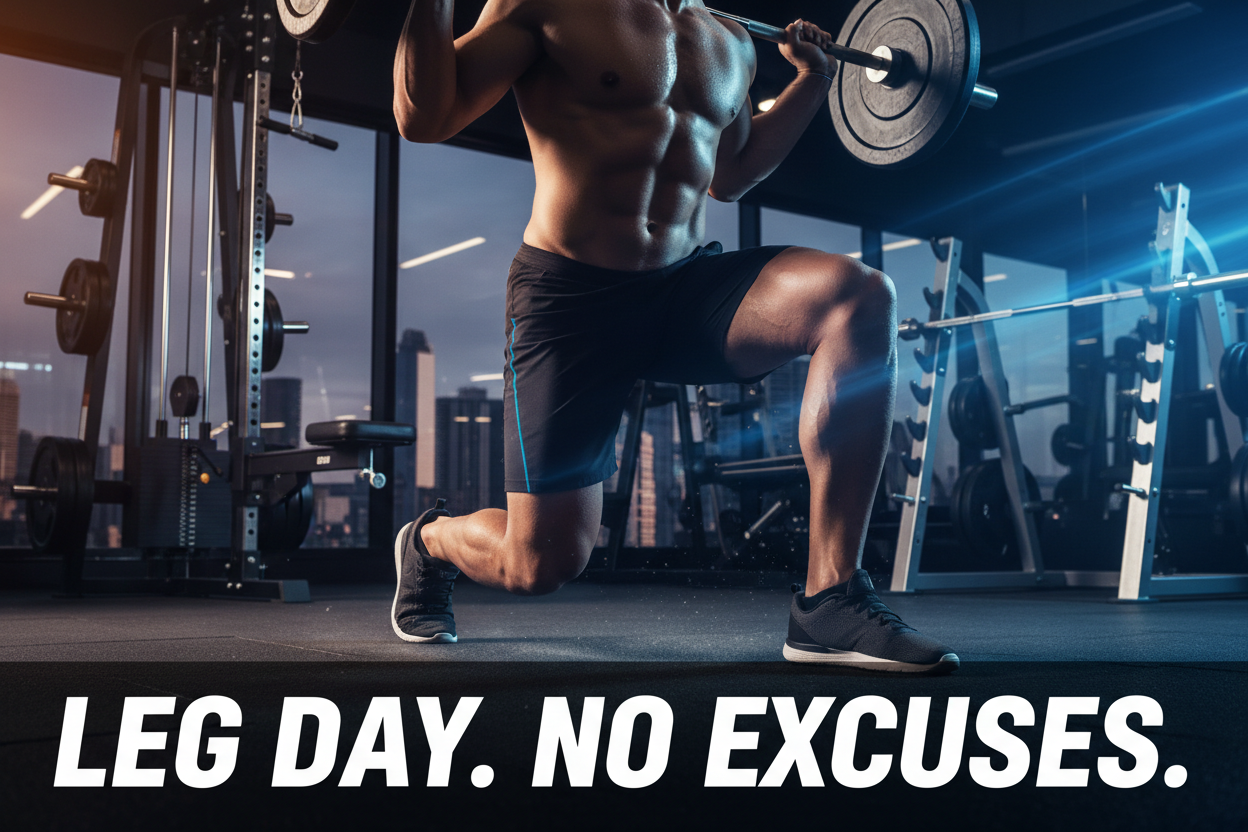
- Bulgarian Split Squats: 3 sets of 10 reps per leg. Lean forward slightly to bias the glutes.
- Seated Hamstring Curl: 3 sets of 15 reps. Control the weight; don't let it jerk your legs up.
The Role of Progressive Overload
You cannot do the same workout with the same weight for months and expect changes. Progressive overload is the engine of growth. This doesn't always mean adding more weight to the bar. You can increase the number of reps, decrease rest times, or improve your technique. If you squatted 135lbs for 8 reps last week with shaky form, and this week you do it with perfect form, that is progress.
Tracking your lifts is essential. Use a notebook or an app to record your numbers. When you walk into the gym, you should know exactly what you need to beat from the previous week. This psychological intent drives physical adaptation.
Fueling and Recovery
Training breaks muscle tissue down; recovery builds it back up. Lower body sessions are systemically taxing. They burn a significant amount of central nervous system energy. Ensure you are consuming adequate protein to support muscle repair and carbohydrates to replenish glycogen stores. Sleep is equally critical. If you are consistently getting less than seven hours of sleep, your risk of injury increases, and your strength gains will plateau.
Consistency over intensity is the final piece of the puzzle. One brutal workout won't change your body, but average workouts done consistently over a year will transform it completely. Stick to the plan, respect the recovery process, and the results will follow.
Frequently Asked Questions
How many times a week should I train legs?
For most lifters, training legs twice a week is optimal. This frequency allows for sufficient volume to stimulate growth while providing enough recovery time (48-72 hours) between sessions to prevent overtraining.
Can I do this workout if I have lower back pain?
If you suffer from back pain, you should modify exercises that load the spine heavily, such as back squats or conventional deadlifts. Swapping these for leg presses, belt squats, or chest-supported variations can provide a great stimulus while minimizing spinal compression.
Will heavy lifting make my legs look bulky?
Building significant muscle mass takes years of dedicated high-calorie eating and heavy lifting. Most people will experience a "toning" and shaping effect rather than excessive bulk, as muscle is much denser than fat and creates a firmer appearance.