Effective Machine Chest Workout Routine for Strength and Shape
Building a strong, well-defined chest isn’t limited to free weights alone. In fact, many people overlook the benefits of a chest workout using machines, which can offer consistent resistance, improved safety, and more controlled movement patterns—making them ideal for both beginners and experienced fitness enthusiasts.
Why Choose a Machine Chest Workout Routine
Machines are designed to guide your motion, reducing the risk of poor form and injury. This structured pathway allows for isolated muscle engagement, helping you target the pectorals more efficiently. Unlike free weights that rely heavily on stabilizing muscles, machine-based exercises focus deeply on the chest, letting you overload your muscles with confidence.
Advantages Over Free Weights
While dumbbells and barbells have their place, machines are particularly beneficial for those recovering from injury, wanting to avoid spotter dependency, or seeking a controlled range of motion. Additionally, adjustable settings on most machines make it possible to accommodate various body types and strength levels.
Sample Machine Chest Workout Routine
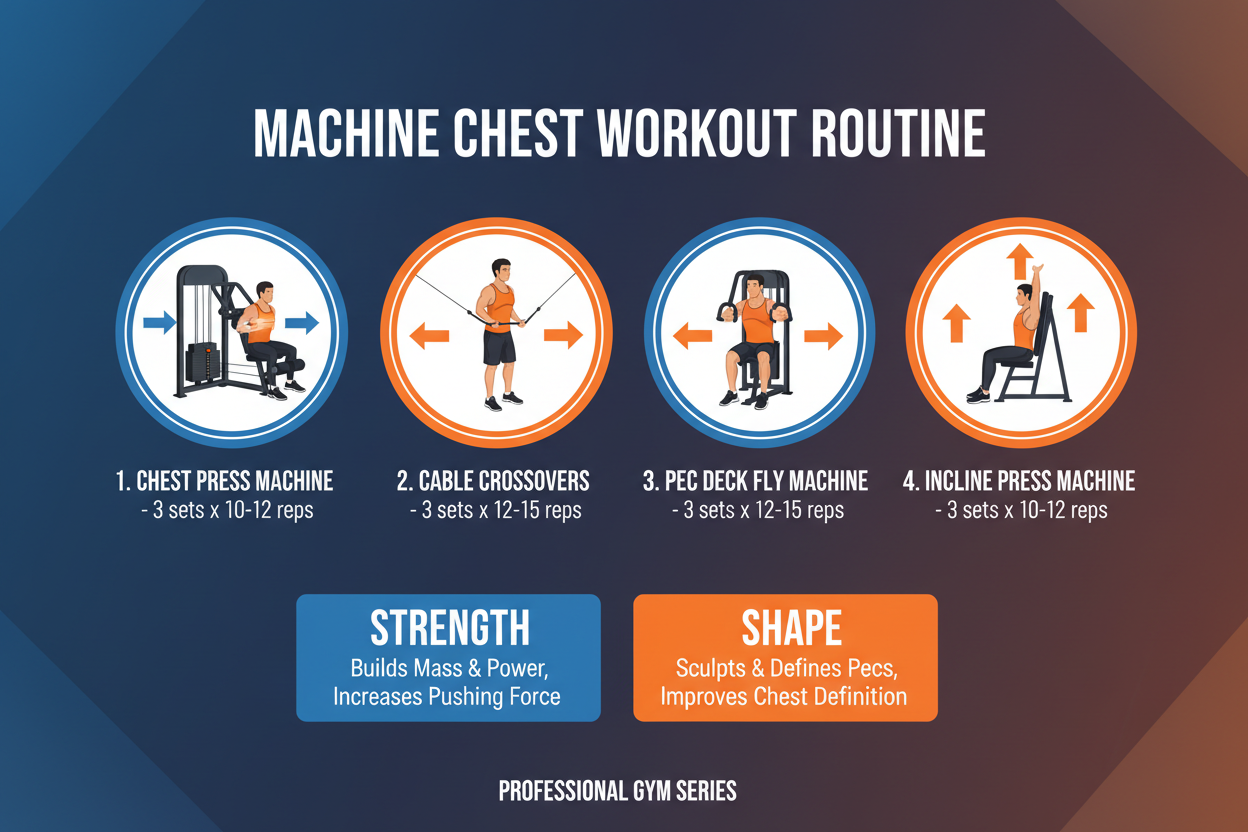
Here’s a balanced routine that incorporates different movement angles to fully engage the chest:
- Seated Chest Press: 3 sets of 10–12 reps
- Pec Deck Machine (Chest Fly): 3 sets of 12–15 reps
- Incline Chest Press Machine: 3 sets of 8–10 reps
- Decline Chest Press Machine: 3 sets of 8–10 reps
- Cable Crossover (from low position): 3 sets of 12–15 reps
Tips for Maximizing Results
To reap the most from your chest workout using machines, focus on proper setup. Adjust the seat height and handles so that your arms are in line with your chest when performing presses or flys. Move slowly through each repetition, emphasizing the contraction at the peak of the movement and the stretch during the eccentric phase. Rest between sets for 60–90 seconds to allow recovery without losing muscle activation.
Progression and Tracking
Consistency is critical. Gradually increase the resistance to sustain muscle growth, but avoid making big jumps that compromise form. Keep a log of your workouts to monitor progress over time. Tracking weight, reps, and perceived exertion will help you identify when it’s time to adjust intensity or volume.
Anecdotal Experience
When I first switched from free weights to a machine chest workout routine during an old shoulder rehabilitation phase, I noticed immediate improvements in stability and control. The guided motion removed the fear of re-injury, allowing me to push harder safely. Over six weeks, my chest strength significantly improved, and I saw visible definition without stressing my injured joint.
Common Mistakes to Avoid
A frequent error is rushing through reps without controlled movement. Another mistake is setting the machine seat or handles incorrectly, which can shift focus away from the chest and onto the shoulders or triceps. Finally, avoid overtraining—remember that muscles need recovery time to grow.
Final Thoughts
Incorporating a chest workout using machines into your fitness plan can deliver excellent results, especially when paired with proper nutrition and rest. This approach is suitable for anyone seeking safety, targeted muscle engagement, and versatility. By following a well-structured machine chest workout routine, you can gain both strength and shape without unnecessary strain.