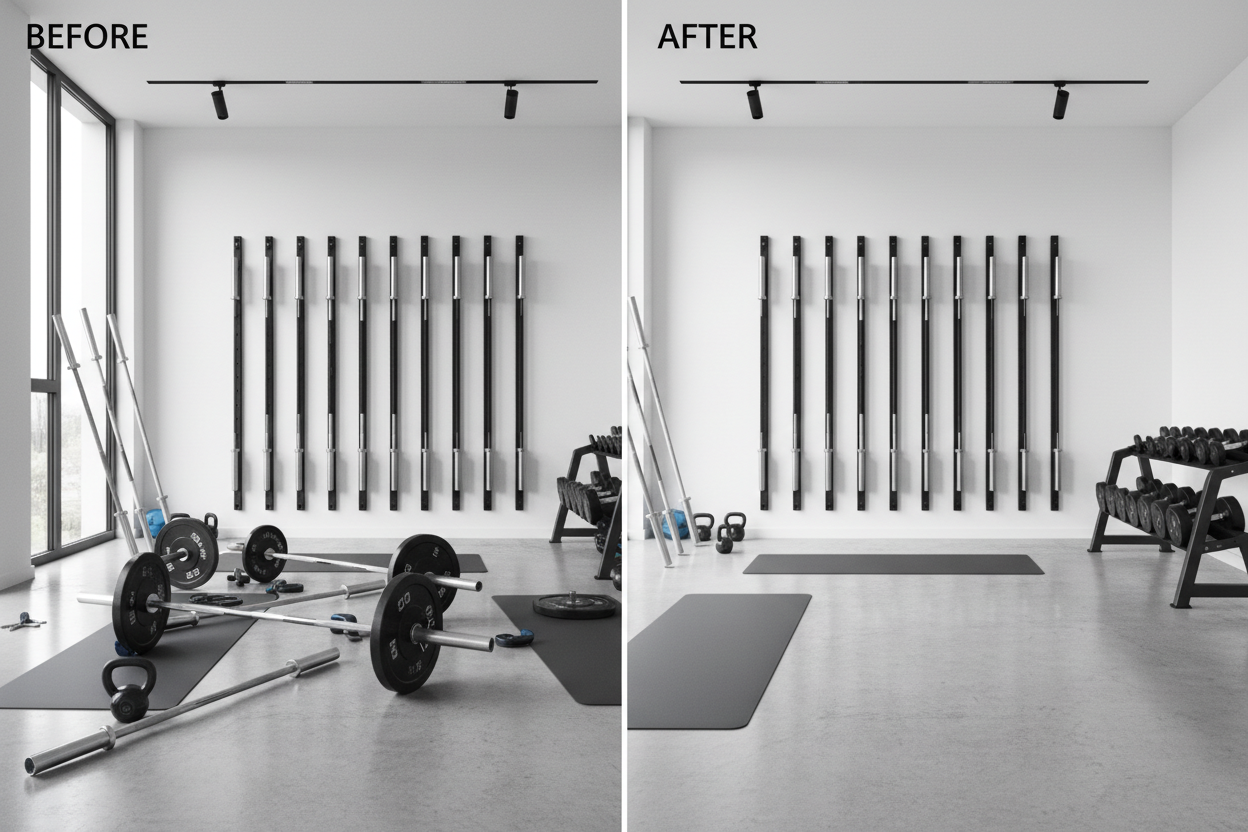
Stop Tripping Over Your Bar: Why Vertical Storage Saved My Home Gym
Nothing kills the momentum of a workout faster than having to step gingerly over a pile of equipment just to get to the squat rack. If you have been lifting for any amount of time, you know that the barbell is the centerpiece of the gym. It is likely the most expensive single piece of steel you own, yet it often ends up leaned precariously against a drywall corner or rolling around on the garage floor. Proper organization isn't just about aesthetics; it is about protecting your investment and maximizing your square footage. The most efficient way to solve this is by utilizing vertical storage solutions that integrate directly with your existing equipment or walls.
I learned this lesson the hard way a few years ago. I had just splurged on a high-end power bar with aggressive knurling and a beautiful zinc finish. Lacking a dedicated spot for it, I leaned it against the wall next to my plates. Mid-set of deadlifts, the vibration caused the bar to slide. It crashed down, taking a chunk out of the drywall and scuffing the collar against the concrete floor. That distinct, sickening metal-on-concrete sound is something I never want to hear again. That afternoon, I started researching storage options, realizing that a forty-dollar accessory could have saved me hundreds in potential damage.
Protecting the Mechanics of Your Bar
Beyond the cosmetic damage of scratches and scuffs, improper storage can ruin the internal mechanics of a barbell. High-quality bars use bushings or needle bearings to allow the sleeves to spin freely. This spin is vital for Olympic lifts and even standard bench pressing to reduce torque on your wrists. When a bar is left on the floor, dust, chalk, and moisture seep into the sleeves. Over time, this grit turns into a paste that seizes up the bearings.
Leaving a bar loaded with weight on a rack for days is another common mistake that bends the steel, but simply leaning it at an angle places uneven pressure on the collars. Vertical storage is generally considered safe for most bars, provided the weight is resting on the sleeve collar and not the shaft itself. This keeps the bar straight, the bearings lubricated, and the knurling away from moisture on the ground.
The Efficiency of Rack Integration
Space is the ultimate luxury in a garage or basement gym. You want to use floor space for movement, not storage. This is where the concept of the rack mounted barbell holder shines. If you already have a power rack or a squat stand, you have a heavy, stable base that is perfect for holding more than just the bar you are currently using. By attaching a holder directly to the uprights of your rig, you keep your specialty bars—like a curl bar, safety squat bar, or beater bar—within arm's reach but completely out of the lifting zone.
These attachments usually consist of a metal tube welded to a bracket that bolts onto the rack. The bar slides vertically into the tube. When selecting one, look for plastic or UHMW (Ultra-High Molecular Weight) polyethylene lining inside the tube. This lining is non-negotiable. Metal-on-metal contact will chew up the sleeves of your barbell every time you slide it in or out. A lined holder ensures your equipment stays pristine.
Wall Mounting vs. Rack Mounting
While rack attachments are excellent for accessibility, they aren't the only solution. Dedicated barbell storage racks that sit on the floor are popular in commercial gyms where they need to hold ten or more bars. However, for a home setup, these floor stands can take up a 2x2 foot footprint that you might need for lunges or deadlifts.
If your power rack is already crowded with dip attachments and plate storage, you might prefer a wall-mounted approach. A barbell holder bracket can be drilled into the studs of your wall. These usually hang the bars vertically. The advantage here is visual clarity; you can see exactly what you have, and it looks like a professional display. Just ensure you are drilling into a stud. A 45-pound bar generates significant leverage, and drywall anchors will rip out almost immediately.
However, if you want to keep your gym compact and self-contained, rack mounted barbell storage remains the superior choice. It consolidates your equipment into a single island. When you move, the gym moves as one unit. You don't have to patch holes in the wall, and the weight of the stored bars actually adds stability to your power rack, weighing it down further.
Managing Specialty Bars
Standard Olympic bars are easy to store because the sleeve diameter is universal. Specialty bars introduce a new challenge. A trap bar (hex bar) or a safety squat bar often has a weird center of gravity or odd dimensions that don't fit into standard vertical tubes. For these, you often need a hook-style hanger rather than a tube.
Some manufacturers have developed modular storage systems. You might see a rack mounted barbell holder that includes a hook on the side for bands or chains. This versatility is key. When organizing your space, map out not just the bars you own now, but the ones you plan to buy. If you eye a Swiss bar (football bar) for the future, make sure your storage solution can accommodate that width, or plan to mount it horizontally on a gun-rack style bracket.
Installation and Safety Tips
When installing any vertical storage, overhead clearance is the variable most people forget. A standard Olympic bar is roughly 7 feet tall. If you are lifting in a basement with 8-foot ceilings, you only have a foot of clearance. To place the bar into a vertical tube, you have to lift it *over* the lip of the holder. If your holder is mounted high, or if the tube is deep, you might smash the ceiling with the top of the bar before the bottom clears the holder.
Measure the height of your tallest bar and add six inches for maneuvering room. If you are using rack mounted barbell storage, mount the attachment as low on the upright as possible while keeping the bottom of the bar off the floor. This maximizes your ceiling clearance.
Taking the time to organize your bars does more than just clean up the room. It changes your mindset. Walking into a gym where the bars are racked, the floor is clear, and the equipment is respected sets the tone for a serious training session. It removes the friction of setup and teardown, allowing you to focus entirely on the lift.
Frequently Asked Questions
Is it bad to store barbells vertically?
Generally, no. Storing a barbell vertically is perfectly safe for the bearings and the shaft, provided the weight rests on the sleeve collar. The only exception might be very cheap bars with loose bushings that could leak oil, but for most quality equipment, vertical storage is standard practice.
Can I store my barbell with the weights still on it?
No, you should never store a barbell loaded with plates, whether on a rack or on the floor. Leaving weight on the bar for extended periods causes the steel shaft to warp or bend permanently, ruining the bar's straightness and making it unsafe to use.
How do I stop my barbell holder from scratching my bar sleeves?
Ensure that any storage solution you buy features a plastic or UHMW liner inside the holding tube or bracket. If you already own a metal-only holder, you can DIY a solution by lining the inside with felt tape or a thin piece of rubber to prevent metal-on-metal contact.