Stop Trying to Buy the Exact Exercise Equipment at Gyms
I remember the first time I looked up the price of a commercial leg press. I had just finished a heavy set at the local powerhouse and thought, 'I need this exact feeling in my garage.' Then I saw the five-figure price tag. We have all been there, scrolling through catalogs for exercise equipment at gyms, dreaming of a personal fortress of steel that feels exactly like the local health club.
The reality is that commercial gear is built for a different world. It is designed to survive 18 hours of daily abuse from people who do not care if they break it. In your home, that level of over-engineering is usually just a waste of floor space and hard-earned cash.
Quick Takeaways
- Commercial gear prices include massive markups for liability insurance and 24/7 warranties.
- Most gym machines are single-use, whereas home gear needs to be multi-functional.
- Floor loading is a real concern; commercial machines can weigh over 800 lbs before you even add plates.
- You can mimic 95% of machine mechanics with smart cable setups and adjustable benches.
The Commercial Grade Delusion
We get fixated on brands like Hammer Strength or Life Fitness because they represent 'the real gym.' But chasing that specific gym items price is the fastest way to kill your home gym budget before you even buy a barbell. A commercial selectorized chest press takes up about 25 square feet and costs as much as a used Honda. In a garage, that is a massive tactical error.
The delusion is thinking that if it is not 'commercial,' it is 'cheap.' That is not true anymore. The home gym market has exploded with high-end racks and functional trainers that offer the same smooth pull as the gym instruments you see at big-box chains, but with a footprint that actually allows you to park your car.
Why Standard Gym Instruments Carry a Massive Markup
When you look at a typical gym machine cost, you are not just paying for the steel and the pulleys. You are paying for a commercial warranty. If a cable snaps at a 24-hour fitness center, the manufacturer is on the hook for a technician to come out and fix it. You are also paying for the 'overbuild.' These machines use thicker frames and heavier shrouds because they have to withstand 300-lb guys dropping the stack every ten minutes.
In your home, you are the only user. You know how to control a descent. You do not need a machine built to withstand a literal riot. If you buy a commercial-grade leg extension, you are paying a 300% premium for durability you will never actually test. Most of that price goes toward the brand’s liability insurance and the logistics of shipping a 600-lb crate.
How to Hack the Heavy-Duty Feel on a Garage Budget
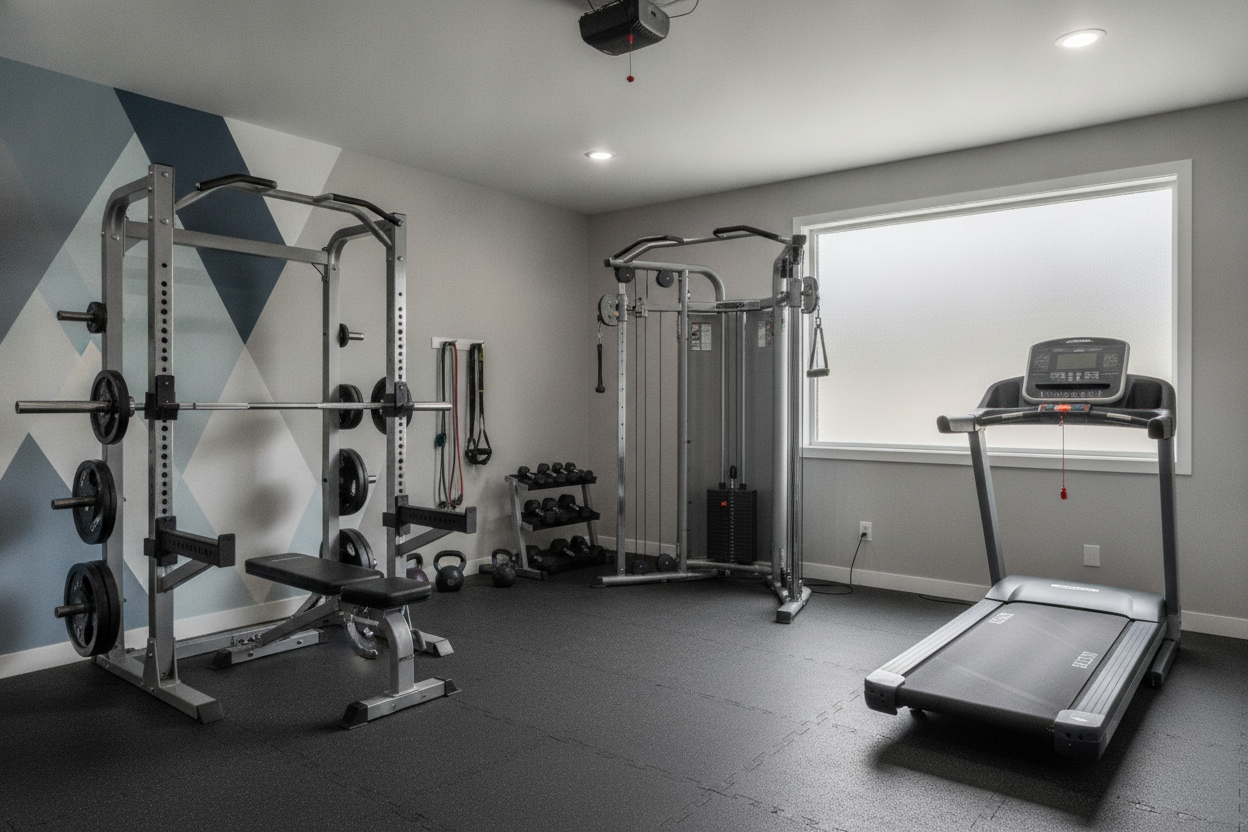
If you want that locked-in feel of a machine without the commercial price tag, look at high-end cable systems. By adapting gym exercises at home using a functional trainer or a lat pulldown with a 1:1 ratio, you get the same constant tension. You do not need a dedicated bicep curl machine when you can just look up specific arm exercise machine names and replicate those exact angles on a versatile cable column.
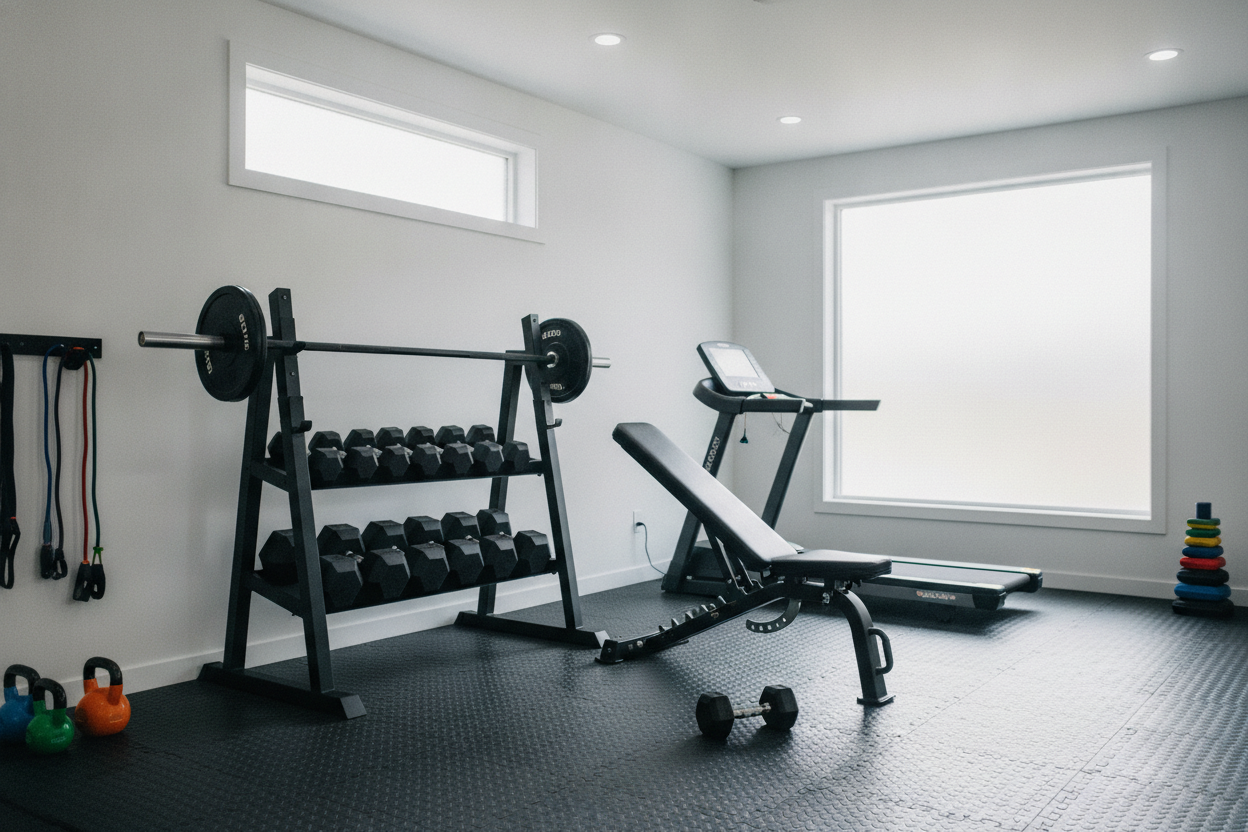
I always tell people to invest in a heavy-duty adjustable bench first. A bench that weighs 100 lbs and uses 11-gauge steel will give you the stability of a fixed machine when paired with a power rack. You can do chest presses, rows, and Bulgarian split squats all in the same 4x6 foot area. That is how you win the home gym game.
The Hidden Trap of Bringing Commercial Gear Home
Let's talk about your floor. Most residential garage slabs are four inches thick. A commercial leg press or a full cable crossover puts immense point-load pressure on that concrete. I have seen guys crack their floors because they didn't realize a loaded leg press can exceed 1,500 lbs in a tiny footprint. If you are going to ignore my advice and buy the heavy stuff anyway, you absolutely must invest in a heavy-duty exercise mat or a dedicated lifting platform to distribute that weight.
Then there is the assembly. Commercial machines often come welded in massive sub-frames. If your gym is in a basement, good luck getting a fully welded pec deck down a flight of stairs. I once had to hire a rigging crew just to get a refurbished hack squat into a client's garage. It cost more than the machine itself.
When It Actually Makes Sense to Pay the Premium
There are exceptions. If you are a competitive bodybuilder, a specific plate-loaded machine might be the only way to hit a muscle group without your stabilizers giving out. In that case, look for 'light commercial' gear. These pieces use the same geometry as the big machines but skip the expensive 24/7 warranty and the heavy steel shrouds.
Functional trainers are another area where spending more pays off. A cheap cable machine feels 'gritty' because of plastic pulleys. Spending an extra $500 for aluminum pulleys and high-quality cables is an investment in the quality of every single rep. That is a price worth paying.
Personal Experience: My $2,000 Mistake
Years ago, I bought a used, commercial-grade T-Bar Row station from a gym that was closing down. It was a beast—solid steel, beautiful powder coat. I paid $400 for it, thinking I got a steal. Within a month, I hated it. It took up a huge chunk of my floor, and I could only use it for one exercise. I eventually sold it for $200 and replaced it with a $30 landmine attachment that fits in the corner. Lesson learned: versatility is king in a home gym.
FAQ
Is commercial gym equipment better than home equipment?
It is more durable for high-traffic use, but not necessarily better for muscle growth. Most high-end home equipment uses the same biomechanics without the massive footprint and 'industrial' markup.
Why is gym equipment so expensive right now?
Shipping costs for heavy steel are the biggest factor. When you buy commercial gear, you are paying for the logistics of moving 500+ lbs of metal, which has skyrocketed in recent years.
Can I put commercial machines in my upstairs spare room?
Generally, no. Most residential second floors are not rated for the concentrated weight of commercial selectorized machines. Stick to the garage or a reinforced basement for the heavy stuff.