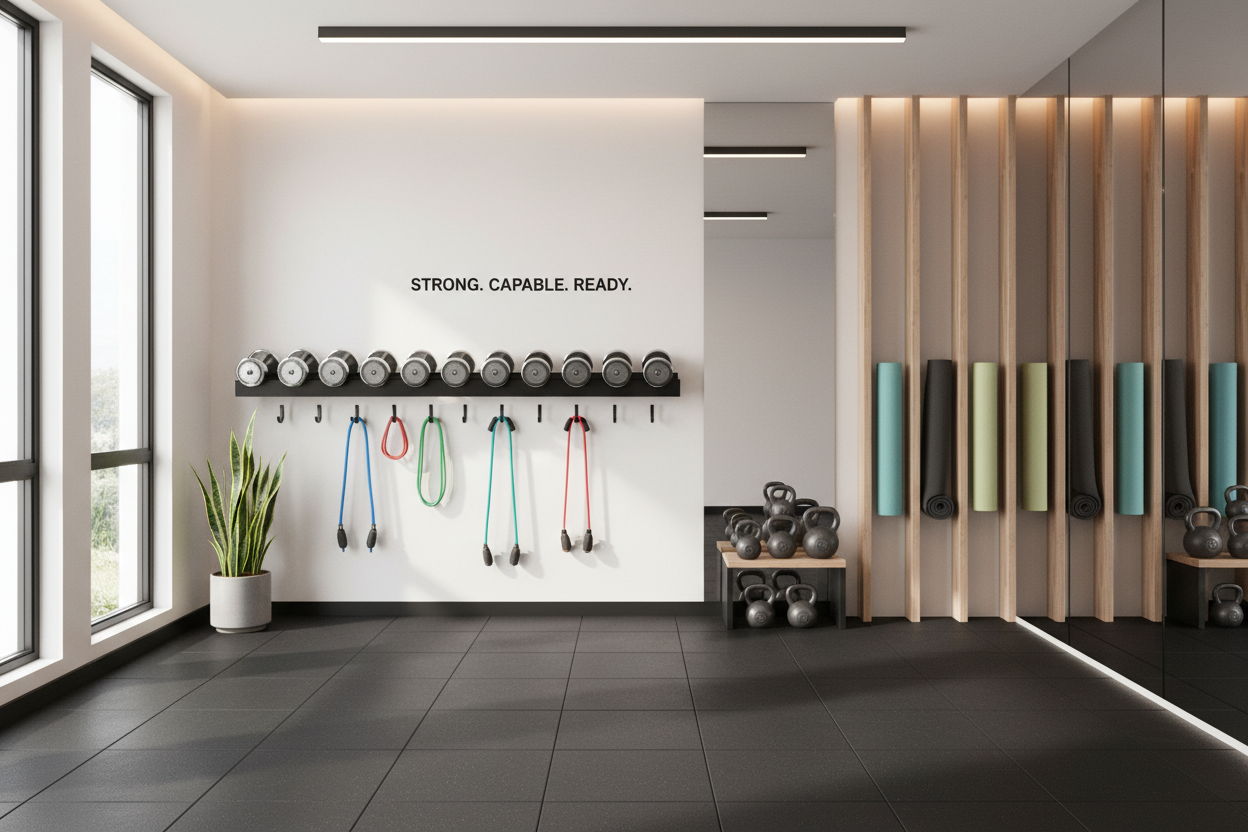
Stop Tripping Over Dumbbells: The Real Guide to Organizing Your Home Gym
Nothing kills the momentum of a workout faster than having to navigate a minefield of cast iron scattered across your floor. If you have been lifting for any amount of time in a garage or spare room, you know the struggle. You finish a heavy set of lunges, you are out of breath, and you just want to put the weights down. Without a dedicated spot, those dumbbells end up in the corner or, worse, right in your walking path. This isn’t just messy; it is a safety hazard waiting to break a toe or a floor tile.
The solution is straightforward, yet so many lifters put it off until it is too late. Investing in a proper storage solution is as critical as buying the weights themselves. A sturdy weight rack home gym setup transforms a chaotic pile of metal into a professional-feeling training space. It clears your mind, protects your equipment, and actually makes your room feel bigger by utilizing vertical space rather than floor square footage.
My Wake-Up Call with Floor Storage
I spent the first two years of my home training journey ignoring storage completely. My philosophy was that I would rather spend money on more plates than on something to hold them. That changed on a Tuesday morning while I was rushing through a circuit session. I stepped backward to set up for overhead presses and rolled my ankle on a 25-pound hex dumbbell I had lazily left behind me. The injury kept me from squatting for three weeks.
That afternoon, I sat down and ordered my first rack. The difference was immediate. Not only did I stop tripping, but my workouts actually became faster. I wasn't wasting energy hunting for the matching 40-pounder buried under a towel. Everything had a home. If you are currently parking your weights on the carpet, take it from me: the transition to an organized system is the best upgrade you will make this year.
Why Organization Impacts Performance
There is a psychological component to lifting in a clean environment. Clutter creates visual noise, which can be distracting when you are trying to focus on a PR attempt. When you walk into a room where every plate and dumbbell sits neatly on a weights rack for home gym usage, it signals to your brain that it is time to work. It shifts the atmosphere from "storage room with weights" to "training facility."
Beyond psychology, there is the practical aspect of equipment longevity. Dumbbells and kettlebells left on the floor collect dust, moisture, and pet hair. If you are using concrete or tile floors, the constant impact of setting weights down can chip the coating on your dumbbells or crack the flooring. A rack with rubber-lined shelves absorbs that impact and keeps your gear off the ground, away from moisture and potential rust.
Choosing the Right Style for Your Space
Not all racks serve the same purpose, and buying the wrong one can be a frustration in itself. The market is flooded with options, but they generally fall into three categories based on what you are lifting.
The A-Frame Rack
If you are working with a tight corner or a small apartment, the A-frame is usually the best weight rack for home setups with limited square footage. These vertical towers hold dumbbells in a staggered fashion. They have a tiny footprint, often taking up less than two square feet of floor space. The downside is that accessing the heavier weights at the bottom can be a bit tricky if the rack is crammed into a corner, as you have to lift them out at an angle.
The Horizontal Tiered Rack
This is the standard style you see in commercial facilities. These are long, two or three-tier shelves. They are incredibly stable and make grabbing weights mid-set very easy. However, they require significant wall space. If you have a full set of dumbbells ranging from 5 to 50 pounds, a horizontal rack is superior because it prevents pinched fingers—a common issue with overcrowded A-frames.
Plate Trees and Combo Racks
For those focusing on barbell training, a plate tree is non-negotiable. Leaning 45-pound plates against the wall is a recipe for damaged drywall. Plate trees keep the weight centered and safe. Some manufacturers offer combo racks that hold plates on the side, kettlebells on top, and dumbbells below. These are fantastic for the generalist lifter who has a little bit of everything.
Key Features That Indicate Quality
When you start shopping, you will notice a massive price discrepancy between brands. Often, a cheap weight rack home listing looks identical to a premium one in photos, but the difference becomes obvious once you load it up. The primary factor to check is the weight capacity. A rack made from thin-gauge steel might bow or wobble once you load it with 500+ pounds of iron. Look for racks constructed with heavy-duty steel (usually 12 to 14 gauge) and welded joints rather than just bolts.
Another feature to scrutinize is the shelf liner. Metal-on-metal contact is loud and damaging. Quality racks will have a rubber or plastic liner on the rails. This protects the knurling on your dumbbell handles and reduces the clanking noise, which is a major benefit if you have family members sleeping in the next room.
Safety Considerations for Families
If you have children or pets, a gym weights rack becomes a safety device. Heavy plates leaning against a wall can easily slide and crush a toe or a paw. Dumbbells on the floor are tripping hazards for toddlers. Elevating these heavy objects and securing them in a rack minimizes the risk of accidental injury. For added security, ensure your rack is placed on a level surface. If you are lifting on thick carpet, consider putting a piece of plywood under the rack to prevent it from rocking.
Placement and Workflow
Where you put the rack is just as important as which one you buy. Avoid placing it directly behind your bench press or squat rack. You need a clear walkway. A good rule of thumb is to keep the rack within two steps of where you perform your accessory work. If you have to walk across the room to switch dumbbells during a drop set, you are less likely to stick to your rest intervals. Keep the flow of the room logical: heavy compounds in the center, accessory weights on the perimeter.
Organizing your fitness space is rarely the most exciting purchase compared to a new barbell or a heavy bag, but it is the one that makes the biggest difference in day-to-day usability. It protects your investment, saves your floors, and might just save your ankles too.
Frequently Asked Questions
Can I place a heavy weight rack on a second-floor apartment?
Generally, yes, residential floors are built to withstand significant static loads, but you should distribute the weight. Placing a heavy rack near a load-bearing wall is safer than putting it in the center of the room. If your collection is exceptionally heavy (over 1,000 lbs), consult a structural engineer or your building management.
Do I need a specific rack for hex dumbbells versus round ones?
Most horizontal trays accommodate both styles, but hex dumbbells are more versatile as they won't roll. If you have round commercial-style dumbbells, you must ensure the rack has a lip or a specific saddle shape to prevent them from rolling off the shelf, which is a major safety concern.
How do I maintain my weight rack to prevent rust?
Wipe down the rack with a damp cloth and mild detergent occasionally to remove sweat and chalk dust, which attract moisture. If you spot any chips in the paint or powder coat, touch them up immediately with rust-inhibiting paint to prevent oxidation from spreading to the structural metal.