Stop Training Like a Machine: How to Build Legs That Actually Work
Most people treat leg day like a math equation: add weight, subtract rest, multiply by reps, and hope the result is bigger muscles. While hypertrophy is a valid goal, having muscular legs doesn't automatically translate to moving well in the real world. If you can leg press 500 pounds but throw your back out picking up a toddler or feel unstable hiking on uneven ground, your training program has a gap. That gap is bridged by functional lower body exercises designed to prioritize movement quality, balance, and usable strength over pure isolation.
Functional training isn't just a buzzword for doing squats on a stability ball. It is about preparing your body for the demands of daily life and athletic performance. A proper functional leg workout focuses on compound movements, multi-planar motion, and unilateral (single-leg) stability. By shifting your focus from machines to free weights and body mechanics, you build a lower body that is as capable as it is aesthetic.
The "Gym Strong" vs. "Real World Strong" Reality Check
I learned the hard way that machine strength is deceptive. Years ago, I was obsessed with the leg extension and leg press machines. I built decent quad size and felt strong in the gym. Then, I helped a friend move into a third-floor apartment without an elevator. By the fourth trip up the stairs carrying heavy boxes, my legs were trembling, my lower back was screaming, and my balance was shot. I had isolated my muscles so effectively that they didn't know how to work together as a system.
That afternoon changed how I approached fitness. I realized that sitting in a machine stabilizes the load for you, meaning your core and stabilizers go dormant. Functional training legs requires your body to create its own stability. You have to control the weight, gravity, and your own body mechanics simultaneously. This is the difference between looking fit and being capable.
Core Components of a Functional Leg Day
To construct a truly effective routine, you need to move beyond simple up-and-down motions. A comprehensive functional leg day workout should cover the fundamental movement patterns: squatting, hinging, lunging, and carrying. Each of these mimics actions you perform outside the gym.
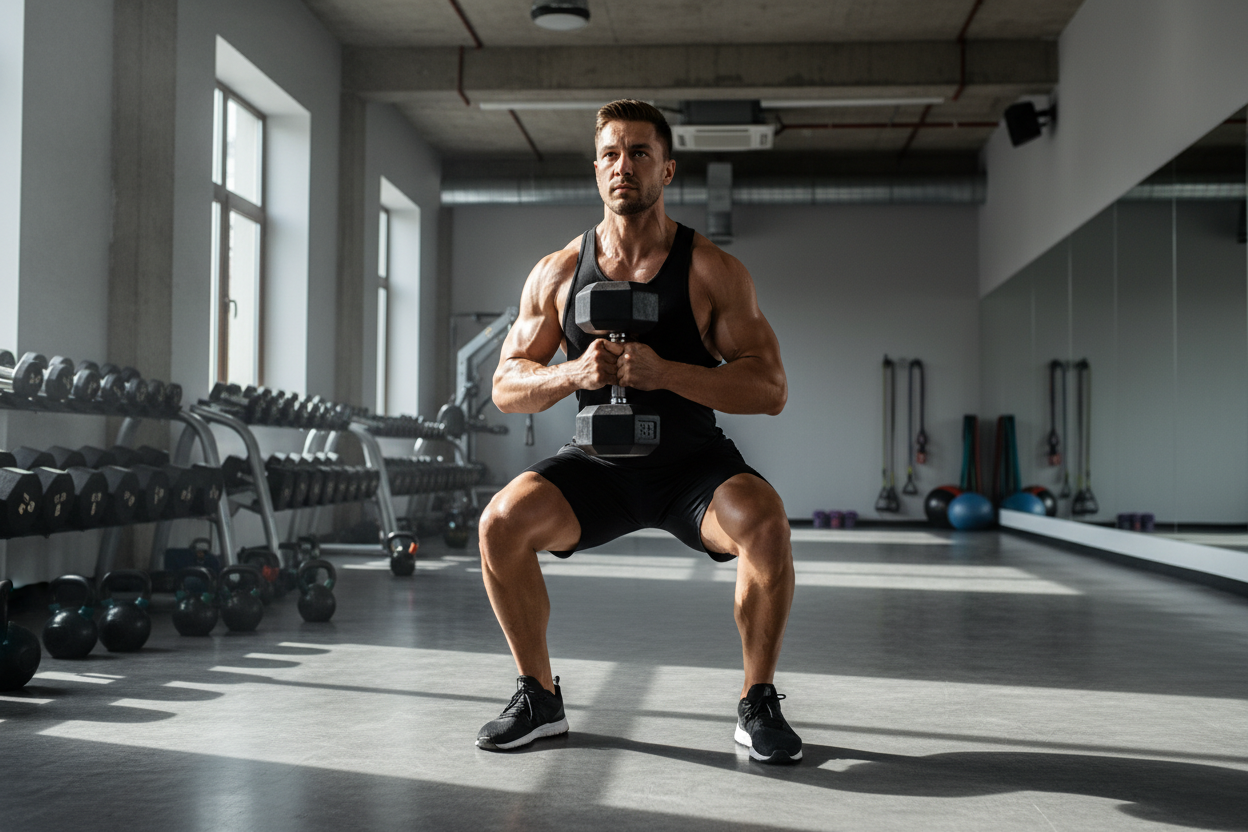
The Squat Pattern: Goblet Squats
Back squats are king for power, but for pure functionality, the Goblet Squat often reigns supreme. By holding a kettlebell or dumbbell at chest height, you are forced to engage your core to stay upright. This anterior load acts as a counterbalance, allowing you to sink deeper into the squat with better hip mobility. It teaches you to lift heavy objects from the floor without rounding your spine, a crucial skill for longevity.
The Hinge Pattern: Single-Leg Romanian Deadlift (RDL)
Most lower back injuries happen because people don't know how to hinge at the hips. The Single-Leg RDL is arguably one of the best functional exercises for legs because it targets the posterior chain (hamstrings and glutes) while challenging your balance. Standing on one leg forces the glute medius to fire to keep your hips level. This translates directly to running, walking, and preventing knee valgus (cave-in).
The Lunge Pattern: Multi-Directional Lunges
Life rarely happens in a straight line. You step sideways to avoid a puddle or twist to get out of a car. Your functional leg exercises need to reflect this. Instead of just lunging forward, incorporate lateral lunges and transverse (rotational) lunges. These movements strengthen the adductors and abductors, muscles often neglected in standard squats, providing 360-degree stability for the hip joint.
Structuring Your Functional Lower Body Workout
You don't need to abandon heavy lifting to be functional. You just need to organize your session to prioritize coordination and stability alongside raw strength. Here is a framework for a solid functional lower body workout that hits all the necessary notes.
- Warm-up: 5 minutes of dynamic stretching (leg swings, bodyweight deep squats, hip bridges).
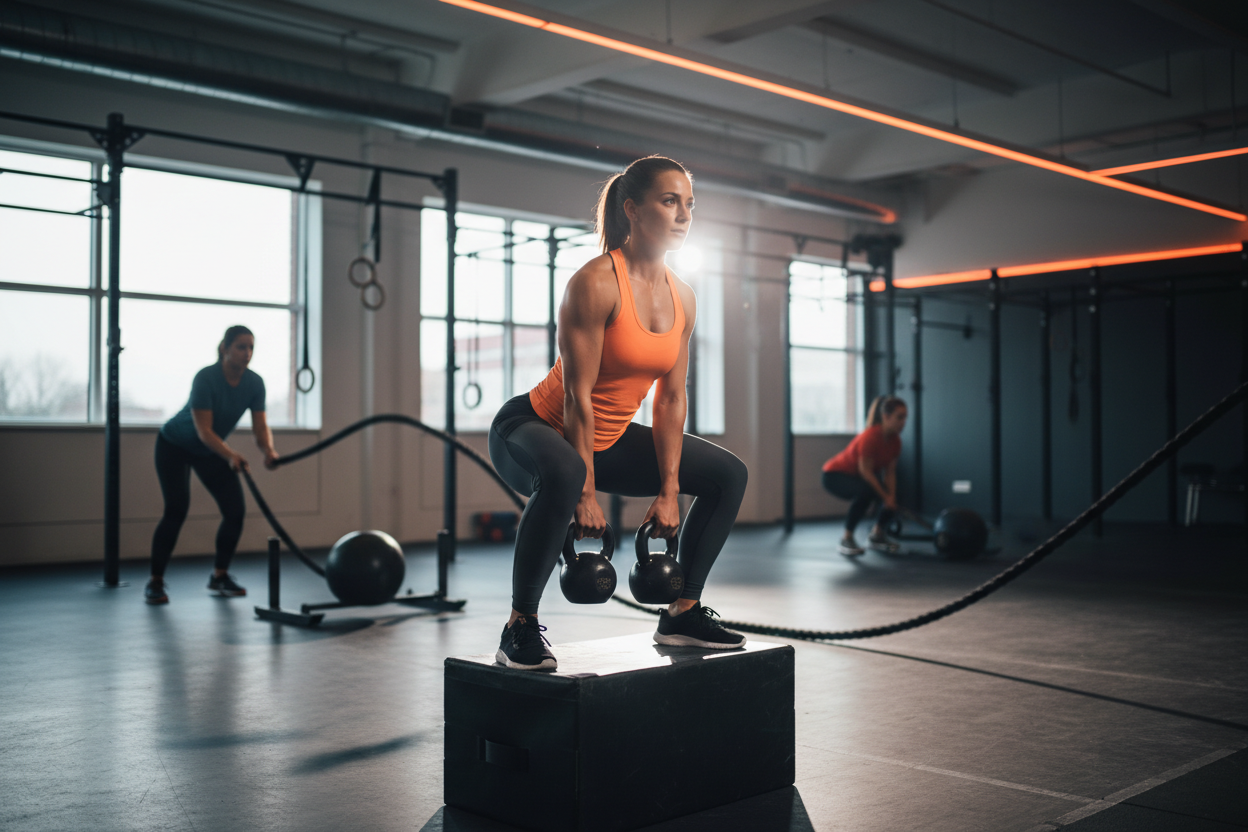
- Power/Speed (Activation): Box Jumps or Kettlebell Swings – 3 sets of 5 reps. This primes the nervous system.
- Main Compound Movement: Front Squats or Trap Bar Deadlifts – 4 sets of 6-8 reps. These allow for heavy loading but place less shear force on the spine than back squats.
- Unilateral Strength: Reverse Lunges or Bulgarian Split Squats – 3 sets of 8-10 reps per leg. This corrects imbalances between your left and right sides.
- Stability/Accessory: Single-Leg RDLs – 3 sets of 10 reps per leg. Focus on a slow tempo.
- Locomotion: Farmer’s Carries – 3 rounds of 40 meters. Walking with heavy weights builds dynamic stability and grip strength.
Why Unilateral Training is Non-Negotiable
If you take only one thing away from this, let it be the importance of single-leg training. When you walk, run, or climb stairs, you are essentially transitioning from one leg to the other. You are rarely on two feet simultaneously exerting max force. Functional leg exercises must include unilateral work to mimic human locomotion. Bilateral exercises (like the standard deadlift) mask asymmetries; your dominant side will always take over. Unilateral exercises expose weaknesses instantly, forcing the lagging side to catch up. This is the quickest way to bulletproof your knees and hips against injury.
Progression Without Just Adding Plates
In traditional lifting, progress is measured by the number on the barbell. In a functional leg workout, progression is more nuanced. Before you grab a heavier dumbbell, try altering the tempo. Slow down the eccentric (lowering) phase to three or four seconds. This increases time under tension and mastery over the movement.
Another method is introducing instability. Once you master a standard lunge, try holding the weight in only one hand (contralateral loading). This forces your anti-rotation core muscles to work double-time to keep you from tipping over. These subtle tweaks increase the functional demand of the exercise without necessarily increasing the joint stress associated with heavy loads.
Integrating This Into Your Routine
You do not need to label yourself a "functional athlete" to benefit from this style of training. You can simply swap out your leg press for walking lunges or your seated hamstring curl for stability ball curls. The goal is to build a body that serves you. By incorporating functional exercises for legs, you ensure that your strength is applicable, your joints are protected, and you are ready for whatever physical challenges life throws your way.
Frequently Asked Questions
How often should I perform a functional leg workout?
For most people, training legs twice a week is the sweet spot. This frequency allows for sufficient volume to stimulate muscle growth and strength adaptations while providing enough recovery time for the central nervous system and joints.
Can I build muscle mass with functional training legs?
Absolutely. Muscle growth is driven by mechanical tension and metabolic stress, both of which can be achieved through functional movements like heavy lunges, squats, and deadlifts. The primary difference is that you build muscle that is coordinated with the rest of your body, rather than just isolated bulk.
I have bad knees; are these exercises safe for me?
Functional exercises are often better for knee health than machines because they strengthen the stabilizing muscles around the joint. However, you should start with bodyweight movements and limited range of motion, progressing only as your pain-free mobility improves. Always consult a physical therapist if you have pre-existing conditions.