Stop Switching It Up: Why Basic Gym Workouts Should Be Boring
I remember standing in the middle of a packed commercial gym, staring at a cable machine like it was a complex piece of alien technology. I had three different 'influencer' routines saved on my phone, and I spent more time scrolling than I did actually lifting anything. I was obsessed with finding the 'perfect' movement, convinced that if I didn't shock my muscles every forty-eight hours, I was wasting my time. The reality? I was just spinning my wheels while the guy doing the same boring heavy sets of five for the last month was actually getting somewhere. basic gym workouts don't need to be flashy to be effective; in fact, the more boring they are, the better they usually work.
Quick Takeaways
- Consistency in movement patterns beats 'muscle confusion' every single time.
- Mastering the 'Big Four' mechanics (push, pull, hinge, squat) is the fastest way to see results.
- Repeating the same routine for 8-12 weeks allows for actual progressive overload.
- A dedicated, high-traction space is essential for building confidence and safety.
The 'Muscle Confusion' Lie Ruining Your Progress
The fitness industry has a vested interest in making you feel like you're falling behind. If they can convince you that your body is 'used to' a certain movement, they can sell you a new program, a new app, or a new piece of equipment. This 'muscle confusion' narrative is a trap. When you are starting gym exercise, your brain and your muscles are trying to establish a neurological connection. You aren't just building muscle; you're teaching your nervous system how to move a load efficiently.
If you change your workout for beginners at gym every week, you never actually learn the move. You spend all your energy figuring out where your feet go or how to grip the bar rather than actually stressing the muscle. This constant novelty creates a massive amount of anxiety for anyone starting workouts at the gym. You feel like a fish out of water because you're always doing something new. Stop the madness. Pick four or five movements and stick to them until you can do them in your sleep. That is where real growth happens.
Why Predictability Beats Fancy Every Single Time
There is a massive psychological advantage to knowing exactly what you are going to do before you even park your car. When you walk in with a basic gym workout beginners can actually memorize, you eliminate the 'analysis paralysis' that kills most sessions. You don't need to check your phone every two minutes to see what's next. You just get to work.
This predictability is why the most effective exercise for beginners at gym environments is the one you can execute with total confidence. Whether you are using a barbell or dumbbells, the goal is to improve the quality of the rep. By removing the BS and focusing on predictable, repeatable routines, you create a path to success that works for everyone. I've seen this play out with this beginners workout for women at gym, which proves that when you strip away the fluff, the results actually start showing up. You want to be the person who walks in, hits their numbers, and leaves—not the person wandering around wondering if the Bulgarian Split Squat is better than a Lunging Step-up.
The 4-Move Blueprint You Can Use Anywhere
You don't need a 40-piece circuit to get strong. You need four foundational movements that cover your entire body. If you master these basic gym exercises, you will be stronger than 90% of the people scrolling through TikTok in the locker room. Here is the blueprint: the Squat (legs), the Hinge (glutes/back), the Push (chest/shoulders), and the Pull (back/biceps). That is it. That is the whole 'secret.'
- The Squat: Start with a Goblet Squat. Hold a single dumbbell against your chest. It forces your core to stay upright and teaches you how to sit back into your hips.
- The Hinge: The Romanian Deadlift (RDL). This isn't about touching the floor; it's about pushing your hips back until you feel a stretch in your hamstrings.
- The Push: The Overhead Press or Bench Press. Pick one and own it. Focus on keeping your elbows tucked at a 45-degree angle to save your shoulders.
- The Pull: The One-Arm Row. Find a bench, put a hand down, and pull a weight toward your hip, not your chest.
If you're looking for a structured workout plan for beginners at gym, use these four moves as your pillars. Perform 3 sets of 8-10 reps for each. When you can hit all 10 reps with perfect form, add 5 pounds the next time. It’s not exciting, but it’s the only way to build a foundation that won't crumble when you start lifting heavier weights later on.
How Long Should You Actually Milk a Starter Routine?
Most people quit a simple gym workout for beginners far too early. They do it for three weeks, don't look like a bodybuilder yet, and decide they need a 'pro' split. That’s a mistake. You should stay on a basic routine for at least eight to twelve weeks. Why? Because the first month is almost entirely 'neurological gains.' You’re getting better at the movement, but you haven't truly taxed the muscle yet.
The real magic happens in months two and three. This is where you apply progressive overload—adding a little more weight or one more rep to the same movements. If you can take your Goblet Squat from 20 pounds to 50 pounds over three months, you have made more progress than someone who tried fifty different leg exercises in the same timeframe. Don't change the movement until you've truly stalled out for two weeks straight. Consistency is the 'secret sauce' everyone is looking for.
Groundwork: Setting Up Your Space for Repetition
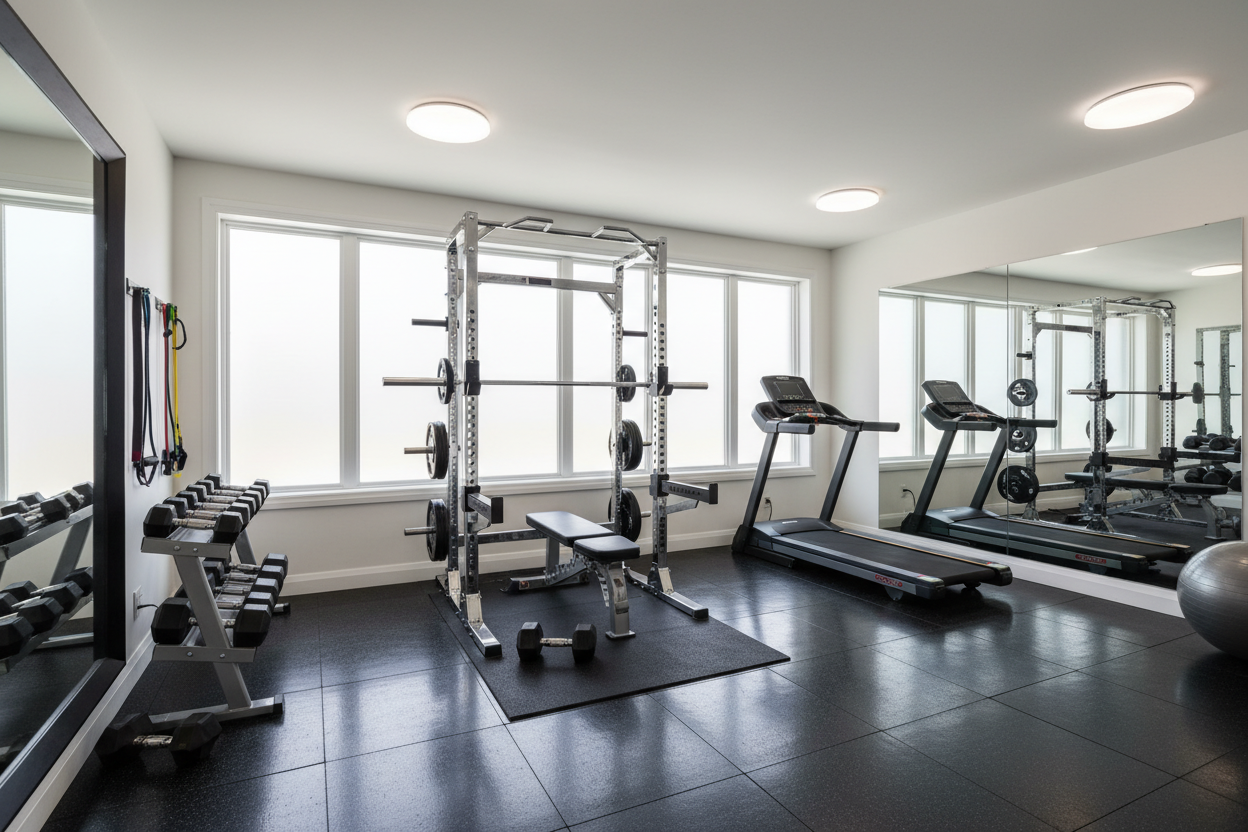
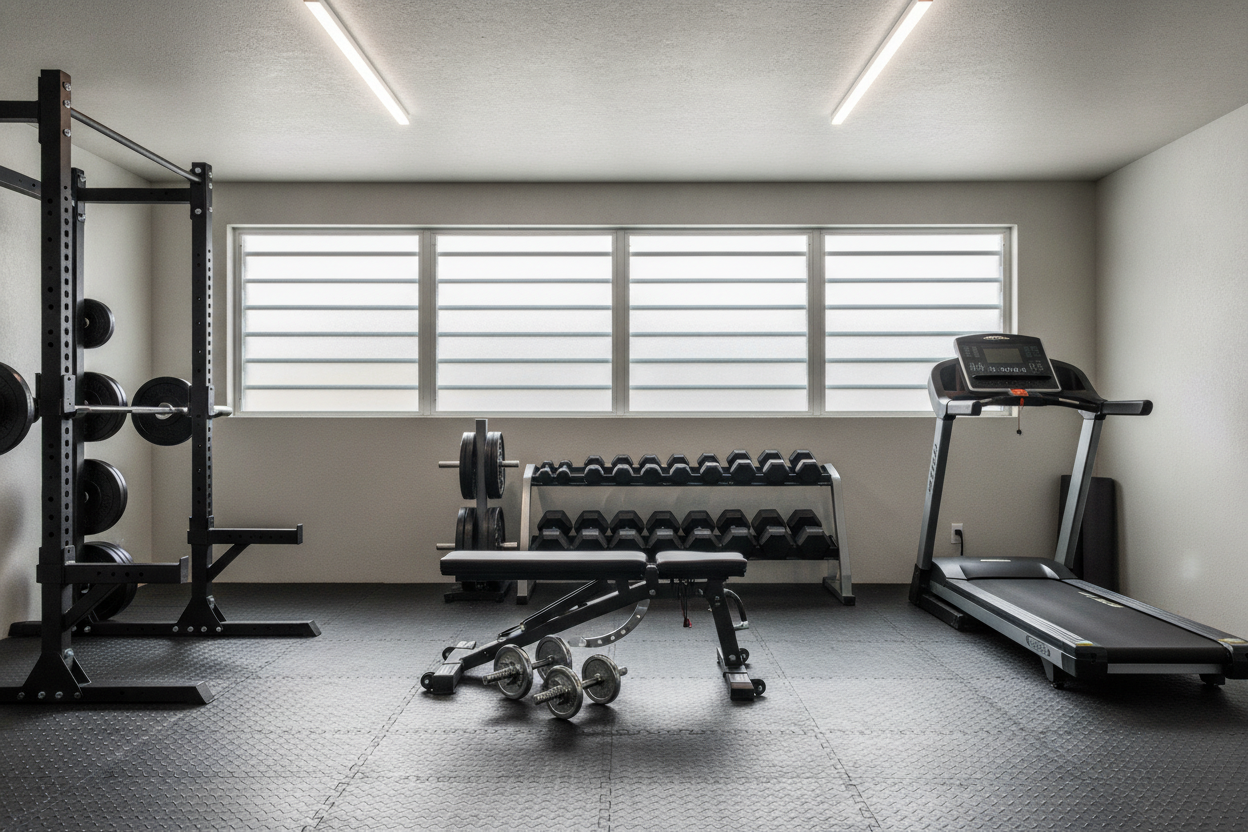
Whether you're at a big box gym or in your garage, your environment dictates your performance. If you're constantly sliding around or worried about the floor, you won't commit to the lift. For a beginner workout at the gym, try to find a spot with a solid rubber floor and stay there. If you're training at home, don't try to squat on carpet or a thin yoga mat that bunches up under your heels.
Investing in a large exercise mat for home gym use is one of the smartest moves you can make. It gives you a dedicated 'zone' that says, 'I am here to work.' You need a surface that can handle dropped dumbbells and provide enough traction so your feet don't splay out during a heavy press. Once you have a stable foundation, repeating those 'boring' workouts becomes frictionless. You just step onto the mat and execute.
Personal Experience: My 'Novelty' Phase
Early in my lifting career, I fell for the 'variety' trap hard. I had a different workout for every day of the week. I had 'Leg Day A' and 'Leg Day B.' I was doing cable crossovers, concentration curls, and four different types of lunges. After six months, my lift numbers hadn't moved. I was exhausted, but I wasn't stronger. I finally stripped everything back to a basic three-day-a-week full-body routine. I did the same five exercises every single session. Within two months, my squat went up 50 pounds. I felt like an idiot for wasting so much time on 'variety' when all I needed was intensity and repetition.
FAQ
Do I really need to do the same exercises every time?
Yes. To measure progress, you need a constant. If you change the exercise, you can't tell if you got stronger or if the new move is just easier. Stick to the plan for 8 weeks minimum.
What if I get bored?
Focus on the numbers, not the novelty. Seeing your bench press go up by 10 pounds is far more exciting than trying a new 'glute blaster' exercise you saw on TikTok.
How do I know when to add weight?
Use the 'Two-for-Two' rule. If you can perform two extra reps over your target in your final set for two consecutive workouts, it’s time to increase the weight.