Are Your Favorite Strength Train Exercises Just Junk Volume?
I spent years thinking that if I wasn't in the gym for two hours, I wasn't working hard enough. I’d spend thirty minutes on the bench, then another ninety minutes chasing a 'pump' with six different types of flyes and cable crossovers. I was exhausted, but my numbers weren't moving. I was falling into the trap of thinking more strength train exercises always equaled more progress.
Quick Takeaways
- Junk volume is any work that causes fatigue without contributing to muscle growth or strength.
- The 'Core 4' movements (Squat, Hinge, Push, Pull) should comprise 80% of your training.
- A 45-minute high-intensity session usually beats a two-hour 'filler' session.
- Quality hardware, like a 3x3 11-gauge steel rack, is better than a dozen cheap gadgets.
Why More Time in the Gym Isn't Equaling More Muscle
We’ve all been there—scrolling through Instagram at midnight, seeing a pro bodybuilder do fifteen different movements for their triceps, and thinking we need to do the same. The reality? That pro is likely on a 'supplement' protocol that allows them to recover from that volume. For the rest of us with jobs, kids, and a home gym in the garage, training economy is everything.
If you’re spending ninety minutes in your gym and your main lifts—your squat, bench, and deadlift—have been stuck at the same weight for six months, you aren't training; you're just exercising. You’re burning calories, sure, but you isn't building the kind of raw power that translates to the real world. You need to trim the fat from your strength train workout.
The Trap of 'Junk Volume' in Your Strength Exercise Routine
Junk volume is the 'fluff' that populates most commercial gym routines. It’s that fourth variation of a bicep curl or the 'finisher' that leaves you gasping for air but doesn't actually overload the muscle. When you add too much variety to your strength exercise routine, you dilute your efforts. Your central nervous system can only recover from so much stress.
The goal is adaptation, not just perspiration. If an exercise doesn't allow for progressive overload—meaning you can't easily add 5 lbs or do an extra rep next week—it’s probably filler. I’ve found that by cutting my total set count by 30%, my strength actually shot up because I was finally recovering between sessions.
The Core 4: Strength Train Exercises That Actually Pay Rent
Stop looking for the 'secret' movement. The exercises that yield the most results are the ones that are the hardest to do. These are the movements that require multiple muscle groups to work in unison. If you focus on the Squat, Hinge, Push, and Pull, you cover every major muscle group in the body with maximum efficiency.
Squat and Hinge: Building the Engine
The squat and the deadlift are the kings of the gym for a reason. They force your body to produce massive amounts of force. Whether you prefer a high-bar back squat or a trap bar deadlift, these are effective lower body movements that build the foundation of your physique. I’ve seen people skip these because they're 'too hard' and try to replace them with leg extensions. That’s like trying to build a skyscraper on a foundation of sand.
Push and Pull: Upper Body Armor
For the upper body, you need a heavy horizontal push (like a bench press), a vertical push (overhead press), and plenty of pulling. Pulling is often neglected, but heavy rows and pull-ups are what give you that thick, powerful look. While I love a good barbell row, sometimes I'll mix in machine-based pressing options or chest-supported rows to hit the muscles without taxing my lower back too much after a heavy deadlift session.
How to Build a 45-Minute Strength Train Workout
A brutal strength train workout doesn't need to take all afternoon. Start with your primary heavy lift—let’s say the Back Squat. Do 3 sets of 5 reps at a high intensity. Follow that with a 'superset' of a pull and a push. For example, 3 sets of weighted pull-ups paired with 3 sets of overhead presses. Finish with one hinge movement like an RDL. You’re in, you’re out, and you’ve done more for your body than the guy doing eight different types of lateral raises.
The Minimalist Hardware You Need to Pull This Off
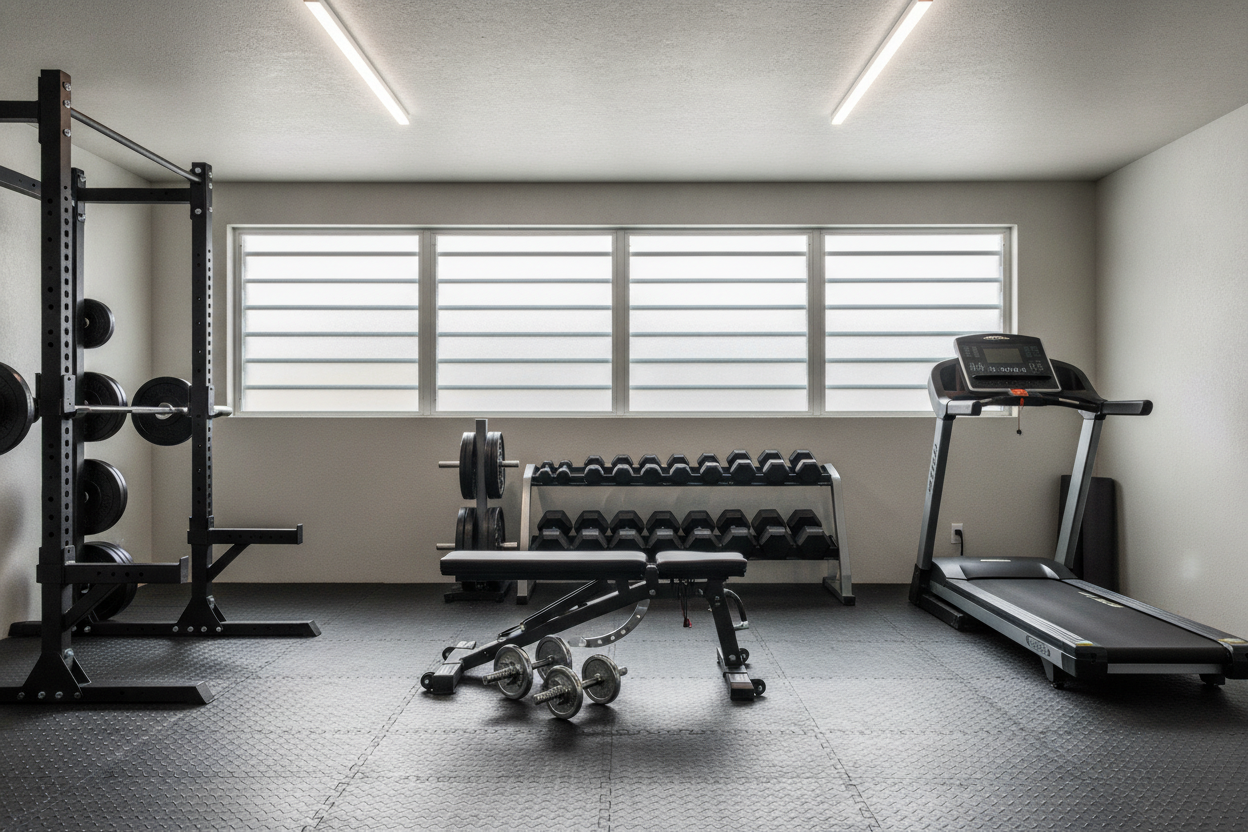
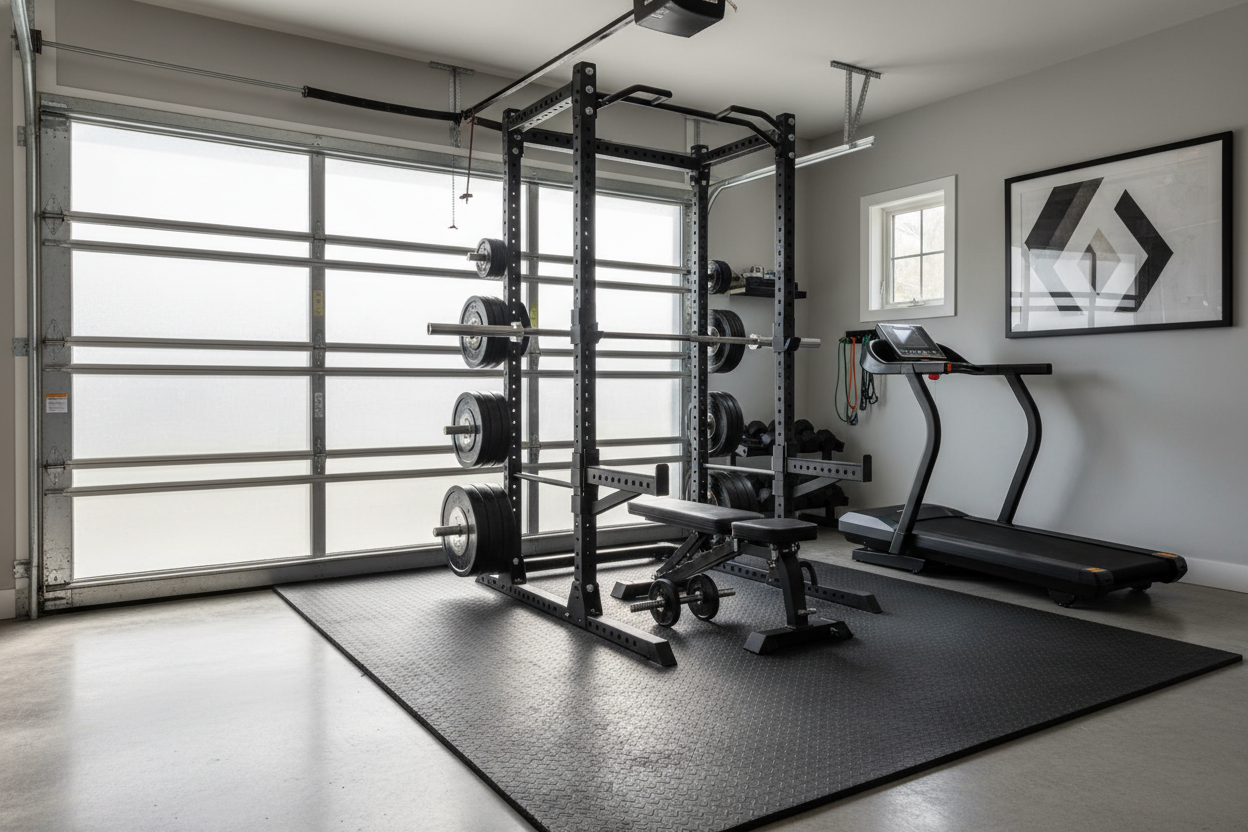
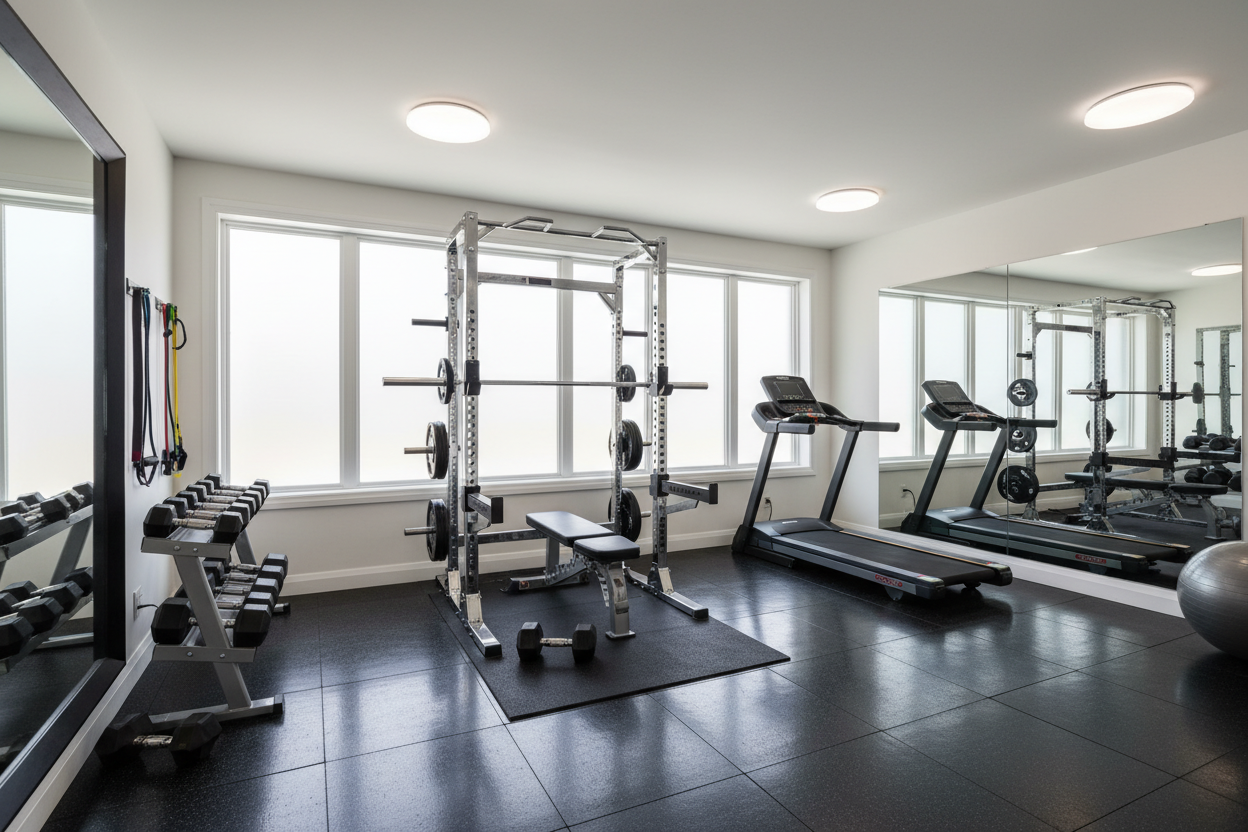
You don't need a 2,000-square-foot facility. You need reliable strength equipment that won't fail when you're under a heavy load. A solid power rack, a multi-purpose barbell with decent knurling, and enough iron to keep you challenged are the essentials. I’ve wasted money on cheap 'adjustable' benches that wobbled under 200 lbs—don't make that mistake. Buy once, cry once.
Also, don't overlook the floor. If you're doing heavy pulls, you need to protect your joints and flooring. I once dropped a 405-lb deadlift on thin stall mats and cracked the concrete underneath. A high-density mat or a dedicated lifting platform isn't just for aesthetics; it’s about gear longevity and safety.
Personal Experience: My 'More is Better' Mistake
Early in my home gym journey, I bought every attachment available for my rack. I had the dip station, the landmine, the lat pulldown, and various 'specialty' bars. My workouts became a logistical nightmare of swapping parts and trying to fit 12 different strength train exercises into an hour. My progress stalled. I eventually sold 60% of the 'gadgets,' went back to a basic barbell and rack program, and finally hit my 500-lb deadlift goal. Complexity is often the enemy of results.
FAQ
How many strength train exercises should I do per session?
Aim for 3 to 5 high-quality movements. If you're doing more than that, you likely aren't pushing the intensity high enough on the first few.
Can I build muscle with just a 45-minute strength train workout?
Absolutely. Muscle is built through tension and mechanical overload, not through the duration of the session. If you're lifting heavy and progressing, 45 minutes is plenty.
Is a barbell necessary for a strength exercise routine?
It's the most efficient tool for loading, but you can get far with heavy dumbbells or kettlebells. However, for maximum absolute strength, the barbell remains the gold standard.