Stop Stretching: The Hip Flexor Strengthening Exercises PDF I Rely On
I spent three years hammering my hips with every yoga pose known to man. I’d sit at the bottom of a pigeon stretch for ten minutes, feel okay for an hour, and then get that same sharp pinch in my groin the second I loaded a 45-pound plate onto the bar. It is a frustrating cycle that makes you feel like your body is just broken, but the reality is usually simpler: your hips aren't tight, they’re weak. I finally ditched the passive stretching and built a hip flexor strengthening exercises pdf that actually works.
- Stretching provides temporary relief but rarely fixes the underlying mechanical weakness.
- Isometrics are the secret to rebuilding tendon health in the psoas and iliacus.
- You need high-density flooring to perform these moves without killing your knees.
- Loaded carries and targeted adductor work are the true 'mobility' hacks for heavy squatters.
The 'Tight Hips' Lie We All Fell For
Most of us spend eight hours a day pinned to a desk chair, then we expect our hips to fire perfectly under a 300-pound squat. When your hips feel 'tight,' it is often your nervous system putting the brakes on because it doesn't trust your strength. A generic basic hip mobility exercises routine feels great for relaxation, but it won't stop the lateral hip pain or that annoying clicking sound when you walk. You are stretching a muscle that is already overextended and underpowered.
Relying solely on a hip flexor stretch pdf is like trying to fix a frayed cable by pulling on it harder. It might look longer for a second, but you’re just making the structural problem worse. To truly fix the 'pinch' at the bottom of your squat, you have to stop thinking about flexibility and start thinking about capacity. If the muscle can't handle the load, it will tighten up to protect itself every single time.
Why Your Psoas Needs Iron, Not Just Yoga
The psoas is a massive, deep-seated muscle that connects your spine to your legs. It is a powerhouse, not a delicate flower. When I started hunting for a reliable hip stability exercises pdf, I realized that the best athletes weren't just flexible; they had hips like iron. They were doing loaded adductor strengthening exercises pdf routines that looked more like powerlifting than physical therapy. This is the secret to bulletproofing your lower back—if your hips can't stabilize, your spine has to compensate.
Integrating hip exercises for arthritis pdf principles—even if you don't have arthritis—is a smart move for any lifter. These protocols focus on joint centration and controlled loading. When you strengthen the deep flexors and the adductors together, you create a canister of stability that allows you to move through a full range of motion without the joint 'catching' or shifting under load. It’s the difference between a shaky squat and one that feels like you're on rails.
The Gear You Need to Fix Your Hips
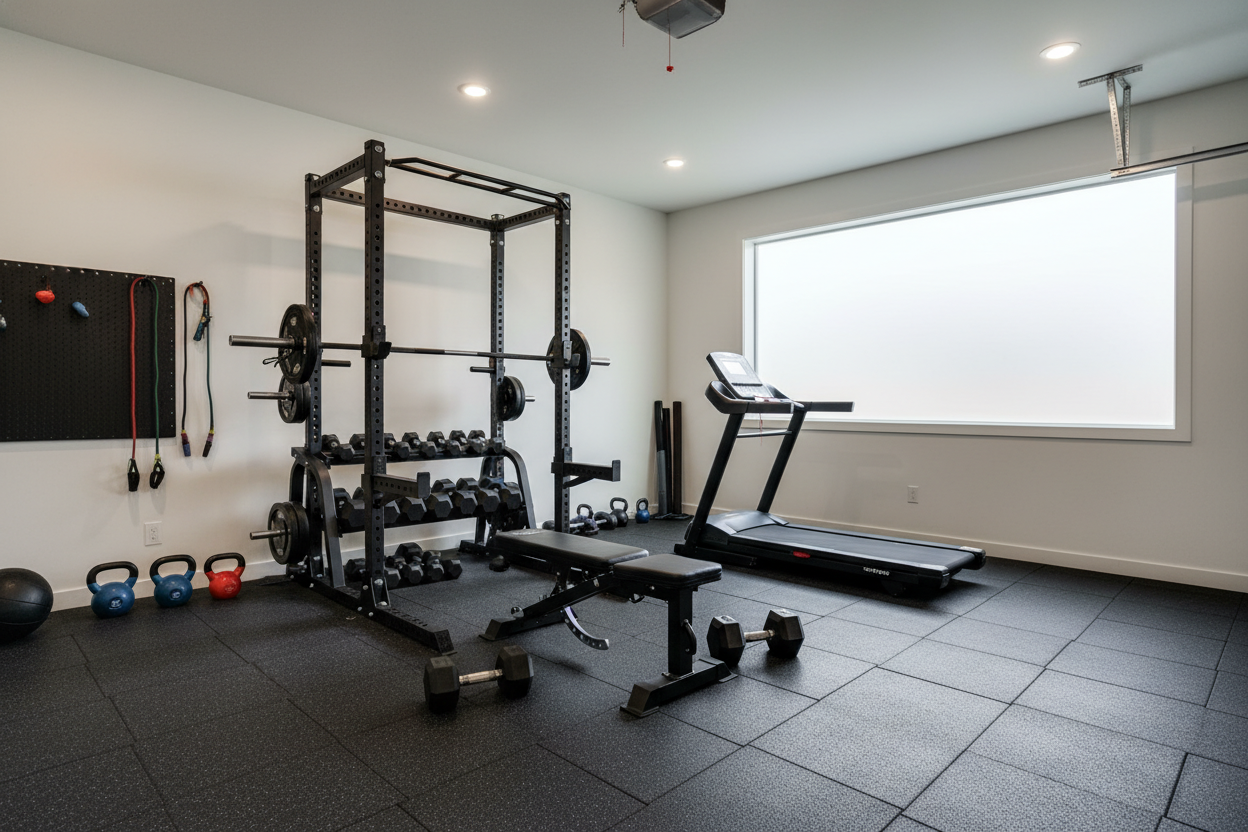
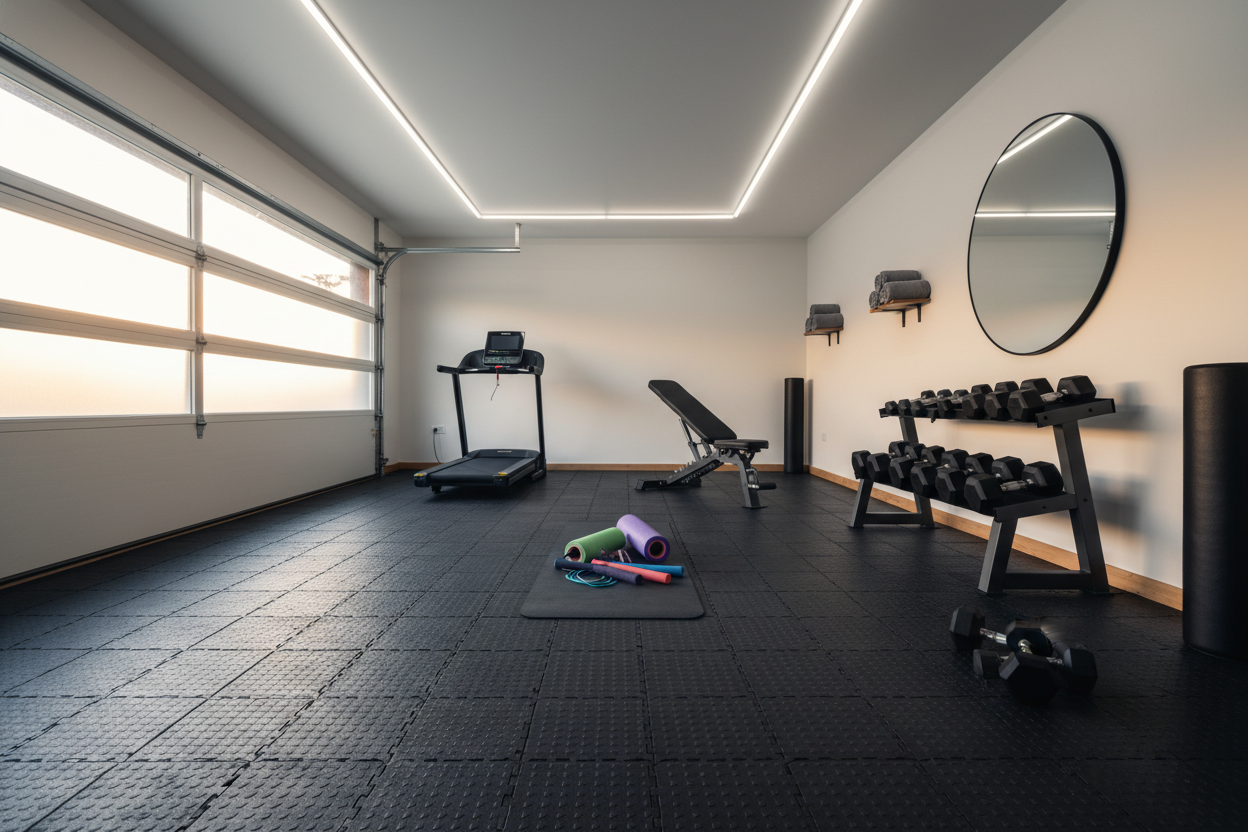
You don't need a $3,000 cable machine or a fancy boutique gym membership to run this protocol. Most of it can be done with bodyweight, a few heavy resistance bands, and a flat surface. However, do not underestimate the importance of your environment. Doing half-kneeling psoas marches or 90-second isometric holds on bare garage concrete is a fast track to quitting your program because your kneecaps are screaming.
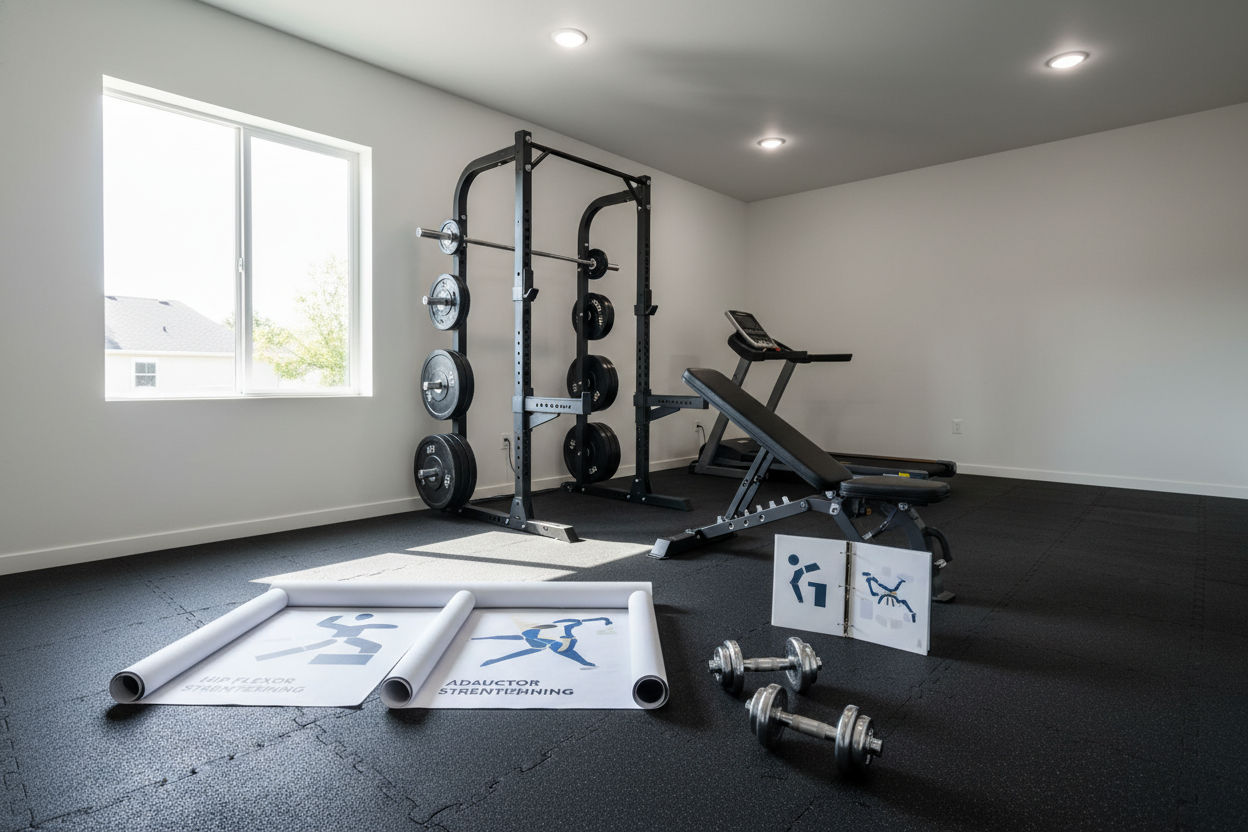
I personally use dense gym flooring for home workouts because it provides the necessary grip and cushion for high-tension work. If you are sliding around or hurting your joints on the floor, you won't produce the force required to actually strengthen the tissue. A solid 7mm or 10mm mat is the bare minimum for consistency. You want to focus on the muscle contraction, not the fact that your floor feels like a bed of nails.
Inside the Printable Protocol (What You're Actually Getting)
Most printable hip exercises you find online are absolute garbage. They tell you to do 30 unweighted clamshells and call it a day. My hip flexor strengthening exercises pdf physiotherapy guide is built differently. It moves from neurological recruitment to actual tissue remodeling. It’s not about 'feeling the burn'; it’s about teaching your brain that it is safe to use the full range of your hip joint under tension.
Phase 1: Isometric Awakenings
We start with isometric hip exercises pdf principles. This is the 'rehab' phase that is essential if you are dealing with hip oa exercises pdf needs or chronic tendonitis. You’ll perform high-tension holds—like the seated hip flexor lift—where you hold the leg at its end-range for 30 to 60 seconds. This recruits dormant fibers and builds tendon stiffness without the shearing force that usually flares up lateral hip pain. It is boring, it is hard, and it is the most effective way to start.
Phase 2: Loaded Lengthening
Once your brain stops panic-tightening the muscle, we add weight. This mirrors the best hip osteoarthritis physical therapy protocol pdfs by introducing load through a full range of motion. We move into movements like the Bulgarian split squat with an emphasis on the trailing leg's hip extension. Eventually, you’ll want to transition to a dedicated hip thrust bench to hammer the glutes and stabilizers. Strong glutes are the best friends your hip flexors ever had—they work together to keep the femur seated properly in the socket.
How to Run This Without Wrecking Your Current Program
You don't need to stop lifting to fix your hips. I use this hip conditioning program pdf as a 10-minute specific warmup before my heavy lower body days. It 'wakes up' the flexors so they don't pinch during my heavy sets. On active recovery days, I’ll run the full circuit to build capacity. It’s about frequency, not intensity. Doing this three times a week for 15 minutes is infinitely better than one 90-minute 'mobility' session on Sunday.
If you're an older lifter or someone dealing with multiple beat-up joints, you can pair this hip work with a shoulder arthritis rehab guide on your off-days. Keeping the joints moving while the muscles get stronger is the only way to stay in the game long-term. I once tried to 'stretch through' a hip flexor strain and ended up unable to squat for two months. Don't be that guy. Build the strength, and the mobility will follow.
FAQ
Will these exercises help with 'snapping hip' syndrome?
Yes. That snapping is often a tendon flicking over a bone because it lacks the tension to stay in place. Strengthening the muscle increases that tension and usually silences the snap within a few weeks of consistent work.
Can I do these if I have hip osteoarthritis?
Absolutely. In fact, hip osteoarthritis exercises pdf protocols almost always prioritize low-impact strengthening over aggressive stretching. Always clear it with your doctor, but building muscle around a worn joint is the best way to reduce pain.
How long until I feel a difference?
You’ll feel a 'neurological' difference—meaning less pinching—almost immediately after the isometric phase. True tissue change and strength gains take about 6 to 8 weeks of consistent effort. Stick with the program.