Stop Stealing Strength Building Workout Routines From Pro Lifters
I remember the first time I tried a professional powerlifting program. I printed out a spreadsheet from a guy who squatted 900 pounds, walked into my garage, and tried to follow it to the letter. Two weeks later, my lower back felt like it had been through a car wreck and I couldn't even bench the empty bar. We all want the fastest results, but most strength building workout routines you find online are designed for athletes whose full-time job is recovery. They have massage therapists, chefs, and sometimes 'chemical assistance' that you probably don't have in your suburban setup.
- Pro programs usually have too much volume for a solo lifter with a job.
- Recovery is the most underrated variable in home gym training.
- You don't need a 12-piece machine circuit to get strong.
- Linear progression is boring, but it works better than 'muscle confusion'.
Why Elite Programs Will Destroy You in a Garage Gym
The biggest issue with copy-pasting a pro's strength gain workout plan is the frequency. These guys are often hitting heavy singles or high-volume accessories six days a week. In a home gym, you're usually the one loading the plates, cleaning the chalk off the floor, and managing your own rack safety. That extra physical and mental load adds up. When you're training alone, you don't have a coach spotting your RPE (Rate of Perceived Exertion), and it's incredibly easy to overshoot your intensity until your central nervous system fries.
I've seen guys try to run high-frequency Bulgarian methods in unheated garages during December. Their joints never get warm, their recovery is hampered by poor sleep, and they wonder why their deadlift is stalling. Professional programs assume 'perfect' conditions. Your garage is rarely perfect. It’s either too hot, too cold, or you're distracted by the laundry humming in the next room. You need a program that builds in a buffer for the days when life gets in the way of your lifting.
Furthermore, elite programs are often peaked for a specific meet date. If you aren't competing in twelve weeks, why are you training like you are? Constant peaking leads to burnout. For the average garage gym owner, a sustainable approach that emphasizes 80% intensity with consistent 1% weekly gains will always beat a three-week blast that ends in a shoulder tweak. You’re in this for the long haul, not a trophy on a plastic stage.
The Anatomy of a Realistic Strength Gain Workout Plan
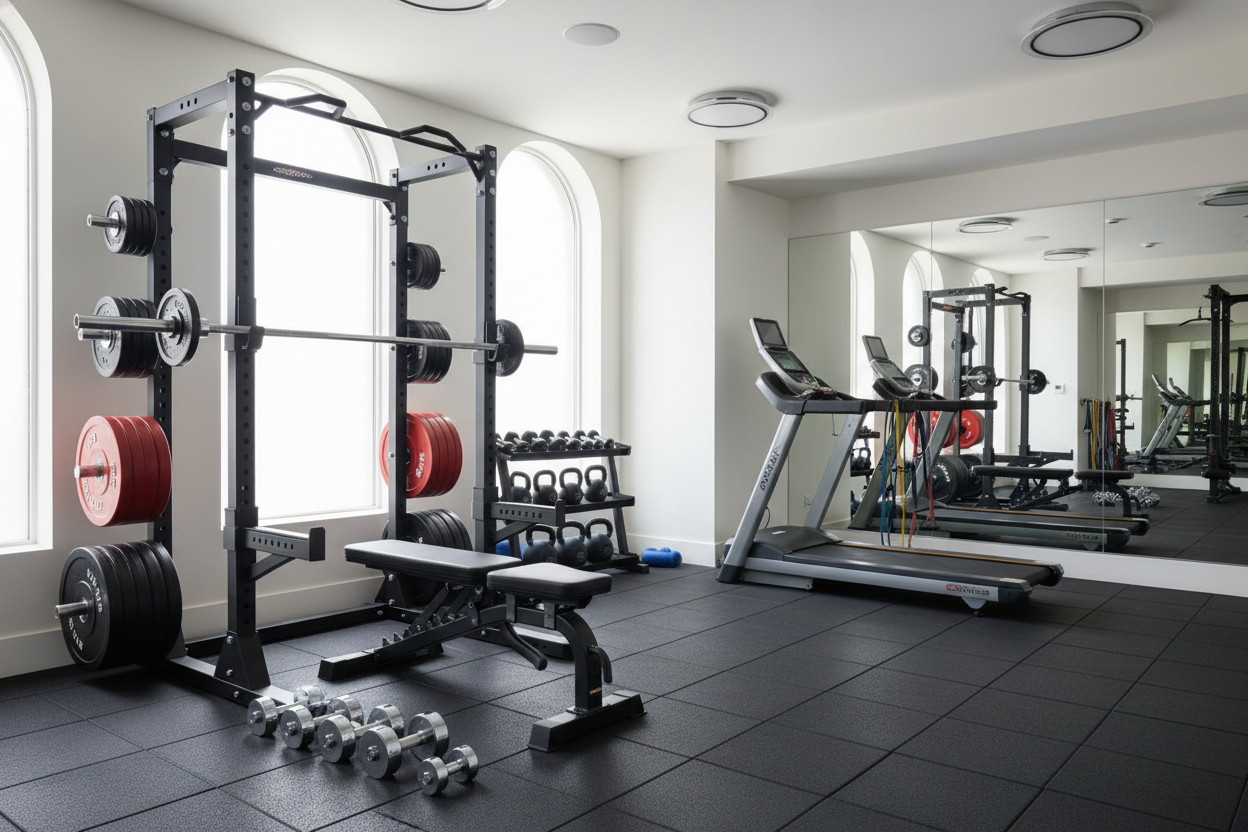
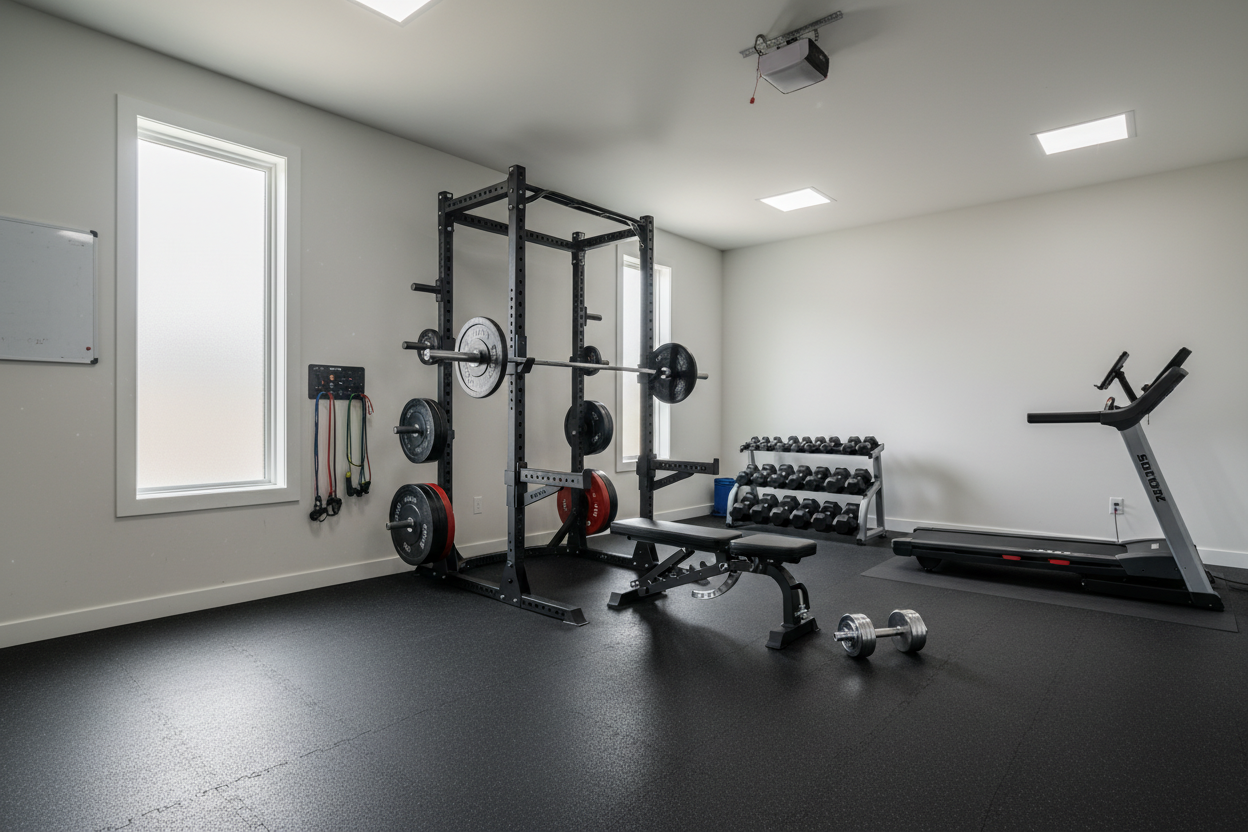
A realistic plan focuses on the 'Big Three' plus the overhead press. That’s it. If you have the basic strength equipment—a power rack with 11-gauge steel, a barbell with decent knurling, and enough iron to make the floor groan—you have everything you need. You don't need a cable crossover or a specialized leg extension machine to build a 500-pound deadlift.
The key variables you need to manipulate are intensity and volume, but not at the same time. If you're increasing the weight on the bar, keep the sets and reps stable. If you're stuck at a certain weight, increase the sets to build more capacity. In a home environment, I'm a huge fan of the 'Top Set' method. You work up to one heavy set of 3-5 reps, then back off the weight by 10-15% for a few sets of 8. It gives you the heavy stimulus you need for strength without the soul-crushing fatigue of doing five sets of heavy triples.
Don't get distracted by 'specialty' bars or fancy gadgets until your main lifts are solid. I spent $500 on a safety squat bar before I could even squat 315 with a straight bar. It was a waste of money at the time. Focus on the mechanics of the lift. Use your phone to record your sets from a side angle. Since you don't have a coach, that video is your best friend for fixing form breakdown before it becomes an injury.
Stop Skipping the Hard Stuff: The Lower Body Mandate
It’s easy to skip leg day when you’re alone. There’s no one to call you out for doing five variations of bicep curls instead of hitting the rack. Most home gym owners avoid heavy lower body work because they don't have a leg press and they're scared of failing a squat without a spotter. But if you have safety pins in your rack, you are perfectly safe. You can run a science-backed leg workout using nothing but a barbell and some grit.
Heavy squats and deadlifts are the foundation of any workout plan to build strength because they trigger the most significant systemic response. If you don't have a leg press, do Bulgarian split squats. They are miserable, they require zero extra equipment, and they will build more stability than any machine ever could. I've found that doing heavy lunges or step-ups is actually better for my knees in the long run than just doing endless back squats. You have to be creative with the gear you have, but never use a lack of machines as an excuse for thin legs.
How to Structure a Workout Plan to Build Strength at Home
I recommend a 4-day 'Upper/Lower' split or a 3-day 'Full Body' routine. If you're a busy person, the 3-day split is king. It allows for a full day of rest between every session, which is when the actual muscle growth happens. Monday is your heavy squat and bench day. Wednesday is for deadlifts and overhead press. Friday is a mix of accessories and perhaps a lighter variation of your main lift. This structure ensures you're never too sore to function at your day job.
For each session, pick one main lift and treat it like a religion. Everything after that is just 'flavoring'. If you're doing a workout plan to build strength, you shouldn't be doing 20 different exercises. You should be doing 4 or 5 and doing them with high intent. I like to use strength training accessories like resistance bands to add a different stimulus without needing a whole new rack of dumbbells. Looping a band around the ends of your barbell for 'speed work' is a classic Westside Barbell trick that works wonders for breaking through plateaus.
Progression should be linear for as long as possible. If you did 200 pounds for 5 reps last week, try 205 this week. When you can't add weight anymore, add a rep. When you can't add a rep, add a set. Only when you've exhausted all those options should you look at changing the exercise entirely. People change their routines way too often. I've kept the same four main lifts in my rotation for three years, and that's why my numbers keep going up while others stay stagnant.
Protecting Your Joints When You Lift Heavy
Lifting heavy in a garage means your joints are taking a beating, often on a hard concrete floor. Concrete has zero give. If you're dropping deadlifts or even just standing for an hour on bare cement, your ankles and knees will start to scream. You absolutely need gym flooring for home workout setups. A thick, high-density rubber mat doesn't just protect your foundation from cracks; it acts as a shock absorber for your body.
Warm-ups are also non-negotiable. In a commercial gym, you walk from the parking lot to the locker room, which gets the blood moving. In a home gym, you might walk ten feet from your kitchen to your rack. Your body isn't ready. Spend ten minutes doing dynamic movements—bodyweight lunges, arm circles, and 'world's greatest stretches'—before you even touch the bar. I once tore a calf muscle because I tried to jump straight into a heavy set of squats on a 40-degree morning. Don't be like me.
FAQ
How many days a week should I train for strength?
For most people, 3 to 4 days is the sweet spot. Any more and you'll likely struggle with recovery; any less and it's hard to get enough volume to see consistent gains.
Do I need a spotter to lift heavy at home?
No, but you DO need a power rack with safety bars or straps. Set them just below your bottom position. If you fail, you just lower the bar onto the steel. It's actually safer than a human spotter who might not be paying attention.
What's the best exercise for overall strength?
The deadlift. Nothing builds total-body power and 'dad strength' like picking something heavy up off the ground. Just keep your back flat and don't ego-lift.
Should I use a belt?
Use a belt for your heaviest sets (80% and above). It's a tool to help you create more intra-abdominal pressure, not a crutch for a weak core. Learn to breathe into your belly first.