How to Adapt Any Exercise for Weight Gain in Gym Settings for Home
I remember the day I finally cancelled my commercial gym membership. I was tired of waiting twenty minutes for a squat rack while some kid took selfies on the leg press. I worried that leaving the fancy equipment behind would kill my progress, thinking I needed every specialized exercise for weight gain in gym environments to stay big.
The truth? My garage was exactly what I needed to actually get huge. When you strip away the chrome and the pulleys, you're left with the heavy iron that forces your body to adapt. You don't need a forty-thousand-square-foot facility to pack on mass; you just need to know how to translate machine movements into raw barbell work.
Quick Takeaways
- Machines provide stability, but free weights recruit more muscle fibers for growth.
- Substitute the Hack Squat for the Front Squat to save space and build quads.
- Heavy compound movements are the foundation of any mass-building program.
- A 3x3 steel power rack is your most important investment for safety and load.
The Commercial Machine Trap (And Why It Keeps You Small at Home)
Commercial gyms love Weight Lifting Machines because they are easy for beginners to use without getting hurt. But for those of us trying to pack on serious pounds, machines can become a crutch. They handle the stabilization for you, which means your secondary muscles are basically taking a nap while you work.
When you move your training to a garage, you lose that guided path. This is actually a massive advantage. Without a machine to balance the weight, your core, grip, and stabilizers have to fire on all cylinders. This increased demand leads to a higher hormonal response and, ultimately, more hypertrophy.
Most people hit a plateau because they rely on the seated chest press to move heavy weight. At home, you’re forced to use a barbell or heavy dumbbells. If you can bench 225 for reps on a flat bench, you’ll always be bigger than the guy who can move 300 on a plate-loaded machine. Raw strength translates to raw size.
Translating Machine Movements to Heavy Iron
You don’t need a leg press to build massive wheels. If your favorite gym workout to gain weight involves the Hack Squat, start doing Front Squats. By placing the barbell across your anterior deltoids, you shift the load to your quads in a way that mimics the Hack Squat’s upright torso position, but with the added benefit of crushing your core.
Replacing the seated cable row is even easier: do the Pendlay Row. Instead of pulling a handle toward your stomach while sitting down, you bend over until your back is parallel to the floor and explode the weight from a dead stop on the ground. It’s harder, it’s uglier, and it builds a back like a barn door.
For chest, if you’re missing the Pec Deck, grab a pair of heavy dumbbells for floor presses or deep-stretch flies. The goal isn't to perfectly replicate the feel of a machine, but to replicate the mechanical tension on the target muscle. Use a slow eccentric (the lowering phase) to make up for the lack of constant cable tension.
Structuring Your Home Gym Workout to Gain Weight
The biggest mistake I see home lifters make is trying to do too much volume with light weights. If you want to grow, you need to move heavy stuff. Structure your sessions around one big compound lift—Squat, Bench, Deadlift, or Overhead Press—and follow it up with two or three high-intensity accessory movements.
Keep your reps in the 6-10 range for your primary lifts. This is the sweet spot for mechanical tension and metabolic stress. If you find yourself doing sets of 15 because you're afraid to load the bar, you're just doing cardio with weights. You can read more about Why Your Workout for Weight Gain Fails in a Home Gym to see how ego-lifting or poor rep ranges can stall your bulk.
Give your central nervous system (CNS) time to recover. In a commercial gym, you can jump from machine to machine without much fatigue. When you're pulling 405 off the floor in your garage, your CNS takes a beating. Train hard four days a week and spend the other three days eating and sleeping. That’s where the actual growth happens.
The Bare Minimum Gear You Actually Need for Mass
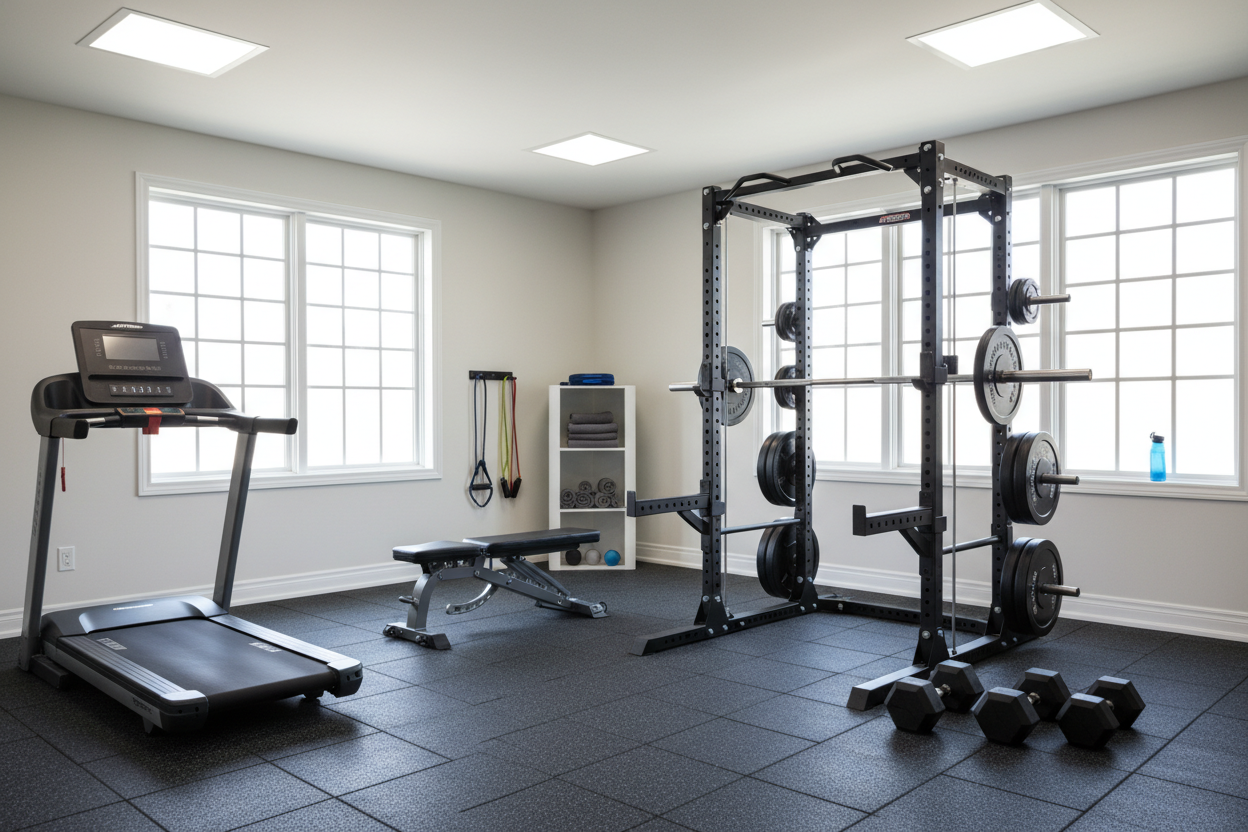
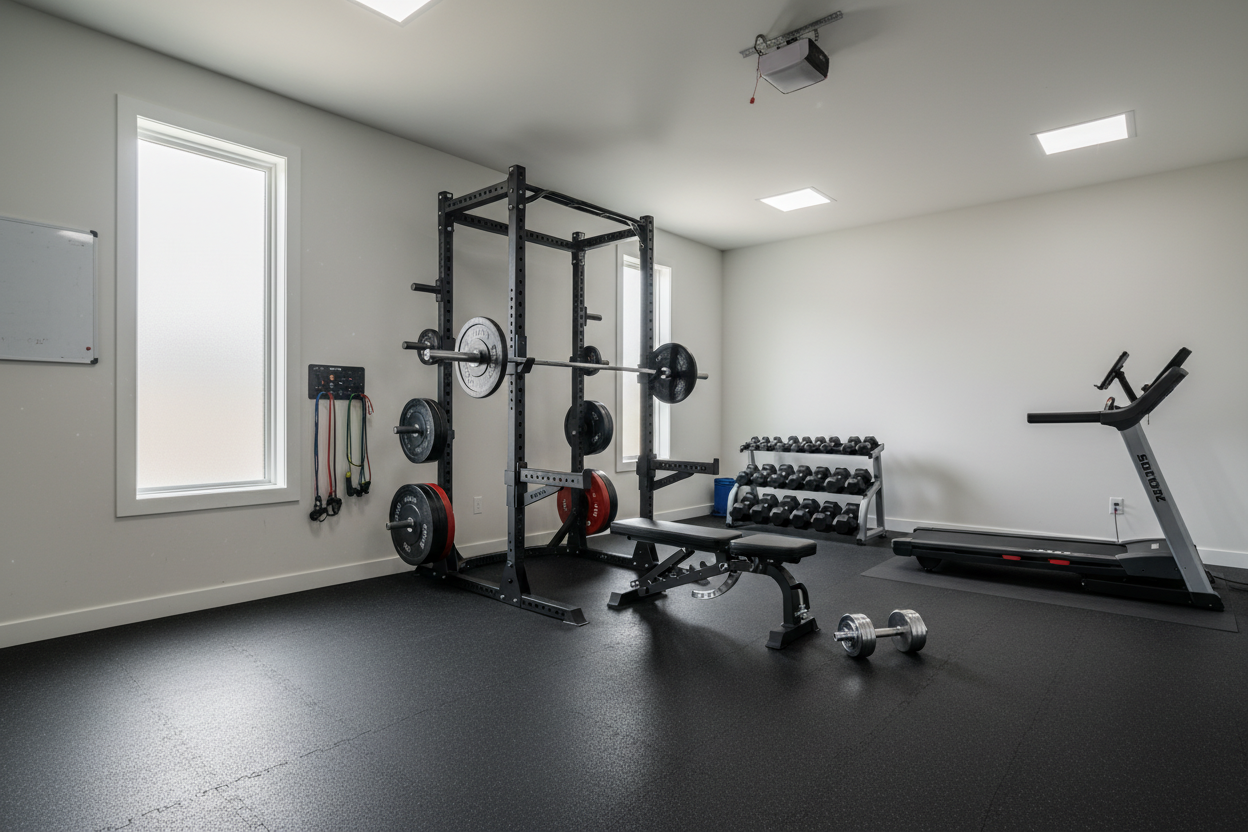
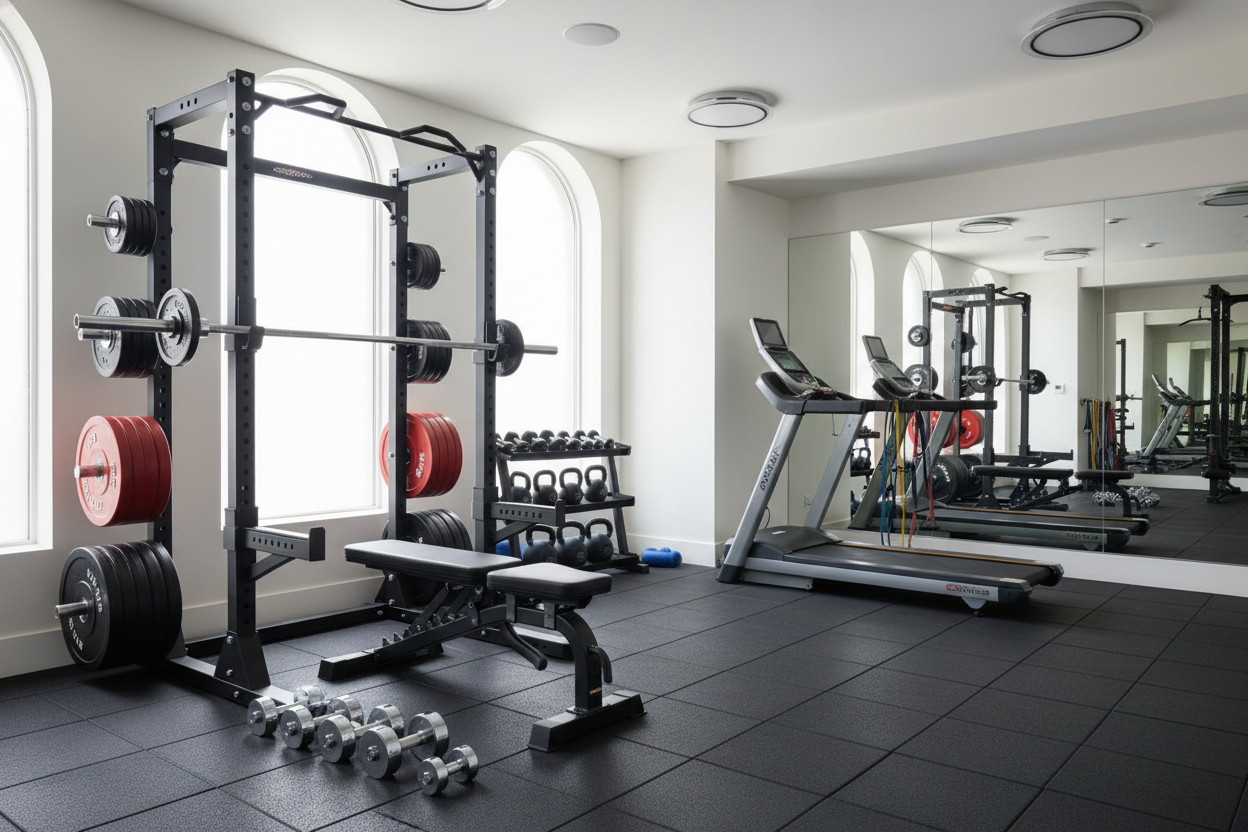
You don't need a dozen different stations. You need a foundation that won't wobble when you're repping out a PR. I always recommend starting with something like the Gxmmat X6 Power Rack Weight Bench Package. You want 11-gauge steel and a weight capacity that far exceeds what you can currently lift. If the rack is rated for 1,000 lbs, you know it’s not going to tip when you rack a heavy squat.
The second non-negotiable is a high-quality bench. A flimsy bench is a recipe for a shoulder injury. The Gxmmat Adjustable Weight Bench is a solid pick because it gives you the stability of a flat bench with the versatility for incline work. Look for thick padding that won't bottom out under a 250-lb lifter holding 100-lb dumbbells.
Finally, get a real Olympic barbell. Don't buy the cheap 1-inch hole plates from a big-box store. You need a 45-lb bar with decent knurling so it doesn't slip out of your hands when you're sweating. Once you have the rack, the bench, and the bar, you have everything required to outgrow anyone at the local commercial gym.
My Personal Hardgainer Lesson
When I first started my home gym, I tried to save money by building a 'cable crossover' out of PVC pipe and literal clothesline I bought at a hardware store. I thought I needed that specific isolation movement to grow my chest. On the third rep, the PVC snapped and whipped me across the collarbone. I had a bruise for three weeks and didn't gain an ounce of muscle. I ditched the DIY junk, bought a heavy set of dumbbells, and focused on weighted dips instead. My chest grew more in the next two months than it had in the previous two years. Don't overcomplicate it.
FAQ
Can I really gain weight without leg press machines?
Absolutely. High-volume back squats and front squats are superior for hypertrophy because they trigger a larger systemic hormonal response. Your legs will grow faster with a barbell than they ever did on a machine.
How much space do I need for a mass-building home gym?
A standard power rack setup fits in roughly an 8x8 foot area. If you have a one-car garage or a spare bedroom, you have enough space to get as big as you want.
Do I need a spotter for heavy home lifting?
Not if you have a power rack with safety pins or spotter arms. Set the safeties just below your lift's bottom range. If you fail, the rack catches the weight, not your chest.